

Sometimes, all a game needs is a good story to create the gameplay from. Something meaningful, obvious in its intentions, and can be easily pulled from to make the right amount of “that’s it!” to the overall experience. Welcome to Tides of Tomorrow.
Tides of Tomorrow, from developer Digixart, takes the same path as their previous societal project, Road 96. Instead of speaking directly about oppressive behavior by the government and the slow, yet steady race for freedom, both mentally and physically, Tides of Tomorrow turns its focus on the greater good versus the greater self. This is an equally worthy and relevant topic when it comes to what is happening in the world right now. Funnily enough, it feels like Digixart almost predicts what the world needs with its releases, and at the very least creates a fresh reminder that we all can’t sit on butts and do nothing because there is a lot at stake.
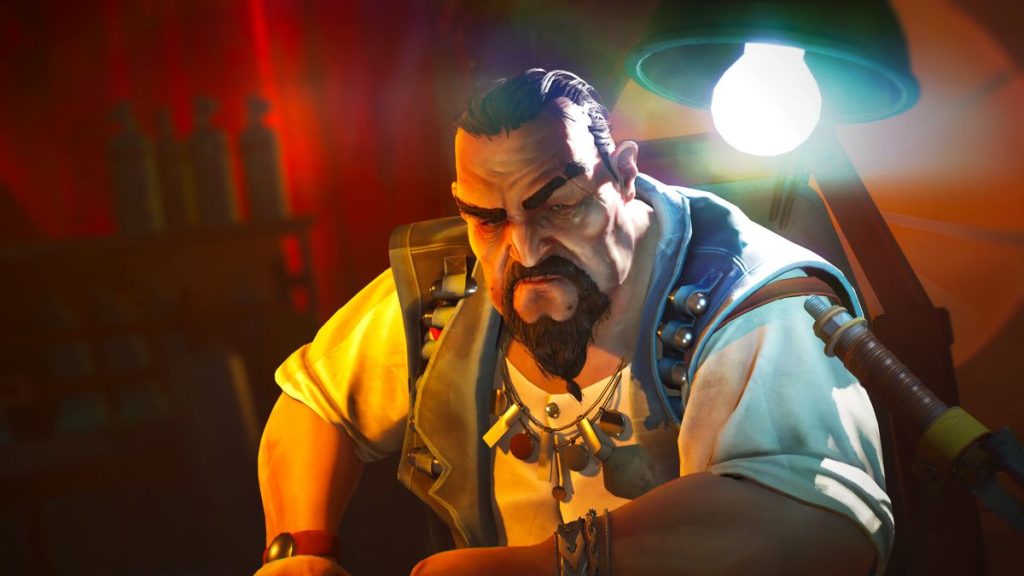
As much as Tides of Tomorrow is different than its predecessor, there are some intersecting design lines between them. Both games are player-driven narratives that use branching dialogue to shift the story from one aspect to another, leaving it completely to player agency to drive the experience. The difference between them lies in the fact that Tides of Tomorrow creates a more microscopic and detailed decision-making set of choices that could take the narrative dramatically in more than two directions. It’s probably the closest and most complicated branching dialogue game I have seen since the release of Knights of the Old Republic. That is impressive considering that no modern game has taken the genre that far since. Tides of Tomorrow comes really close. I mean, really close.
Now, getting back to the release comparisons, one of the faults of Road 96 was how the interactive gameplay was linear and seemed secondary in comparison to the dialogue choices. That’s one aspect of the game that truly turned me off from thinking it was one of the better releases out there. Having a good balance of story and interactivity means that the game isn’t a visual novel (no offense to visual novels). I wanted far more control of my characters in Road 96, but it never gave me that option. It was like they didn’t prepare for the player in their gameplay equation and/or didn’t trust the player enough to guide the narrative to where it needed to go. Well, those issues are a thing of the past for Tides of Tomorrow.
This game not only gives you impactful narrative choices to make, but also pulls out appropriate interactive gameplay scenarios to mix in with the dialogue. This type of freedom creates a few things that resonate from start to finish with the game. Let’s discuss and break down this game.
Firstly, the game’s narrative sets up an amazing story where the main character is heavily flawed and has a finite amount of time to get the story’s mystery uncovered and solved. The player takes control of a Tidewalker, a gradual, plastic-plagued, dead person pulled from the ocean. The character can see into the future and see other players’ timelines as they go on the same quest. This means they can see mistakes that were made or get false information from the previous player, which puts them in peril.
In addition to their powers, the Tidewalker has to take a breathed-in chemical called Ozen that will prevent their rapid deterioration into the world of a plastic person. Once they become plastic, that is the end of their life. So, the story always pushes this urgency against the player, which makes the entire adventure somewhat intense and stressful. This also makes the race against time felt from beginning to end.
Along this potentially impactful short journey, the Tidewalker will run into many types of people, some who crave power, others who want to help humanity, and still others who are trying to prove their religious fanatical natures are justified. Each person has their own goals, which mingle with the main character’s, with the one intersecting goal for everyone being how to save the world from becoming a poisonous, toxic plastic wasteland. The Tidewalker must decide the path they want to tread and take into account everyone involved in their life, while also keeping that main goal of saving the planet in mind. From that story, the interactive gameplay appears.
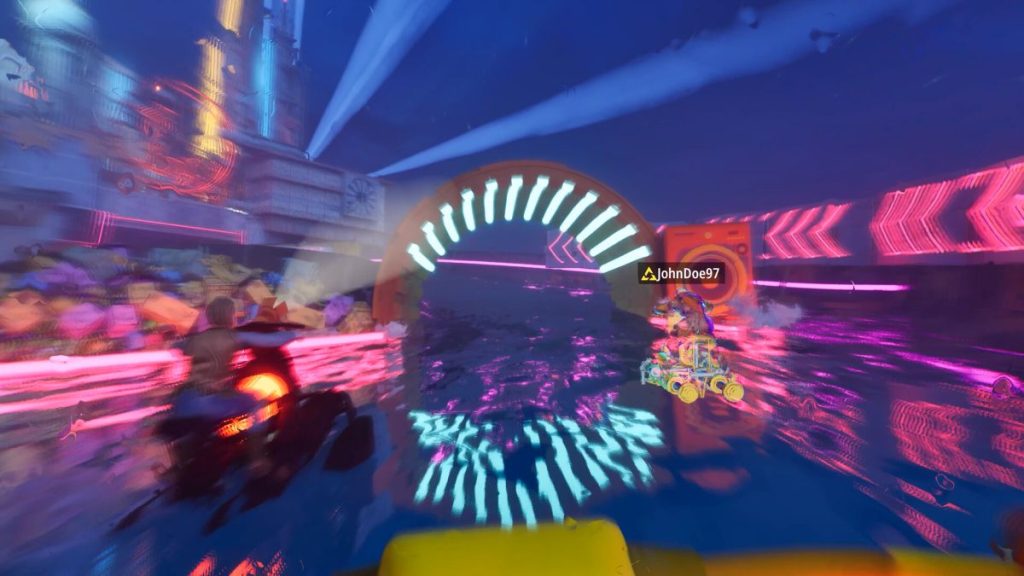
The actual gameplay is divided into a few areas of interest. There is boat-play (riding around in a boat) that leads to all the other pieces of the gameplay. This boat option is both easy to pick up on and crazy when it comes to fights on the water, and useful when selecting the non-linear path to journey on during the story. And, yes, you read that right, this is very much a non-linear journey.
The locations to visit are driven by the dialogue and urgency of whatever situation the Tidewalker runs into. For example, there might be a moment in the game where the character has to free a large fish from capture, one that is important to the survival of the planet, or stop a religious fanatic from going too far with a friend. Much like the branching dialogue, the game allows the player to choose what is most important to them and then see it through. No direction is wrong, but the outcomes from said direction are different. Again, it’s total player agency, and it’s brilliant with how it mingles with the branching choices.
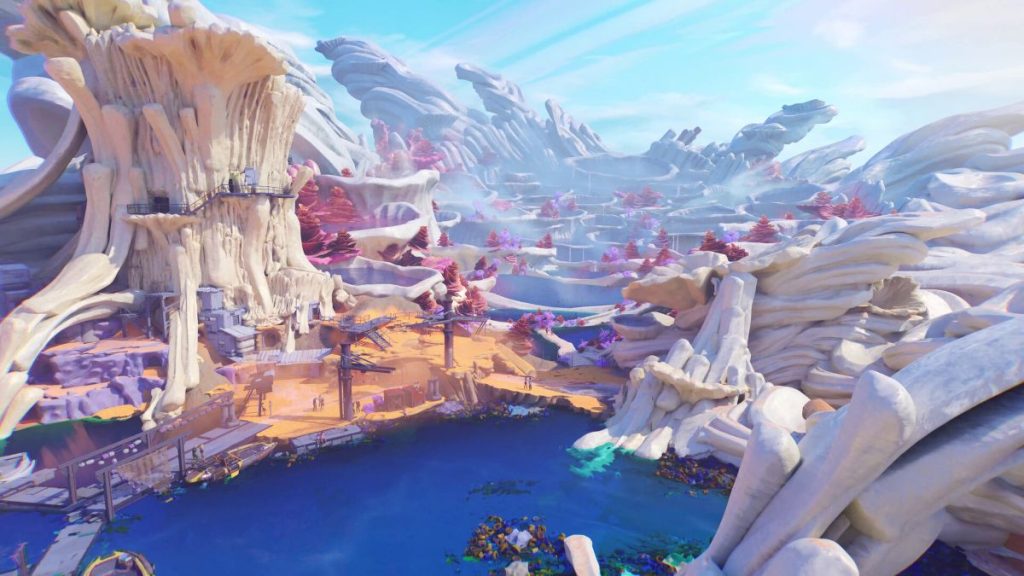
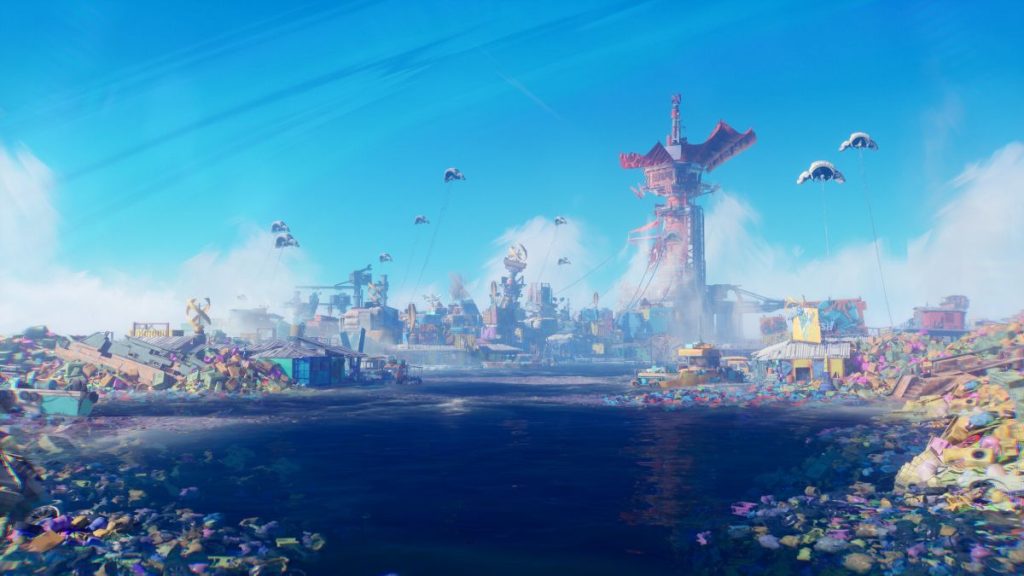
Once a selection is made, the gameplay becomes a mixture of stealth, some puzzles, and trying out what the player deems important. The various landscapes/islands that the player visits are a hodgepodge of construction and navigation, which means nothing feels the same. In one world, the player has to traverse buildings that were thrown together. In another world, the player has to make their way through a pleasure island-like locale with rowdy music and small spaces, thanks to large crowds. In yet another world, the player has to jump around a destroyed and abandoned homestead on the water in order to complete a task. The many environments with their own personality and touch make visiting them all a treat. It never feels boring; rather, it builds on the world that Digixart was probably trying to create and puts the player in this large, horrible mess of many survival scenarios and the obstacles that come with them.
Now, speaking of obstacles, the game does serve up a fair amount of stealth and puzzles. Players will not be whipping out guns and going on a killing spree with this first-person game. Instead, the interactive gameplay is driven by figuring out how to navigate locales, while also sneaking around dangerous areas where the player will be shot on sight. Normally, I would absolutely hate stealth games not called Metal Gear Solid, but the story and purpose helped to sell the stealth gameplay that Tides of Tomorrow featured. It was fun, appropriate, and worked within the narrative built for it. In other words, I didn’t feel it.
Of course, that didn’t mean that the stealth wasn’t challenging. Hiding from armed guards, stowing away under tables to avoid red lights on the gun, and generally just knowing when to hide and make a break for it were challenging. All of that got turned up to 11 towards the end of the game, as navigating many armed guards with a limited number of areas made for a difficult time when performing stealth gameplay. Getting through that portion of the game was a big booger of a time, and almost unbearable, and yet it made sense within the narrative on why it existed. Most of the stealth situations play and fit well within the overall story and world. That’s just great planning and execution.
Beyond stealth, the game also features a small number of puzzles. These are simple tasks that the player must commit to in order to get into certain areas of the game and progress. This could be as simple as trying to find a password that allows for a key to be obtained and a door to be opened. This portion of the gameplay isn’t nearly as difficult or intense as the stealth, but sometimes it can get overwhelming just trying to figure out what the hell you’re supposed to do to move forward.
To help the puzzle aspect of the game, and this is where the game gets really neat, other players are leaving their mark in the areas you visit. It’s in the same vein as finding a memory in Dark Souls, where someone’s success or failure can be watched and learned from. In Tides of Tomorrow, you can activate the Tidewalker’s vision capabilities and watch and see what other players did in the scenario you’re currently dealing with in the game. For example, there was a moment when I needed to find a key to a door so that I could move forward in the game. This ability allowed me to find some hints that led me to a password and then eventually to the key I needed. This was all laid out by a player on a different server who played this level prior to me.
What is interesting about the above power is that sometimes players can be somewhat pricks. They can leave wrong information to get you in trouble and make choices they know are wrong to lead you down a bad path. This aspect is fascinating, especially when it comes to trusting other players in the game, as well as dealing with the fallout of their imprinted follies. What’s even more interesting is that the choices they make will be mentioned as ‘other Tidewalkers’ in various amounts of dialogue during the playthrough. The characters in the game will talk about other players as if they were there, making choices in the same world that you’re playing in. Those dialogue pieces help to bring more logic to the player’s decision-making process, which is incredible in the gameplay scheme of things. It’s an extra step to what Digixart established in Road 96, and one that changes the complexity of the game through more precise logic choices.
A few other tidbits also make up the gameplay and potentially complicate things. The first big one is the need to watch Ozen levels during the game. Tides of Tomorrow will establish right at the get-go that Ozen is a life source for Tidewalkers. Without it, the Tidewalkers will die. The game keeps that over the head of the player the entire experience, as they will be reminded of their Ozen level by a small health bar at the bottom of the screen. As the player progresses, the bar will steadily and assuredly lower, and if it gets emptied, then the player will die temporarily and be given one more shot at redemption before it’s completely ‘game over’. It’s a stressful gameplay component that keeps the player awake and aware, while also fitting perfectly within the narrative told. This part of the Tides of Tomorrow tapestry was beautifully, yet stressfully, woven into the whole, and makes some characters in the game far more developed and meaningful.
Staying with decisions and stress, making decisions in the game affects how other characters will look and react to the Tidewalker’s existence and presence. For every dialogue choice, the player will receive some XP in specific categories. Those categories are broken into Troublemaker, Pro-Mankind, Cooperative, Pro-Nature, and Survivalist. If the player leans heavily on one side, then they lack on the other, which changes how other characters react to them. See? Just like Knights of the Old Republic. Be as good or as evil as you want, but face the consequences of your choices.
All these gameplay elements combined make up the entire construct of Tides of Tomorrow. As you can tell, this game is far and away more complicated than Digixart’s Road 96, and may set a new standard of expectations for what players should want from the branching dialogue and interactive gameplay genre. For me, I enjoyed this far more than I thought I would and felt like it’s a strong step forward for Digixart and these types of games. I hope they keep pushing this envelope a little and possibly meet or exceed the likes of KOTOR in their next go-around with this genre.
On that note, let’s wrap things up.
Conclusion
Tides of Tomorrow is a wonderful game that brings a balance of fantastic branching dialogue and consequences of that dialogue, while also creating some meaningful and solid interactive gameplay that complements those dialogue choices. The game feels very well planned and executed.