

Isolationist, existential, and compelling, The Alters molds the struggle of one's self into an often bleak, obtusely hopeful exercise of survival. By bending the genre to its whims, 11 bit studios have crafted a futuristic study on purpose and time.
The significance of the choices we make ripple throughout the timeline of our existence until the moment we die.
At what point did we create our own flashpoints? Events or moments or decisions that will fundamentally alter the course of our life. The person you chose to talk to again. The road you decided to drive. The job you turned down. The meal you ate. The moment you stood up for yourself.
Regret often colors our hindsight rose, knowing that our present and future could be made more whole by returning to the past, placing a hand on our own shoulder, and intervening.
To say that The Alters arrives at a time where my own existence is going through its own weighty junctures feels cosmically ominous, yet another sign signifying importance I likely will not understand until those ripples in the timeline continue to smooth and eventually dissipate.
But one of the fundamental questions posed by The Alters is one of self. What if we could be there for ourselves in the most desperate of times? Not to intervene in some serendipitous shot at happiness or a higher paycheck but at survival? What if somehow, our self could be multiple distinct persons, capable of entirely different perspectives, tasks, and acts than the original copy.
11 bit studios’ concept is simple. Jan Dolski is one of the crew members of Project Dolly, a voyage into space to find a rare substance called Rapidium. The game starts with blaring red lights flooding Jan’s face. His small pod has crashed onto the planet. A violent beach ravaged by a radioactive storm and waves crashing against its Brutalist black rocks. A search for crew mates proves fruitless as they have all died on impact, corpses in their steel pods like rotted yolks. Jan’s most pressing mission is to survive, Project Dolly fails if he dies, after all.
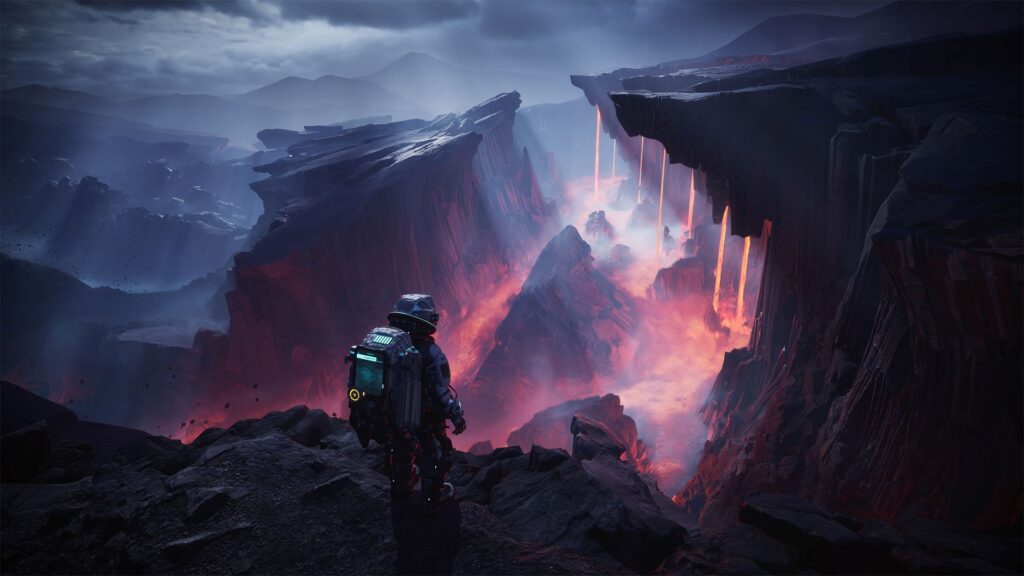
One of the most striking things about The Alters is 11 bit studios’ interpretation of this particular brand of science fiction. Whether Alien or Moon or The Martian, movies portraying the dense emptiness of seemingly dead orbs in space evoke the notion of a world long-haunted by former inhabitants. The planet here is cold in its absolute absence of life. Yet it is a meteorological firestorm. Rivers of lava and violent oceans would be on the postcards, as would the gravity-defying anomalies and shimmering deposits of Rapidium.
But Jan’s clock is ticking.
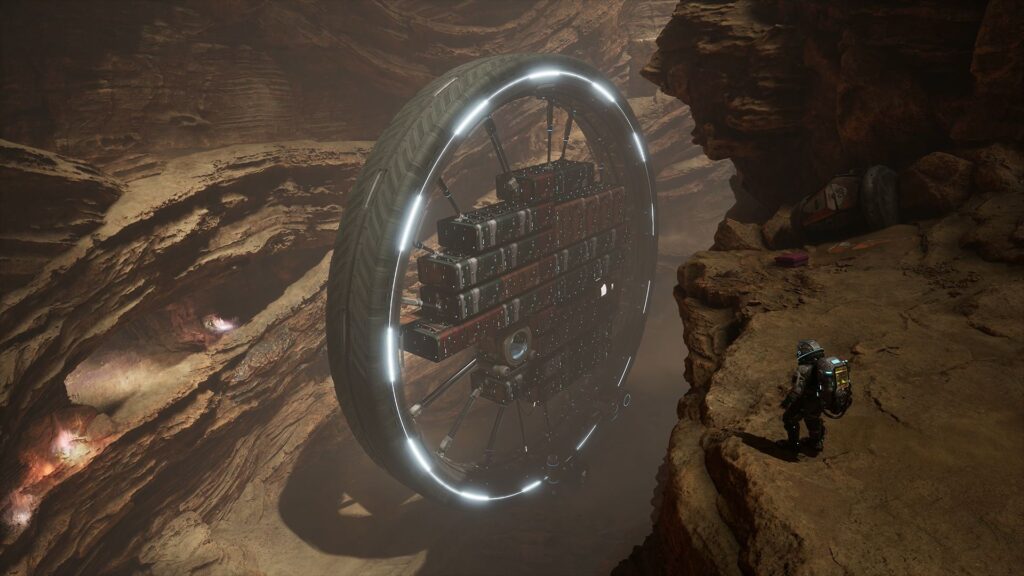
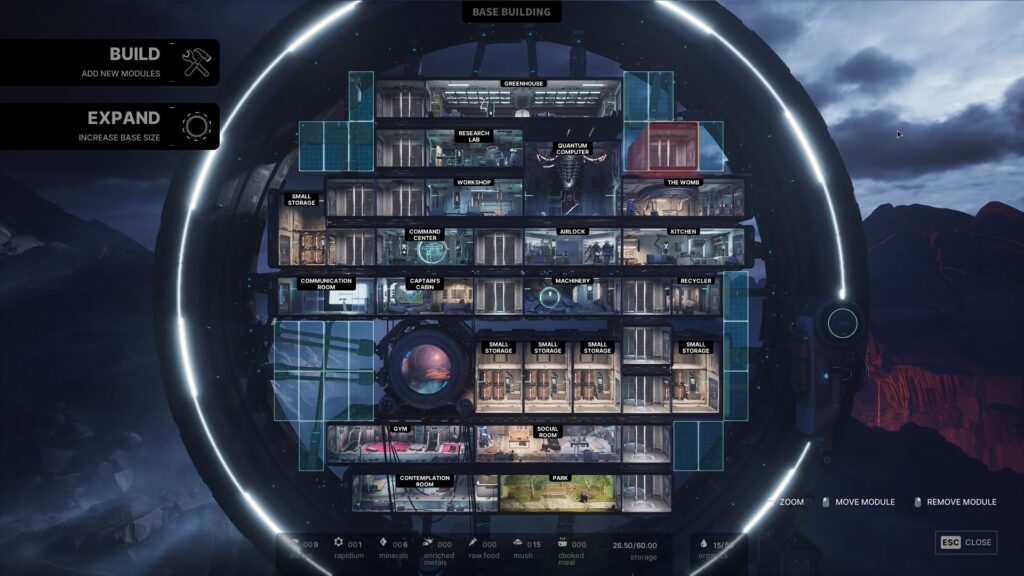
He makes it to the mobile base of operations, portrayed as a behemoth wheel, capable of driving through the terrain, its innards housing the numerous facilities meant to aid in survival and progress. This immensely fascinating structure has likely been done before in media but my mental codex cannot recall an example. It’s brilliant–if somewhat impractical–home for Jan. Yet over the course of the game I loved putting new rooms in it, puzzling out the most optimal placement, a satisfying minigame for fans of base-building. But again, the developer’s grasp of familiar and foreign push futurism and science forward. Hopping into the communications room he makes a fuzzy call to home, hoping for advice.
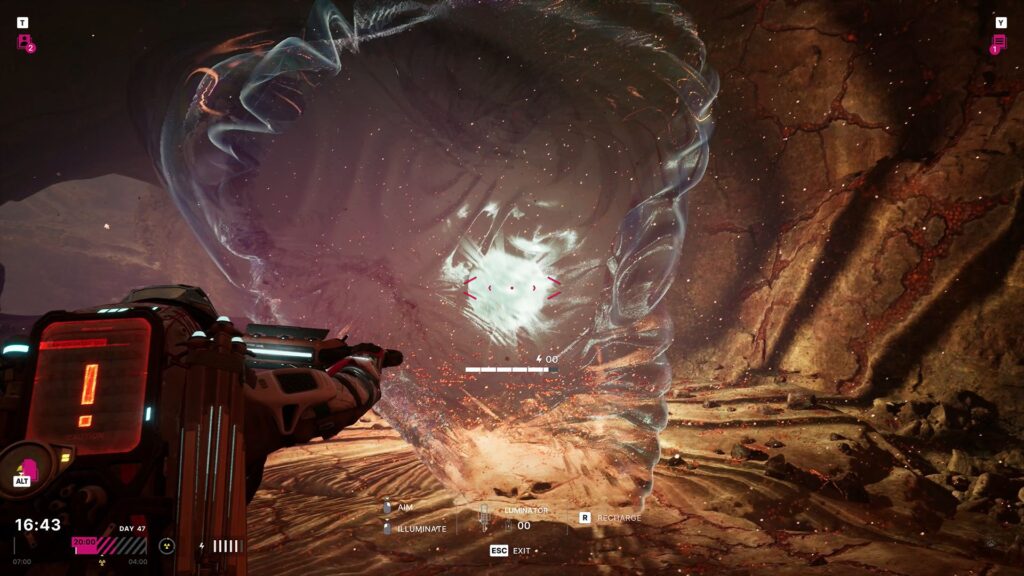
On this planet, when the sun rises, it will boil the surface and Jan along with it. So he must travel to safety. Thus locking in place The Alters‘ loop.
The Alter‘s survival mechanics are at the forefront of its gameplay. Players can expect the typical resource collecting, crafting, and time management that are fundamentals of others in the genre, even 11 bit studios’ previous efforts Frostpunk and This War of Mine. But rather than tedious, The Alters is tense but often breezy in its execution.
Jan runs around the surface of the planet under the player’s control. He hops over ledges, places facilities, and navigates the landscape through the work of the player. All the while a clock is ticking. Awake past 8pm? Completing tasks–whether it be mining resources, crafting at the workshop, or cooking food–will take twice as long. Failure to sleep before 11pm means Jan will wake up later the next day. Oh and I was so judicious to put Jan to bed, timing out every action so he steps into bed with literal seconds and virtual minutes to spare.
Time management is essential because, unsurprisingly, everything takes time. But The Alters is not stingy with players, even on the hardest difficulty that makes economy management a touch more extreme. Players desperate to be efficient during their day aren’t always best served running back and forth across the planet. And there is no attempt to exhaust the player.
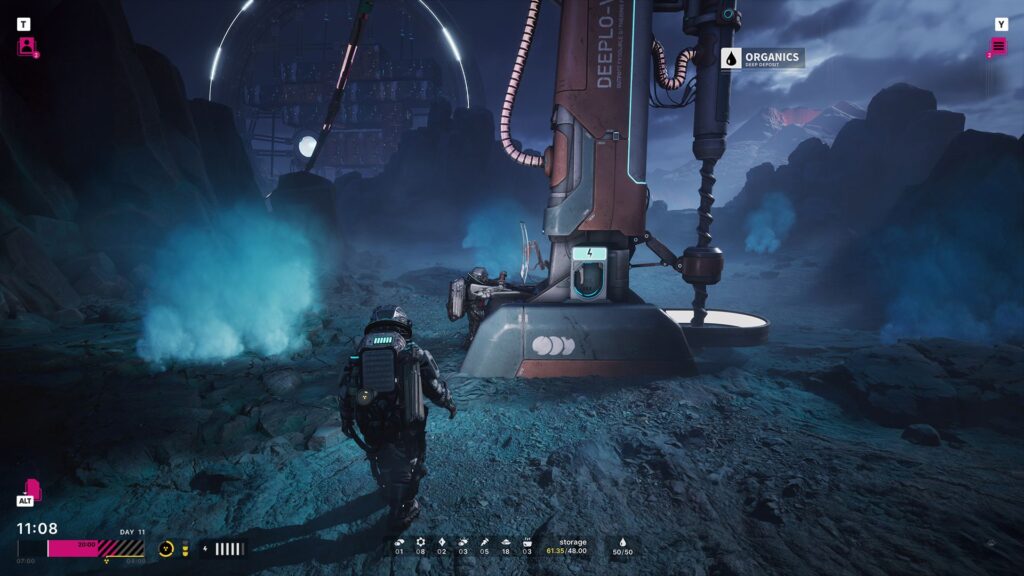
One of the key structures Jan can build is a mining outpost meant to continuously harvest metals, or minerals, or organics, or other substances from the planet. The process to initiate this requires sensors placed on the ground to detect the most optimal vein to drain from. Once that is completed, Jan must connect pylons from that mining structure to the base of operations. All these pylons operate in a network, meaning that a clever player using height, sight lines, and the generous distance to create a colony of resource farms.
Better yet, the player has the ability to fast travel from the ship to various mining outposts. And in the game’s opening hours, fast travel pylons can be placed anywhere as well. As fascinating as the deadly planet may be, The Alters doesn’t want players wasting time trekking back and forth through the same familiar territory. Most return journeys through paths are done in service of opening up new lanes of exploration or implementing new tools crafted.
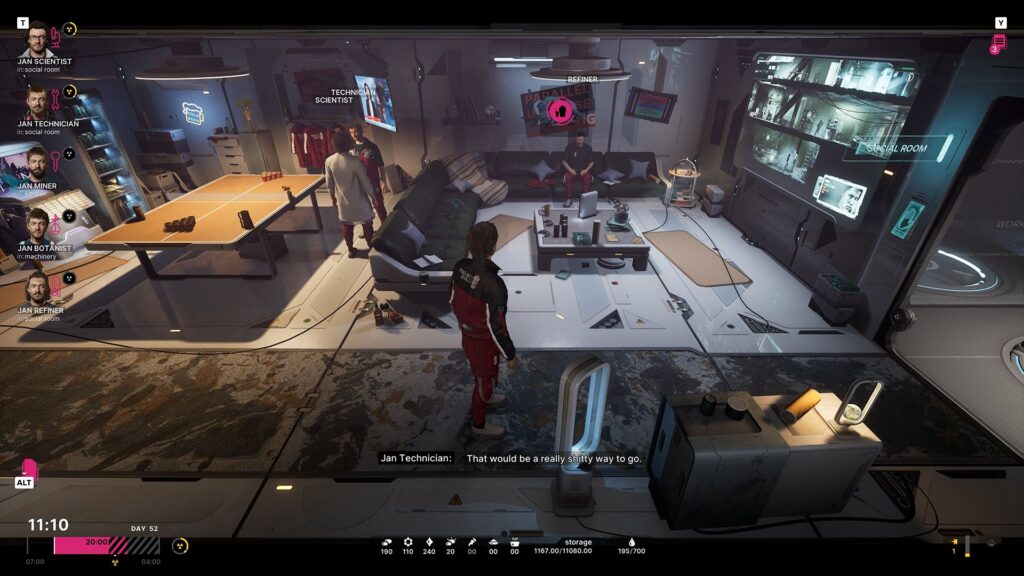
While I admit that The Alters‘ loop became a bit familiar and rote by the end–as is often the case with the genre–its strange but accommodating rhythm made it one of my favorites. 11 bit studios never over-complicates the process. A steady drip of new resources to understand make blueprints more complex to achieve but that is counterbalanced by new methods of harvesting and exploration. New mechanics are introduced to spice things up but also serve to grant players rewards that can be used for new research or to refine materials.
However, for a guy like Jan, it’s simply too much. The handful of introductory days in The Alters is meant to make the player fear the impending sunrise, rushing around close to the base picking up ore and holding down “X” at deposits to harvest them dry at the cost of a few hours. But the moment Jan attempts to leave for safety, the base suffers a mechanical failure. One he simply cannot fix.
His direct connection to home, a faceless but not nameless member of the Ally Corporation–the ones responsible for Project Dolly–suggests the unthinkable. Jan can use Rapidium to potentially clone himself. The Rapidium can accelerate the growth of this clone into a full adult in hours, gestating them in a facility known as The Womb. But that wouldn’t be enough. A clone of Jan would be a blank slate, right? At best it would be another Jan that couldn’t repair the base but could help with some dishes and cooking.
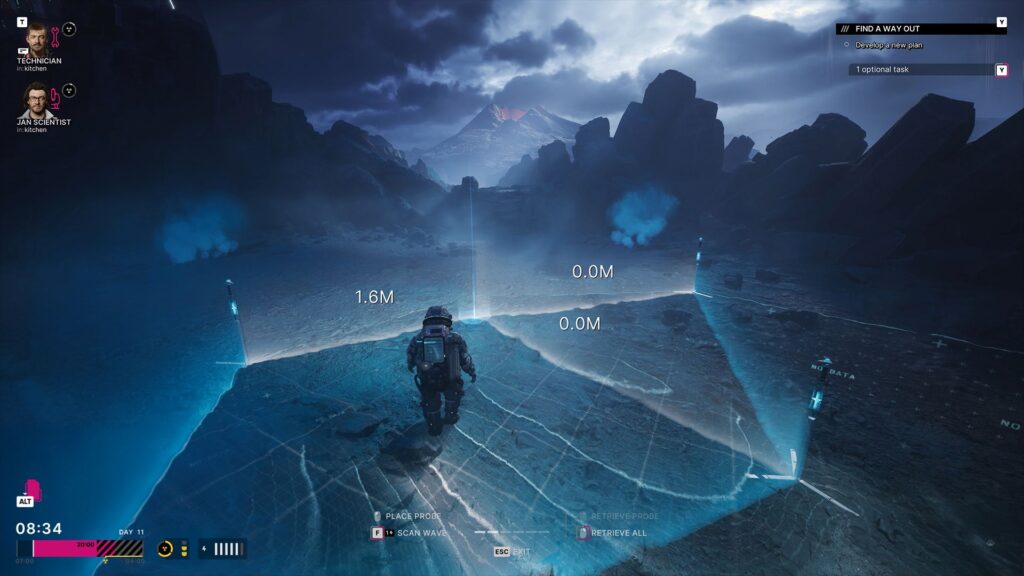
Onboard the base is a Quantum Computer that has mapped out the most significant moments in Jan’s 30ish years of existence. His alcoholic father. His departure from a broken home for college. His mother’s death. Meeting a woman. Losing The Woman. Getting a job with Ally Corp. Being inextricably pulled towards Project Dolly. With the assistance of the Quantum Computer, Jan can infuse this clone of himself with a new path, one forged from a version of himself that made different choices.
In a matter of hours for Jan and a matter of minutes for the player, “Jan Technician” wakes from his slumber, groggy and mildly confused.
The Alters spends a necessary amount of time allowing the player and the two Jans to work out the logistics. While it is a crafting survival game, The Alters features a broad, choice-driven narrative that finds a way to constantly be at the forefront. As Jan, the player can usually respond to most characters in a few ways. And while the the result can feel mostly similar, it belies the preponderance of choice later in the game, especially to a significant degree. In fact, subsequent playthroughs or even new saves will mark any dialog option that has already been chosen, allowing the player the chance to explore all outcomes.
Jan and his Technician counterpart are cut from the same cloth but the end results are completely different. The Technician version of Jan stuck around his home instead of leaving for college, ultimately ousting his alcoholic father and being able to enjoy a calm, happier life with his mother, though struggling to make ends meet. As such, the Technician is less pliable, a bit more irritable and independent. But he’s also capable of fixing the ship.
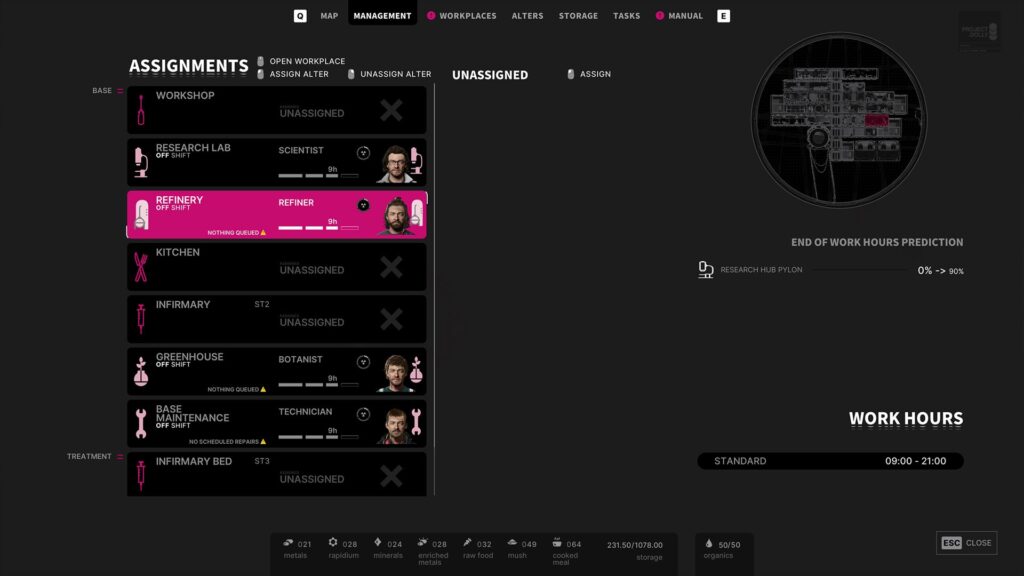
The interplay between Jan and his alters is the true resource management of The Alters. Over the course of the game, players will unlock a growing roster of Jans capable of helping out around the base. The player can send a Jan to mine at an outpost while Jan Prime makes meals as another Jan crafts resources and four other Jans take care of numerous daily tasks. As mere “units” at the player’s disposal, it’s important to play to the Jans’ individual strengths, as they cannot explore the planet at will, merely stand at a mining facility and extract resources. If the ship needs repairs, “Jan Technician” can fix them in half the time. “Jan Miner” can mine faster. “Jan Scientist” is the only one capable of performing research, and so on.
Because The Alters has an incredibly easy-to-understand UI, acts like crafting and assigning alters is intuitive and quick. While doing these actions in-menu might not seem thrilling, it cuts unnecessary fat from the experience and allows the player to make quick decisions on the fly. Should an alter complete a task, they will ask if they should take over something else, prompting the player to press a quick button to confirm without going back into the menu.
And, obviously, more alters means more requirements are put on the player for survival. Eventually a second dorm will need to be formed to house all the Jans. More organics are needed to make food for them all. But as the roster grows, the player may feel that rise in tension but also the increase in effectiveness, having that fun meta-game of making sure the right Jan is performing the right task optimally.
But The Alters is also a game about narrative resource management. This collective of the same man has individual wants and needs, spurned from their past. Performed incredibly by Alex Jordan, all the variations of Jans touched my heart in some way. Jordan voices each Jan with a different dialect, some subtle, others a bit (intentionally) heavy-handed. I think most of us would wonder how a person would take on a different accent, despite only a few life circumstances changing, but it works in The Alters. It infuses the Jans with individualism and makes them unique from the whole, despite their identical nature.
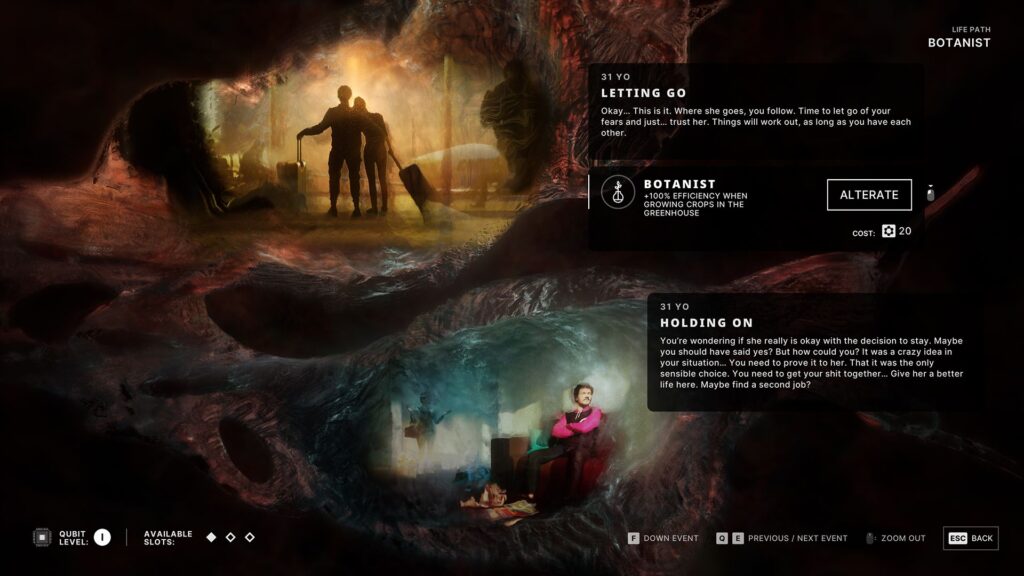
“Jan Technician” is given primary focus to allow the player to familiarize themselves with the eventual deluge of personalities. A certain response can upset or endear a Jan to Jan Prime, emphasized by shimmering green or red text bubbles saying “less gloomy” or “more rebellious” or something else to indicate what’s going on in their head. The alters will fight amongst themselves about how something about life at the base and a potential needed change, allowing Jan Prime to pick sides or just not get involved. A section of the menu allows the player to dive deeper into a specific Jan, pointing out things that upset or pleased them on that day.
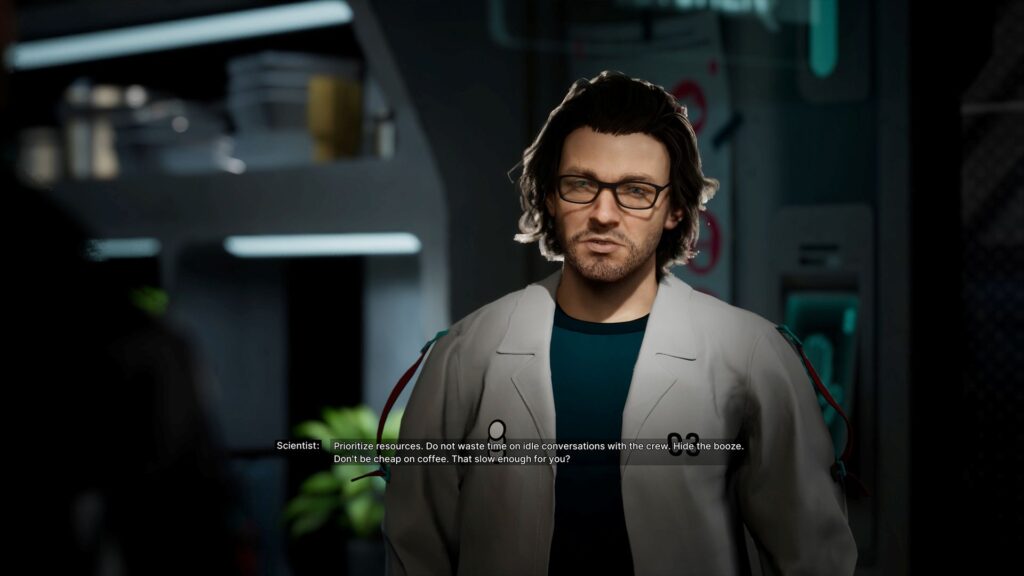
But each alter feels unique, well written. 11 bit studios write these personalities to have a core truth: that they are the same man and at some point, that shared experience was forever changed. A few of the Jans are nearly identical outside the last few years of their life, having fallen in love or met the same woman, many hold memories of a terrible father. But all share the same fate. Somehow their lives brought them to Project Dolly. And the player must spend important time managing the expectations and needs of each member of Team Jan. Inevitably, personalities will clash. Jans can die or start rebellions. If they get injured they can’t work. If they are displeased they work fewer hours. Jan Prime and the player can enforce cheat days where the alters don’t work or days where everyone works 12 hours.
Outside of the mechanical implications for the survival of the group, The Alters crafts an incredibly personal experience on identity and the existential quality of existence. At what point are we ourselves? What makes us who we are? 11 bit studios explores this heady topic with grace and intrigue.
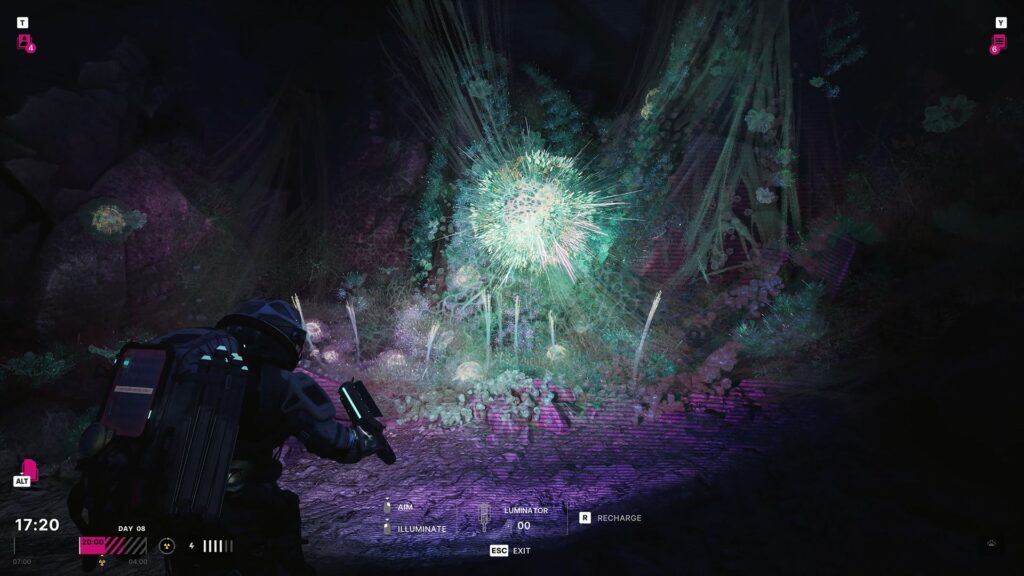
After all, this is a game rooted in science fiction. As the days progress and quests are completed, the mystery of the planet begins to crack open as does the touching nature of Jans. A particularly gut-wrenching segment early in the game involves the Miner, who lost his arm in an accident and turned to alcohol like his father. But because he was created from scratch, this “Jan Miner” retains all his memories but has a new arm, one that begins to drive him insane with a phantom pain. The player and Jan Prime can sympathize and indulge him with medication or attempt to be stern. But it’s Alex Jordan’s voice acting and the writing that sells the pain of this unique scenario. Jan Prime can only understand the Miner’s pain so much and sometimes a shared experience doesn’t overshadow the demons inside of others. And the aftermath of this instantly places new stakes on the potential of not only the alternate Jans but test the player’s compassion and inner turmoil.
Often I felt absolutely touched by engaging with the Jans, all who have a primary drive and narrative thrust. Actually truly bonding with these alters not only feels captivating but emotional. And when questions of identity clash with time travel, alternate dimensions, and hidden truths, The Alters begins to revel is the complex spiderweb it has created.
11 bit studios have published one of the most thought-provoking games I’ve played in years. Multiple times since I played it almost a year ago, Indika has remained at the top of my list of recommended games. Similarly, The Invincible explored desperation on a dangerous world and surviving against desperate odds. I mention these two tiles because 11 bit studios seems to have an understanding and appreciation for complex narratives steeped in a seemingly simple premise. And The Alters is no different. But I also think that its surreal narrative doesn’t entirely eclipse its satisfying survival mechanics, meaning both halves create a complimentary whole.
And throughout my time with The Alters I was reminded at the quality of its production. Packed with short films, constantly moody soundscapes, and truly impressive visuals, it’s all the more surprising that the game doesn’t show its cards fully as an “indie” game. Of course, that quality over time has itself been altered but 11 bit studios’ work in this space has been a boon to numerous developers and I cannot wait to see what comes next from this brilliant, creative team.
The Alters is an isolationist and existential meditation on survival, using compelling mechanics to strip itself of the genre’s most frustrating chokepoints of tedium. But when The Alters becomes less about gathering materials and more about managing yourself, it molds the struggle of one’s self into an often bleak but obtusely hopeful exercise on living with yourself and the choices that have shaped you. The universe may often be in control of our destinies but 11 bit studios provides a fleeting glimpse into a core question of humanity and what it means to be you.