


Sonic Racing: CrossWorlds does what any arcade racer should do: provide the player with an absurd sense of speed on smartly designed courses. A clever world-shifting thrill and tight controls trump any shortcomings in this surprising genre heavy-hitter.
The gulf of time between me playing kart racers has been gargantuan.
In 2006, Mario Kart: Double Dash would have been in heavy rotation in my college hall. The fervent madness of Baby Park as six or seven of us would constantly swap out controllers, hooting and hollering at sour defeat and ruthless victory. Fast-forward to 2019 and Crash Team Racing Nitro-Fueled. I’d never played the original and likely spent a hearty week with the remaster reviewing it and having a good time at the fresh coat of paint on a classic.
And now, we’re in the delicate year of 2025. Who would have thought Sonic Racing: CrossWorlds would be such an astounding game to return to the genre with?
Look, it’s not that I hate kart racers, quite the opposite. My attachment towards “driving” games goes relatively far back. Spy Hunter, that terrible Jeep level in The Adventures of Bayou Billy, Mario Kart on the SNES. I’ve also never leaned towards the racing sims like Gran Turismo or Forza.
But the world of zanier arcade racers has always appealed to me. Something about the ridiculous speeds and dalliance with non-Earth physics. I’ll never turn down the chance to play a Need for Speed or something like The Crew Motorfest, where racing for first place isn’t the sole activity. Sometimes it’s just entertaining to drive around in these worlds where developers carve out fascinating trails for the players to burn rubber.
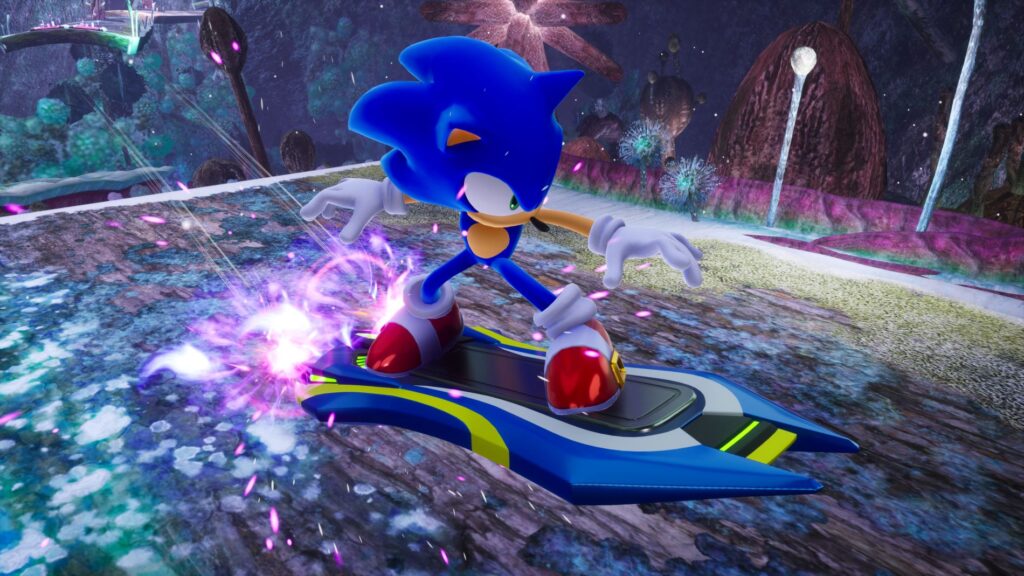
Sonic Racing: CrossWorlds immediately punches you in the throat with its unbridled speed, fitting for the blue hedgehog that has proven astoundingly resilient for decades. Regardless of genre–whether 2D platformer, a makeshift pinball, or freely roaming in an open world–I’ve always found Sonic to be so fast that he is unwieldy. My first Sonic game was Sonic The Hedgehog 3 and half the time I couldn’t keep up with where he or I were supposed to go. Sonic the Hedgehog Spinball was fairly tortuous as the Sega Genesis seemingly couldn’t keep up with the game’s intended speed and Sonic always felt… sludgy. And I’ll never forget that brief moment at Best Buy playing Sonic Adventure on a Dreamcast kiosk, falling in love with that new dimension of possibilities and how cool Sonic looked in his chunky polygons.
As noted, I’ve played a grand total of two kart racers in the last decade. Because of that, I’ve avoided the entirety of the Sonic Racing franchise and any game where Sonic was competing with other characters for first place. How does Sonic Racing: CrossWorlds fit among its other hedgehog peers? No clue.
And absent a point of comparison, it was truly difficult for me not to be transfixed by the blistering speed present in my first Grand Prix race of Sonic Racing: CrossWorlds. All the hallmarks were there. Drifting sharply around corners to build up a boost, shortcuts, cruel offensive items to knock you out of first, clashes with racers, and adrenaline-pumping victories.
More importantly, however, was the tangible feeling of incredible speed. Sonic Racing: CrossWorlds is fast, appropriately so given its namesake. Often it feels chaotic in the best way, feeling like an actual battle of opponents who originate from a character and a franchise based on speed. The way the racers and the world moves can feel almost dizzying but its not.
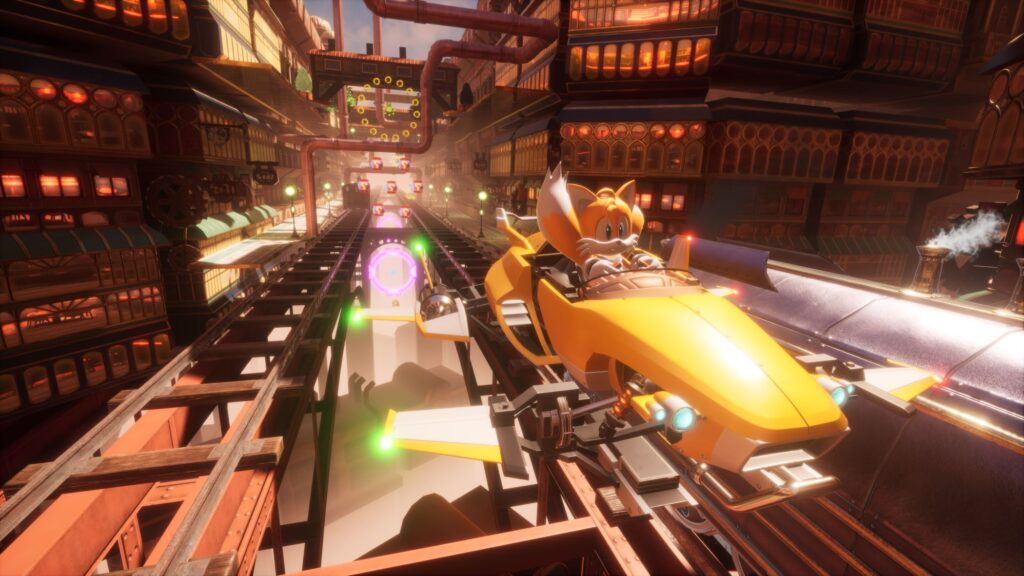
My obvious point of comparison is to Mario Kart. And while Nintendo’s behemoth has been going strong for decades at this point, it never felt this fast to me. Regardless, any player with any kind of familiarity should feel at home with Sonic Racing: CrossWorld.
Being mechanically simple is a crucial benefit towards a kart racer. Burdening the player with too many things to keep in mind would be detrimental towards what it should be focused on. In Sonic Racing: CrossWorld, maintaining constant speed and boosting is fundamental towards victory. Players primarily do this by mastering the handful of skills that constantly churn out further bursts of speed, maximizing acceleration and temporarily raising top speed.
The most hands-on approach to boosting is using the game’s generous system of drifting. In the most typical scenario, the player will press the shoulder button to initiate a drift, burning rubber around a curve to maintain better control and speed. In Sonic Racing: CrossWorlds, keeping that drift will charge up to three levels of a boost whereby releasing the button and stopping the drift will unleash a blast of speed. The trick is to recognize when to chain low-level drift boosts or to wrench control of a drift all the way up to the third level.
Ratcheting up to the third drift boost level requires a good amount of control in maintaining a kind of slide and not all tracks have curves optimized for this severe kind of turn. But continuing to drift through sharp turns and curves in the road is also a great way to continue to hold top speed and avoid crashing into walls. However, players who familiarize themselves with the mechanic should also be able to chain together a series of low-level drift boosts on a straightway given that it is wide enough to waggle back and forth between.
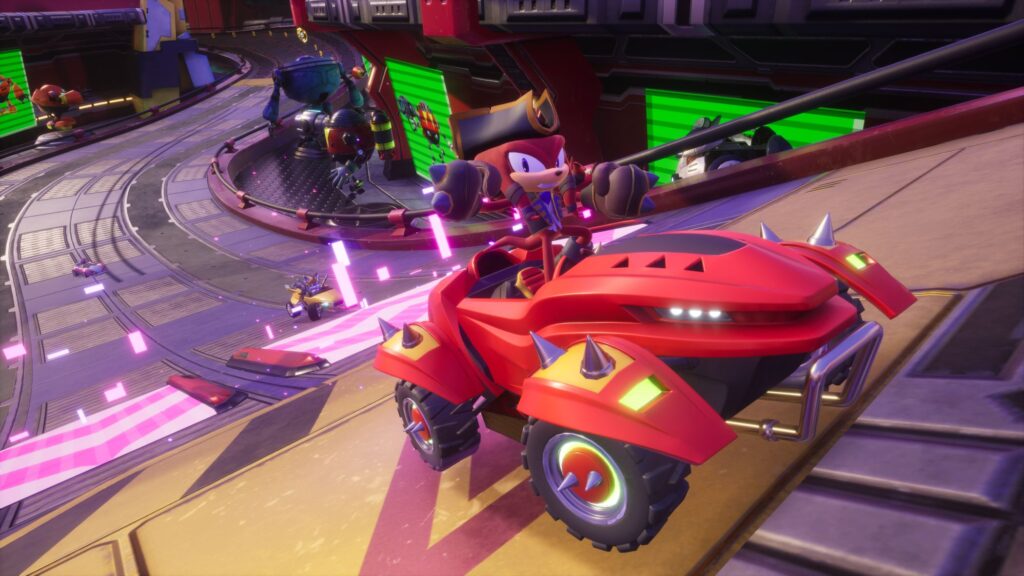
Tracks are also littered with all manner of boost rings and pads that racers can cross over or between, providing that crucial, place-saving potential for speed. Sonic Racing: CrossWorlds incorporates shifting vehicle modes throughout many of its tracks. At several junctures, racing goes from karts to flying vehicles to water-based craft. Often these shifts happen as a natural part of the track, other times they lead to shortcuts capable of shaving off a few extra seconds of time.
But another interesting twist to squeeze out just a bit more speed is in the tricks players can perform during races. It’s an extremely simple system but one that adds just a slight bit more complexity and flash to races. When on karts, pulling the left stick while in air can have the racer perform quick tricks. Once landing, there’s a quick shot of speed based on how many tricks were performed. When on a plane or in water, holding down the drift button will charge up a speed boost or jump.
Incorporating all these large and small methods of maintaining and increasing speed makes Sonic Racing: CrossWorlds a constant game of escalation. The amount of velocity and kinetic energy I felt on my first round of Grand Prix was intoxicating. After my three laps were done, I had to take a moment to gather myself, having not expected the sheer amount of speed. Is this what the Sonic Racing series has always been about? Ironically, when feeling this much speed in a traditional Sonic game, I always felt a bit disoriented. This was different. And I became captivated.
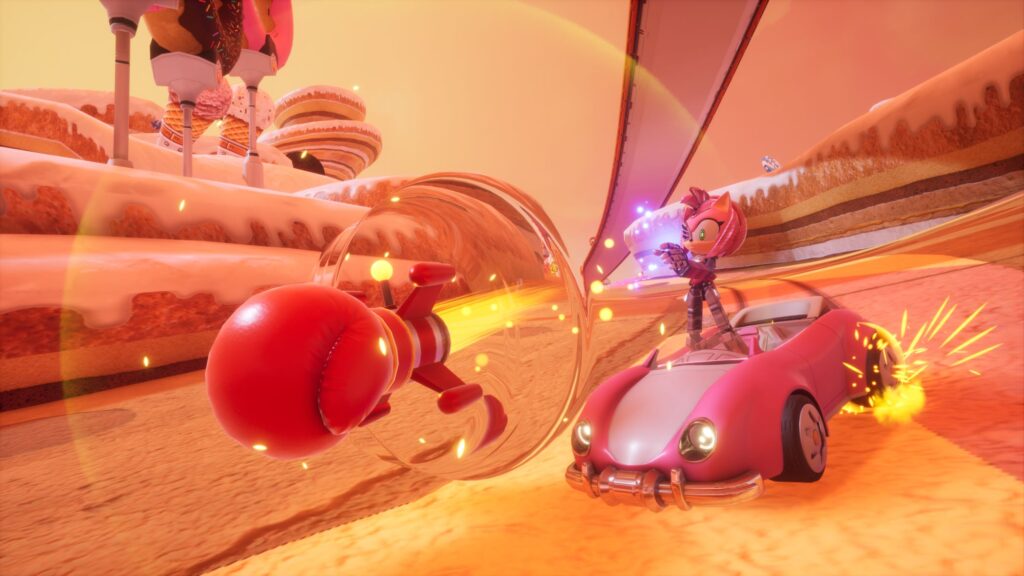
Sonic Racing: CrossWorlds feels astounding to control and play. There is a constant tension of trying to go as fast as possible while not losing top speed and having to crawl back an easily lost ranking. Collecting rings littered around the track not only provides a sense of guidance but a method of always keeping potential top speed as high as possible. While the items and weapons used to gain an upper-hand against other racers are effective, they are still standard fare by the genre’s standards. Single-use boosts do as expected, hazards can be dropped behind or ahead of the racer, homing items ruin your day, and crazier tools like turning the kart into a monster truck are meant to give lagging racers a temporary advantage.
Players contend with five stats when picking both a racer and their specific kart. Acceleration, top speed, power, handling, and boost. While I leaned heavily into handling and speed at first, it wasn’t long before I recognized the importance of having more power, as it meant my racer was less prone to getting knocked around during races and losing rings. But the boost stat should also be massively considered because of how often the player is expected to hit boosts.
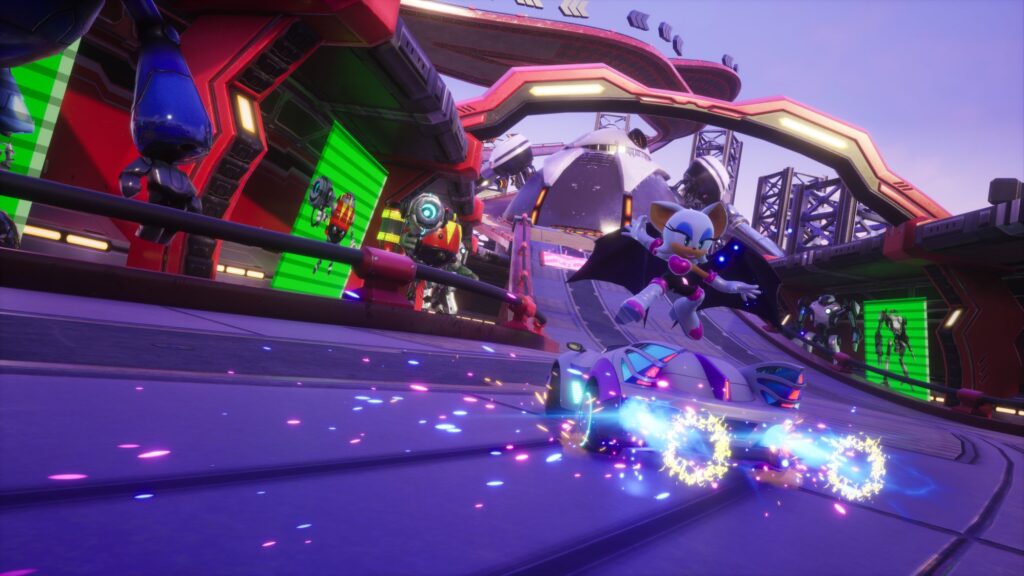
Parts can be swapped out for each vehicle that emphasizes one of those key areas, making customization important but not overly vital. But it’s possible to pick Knuckles for his power and have him on a lithe hoverboard. There’s not really a kind of jack-of-all-trades scenario, as players should really look into focusing their racer in the categories they feel most comfortable with.
Further tweaking comes in the form of the Gadgets system. Here, players are able to fit modifiers onto their racer between rounds to have potential loadouts based on what they feel will help them place better. There are up to six Gadget slots that players can fit onto a plate, with minor ones taking up one slot and major ones taking up two slots. I relied heavily on a Gadget that allowed me to achieve the first level of drift boost almost immediately, rather than having to wait a handful of crucial seconds. Another gave me the ability to hold three items instead of two. Smaller Gadgets can increase the frequency of specific types of items and their type.
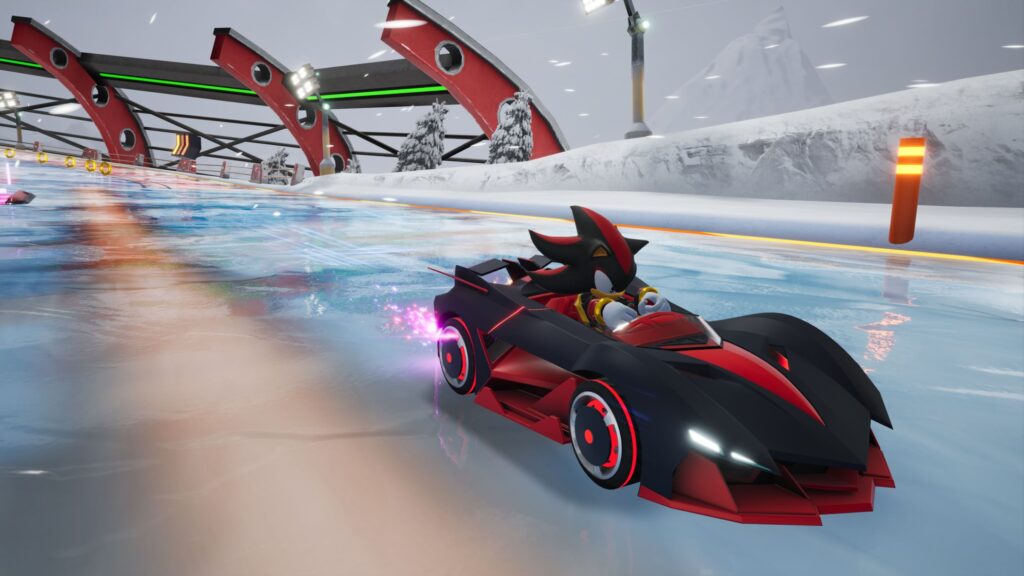
Something like the Gadget system in Sonic Racing: CrossWorlds doesn’t negate pure skill but there are some online modes where players who have spent more time in the game could be considered to have an advantage. Packed with challenges, the game does reward players for their investment of time. Tickets are granted that can unlock cosmetic items and eventually the Gadget plate will be leveled up to unlock all slots. In the online mode Race Park, players compete against each other in races where special rules apply such as grabbing the most rings, bashing into other racers, and landing more boosts. Having a high-level racer could be considered an advantage but I don’t think anyone but the most hardcore will mind.
Speaking of modes, Sonic Racing: CrossWorlds is primarily centered around its Grand Prix and the ability to play with and compete against other players online. Grand Prix is a relatively robust mode featuring a generous amount of cups, all with numerous speed ratings to beat. But there’s no “story” mode, no open world to drive around in. This is purely a competitive racing game and players wishing for more might be disappointed.
And while the Sonic franchise’s cast of characters has grown over the decades, the roster of racers includes a few lower-tier faces that I barely recognized outside of looking like they exist somewhere in the Sonic universe. Where’s the more obscure people? The human characters from the 2006 Sonic The Hedgehog? Knowing that in the future, we will see racers from other properties and Sega games makes me wish there were a handful of weirder ones available at launch.
What does spice up the roster are the rivalries players can engage with during the Grand Prix. Any racer a player picks will be assigned a rival for that run, another racer that will taunt and hound the player throughout the four rounds. It’s fun and quirky but mechanically it provides the player with a true challenger who doggedly keeps the pace to an almost superhuman degree. And players are also able to choose a different rival who may be even hard than the one initially assigned, promising a reward of more tickets.
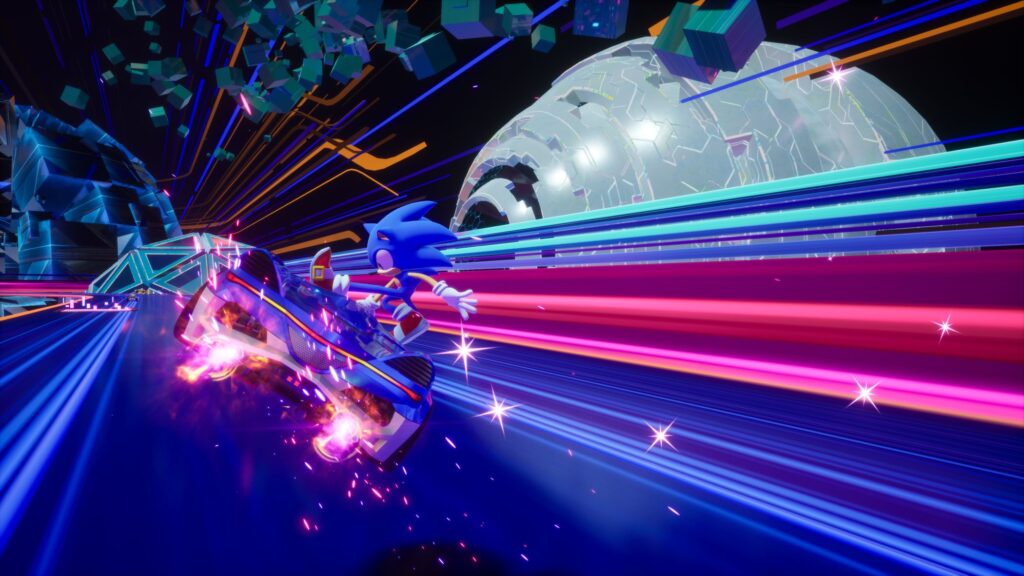
But outside of its sheer speed and the blistering pace Sonic Racing: CrossWorlds sets, its tracks are yet another feather in the cap of this thrilling kart racer. Players are given a total of 24 tracks to race through and so many of them are colorful, bonkers standouts. A shopping mall, a battleship harbor, a water park… Many are themed from other Sonic games and they are all packed with color and personality.
In addition to these 24 tracks are 15 bonus ones that arrive as the second lap during competition. As part of the “CrossWorlds” nature of the game, the racer who heads into the lead at the end of the first lap will have the option to choose a new world that the group will warp into for the entirety of the second lap. This is done via a cool portal visual that leads to a relatively impressive shift, reminiscent of Ratchet & Clank: Rift Apart.
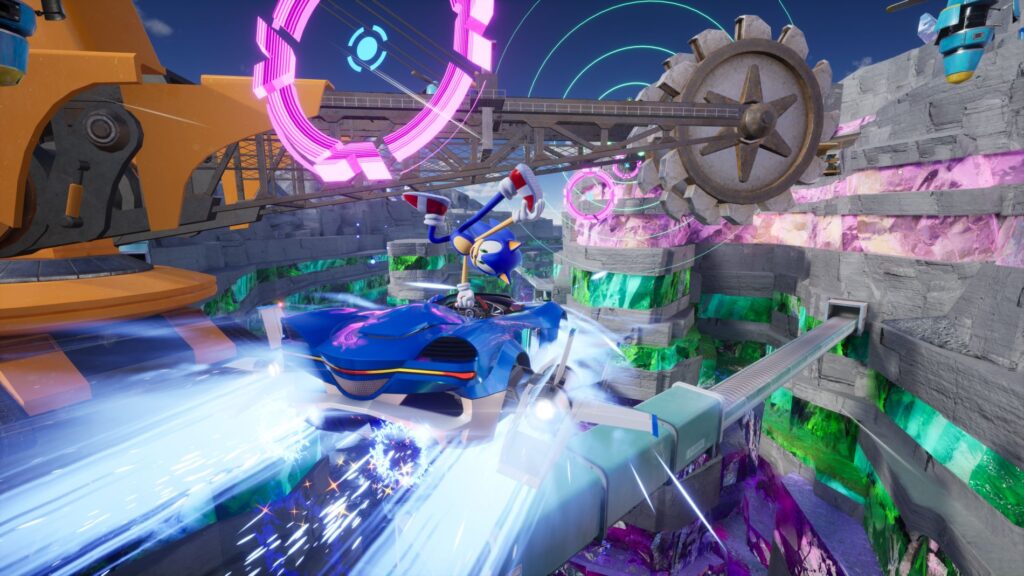
While it’s easy to dismiss the interchangeable laps and worlds as a kind of gimmick, I think that’s the cynical take. There’s always a bit of randomness to that second lap during the Grand Prix that players won’t necessarily see coming, even if they are familiar with the track itself. And that zany approach of chaotic speed and unpredictability permeates through Sonic Racing: CrossWorlds, making it unique in the genre.
Sonic Racing: CrossWorlds does what any arcade racer should and provides the player with an absurd sense of speed. Pushing players to constantly maintain ludicrious velocity on a number of exciting, smartly designed courses will fuel countless hours of competitive adrenaline-fueled play. While the lack of single-player modes and an exciting roster may deter some, tight controls and a fun world-shifting mechanic are enough to make this a heavy-hitter in the genre.