


Once players round the hurdle of its initial difficulty spikes, Nioh 3 becomes a festival of player choice in its deluge of loot-based combat. A focus on open zones and a second combat style give the formula renewed energy to carry players into the rich endgame.
After my time with Nioh 3, I’m fully convinced Team Ninja has crafted the best translation of FromSoftware’s beloved formula. And in an onslaught of games vying for their own slice of the genre’s crown, that’s certainly saying something.
Since the original Nioh‘s release in 2017, there’s always been a kind of special sauce that has kept it above the pack of lesser imitators or those dancing in close proximity to the Soulslike tone. The Surge made it science fiction and Remnant swapped swords for guns. Lies of P brought us Pinocchio and Jedi: Fallen Order used Star Wars as a framework. Hollow Knight and Blasphemous taught us it even worked in 2D.
Nioh had loot. A lot of it.
To this day, the best way to describe Nioh is Dark Souls via Diablo. Combat is blisteringly punishing as bosses will eviscerate you in a few hits and a basic enemy will capitalize on mistakes. And as that bitter air hisses through your clenched teeth, you press on. You die and hopefully make it back to your grave to recollect the precious currency meant to level up, to push against that harsh lesson of a wall.
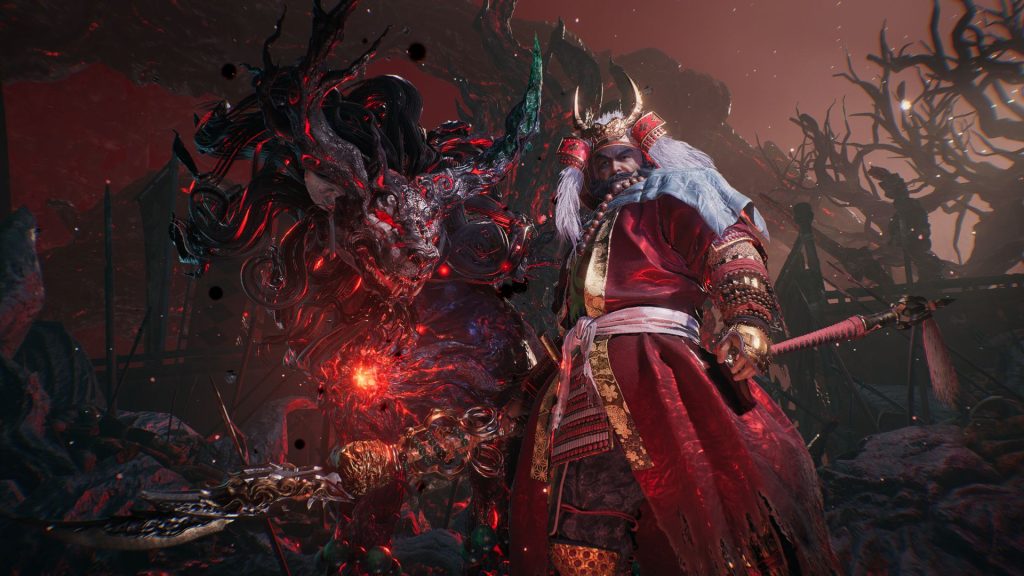
Equipment and inventory aren’t strangers in these kinds of games. Under the weight of a bastard sword the bones of a dexterity build might crumble but your friend who dumped all their points in strength will love it. Enchanted wands that hurl ice magic or summon spectral mist are just as deadly as a blunt or sharp object in the right hands. But traditionally, the types of weapons and armor that players can equip are finite and spread across specific points in the story on on the map. The ability to apply magic or stat-scaling features may exist but that loot pool has a definite cap.
Team Ninja decided that equipment would be a core pillar of the experience in Nioh, one of the numerous ways players can express themselves during combat. Weapons, armor, and accessories fly out of defeated enemies and lootable corpses. The player’s inventory exponentially grows over time with numerous pieces of gear that are not only cosmetically different but grant varying stat bonuses.
Should the player wish, Nioh becomes a game about identifying what feels best to the player and focusing all their efforts into making that playstyle as strong as possible.
Nioh 3 has expanded on the ideas put forth in the prior two games to push the formula to its conceivable edge. While Nioh 2 released in 2020, three years after the first game, Nioh 3 arrives six years later and it shows.
The biggest change? An emphasis on open areas. Yes, you read that right. One may cheekily point to the specter of Elden Ring‘s–and Breath of the Wild by proxy–influence as having a hand in Nioh 3‘s direction and that would be a relatively fair assessment. But unlike other Soulslike games, Nioh always had its eye more towards how the progenitor Demon’s Souls did things rather than Dark Souls.
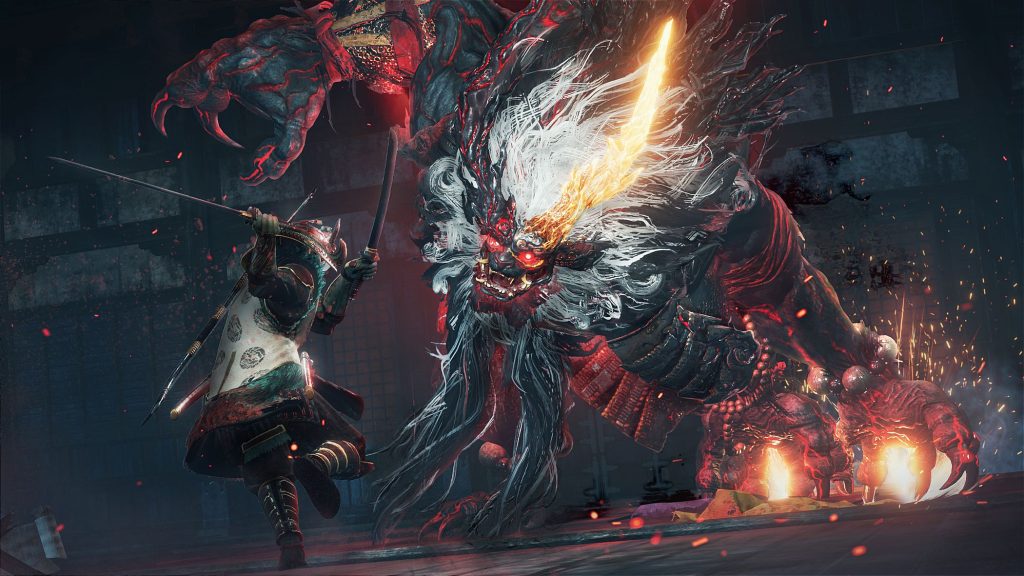
Rather than have an expansive, interconnected world chopped up into varying moods and biomes–bloody forests, poison hells, gothic castles, haunted mines–and stitched together by shortcuts, Nioh games featured large “levels” that would act as missions players would plop into. They weren’t tiny and they weren’t large. They would have shortcuts that would conveniently loop back to save shrines but usually culminate in one or two boss fights and be over. Players would then select a new mission from an overworld map and move on to the next challenge.
In Nioh 3, Team Ninja has created three massive areas meant to evoke a kind of freedom put place in Elden Ring but scaled down. While I doubt the real estate of all three would rival the Lands Between, each one is thematically unique, taking place in different eras of Japanese history. Each one of these maps houses zones that can be accessed from multiple paths and feature missions, secrets, and varying levels of recommended difficulty. While the player is initially restricted in the opening hours of the game, the reigns are soon loosed and they can take on any challenge deemed fit.
Akin to Elden Ring, Nioh 3 has obvious ways to nudge the player in a direction. Some enemies are simply too aggressive and hit too hard for the average player to take on without properly boosting their core stats. Absolutely there will be those expert psychopaths who beat Nioh 3 at level one because they parry and dodge with aplomb. But a lot of us are scrubs for the first few hours and I certainly was.
Nioh 2 turned me off with its brutal difficulty. Forgive me, it was 2020 and we all know how that year was. I hit a wall with that game and struggled to enjoy ripping my flesh off to ascend it. But going back now I would likely enjoy it a lot more. Even the original Nioh wiped the floor with me at its second boss, that crazy monster lady in the cave who dove around and inflicted paralysis. Playing that during the review period I felt super hopeless but luckily got linked up with another reviewer after summoning them, finally beating the boss after god knows how many tries and ultimately enjoying the final product immensely.
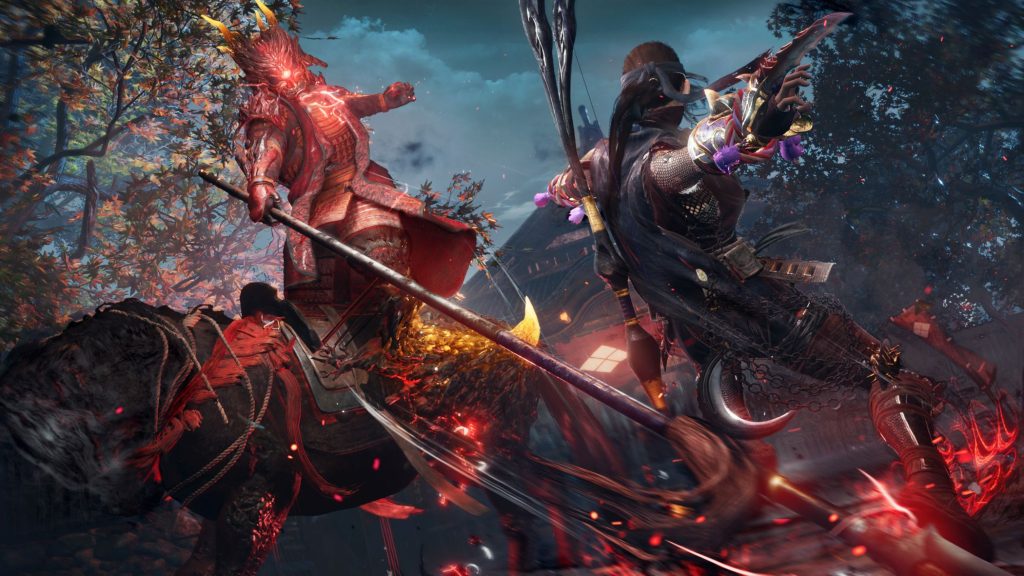
Similar agony and frustration threatened my time with Nioh 3. The first two progress-gating main bosses proved ruthless. The first was able to fell me in four hits and I stubbornly refused to use healing elixirs because Nioh 3 starts out by giving players a maximum stock of 3 that refreshes, anything above that amount is pulled from reserves. What? I’m going to burn through all my extra dozen heals this early and have to grind out more? Nah. Let’s not talk about how I ended the game with around 400 in my storehouse. The second boss was equally cruel, hitting just as hard with attacks that were difficult to read.
And then something insane happened.
I magically got into a rhythm and the rest of Nioh 3 became this unprecedented fight for my life but one that never became too hard. Bosses were difficult, tortuous almost. But none I died to more than ten times. A few I beat on the first try. Many fell to my tonfa and bombs by the skin of my teeth, having exhausted every spell and elixir I had. Those victories felt so intoxicating.
Was Nioh 3 easy? No way, right?
Team Ninja’s choice to make this game open area provides the player not only with the freedom of discovery but the freedom to grow. Scattered across these areas are the opportunities to avenues of improvement. Each section of a map has up to four levels of completion, each one rewarding a base stat boost to something like luck or strength. Chase down cat-like Scampuss, shoot mystical ferrets out of the sky, clear out enemy bases, defeat difficult masters. Each of these activities goes to reveal points of interest on the map and provide the player with fighting experience and, ultimately, amrita–the currency used to level up.
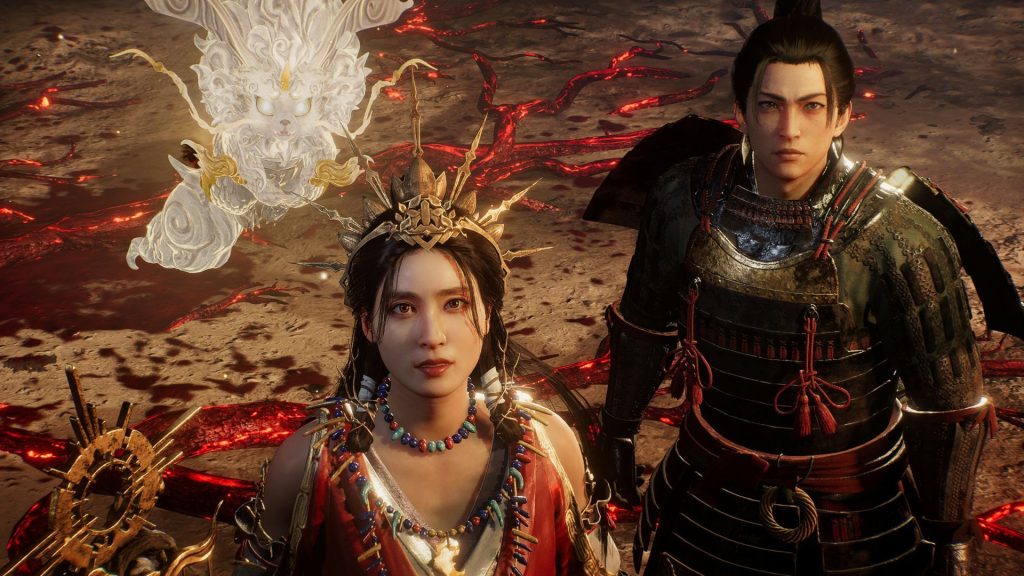
I spent the first few hours of Nioh 3 simply exploring what was available in the opening area, clearing out what I could before the game forced me to fight the boss and teasing me with inaccessible areas future powers would help me access. I attribute not getting absolutely dog-walked by the first boss to my thoroughness. And then when the rest of the first map opened up I felt empowered. Hell no, Team Ninja, I’m not about to beeline to the next part of the main story, I’m exploring!
And that’s what I did. I encountered a leviathan beast in the water who needed to be calmed. I tussled with a wind magic weasel that almost killed me instantly who I came back to five hours later and could finally hold my own to who then gave me the experience I needed to fight it again–this time as a progress blocking encounter–and beat it first try by a knife’s edge. I explored a massive underground mine that I felt wildly underleveled for and fought a boss I’m pretty sure was an ode to the mine boss that gave me so much trouble in the first Nioh.
The strict mission structure in Nioh and Nioh 2 were harsh. Players had to beat them before moving on to the next. Earning confidence through grinding levels had to be done in the same location or revisiting prior missions. With Nioh 3, the player can shift their focus around to different zones and find ways to embolden themselves both psychologically and in raw power. And that choice alone makes all the difference. The game can still be extremely challenging but the player doesn’t need to feel burdened with the fear that they have no off-ramp outside of getting good. Instead they can go fight somewhere else. Go to a part of the map that can reward a new skill or potentially drop an item that has that perfect synergy for your playstyle at the time.
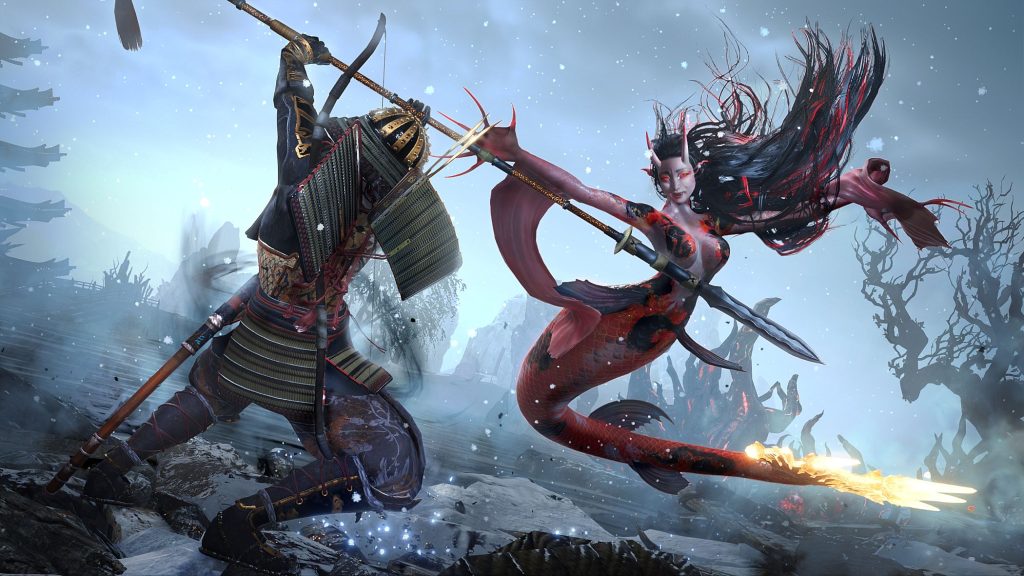
Incentivizing exploration is the perfect antidote for players who can become exhausted by difficult games like Nioh or other Soulslikes. Often challenges are overcome by taking the time to grind through more levels or simply fight a boss enough times you figure out the math of how to beat it. Feeling my nerves before the final boss of the first map, I decided to reach exploration level 2 on each zone. A feat that would reward me a base +5 in two stats. Why would I pass that up? Did it make a difference in ultimately beating that boss? Probably. But more importantly, it felt good to do and gave me the unspoken confidence that my character was absolutely stronger having interacted with the world, despite not comparing raw damage numbers to prove it was fact.
For all the emphasis I’ve placed on Nioh 3‘s open-concept world, it can still prove to have moments of frustration. Fall damage exists and there are times where I fell to my death thinking I could take a shortcut or two that was too high. There’s a decent amount of water in the game that will simply result in death and numerous traps Team Ninja places to catch the player off-guard and have them disappear into murky depths. Some paths could be less vague or signposted better, not with yellow paint, just not blended in so naturally with everything else.
One of the ways Nioh 2 lost me was in how Team Ninja incorporated the need to Burst Break glowing red attacks by enemies. As with many games, these are attacks that can’t be parried or blocked, and are often difficult to dodge and inflict massive damage when struck by them. If I’m not in the proper mindset or mood, I’m garbage at perfect timing, especially when the windows are precise. Sekiro was hell for me a lot of the time.
Nioh 3 brings back the ability to Burst Break but it is incorporated into another new element for this game. Players now have the ability to switch between Samurai and Ninja styles with the tap of the R2 button. And wow, what a literal game-changer.
The flashy, near-instantaneous way that player can swap styles but do so at the same time an enemy attacks feels phenomenal. It took me a few bosses before I fully wrapped my head around the timing of Burst Breaking through a Style Shift but it was as if I had performed some flawless counter in a fighting game. Now the boss had less maximum stamina to pelt me with attacks, becoming more desperate and performing subsequent Burst attacks to try and compensate. Better yet, it was the first boss that had kicked my ass in the beginning of the game, back for revenge. But this time, I had his number.
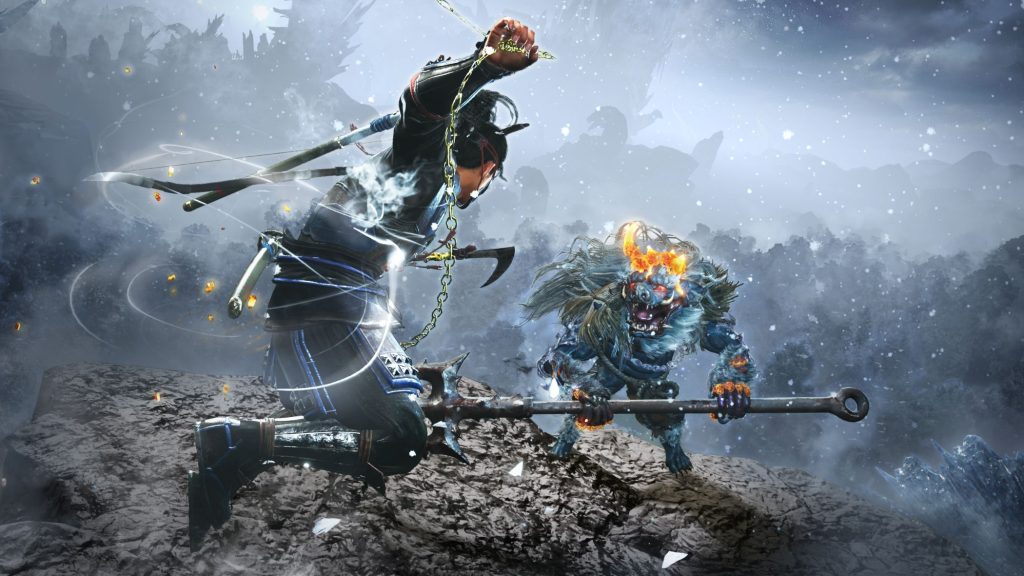
Personal victories aside, shifting from Samurai to Ninja enables players more control over their destiny in Nioh 3. As a Samurai, players control the game similarly as in other Nioh titles. Swapping between low, mid, and high stances, the player uses a suite of weapons to balance their flurry of attacks, each weapon type having different movesets based on what stance is being used. As a Samurai, players can take more damage and dole out more too.
Returning in Nioh 3 is also one of my favorite concepts of stamina management the genre has to offer. Here, stamina is referred to as “ki” and both the player and enemies have ki bars to mind. When using the Samurai style, attacking will deplete the player’s ki and the amount consumed will be represented by a red portion of the overall ki meter. After an attack is over, the red portion of ki will begin to grow yellow and if the player presses the R1 button, they will be able to perform a ki pulse, recovering some of that lost stamina.
Often, when fighting enemy yokai, they will emit a distorted black pool around their body. This “yokai realm” is the only way for non-human enemies to recover stamina and it also prohibits the player’s ki from recovering. However, performing a ki pulse dispels the yokai realm. While this is an added twist to stamina and can often be a lot to contend with in intense fights, mastering ki management is a crucial aspect of the Samurai style and can become a powerful tool in the game.
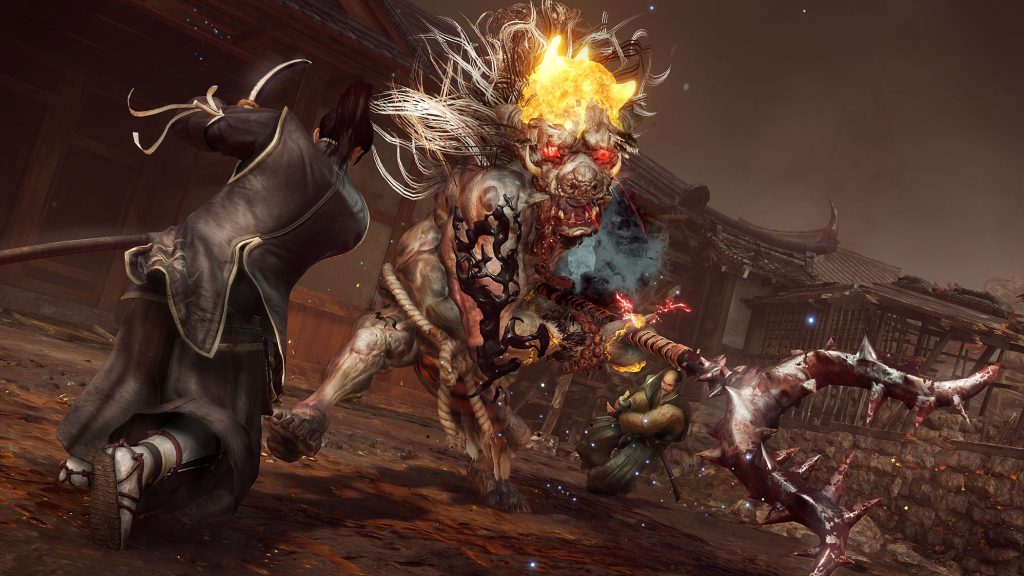
But for those players wishing to change it up, the Ninja style offers faster movement and relentless attacks. Players won’t be able to naturally perform a ki pulse and dispel the yokai realm but as a Ninja, the overall pool of ki is increased to compensate for weaker attacks and the need to dodge more often. After attacking, the Ninja can perform “Mist” dodging in a direction and leaving an afterimage that enemies will briefly be distracted by. Additionally, players can invest points to unlock Ninjutsu–tools like caltrops, shuriken, elemental attacks, and status ailment traps–that are limited use but can be recharged by performing attacks.
I played as a Ninja for most of my time inside of Nioh 3. After having played the first two, I wanted to change it up for myself. The amount of freedom I felt whipping around enemies and dodging them, hammering them with fast-moving attacks and then falling back to throw bombs at them, setting them on fire to take damage over time… it was fantastic.
Team Ninja’s decision to give players this option, along with these open areas, instills trust into the player that they will figure out what works best for them. Better yet, being able to switch between the two styles amplifies the series’ reliance on the constant flood of equipment that waits for them.
Let me go ahead and say that Nioh 3 hasn’t really rectified how to deal with the unruly amount of loot players will receive over time. It’s made worse by the fact that both Samurai and Ninja styles have their own weapon, armor, and accessory sets. There are ways to automatically sell and break down equipment based on parameters set by the player. But even trying to parse through everything can be quite difficult and many aren’t going to want to sit for minutes doing inventory management.
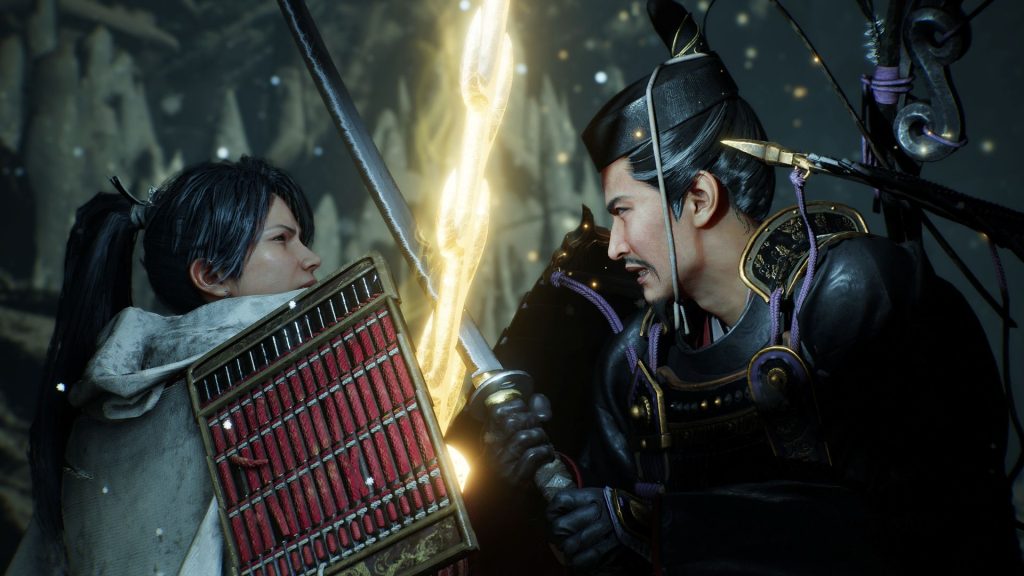
Yet there is a thrill when players get a weapon or armor drop that has a specific stat boost that is capable of amplifying a build. Much like in Diablo, there’s certainly no shortage of junk bonuses that won’t make sense for a playstyle. The granular nature of drops also provides aspirational goals for players. It’s easy to get lost in higher defense and attack values or things that reduce ki consumption. Gear also can be attuned to increase the damage of magic across the board or a specific type of Ninjutsu. Equipment sets increase in value and efficiency when more pieces of a set are equipped.
All this being said, Nioh 3 was surprisingly manageable for me without having to invest too much time in its loot system. For several hours I stuck with one weapon because it inflicted paralysis build-up on attack. And even when attempting to craft my own gear, I found it to be prohibitively expensive. Eventually players will reach a point where they wish to invest in crafting to attain specific bonuses on gear but that’s best saved for endgame.
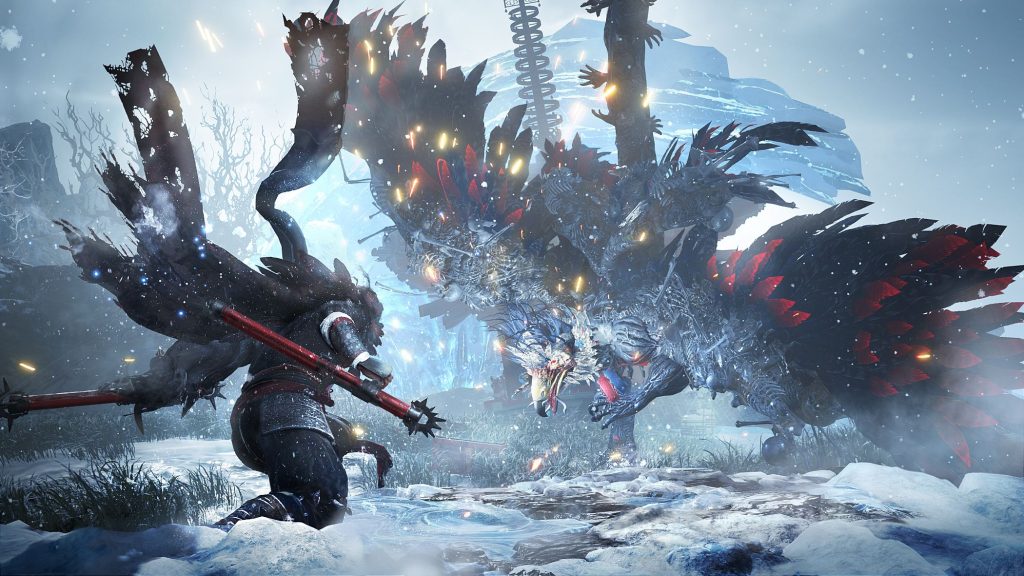
Part of this is due to the fact that Nioh 3 is constantly opening itself up over time. This game is packed with ways to adjust your character and make them stronger. Soul Cores of enemies can be equipped to boost base stats and summon that enemy briefly in battle, or slotted elsewhere to grant magic talismans or familiars. Skill points are unlocked that can be used to perform special attacks with one specific weapon. Players can upgrade just about everything to raise their strength and focus on core stats they wish to enhance to strengthen their build.
Even 40 hours into the game and reaching the third full map, new things were being rewarded to me. And much of it is in service to rolling credits and diving into New Game+ where harder missions are unlocked. A new rarity of gear is exclusive to NG+ and even enemy bases and difficult Crucible encounters must be unlocked by engaging with these harder missions.
As the third entry in the Nioh franchise, Nioh 3 very much feels like its predecessors. Team Ninja uses the clash of Japanese shogunate drama with yokai folklore, creating villains both real and otherworldly. Enemies and bosses are creepy, weird, and humorous. The world is beautiful even if the palettes used in the three main open areas are of a similar theme.
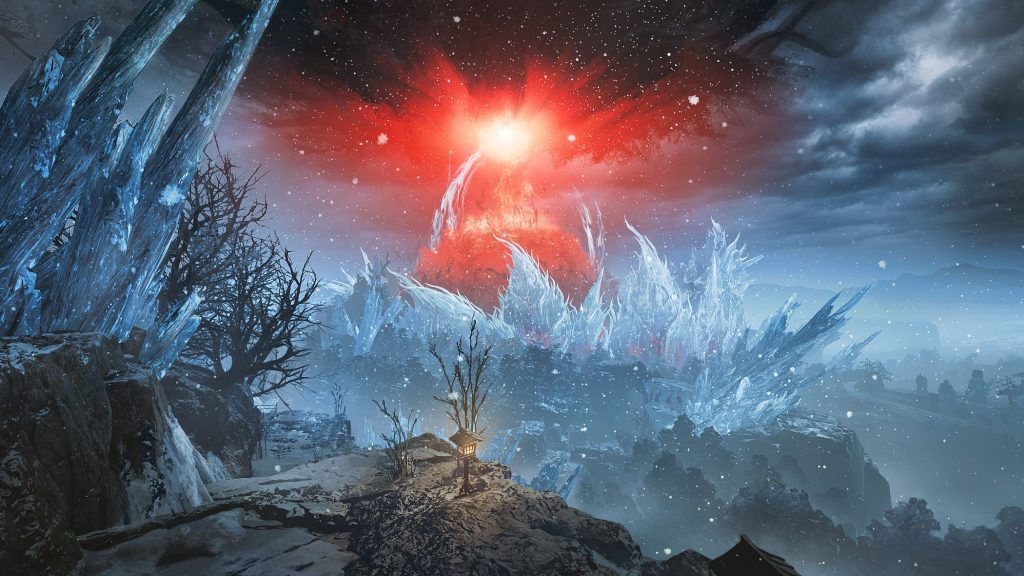
But it’s the important changes to the formula and the ways players can express their preferred combat skills that make Nioh 3 what it is. During a weekend with the game I spent two 10-hour sessions exploring, struggling, and fighting. I kept getting better. I kept being surprised at how well I had learned diverse bosses and how flexible the game would be if I decided to change up how I was playing. I could instantly and for free reset all my invested levels and points just to try something else. And that’s a wonderful feeling in a game meant to test your skills rather than your patience. While I’m not sure where the Nioh franchise could go from here outside of providing a truly massive, open world, this path feels the most in line with what Team Ninja has worked on this past decade, separating itself from the pack.
Nioh 3 is a testament to player expression. For the third entry of a series in an extremely busy, competitive genre, Team Ninja has always managed to set themselves apart with Nioh. By incorporating open areas to explore and gain confidence and experience in, players will be able to find a playstyle that works best for them. It won’t always be easy but Nioh 3 straddles that delicate line between expert challenge and thrilling victory, where your pulse is racing having exhausted all your options, finally pulling off a clutch encounter with a sliver of life to spare, breathing a sigh of satisfaction at your resounding success.