

This could be Bandai Namco’s own Witcher.
The Blood of Dawnwalker from developer Rebel Wolves is an open-world game that features a fair amount of meaningful story, lots of good side quests, and unique control schemes that, oddly enough, make sense. While the game is certainly going the Witcher route with glitches and early-release issues, it’s stable enough to deliver everything it said it would, and maybe a bit more.
Without further delay, let’s jump right into it.
Story
The story of The Blood of Dawnwalker is well written and well structured. It follows a villager named Coen, who, like many people in the 13th century, is fighting the Black Plague. As the plague claims more lives, it reaches Coen’s family, especially his younger sister. Needing to find help for his sister, and help that isn’t close to home, they both go on a journey, crossing questionably dangerous lands in hopes of a solution. Unfortunately, Coen and his sister end up in a terrible situation with bandits, made worse by vampires hunting them. As one would expect, the vampires take down the bandits and then turn their sights on Coen and his sister. Instead of killing them, they turn Coen and his sister, which cures her but leaves them both cursed with being creatures of the night.
Leaving the pair to suffer on their own, the vampires begin to stretch their reach toward the great goal of ruling over humans. The vampire group grows, and their way of life infects the land as a whole, while surviving humans struggle to maintain a balance between being hunted and protected. The vampires help to cure the black plague, but in return ask for the occasional villager sacrifice. But as society becomes unstable because of this relationship, the vampires finally get too close to Coen’s family and end up taking out the mom. That pushes the family into action and the land into chaos; the dad tries to take out the main vampires but ends up on the short end of the stick, as does Coen. After the encounter, Coen wakes to find his family gone and a good friend waiting for him, having saved him from death. From here, his quest to get back his family and take down the vampires begins.
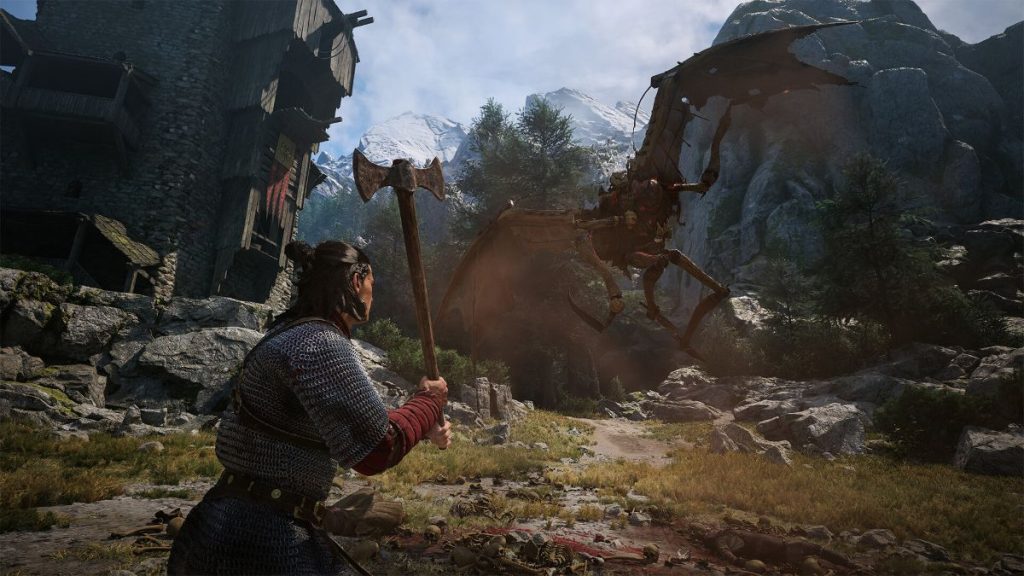
The story is straight out of a Bram Stoker fever dream. The world is set up well; the villains are well defined, meaning they are more than just bloodsuckers; they are bloodsuckers with well-thought-out intentions. The antagonist’s development makes sense within the world, and how they treat humans like cattle fits the framing and emphasizes the magnitude of their power over their victims. They’re neat villains, and every step they make is a logical, sensible direction for them to go, especially with the direction of the story.
As for the hero, Coen, I like how he’s flawed and unseasoned for a violent world. He starts innocent and naïve, but as the adventure continues and he has to deal with his half-vampire/half-human self, the story develops him the right way, as struggling to keep himself human feels real throughout the journey. It’s slow and steady, which will certainly make the player feel like they’re with Coen every step of the way. Players will feel his justification for doing what he needs to do to get his family back. They will also feel his pain and struggle as he fights the urge to go full-vampire on enemies and villagers alike. The story defines the hero well and makes sure he is flawed, yet heroic.
Ultimately, I like that Rebel Wolves gave everyone involved some dimension beyond just lazy tropes. I also really like the stakes and how the story treats them, driven by giving the player a finite number of days for Coen to rescue his family before it’s too late. Again, this is a well-written, well-executed story that isn’t one-dimensional in its intentions. It would have been easy for the devs to say, “Hey! Let’s get Coen going on a revenge tour!” or, “Just have the villains become monsters that are ravaging the land!”, but every aspect of the storytelling is far deeper and richer than just those easy outs. The game develops reasons for the vampires to keep humans alive, and it makes the humans’ justifications for sacrificing friends and family feel earned and understandable. Strong multi-act development and well-defined character arcs push that justification.
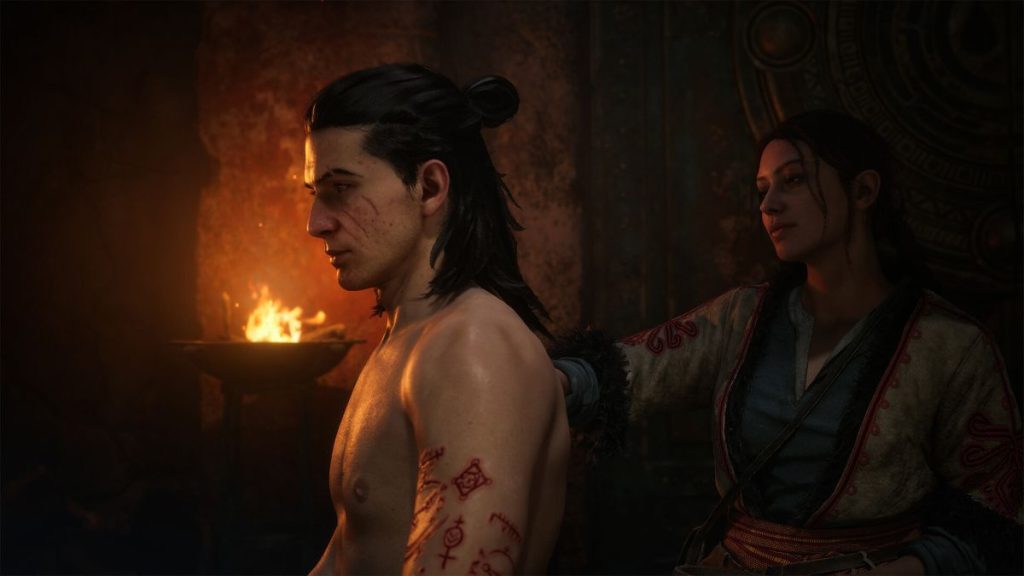
Beyond the overall story, the game also gives players agency with branching narrative options that affect the story and how it shifts. When players choose a conversational approach during gameplay, it can shift relationships, push the story in a different direction, and/or create future obstacles Coen can’t get past. It’s a well-implemented branching-narrative option that adds depth to an already entertaining story. It was more than I expected out of this game, but it fits right in with a satisfying narrative journey.
Gameplay
Right out of the gate, you should know that the game is still a bit shaky on performance. It’s nothing close to what players have encountered with games like The Witcher 3 or pick-a-Bethesda-open-world-game, but it does have its moments of weirdness. The last time out, after the pre-day-one update, there were glitchy lights and occasional texture-rendering issues. This morning, I downloaded the latest update, and it’s been stable, but I haven’t played long enough to confirm that. That said, even before this latest update, the game never crashed or did anything dramatic. Just wanted to mention that before we move on.
*Thrown out there*
Updates aside, the game is broken into several gameplay elements. The first and biggest reason people will get addicted is the open-world aspect. The world stretches everywhere and contains huge, multi-tier environments to explore. In the same vein as Skyrim, The Blood of Dawnwalker brings surprises, hidden gems, and plenty of good reason to constantly explore off the beaten path. I was skeptical about how Rebel Wolves would deliver on the promises of this large open-world adventure, but they’ve put that to rest, giving plenty of reasons to wander off and find cool stuff (and enemies) along the way. They did a great job of delivering a true open-world feel.
As for the other gameplay elements, the game’s world plays off two times: night and day. When it’s night, Coen turns into a vampire and his abilities change, as does his reaction to environments. He can suck the blood from good/bad people and grow vicious claws to knock his enemies around, or simply take down animals around his environment to feed his bloodlust. It’s interesting how the game shifts with his abilities and how much it opens up different possibilities for him to approach people or battles. In addition to the offensive side, he also gains the ability, though finite in time, to climb walls and shift planes. This lets the character explore areas unreachable during the day and find more goodies. In other words, it fits what the world is trying to perpetuate perfectly, though it can be a little finicky at times (very jittery in the wrong spots).
When the night turns back to day, Coen’s abilities become more limited. He’s no longer a bloodsucker; he has to rely more on strategy and sword. Pretty much all his vampire abilities cease to work, which means how Coen functions within the world completely changes. It’s tougher being human than it is being a vampire during gameplay, but it also leads Coen down a more righteous path than not.
The dynamic between night and day aspects of gameplay keeps the adventure fresh. Additionally, the huge, distinct skill trees make it a more unique and fun experience to try new approaches during fights or exploration. Whoever made that decision to create a huge skill tree and to separate the daytime/nighttime forms should get a raise because it adds so much fun and variety to the gameplay. Again, it makes Coen’s abilities seem larger than life. That’s important because you never want the player to hit a wall with upgrades. I know you’ll eventually hit that wall, since skill trees are finite in size, but the journey to get there is long. Anyway, it’s impressive and inventive, and it sets a new standard for character development and logical path choices while opening up strategic possibilities in gameplay.
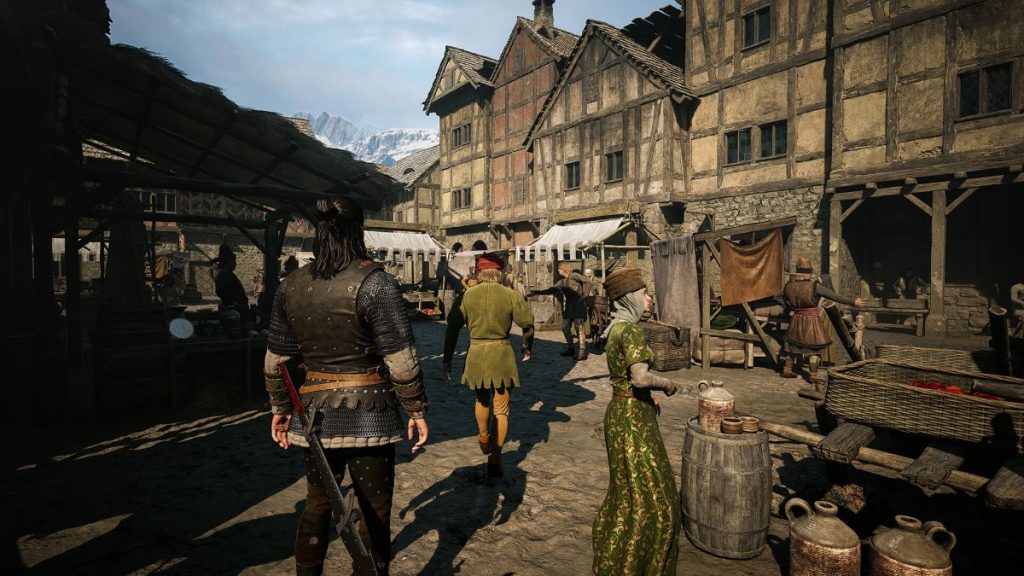
As for the action itself, the fighting portion of the game is divided into daytime weaponry and vampire skills or weaponry at night. Being a vampire, killing from afar, and creeping up on people is fun and addictive. While the consequence of doing so is always hanging overhead, getting things done, like taking down an enemy by sucking their body dry of blood, is a hoot. The game gives you a choice once a certain distance between the victim and Coen is reached (a sweet spot). When you use the move on animals, it’s non-player-controlled, so Coen just kills the thing and leaves the body (sorry, rabbits). When you use the same move on a guard, a villager, or something else, a meter appears that shows how far the bite will go to kill the victim. It’s a neat meter that is more like a quick-time event, meaning that if the player hits the button too soon or too late, they will miss the chance to take down their victims.
Another disruption to the biting process occurs if the player uses this move in a group. If it’s villagers, the rest will run for their lives and leave the victim to die. If it’s a group of soldiers, then the other soldiers will try to smack Coen off the neck of the victim. The differences between the situations bring about different types of player strategy, meaning how you approach a well-armed group of guards and whether biting them is worth it, especially if it’s going to be interrupted. Getting interrupted is frustrating, especially since there is little you can do to stop it. Logically, it makes sense that players can’t multitask during the moment, but it seems a fruitless venture at times, especially if Coen is low on energy, which is replenished through this attack. In short, the reaction from the differing groups of victims is neat, but it’s also almost worthless to try and perform this on well-armed individuals. I think a stronger stealth component would have been better, since armed folks react from varying distances (and not in your favor).
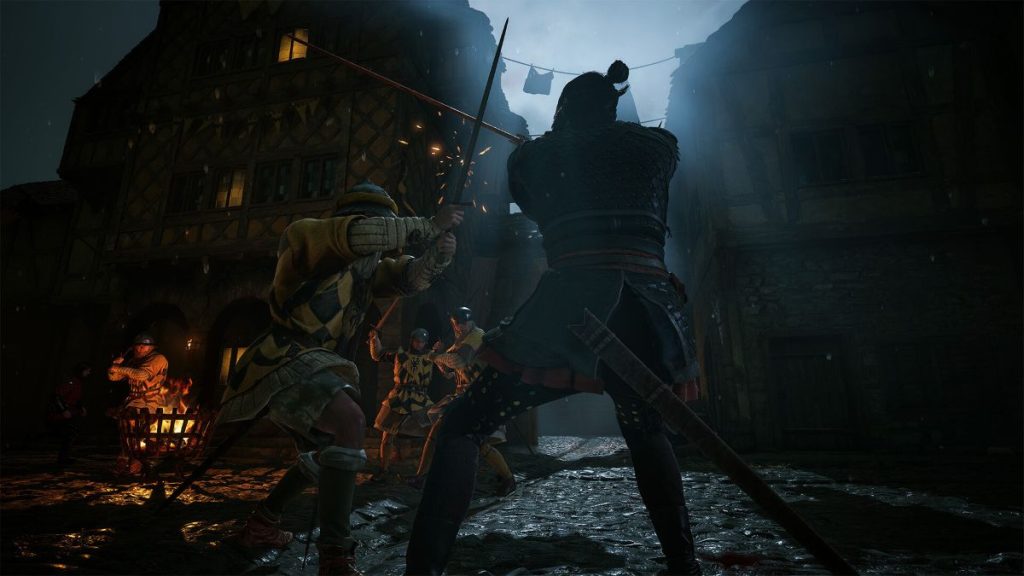
Now, having said that, please do understand that beyond the bite, the actual fighting against soldiers is a hoot, almost in comparison to that of Rocksteady’s combat in any of their Batman titles. Targeting and execution are easy and satisfying, which makes the action ten times more fun. It almost forgives the lack of consistent blood-sucking abilities. Almost. It’s not a perfect game in this manner, but it does a good job with controls and execution when it’s on a roll.
Good skills and fun controls are nice, but what does the player use them for? The game is divided into a main quest and a slew of side quests. When I say ‘slew’, I mean ‘SLEW’. There are a lot of side quests to find, and finding them plays right into the exploration portion of the game. It’s another reward for players who are nosy about the environment. Some of the side quests involve simple tasks like saving someone from imprisonment or taking out a group of belligerent soldiers. Others can include investigating campsites, following leads, and just happening upon random shit. There is a large variety of side quest types, which pair well with the main quest and just make the experience so much bigger. Again, it plays into exploration, and the number of side quests depends on how much time you spend exploring the land. It’s a good balance of risk and reward with time.
As for the main quest, it fits the story well and flows as it should. It’s certainly a shorter path than side quests, but it’s worth the journey, especially with how the story ultimately ends up. Taking side quests won’t hurt the main quest journey, as the game pretty much prevents Coen from losing time when he isn’t on the main quest. That extends gameplay and gives the player a fuller journey than a quick story.
Moving on, the only big blight that is probably more about me than the game is the inventory system. It has some really good aspects, but others can be overwhelming. The good aspects start with the variety of goodies that players can acquire during their adventure. This is Skyrim-level insanity, as Coen will find books, poems, letters, jewelry, food, food ingredients, charms, weapons, and armor (and weird shit that doesn’t belong anywhere). While there aren’t any cheese wheels to be had, the game allows the player to collect a shit ton of material with no consequence for weight. This means Coen could carry 20-40 books and still run a marathon through the woods. Nice, especially if a player is used to that Bethesda weight-pinch.
Focusing specifically on the wearables, each wearable comes with attributes and buffs. Some of these can be incredibly powerful and pro-Coen, while others balance out good buffs with bad (ex. – Coen could have a stronger attack, but weaker defense). The fact that Rebel Wolves dove deep into their D&D design and provided a large number of attributes and options with buffs for every piece of equipment acquired means that the mix-and-match strategy capabilities feel endless. Building Coen’s character in different ways gives the player the option to personalize Coen as they see fit. It’s the details that matter.
The only downer is that carrying so much equipment, even if you can sell it, is a chore. Going through a huge list of items Coen collects can read like an exciting grocery list (doesn’t exist). At times, the choices can be overwhelming and cognitively exhausting. I know that’s a bitchy complaint for a reviewer, but truly, it’s a lot. Of course, if this is the worst part, then sign me up every single time. I would rather have too many choices and items to juggle than not. It’s a minor complaint in the scheme of things. And it’s a reason why Bethesda probably puts weight limits on its characters in The Elder Scrolls titles.
Wrapping this rambling up, let me end with this. The Blood of Dawnwalker is damn good. I was honestly skeptical that Bandai Namco could publish a game like this or push a journey of this magnitude, and a story this good, with a developer not named FromSoftware. Rebel Wolves did a phenomenal job capturing a broken world, delivering a fantastic and impactful narrative, and finding a wide variety of gameplay elements to keep the action interesting, even when it’s repetitive. It checks all the boxes of what makes a game great, and this is definitely a great gaming experience.
On that sweet note, let’s wrap this review up.
Conclusion
The Blood of Dawnwalker from developer Rebel Wolves is a great starting point for what could become a bigger series. It delivers a strong story, entertaining gameplay elements, and plenty of quests to keep the journey going.