

When you bring a game back and add the moniker of ‘remastered’ to its title, then it should probably go beyond just graphics. It should always go beyond the visuals. Better controls, more detailed environments, maybe even some less linear movements, would help justify a remastered label. A lot of companies make this mistake and depend on improved visuals and momentary popularity to drive the bus.
I bring this up because publisher SEGA and developers SneakyBox and Relic Entertainment have unearthed a good game from 2011, remastered its visuals, retained its core, and packed it with all the content that was originally included with the game. This includes DLC and special items, which are everything included with the Anniversary Edition of the game.
Before we dig into this, let me preface by saying that I never played the original game when it came out. Maybe I should have when it hit the PlayStation 3, but I completely missed it. Anyway, as you read through this review, please do keep that in mind because the points that I make are with fresh eyes and an outside perspective. I went into this game with no expectations and came out of it with plenty.
So, lock and load that chainsaw sword, get your massively armored butt going with some stretches, and let’s review what Warhammer 40,000: Space Marine – Master Crafted Edition has to offer.
Quick recap
The story with Warhammer 40,000: Space Marine – Master Crafted Edition revolves around a space marine named Captain Titus (played by Mark Strong). Titus must bring his violent soldier skills to the imperial planet of Graia and fight back the evil Orks that look to conquer it and take invaluable imperial weapons in hopes of shifting the never-ending war in their favor.
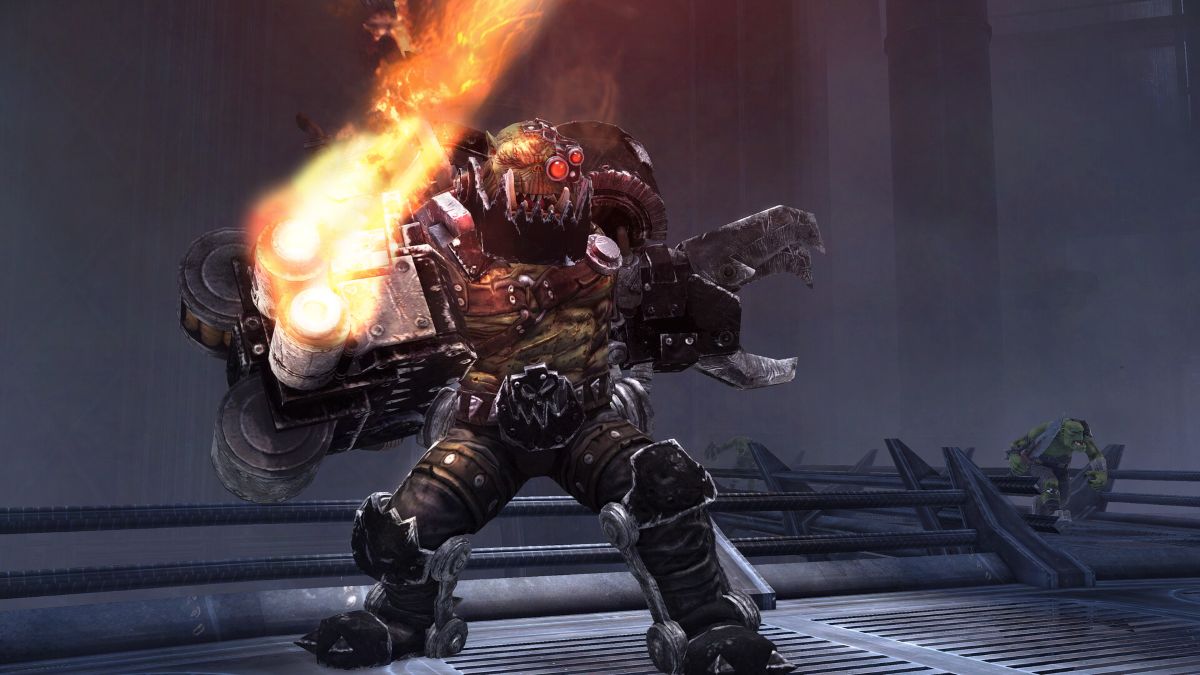
As stories go, this one is quick and dirty. Akin to what you would find in an ’80s action flick, with a shade darker sense of urgency, the story is simply about taking down an evil army while facing incredibly lopsided odds. It’s a violent narrative that just brings gross action and a fair amount of intensity from points A to Z. In other words, it’s perfect for a third-person action title that represents the source material beautifully.
Overall, you are given purpose through Titus, you’re given a direction toward the action, and you go in there guns blazing, which means the story does enough to justify itself. I like action stories because of this, where you don’t need much of a purpose to be a part of relentless chaos.
Gameplay
With this aspect of the game, I’m going to harken back to my previous comment about going into the experience with a fresh perspective. I didn’t have any idea what this game was about or when it was made. I knew that Warhammer had recently been kicked up a positive notch with releases in the last year, which meant there should be more Warhammer games, but I had no idea that this original THQ-published title ever existed. I jumped into it thinking that it was something new.
The first aspect of this game that tipped me off about it not being a more recent release was how it felt when I ran around the levels while taking out Orks. No joke, this felt exactly how an Xbox 360 game would be – linear, clunky, and new in how it handled chaotic third-person action. Back in the day, all of that was new, and it was basic in controls and design.
When you’re thrown into the game for the first time, after some good cutscene setup, which was well done, you land in pure adrenaline hell. Graia is under siege, you’re trying to push forward against what feels like a gazillion Orks, and essentially trying to get your bearings on what you should be doing and where you should be going. If the game was trying to emulate the utter chaos of war, then it started on the right foot to get that done.
From there, the game defines its linear path for you. It sets you on a journey that it wants to see you go down and requires you to move in one direction. Occasionally, you can move around to other empty places, but mostly the game is stuck on one singular path for you to take that is unchanging. Not at all unusual for a third-person game from the generation it was born within, and it works for a 2011 gaming capacity.
Now, is that a good thing? Yes and no. Yes, because it keeps the purity of that gaming generation intact without deviating from what made the game fun. For those who love this game, or games from this period of gaming, it will kick up some good muscle memories and nostalgia. If you appreciate how older games worked, then you’ll appreciate how this one was maintained and re-delivered. It feels like a 2011 game should feel.
The negative to this statement of nostalgia is that it feels like a 2011 game should feel, which is out of place for modern gaming expectations. Going down a linear path that is restrictive feels like a cheaper experience nowadays. I expect a third-person action game to contain more freedom, or at least the illusion of it. I don’t want to be led, in a war, down one singular path. I certainly don’t want to be pushed down it. These are older gaming concepts in a video game world that was trying to figure out the joy of 3D and how far it could be pushed.
In 2025, that’s not the case, and the expectations of how much exploration and how grand a world you can build in a third-person action gaming experience have a much higher bar set. It’s just the nature of progression with gaming. You take a good concept and make it better, which is why devs are finding better ways to make older concepts.
Beyond how it felt being in the environment, and the linear flavor it emitted, the game’s revamped control scheme was more positive than negative, but certainly not completely redone, as it made a big difference. Again, moving Titus to and from places felt like a 2011 game, where it’s clunky, robotic, and what you would expect from a 2011 control scheme. The dual thumbsticks were in full force in this moment, and that was quite evident.
The negative about the control scheme is how it worked during gameplay. I know a big part of this release was improved and modernized controls, but nothing felt familiar. Getting from one weapon to the next meant that I had to hold L1 (using a PS controller) down, open a wheel menu, and then navigate the menu with the left thumbstick to choose a weapon. On the surface, that felt like a more modern design.
Sadly, that left thumbstick also simultaneously controls Titus’ movement, which was still active while in this wheel menu. Yes, you will have two different aspects of the controls competing for domination of a left thumbstick, while the action is still going on. For example, there was a moment in the game where I acquired a sniper rifle, which was located on the bottom of the weapons wheel. When I went to switch to it, I could get to the top weapon and even the weapon in the right slot, but every single time I went to choose the bottom sniper weapon, using the left thumbstick, Titus just moved back. I did this multiple times. It drove me nuts. Randomly, I eventually made it to the sniper rifle, and I honestly have zero idea of what I did to do that, but the fact that I had to fight against what should be a more modernized design means that it simply didn’t work out the way it was intended.
Now, what could have worked for the control scheme was assigning the directional pad the duties of the weapons wheel and eliminating the game competing for the needs of the left thumbstick. OR! If the devs were dead set on going with L1 to access the wheel, and still using the left thumbstick to navigate it, then stopping the game, literally freezing the action, to give priority to the left thumbstick would have been a good move as well.
Regardless, the modernized controls felt a bit clunky and didn’t help push the gameplay forward at all. In addition, I felt like there were too many different controls for the action, and none that felt modern, which didn’t feel familiar. There are plenty of good third-person action games out there to identify a familiar gameplay pattern that all players are used to seeing nowadays. This one didn’t follow any of them.
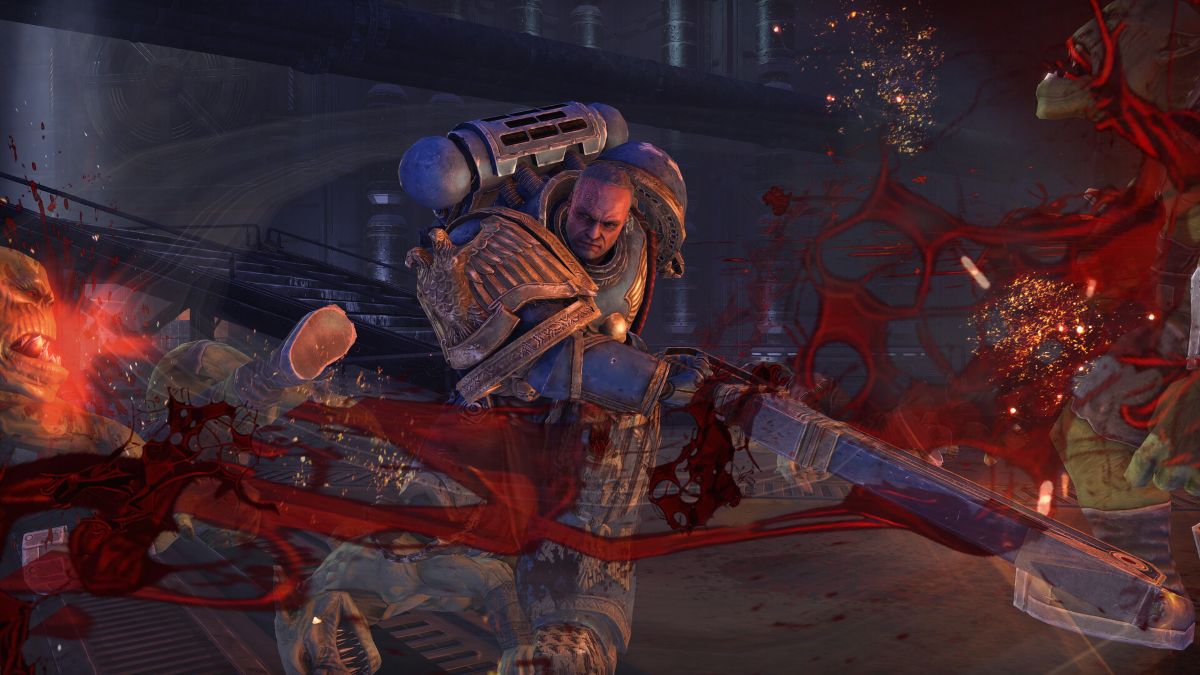
All the above said, I must give some strong kudos for weapon and action design. When the weapons are controllable, they’re pretty badass. I love the chainsaw sword, especially the sound and violence that it brings. It’s cool and might be more useful than guns. It certainly makes melee feel like ‘more’ of an option than ‘less’.
In addition, I like how the enemies you use the above weapons on come pouring at you during gameplay, which causes just the best chaos for a game trying to emulate a war-torn world. While there are a lot of common enemies repeated, the way they run at you, and some of their movements to avoid death, which are quite intelligent, build such a sense of impending doom that requires urgency and intensity to rectify. In other words, they’re darn neat and somewhat challenging, even if you’re head-shotting them most of the time. Along with those common enemies are creative bosses that offer a good challenge. The bosses keep you motivated to move forward on your linear path and to see how the devs upped the last boss with the latest.
All enemies combined, they lend well to the action, story, and world that Warhammer 40,000: Space Marine – Master Crafted Edition is trying to create for the gamer. They’re brutal in their fighting, impressive with their dialogue and actions, and create a perfect antagonist for Titus and his troops to go against.
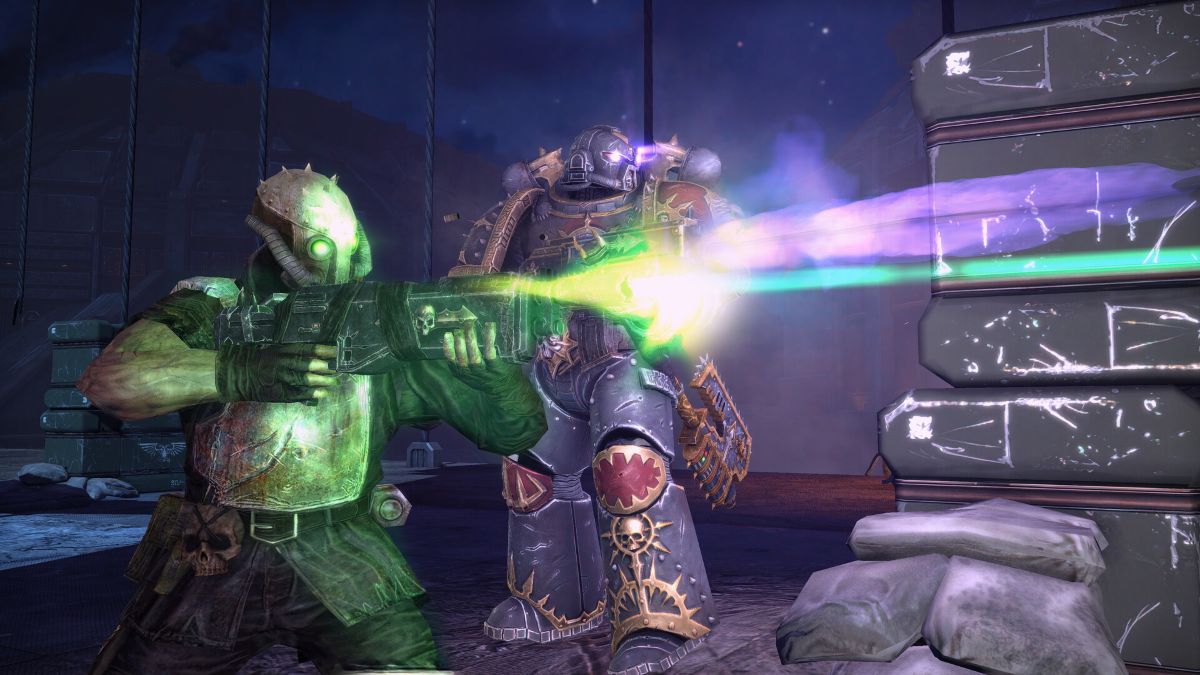
Overall, the gameplay is built on 2011 ideals that work from the period of time in gaming they were born within. You get linear gameplay, simple action, and just a reason to take out hordes of Orks. The gameplay is nothing more or less than that statement, which is just fine when you think about what your expectations are of this game. The only big downers are that it does feel like a 2011 game, where it is restrictive and pushing toward only one direction, and the modernized control scheme that needed more time to bake. Don’t get me wrong, the game is more fun than it isn’t, but it certainly doesn’t feel like third-person action games that you would find nowadays.
Anniversary masterfully crafted
After doing some extensive research, I saw there was an Anniversary Edition of this game released back in 2011. In comparison to this version, it seems like the Master Crafted Edition features more updated textures and modernized controls. Both editions are $39.99, and both include the same DLC and items. Online play is still intact, though not very populated during this review period, so they’re even on that level.
Outside of updated textures and controls, what does the new edition offer that the old one doesn’t? It’s tough to say, as the environments in the game look similar, as do the textures of the models and such. There is a difference in visuals, but not a huge step up to call it a fully remastered experience. It’s not like The Last of Us Remastered or even Resident Evil 2 Remastered, where the visual bumps and the improved schemes justified the remastering moniker. It would have been nice to see that bump up and kind of care.
Anyway, I just expected a bit more for the same price as a 2011 release. Warhammer 40,000: Space Marine – Master Crafted Edition needed more justification for its release. I will certainly explore more of this series because of this release, but my expectations for the next game remastered from this series have now been set.
On that note, let’s wrap up this review.
Conclusion
Warhammer 40,000: Space Marine – Master Crafted Edition, from developers SneakyBox and Relic Entertainment, feels too much like the Anniversary Edition released a few years back. While new gamers of the series might enjoy what this title has to offer, as it does bring some solid action that mimics the chaotic nature of the Warhammer world, seasoned fans of the series may not get enough out of this release to justify another purchase.