


Valor Mortis is an impactful blend of first-person combat that aspires to be One More Level's take on the Soulslike genre. But this Napoleonic tale evolves into so much more than mimicry with its unique setting and enticing powers fueling sword-based combat.
One More Level’s experience with Ghostrunner has primed them for a challenge like Valor Mortis.
When lined up side by side, the games look and almost feel fundamentally different. Ghostrunner is a fast-paced, first-person platforming game. Valor Mortis is a cautious, visceral first-person combat game. But when you begin to analyze the moment-to-moment thrills, that shared DNA is harder to ignore and merely different interpretations of the developer’s lexicon.
Valor Mortis has been explicitly marketed as a Soulslike by One More Level and the developer has emphasized their desire to use first-person combat as a way to change up the genre to meet their own demands and expectations. Many have fallen into the doomed well of FromSoftware imitation over the years, especially those who seek to replicate the formula through both a fantasy setting and third-person perspective. As the years have gone on, it has become harder for developers to distinguish themselves from each other and only a number of games ever bubble close to the surface.
What makes the gaming collective see these games as more than imitation? Challenging boss fights can only eclipse one another so much until difficulty becomes a detriment to enjoyment. I’m still surprised that The Surge series is one of the only science fiction themed variations I can think of. Or that Remnant: From the Ashes and its sequel likely were done a disservice by being too strongly associated with the genre. And often, having a unique catch isn’t enough to grab the attention of voracious players who have discerning taste but less and less time and funds.
There are many reasons Bloodborne came to mind when playing Valor Mortis. Predominantly was the vast departure in setting that shared a common, sickly warmth.
After a series of dark, sword and sorcery, fantasy-adjacent games, FromSoftware took to the moody gothic streets of Yharnam, evoking a diseased, plague-ridden Castlevania. Past work on Armored Core aside, Bloodborne nested the studio’s fundamentals inside of it but translated them into different expressions of what had already become a beloved formula. Those hallmarks existed and players knew what kind of game they were playing and from who but it often stands so brightly because it evolved in such an unexpected way.
Ghostrunner is about momentum. Weaving through a science fiction setting as a cybernetic warrior, players navigated tricky platforming sections that required precise timing. Combat–both long-ranged and up-close–were thrown into the mix to create a thrilling flow state.
Trading Ghostrunner in for a disease-ridden, Napoleonic-era Eastern European battleground with magic powers and deliberate sword combat does sound like an idea out of left field when you spell it out. But One More Level shows they are a capable developer throughout Valor Mortis and have cleverly borrowed from a few prominent points of inspiration to further flesh out their game.
Set in the year of 1820, Valor Mortis centers on the legend of Napoleon Bonaparte–the somewhat messianic Emperor–after the Battle of Waterloo. Devotees to Napoleon have been the subject of myth, rumored to love their Emperor so much they would die for him twice. And Valor Mortis embellishes that notion to the maximum.
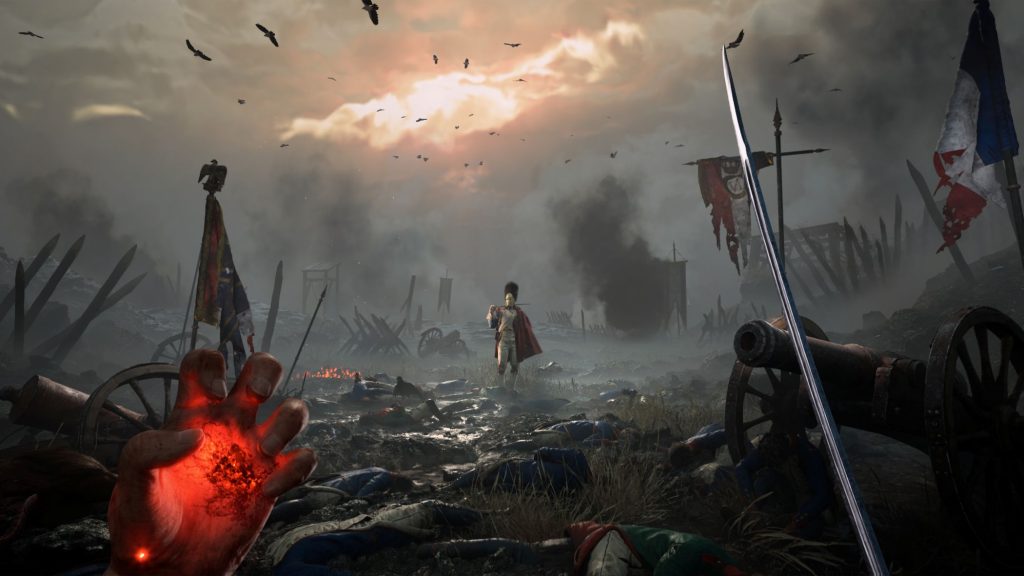
Players embody William Dowsett, a British officer who has no memory of how he ended up on this bloody and grotesque battlefield riddled with corpses both alive and dead. Over the course of the game, William works to piece together his fractured, missing memory while the voice of Napoleon continues to trumpet in his mind. What has caused this affliction? Why are men who used to be William’s brethren, who are wearing his colors, so mindlessly and ruthlessly attacking him?
Valor Mortis reminded me of the historical bits of the first Nioh, where players took on the role of another William and fought yokai in Japan. Beneath the surface of all the folklore and hellish influence, was a “practical, scientific” rationale. The absurdity of it all kept me intrigued, even if the end result mattered little.
Players should hold enough concern for William and enough curiosity to play out the events of the narrative. Across the game, a smattering of historical figures will be met and I imagine if you’re a fan of history, Valor Mortis‘ narrative will be a treat. Vincent Cassel as Napoleon is a remarkable get, intimidating and inspiring all in the same breath. Jennifer English unsurprisingly kills it at The Shrike, a resistance leader players begin to work with to discover the underlying cause of what has transpired in Europe.
The novelty of Valor Mortis isn’t necessarily in its delivery of the plot. Most of the drama and resolution can be gleaned well enough. But the setting is what sells everything. Despite the breadth of human history and the important eras and events taking place within, video games really only visit a few places of impact. In recent years I’ve noticed the influx of Feudal/Edo/Sengoku Japan. Ancient myths of Greece pepper a lot of our medium. And A Plague Tale has been one of the few to visit the bleaker recesses of Europe during particularly hopeless times.
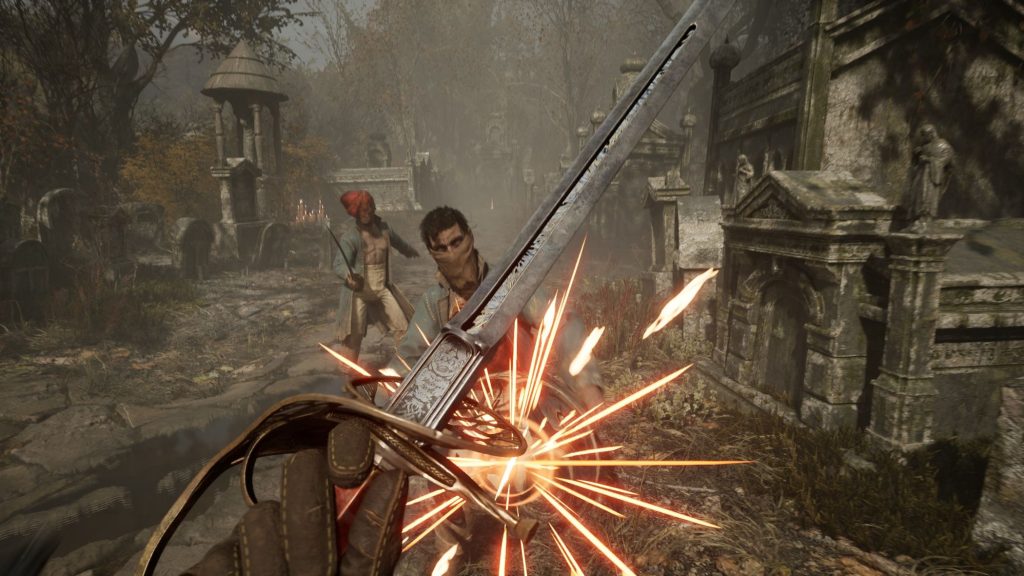
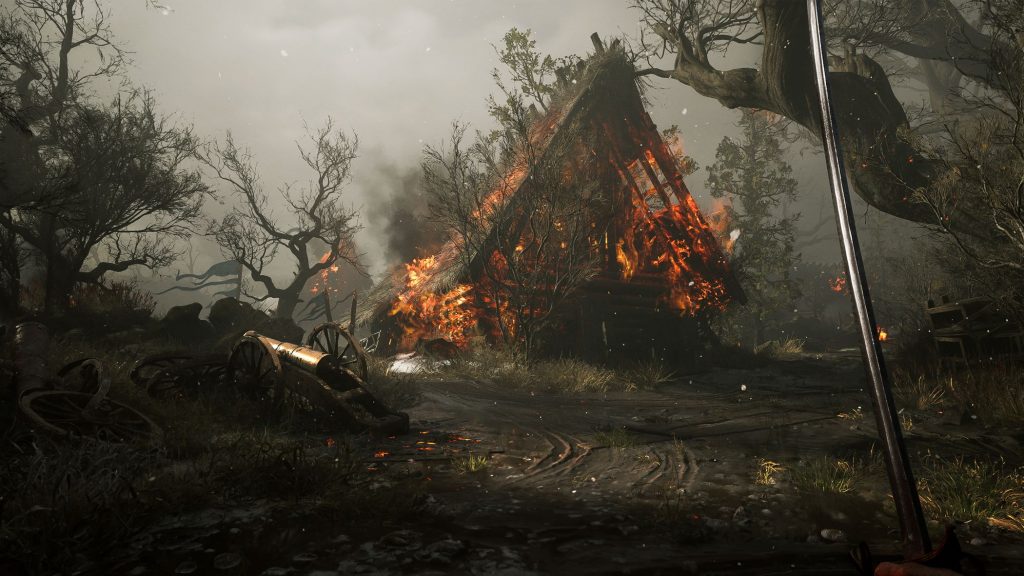
Valor Mortis feels new and fresh often because it uses the time of Napoleon’s reign to house its dangers, inspiration, and concepts. Muddy battlefields, abandoned villages and churches, and scenic fields give way to unique moments that have barely–if at all–been seen.
One More Level capitalizes on this lack of use, taking an underutilized place and making their game within it. That kind of restraint works wonders as the player never encounters anything too fantastical but is also greeted by actual history that they likely have some inkling of.
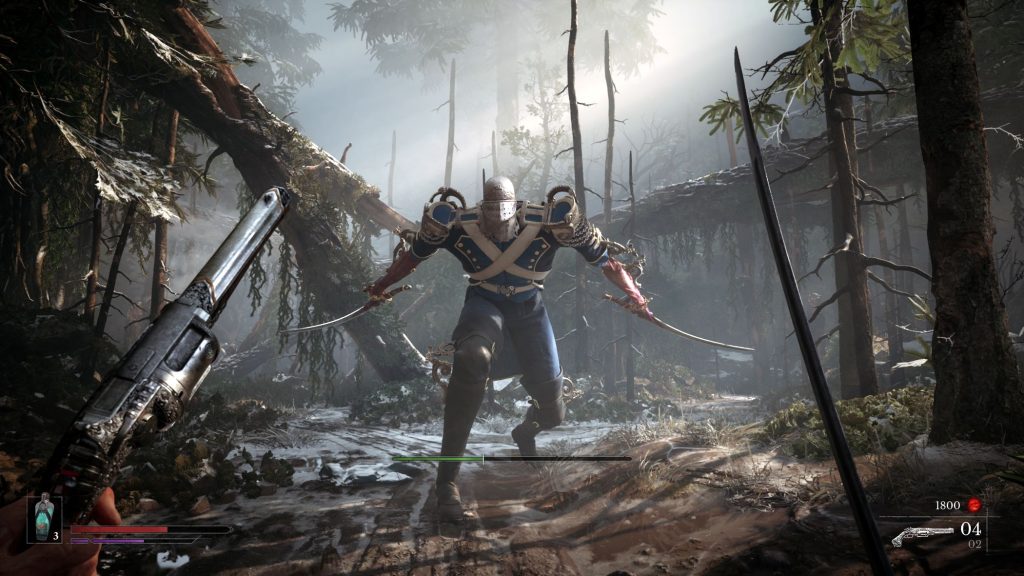
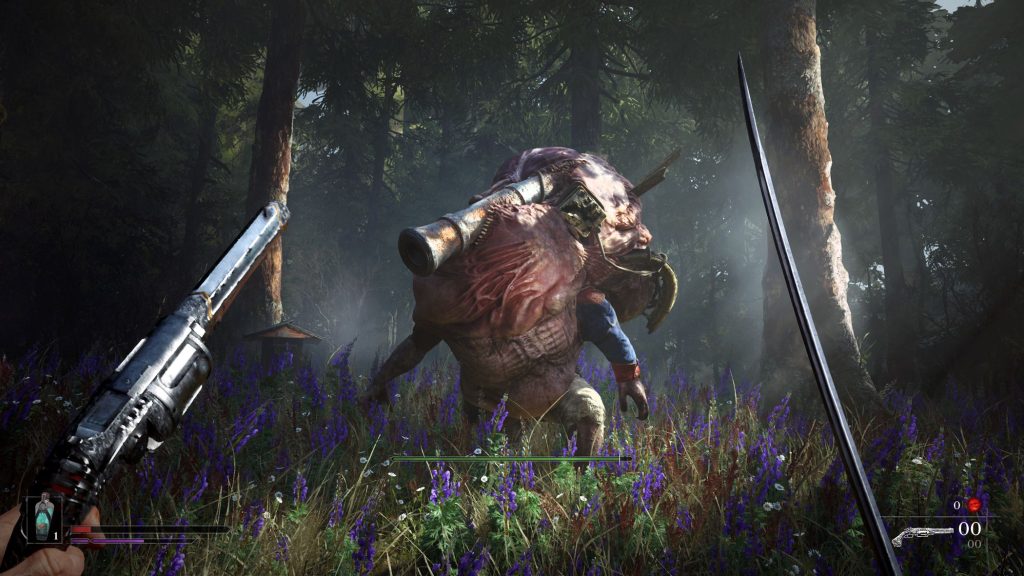
Using the horrors of war as a framework, I could imagine similar beats being played in a game about the American Civil War, a period almost no developer has touched. But in it I recognize a similar expression. Napoleon’s army is made of soldier’s dressed to the nines. Pants, capes, bicorne hats are all gaudy and overly formal–just as war used to be. Now these once proud men have glowing pustules rupturing from their skulls, malformed limbs sprout from their bodies, their entire heads are split in twain to reveal canine-like mouths.
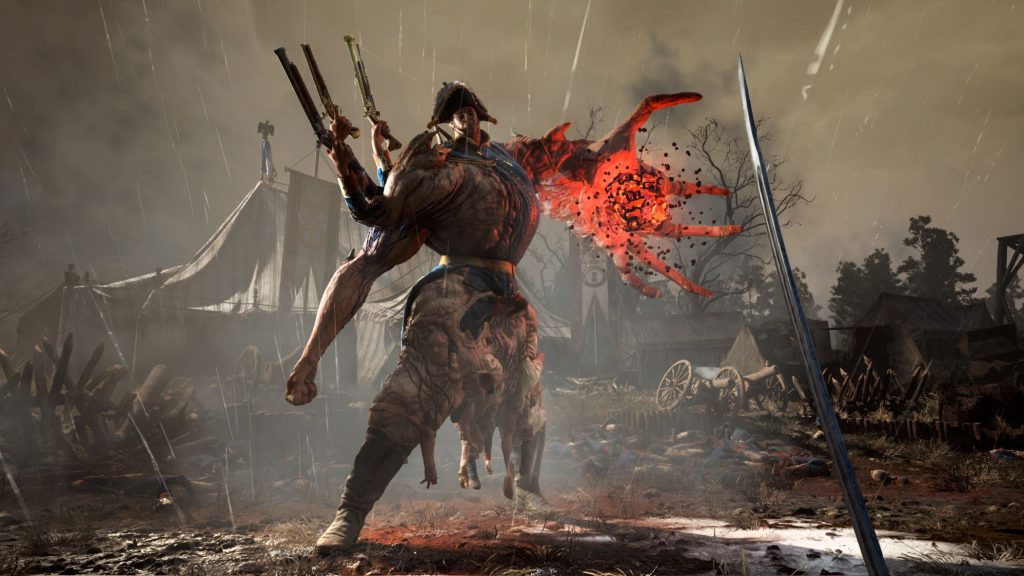
The gruesome creativity on display here is the perfect catalyst for a treasure trove of video game enemies that are fun to kill, offer deadly challenge, and make you cringe a time or two when they come for your throat or growl around a corner.
While a decent chunk of the game is going to feature Napoleon’s soldiers in any manner of transformation, variety could have been stronger, especially in the second half as foes tend to reskin themselves. It doesn’t strip away from my enjoyment of the festering waste of Eastern Europe but does mean there’s a little less to be excited about in terms of fights as the game goes on. I suppose that comes with the gentle devotion to a period of time. There’s only so many ways one can mutate and malform a human body. While John Carpenter and David Cronenberg would be proud of One More Level’s ideas, as a player I’m always wanting new foes to learn and obliterate in equal measure.
The setting also amplifies One More Level’s thrilling combat loop whose seeds were planted back with Ghostrunner. As Valor Mortis continues, players will encounter a number of obstacle courses and platforming challenges that work in tandem with powers that William acquires. The ability to run along walls, grapple around arenas, and simply swing from extended rails and branches invoke the developer’s previous work and act as a way to integrate exploration and backtracking to Valor Mortis.
Not only will this movement tech be used in combat, it is used to offer up side quests and collectibles. When players acquire the pistol for the first time, they will learn that it can blast open bright-red boils on the environment, usually leading the way to an item or a new path. Notes of a Metroidvania are here but just enough that the game doesn’t lean on it. Often, the ability to ignite snot-colored webbing on fire means the player is merely opening up a shortcut that leads to the safety of a Lantern.
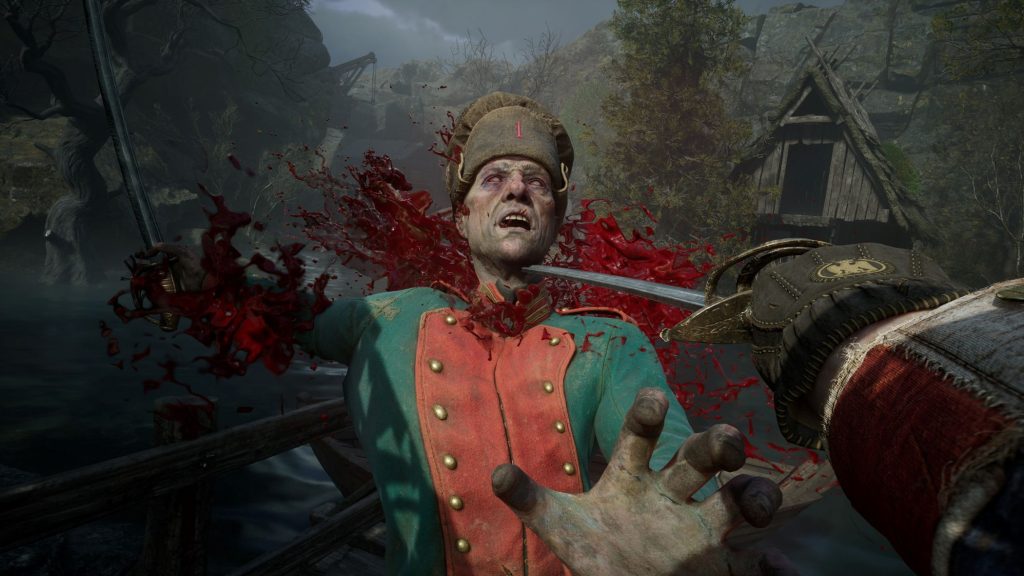
Valor Mortis relies heavily on using a bladed weapon for attack and defense. Whether a faster light attack or a slower heavy attack, melee strikes have a weightlessness to them but also a kind of flair that don’t make them instantaneous. William brandishes his sword combos with a bit of drama, giving basic fights a bit of style. Players have the ability to block incoming attacks or parry them. When blocking, William takes damage but this health can be recovered for a time by striking back (yet another whiff of Bloodborne). The system is generous and doesn’t strip cautious players of the ability to learn timing or merely put up a defense. Obviously with parries, more accurate timing is required but doing so will render an enemy stunned for a critical attack.
Guns act as expected, providing long-range fire and an effective means of blasting an enemy’s glowing weakpoint. Headshots are not all-powerful in Valor Mortis but can effectively stun an enemy when the appropriate spot is targeted. Transmutations act as the game’s magic mechanic, sporting a lot of similarity to Bioshock’s plasmids. While Transmutations often open up new paths, incorporating them into combat is extremely satisfying.
The first Transmuation players receive is the ability to shoot out fire from their hand. It takes a moment to build up in enemies but when they do, they will continue to take damage over time. But watch out! Often enough enemies will explode when set ablaze, harming William for just a bit of health. It’s an interesting tradeoff because it requires the player to get close enough and then push away.
Different swords, guns, and Transmutations are acquired over the course of Valor Mortis and One More Level smartly doesn’t give the player too much. Each ability or weapon serves a different purpose that can be effortlessly cycled out with a radial wheel that slows down time. Every five levels, Ambers can be equipped that provide passive powers. Automatic healing, deflecting bullets, and using Transmutations to recover health are just a few that can be used to help craft a viable build. Players can swap between a gun and a transmutation at any time, making combat quite thrilling when players begin to master its systems. Transmutations can recover with melee strikes but players can also shoot an enemy weakpoint with the gun to have them drop an essence that restores power. For boss fights, these ideas become essential to survival.
Valor Mortis is absolutely a Soulslike, that much is apparent from how it handles death, leveling up, and the eye-watering challenge it often presents.
Die and every enemy comes back. Rest and every enemy comes back. Catalysts are used to level up and are lost if the player dies without recovering them. Every single enemy can pose a significant threat to players who get caught unaware or cocky enough to think they have enough endurance to fell a soldier in one burst of stamina.
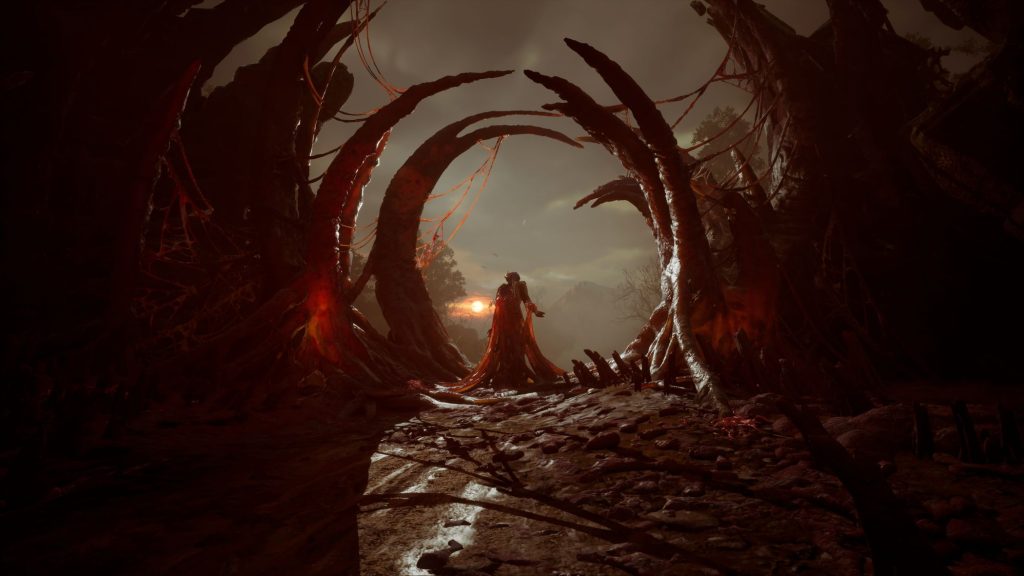
It’s absolutely punishing and bosses can be exacting. Some safety nets exist. During a boss fight, player’s Catalysts will spawn outside the arena and depending on how far you progressed during the fight, a meager amount of extra Catalysts will be retrieved–ensuring that eventually you will be able to level up after increased failure. Checkpoints between Lanterns and additional shortcuts are favorable towards maintaining momentum and the game clocking around 20 hours to beat means that it won’t become a slog.
But Valor Mortis is also extremely punishing and exacting, especially in the first half of the game. Growing in power is a slow process, as enemies don’t reward the player with substantial Catalysts. A handful of times I ground out kills to edge my way into a new level up, increasing William’s base health and stamina to feel as if I had a chance for survival. Early on, enemies can take the player out in a few hits and stamina depletes before even the most basic enemies die.
Thankfully, progression does eventually feel rewarding and further investment in valuable powers and passive skills offer tangible feelings of improvement. Does that change the fact that bosses–especially those with multiple phases–are a breeze? Hell no. Learning patterns of everything takes time and it can suck to die so swiftly, especially on a good run. I loved finally recognizing the timing of normal soldiers who delivered multiple rapid strikes, parrying every one. Getting that perfect dodge to slow down time and deliver a stronger blow is a chef’s kiss moment. Simmering all of these elements in the Valor Mortis soup is absolutely delicious. One More Level understood their own assignment and passed it with almost flying colors. Much like Ghostrunner, should an inevitable sequel arrive, I imagine more of the same but refined and evolved in a way deserving of the developer’s legacy.
Valor Mortis is an impactful blend of first-person combat that aspires to be One More Level’s take on the Soulslike genre. But this Napoleonic tale evolves into so much more than mimicry with its unique setting and enticing powers fueling sword-based combat.