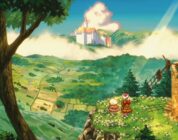

Let me start by saying that you should stop what you’re doing and add Towa and the Guardians of the Sacred Tree to your Steam wishlist already. Seriously. It’s going to be good.
Last week, we were privy to a preview of Brownies, Inc.’s Towa and the Guardians of the Sacred Tree courtesy of Bandai Namco Entertainment. On paper, the game looked gorgeous and seemed like a cute action title that was better than the typical roguelike action-adventure. Driven by anime-style, branching dialogue, and a fun, yet intriguing story, the game looked impressive on the surface. But it quickly became so much more.
For my 3-4 hour demo session with the game, I found that the story was a lot more complicated than the typical narrative found in this genre. It featured real stakes, good characters, and a competent narrative structure that will more than likely keep people hooked. It certainly kept me hooked. I especially found the characters pleasing, defined, and well-acted, which helped to push the adventure along, even in the face of danger.
While my attention span is that of a bee (short), I found myself trying to keep up with what was going on in the story more than I typically do with roguelikes. Generally, the action drives these types of gaming experiences, and the narrative takes a back seat, merely playing as support for when a player needs a break. But this time around, both action and narrative shared equal stage time. Something I was surprised to experience, as I found myself wanting to know more about Towa’s world and the characters, good and bad, that occupy it.

If you haven’t heard of this game or its story, then let me briefly give you the lowdown. The story revolves around a warrior named Towa, who is tasked with taking down Magatsu, giant creatures created by an evil God, who possess special abilities that they use to terrify the land and haunt the village of Shinju. It starts as easy and clean-cut as that little description. Not a bad setup when you’re trying to capture gamers’ attentions.
During my time with Towa and the Guardians of the Sacred Tree, I truly found myself wanting to go around the Shinju village and meet/greet people. Each character that my warrior met brought their personality, their goods/bads, and showed their usefulness to the overall narrative. In all transparency, I usually can’t connect with games like this on a narrative level, as they might seem like typical run-of-the-mill manga-structured stories that carry a heavy dose of overdramatic elements. Towa and the Guardians of the Sacred Tree was not that game. From relative storyline dialogue to chit-chat between people at a rest stop between fighting sessions, the game brings meaningful plot points, dialogue, and good narrative elements to the table that will keep you in tune with what’s going on. Nothing about the storytelling seems wasted.
In short, I loved the story and how it was integrated within the gameplay.
Speaking of the gameplay, at its core, the game is a roguelike, which means action is the name of the game. During my session with Towa and the Guardians of the Sacred Tree, it took on the typical roguelike personality that you would expect from the genre’s gameplay. You’re thrown into multiple linear levels of fighting with common enemies, where goals of survival and improving backend elements of the warriors you select lead the way. In this respect, the game excels. It does what you would think a roguelike would do, and it does it oh-so-well.
The fighting is fast and furious with little breaks in the action between enemy spawns. For every short level of common enemy fighting, your characters are rewarded with buffs and improvements. The buffs/improvements can affect health, defense, offense, and/or other small elements that you can keep and use later.
After each complete level, the game allows you to choose from multiple paths. You can choose paths that take you to food, upgrades, more common enemies, or mid-boss battles. These are rolled randomly, so you’re not going to get the same pattern each time. There are also timed attack events that put you up against a countdown that forces you to survive a constant enemy barrage. There are a lot of different paths to take that bring you variety and fun.
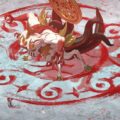
As you build your character up and make them more powerful, you also make your way toward a boss fight with a Magatsu, giant creatures that will wreck your world. These creatures are Dark Souls-esque, as they are considerably tougher than any enemy you have fought prior. My biggest obstacle during this gameplay session was with a dragon named Ensa. That cheeky bastard took me down multiple times, even though it revealed its patterns each time out. Fights against creatures like Ensa come in three stages, so you’re constantly putting your best skills to the test repeatedly. The jump to the Magatsu fight is well-placed, as common enemies are used for understanding and honing your skills. The progression seems good, and nothing seems overly frustrating about the jump in difficulty. I know a lot of gamers who are going to enjoy the tough moments and monsters in this game.

Anyway, as with most roguelike experiences, if you perish in Towa and the Guardians of the Sacred Tree, you lose any buffs/improvements that you garnered during your journey, but retain collectibles and upgradeable material to make your character stronger. That alone will encourage you to keep trying and trying, even in the face of multiple defeats.
During my time with the game, I died quite a bit. But as I kept coming back and upgrading my character more, I could see improvement in fighting results, and I could see myself inching my way closer to taking down a Magatsu. And when that finally happened, it created even more motivation to keep pushing forward. I rarely cheer myself on during gaming sessions, but clearing a Magatsu was such a win that I had to do that out loud. It was that worthwhile.
Now, getting back to upgrades, the game doesn’t just give you money and have you go buy your way to the top. That’s not how the game works. You work your way to improvement, and you can even create a sword of your own from iron to a finished blade. That’s probably one of the coolest experiences I had during my preview time.
During this sword creation process, I used material gained from my failed missions. With that material, I banged out iron using quick time events that measured accuracy. These events could be smashing the metal into a single piece using a hammer that has a hit accuracy gauge. It could be putting an extra layer of protection on the sword to keep it sharp and useful. It could even be sharpening the sword in certain ways to deliver a more balanced attack. At the end of these QTE events, you get to shape your sword to your liking, like, literally shape it, before solidifying and readying it for battle. This entire process fascinated me, and it gave me good control of how powerful my character would be during fights.
Staying with fights, the game has a couple of cool gameplay elements that separate it from typical roguelike games. The first is the ability to wield two swords and switch between them. The swords you make or collect/buy can be added to your character’s arsenal. As you wear one down, you can replace it with the other, which allows the previous time to replenish itself, so that you can switch back to it. This gameplay element creates a forced sense of strategy, where you have to time when you need the right sword for the right enemy. And believe me, that makes a big difference, especially with Magatsu.
The second gameplay element that is unique to Towa and the Guardians of the Sacred Tree is how you’re connected with a partner. This could be a close friend, which I didn’t get to experience, or it could be with the CPU. Regardless, you will have two different characters at once in a fight that bring two different styles of attack/defense to the table. You’re joined at the hip with each other, and each character requires you to watch their health, as the pair is bound by their adventure. If one person dies, the session ends. So this part of the gameplay has its obvious positives and its strategy-heavy moments.

As you fight through the game, you will also have macros at your disposal that deliver light, heavy, and horrific attacks. The latter of the bunch is timed, so you can’t constantly use them to take down big enemies. Much like juggling swords and picking the right character to accompany your style of play, you must be aware of when to use powerful moves and when to hold them back until the right moment. That alone adds more intrigue and strategy to the gameplay, which just makes this gameplay even deeper and richer than the typical roguelike experience.
There is just so much to love with this game. It has a wonderful story, great upgrade and backend elements, fun fights with common/mid-bosses/big bosses, and creative and challenging enemies to make the adventure worth your time. This game is going to be good.
On that sweet note, I’ll return to this game once the review code is available. My advice to you right now is to download the demo of the game and experience it yourself. It’s going to stand out in the roguelike action genre.