


Tales of Arise – Beyond the Dawn Edition brings the newest Tales title to Switch 2 owners in a complete fashion, albeit one that is not the most optimized for the hardware. It remains a compelling, engaging, and gorgeously designed action-RPG despite its execution.
Five years after its release, Tales of ARISE (and its Beyond the Dawn DLC) is available on the Nintendo Switch 2. We didn’t have to wait for a questionable remaster this time around, folks – it’s an all-in-one package that includes the base game and the DLC. You would think that this port would take advantage of Nintendo’s 2025 hardware – a mere stone’s throw from that of the PS4 Pro…but it looks like Bandai Namco missed that memo.
In no way has Tales of ARISE aged in ways that warrant a significant rework of its mechanics. Instead, it’s solidified its position as the next-gen Tales RPG with modern graphics, an action-packed combat system with a gimmick, and meaningful character development that unfolds through a myriad of storytelling tools. While ARISE falls prey to the same pacing issues that have impacted all Tales titles to date, it’s a modern RPG with spirit that serves as perhaps the best entry point into the Tales anthology.
Tales of ARISE tells a story of a masked slave, “Iron Mask,” who is thrust into a resistance movement when he saves a mysterious girl from imprisonment. This tale can be misconstrued as a take on Romeo and Juliet, but the resultant arc ends up being a story of resistance with smidges of revenge. Intra-party relationships that emerge in the player’s ever-growing party are present throughout the game, making for a tale of many rather than a story starring a single protagonist.
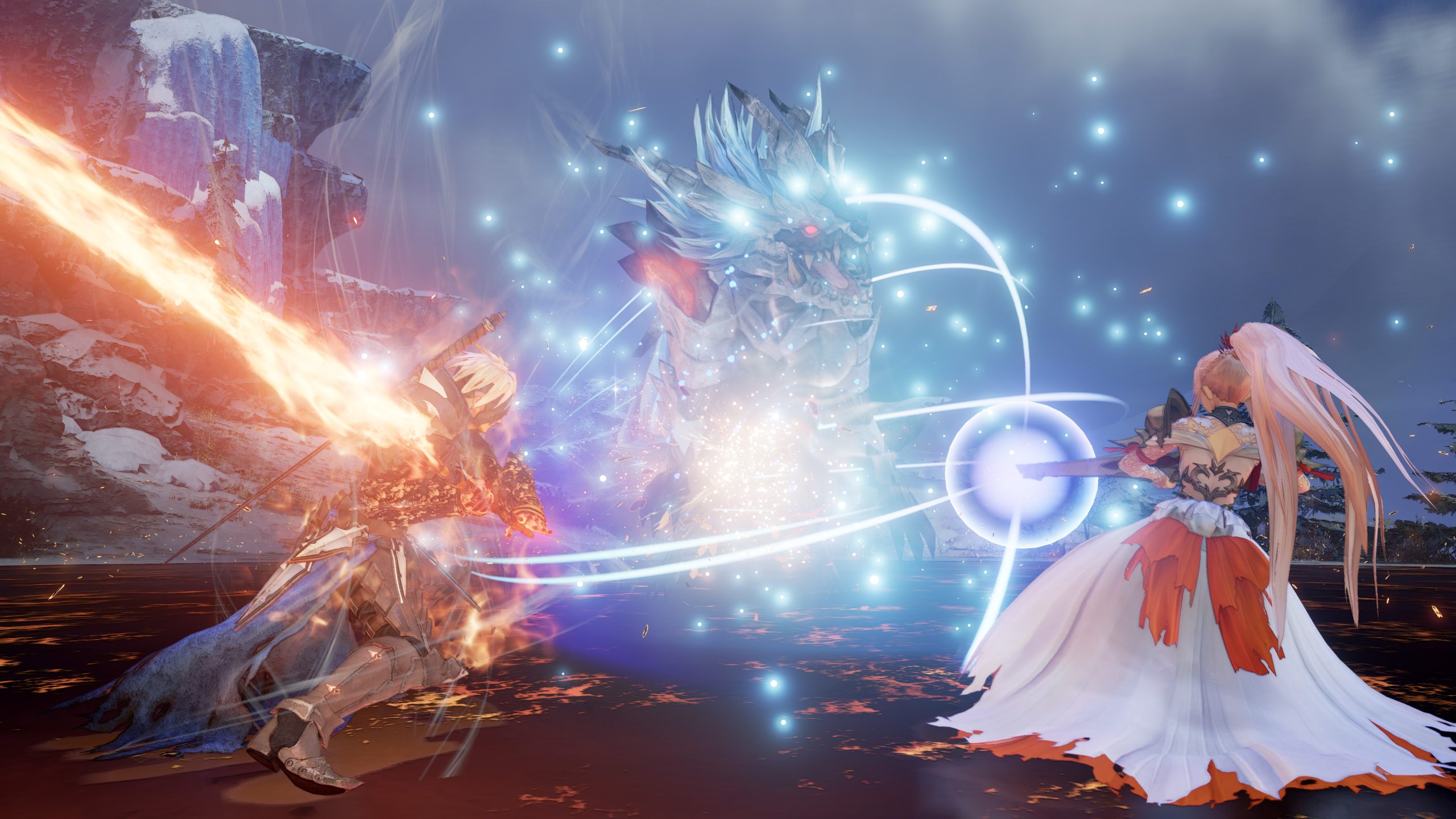 The standout element of Tales of ARISE is its art design. Bandai Namco describes it as “atmospheric shading” derived from watercolors, but that’s a massive understatement. The world of Dahna looks like it was brought to life with acrylic paint and a palette knife, almost like Cézanne himself had carved each and every paint stroke. I noticed it in my first few minutes when I began exploring a canyon alit with flames. Everything looked naturally and intentionally placed, a stark departure from traditional cel shading found in most Tales titles. Some toonish art designs persist, such as those present in the skits and the skippable cutscenes, but the overall aesthetic is a step in a right direction for setting ARISE apart from its siblings. It’s an art style that should be explored further in future Tales titles.
Tales of ARISE seems to have been developed with approachability in mind. This is evident in its fluid and action-packed “Boost Strike” combat. Most modern Tales titles opt into reinventing their combat with granular shifts in timed inputs and automation, and ARISE is no different. ARISE’s “Boost Strike” system emphasizes chaining attacks, aerial combat, and 3D movement. If you’re familiar with Final Fantasy XVI’s combat, ARISE will feel familiar but unintuitive. The default button mapping has simple attacks bound to the R button (on the Nintendo Switch 2’s Joy-Cons), the jump button mapped to A, and then the remainder of the special attacks (called Artes) bound to B, X, and Y. Evading (via ZR) and countering are key gameplay elements while some character interactions utilize different party members in variable cadences.
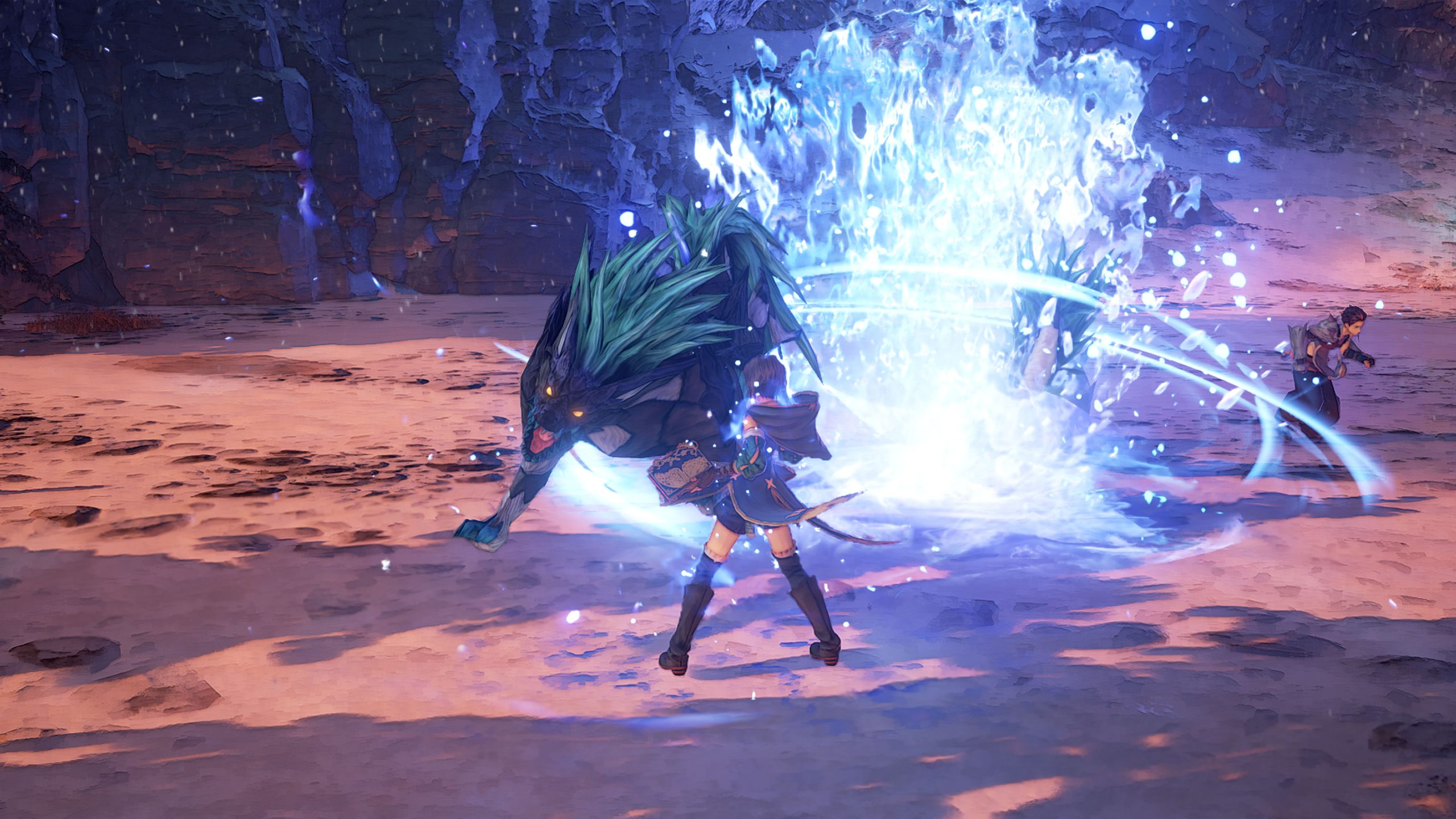 Compared to other Tales titles, ARISE is arguably polarizing in its combat system. The simplification of the “Boost Strike” system makes the early game drag on for a smidge too long until additional party members join the fray and new Artes are unlocked. The depth and complexity of inputs are there and reward those willing to experiment with the Artes system, but the mapping makes it unintuitive to grasp. I err on the side of ARISE being satisfying regardless of its complexity, with the focus being on timing and flexibility rather than formulaic fighting game combos.
This edition includes the Beyond the Dawn DLC that takes place shortly after the events of ARISE. It doesn’t add anything groundbreaking, it’s more of a reunion episode rather than a meaningful addition that ties up loose ends. Should you make it to the end credits of ARISE (around 50 hours or so, maybe a smidge less if you attempt to blaze through the main story), you get some additional time to spend with the cast…and that’s about it. It’s nowhere near sequel territory.
Outside of the Beyond the Dawn DLC, this version doesn’t add anything else. Existing ARISE owners can (and should) replay the game on the platform where they first bought they game.
What about the Switch 2’s performance, though? Since this is a review of the Nintendo Switch 2 edition of Tales of ARISE, it would behoove me to comment on how it runs. Sadly to say, it’s not the most impressive.
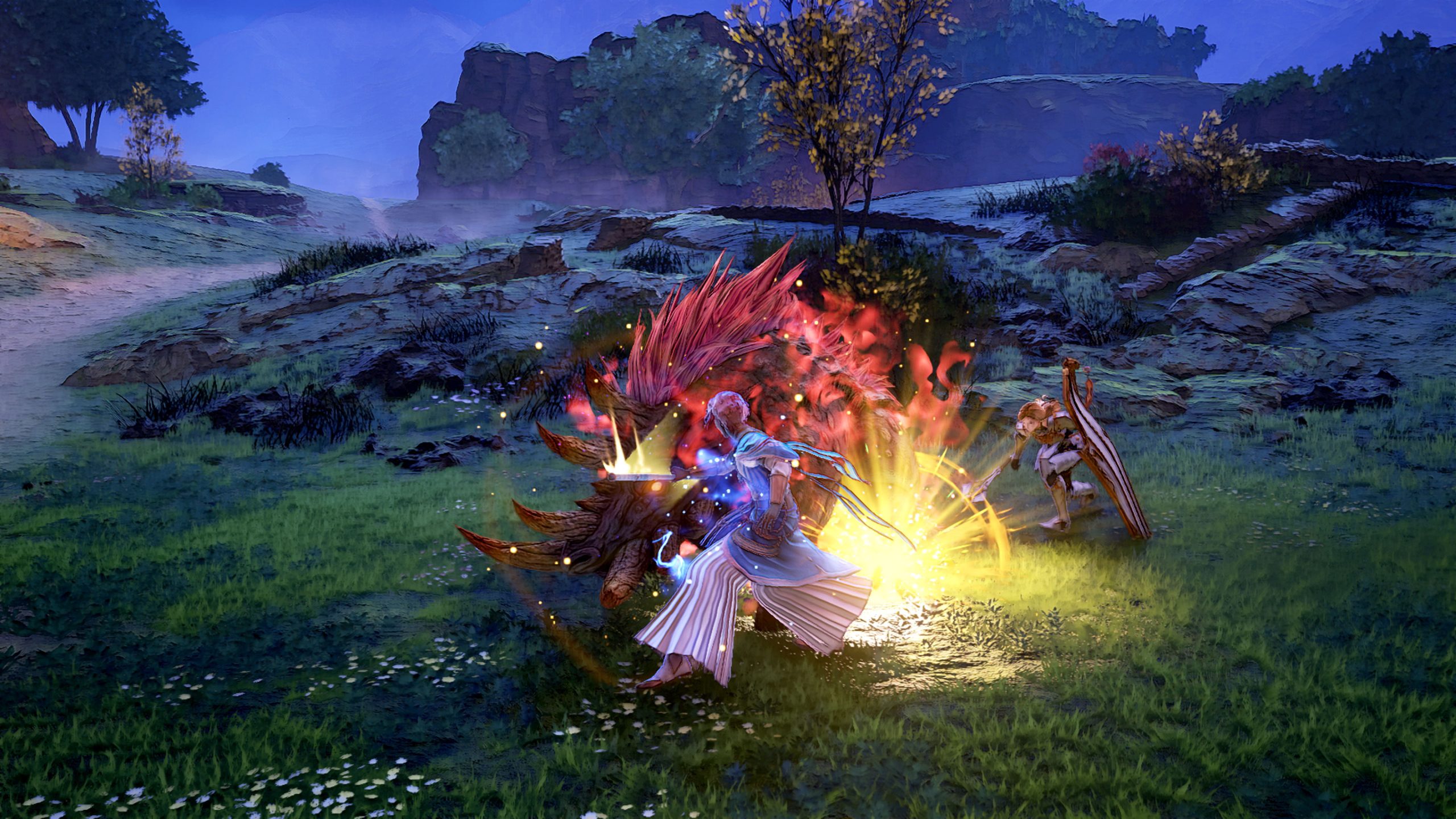 I shouldn’t be too surprised about the decision to lock ARISE to 30fps on the Switch 2, but it doesn’t feel good to know that other versions of the game exist that look and feel smoother. It’s immediately noticeable within the first few minutes of the game that a degree of sluggishness is present. For instance, rotating the camera in combat feels as though the cameraperson is navigating through sludge…not the most ideal when attempting to move and attack quick.
ARISE is indeed a pretty game (especially in its first half), one that attempts to showcase graphical details of varying compositions. Granular elements like individual strands of hair and miniscule embers can be discerned even in the Switch’s handheld mode, but those details aren’t worth it when chaotic battles slow down from artificial frame capping. If things were optimized to a more prominent extent, I would have less of an issue with the frame capping, but what exists feels half baked.
When I evaluate games, I try not to sound like a PC elitist and complain about framerates. I usually settle for games with consistent lower (read: 30) framerates if they’re exactly that: consistent. ARISE on the Switch 2 feels like a missed opportunity in optimization and execution.
Tales of Arise – Beyond the Dawn Edition brings the newest Tales title to Switch 2 owners in a complete fashion, albeit one that is not the most optimized for the hardware. It remains a compelling, engaging, and gorgeously designed action-RPG despite its execution.