
Call of the Elder Gods pulls from Lovecraftian mythos to create a pulpy puzzler that works to build off of 2020's Call of the Sea. However, its intense head-scratchers with complex solutions can often clash with the pace of a relatively short adventure.
After wrapping up Call of the Elder Gods‘ first chapter, I went to the PlayStation Store and downloaded 2020’s Call of the Sea.
Developer Out of the Blue had created a compelling enough universe and I didn’t want to miss any detail. I remembered Call of the Sea being highly regarded by many for its puzzles and its story. And upon starting Call of the Elder Gods, I felt a twang of guilt at selecting that I hadn’t touched the first in the New Game settings.
I spent the entire day playing Call of the Sea, only stopping at the final chapter before continuing it the following morning. It was an engaging adventure focused on Norah Everhart searching for her husband Harry, who had left the year prior to search the Southern Pacific for a cure to her mysterious illness. As suggested by the sequel’s title, an excursion through a secluded island eventually led to stakes on a Lovecraftian level, where eldritch forces dwelled in the mortal realm.
A large part of me is happy to have played Call of the Sea before delving too deeply into Call of the Elder Gods. Now I would have context. Harry, who is playable in the sequel, makes more sense having followed in his footsteps. Hearing Norah’s voice as the narrator gives a warmth to the narrative knowing what she endured. Now I was able to recognize that Evangeline Drayton, the primary protagonist, is the daughter to Frank, a man who died as a part of Harry’s crew in the South Pacific. And throughout both games, I could see the connective tissue tying Out of the Blue’s games together, little nods that would be expanded upon in the sequel or leave the player salivating for another adventure.
But part of me also wonders if wading into Call of the Elder Gods only to then barrel through Call of the Sea to then immediately dive right back into Call of the Elder Gods in a matter of days colored my impression of the sequel too much.
Without giving away too much, Call of the Elder Gods feels almost like a middle chapter in a trilogy. Where Call of the Sea wrapped itself up quite nicely with no suggestion the story would be continued, Call of the Elder Gods almost works to pepper lingering questions throughout. Both games are six chapters and come in at similar lengths, yet Call of the Sea felt longer. And often I wondered if I appreciated Call of the Elder Gods more because it was a continuation of a game I found to be quite incredible.
Both games operate on a relatively simple premise, which rapidly lead to escalating stakes. Here, Evangeline is seeking out answers to mysterious dreams she has about an otherworldly city and a period of months where she suffered from amnesia. Her answers lead her to Harry Everheart, now an aged professor in the 1950s, not the determined adventurer of the 1930s. The two work to understand an ancient statuette and a black ooze that can inflict anyone that touches it with madness.
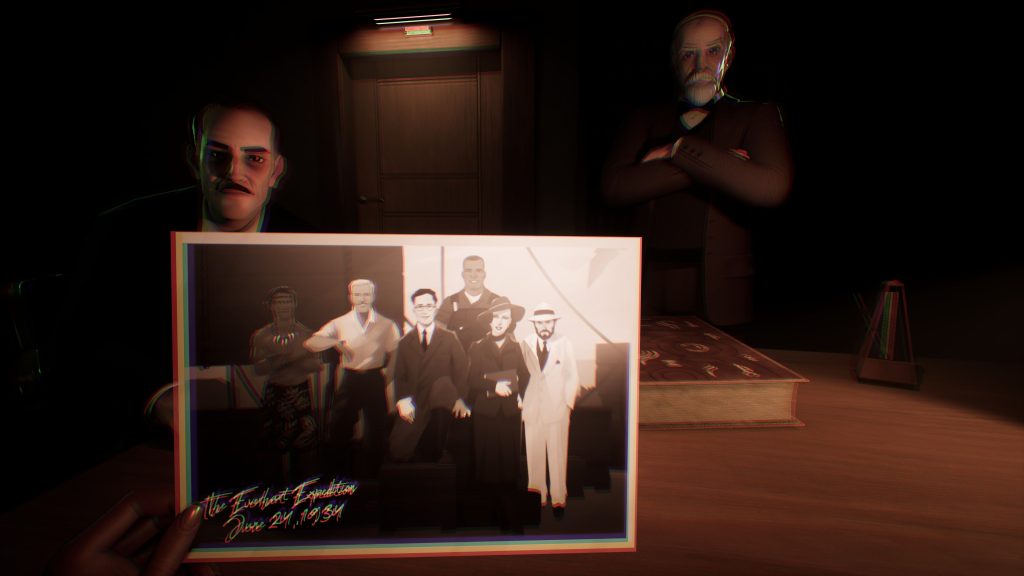
Expertly voiced by Yuri Lowenthal, Mara Junot, and Cissy Jones, the three leads of Call of the Elder Gods deliver powerful performances across a world-hopping adventure. Norah, played by Jones, performs her role as narrator perfectly. Often somber when speaking about her husband, playful when talking about Evangeline’s inquisitive nature, and occasionally breaking the fourth wall, Norah is the perfect constant companion to have on this adventure and doesn’t feel out of place when describing the inner thoughts of characters.
Harry and Evangeline are good foils for each other. Evangeline is desperate for answers while Harry wants to leave the past where it is. Where Norah in Call of the Sea was reactive and curious to the events around the island, the pair of Harry and Evangeline are more investigative, trying to put together the pieces of a massive quandary.
Initially, I thought having two protagonists meant that Out of the Blue would provide players with multiple opportunities to switch back and forth between Harry and Evangeline to solve puzzles and tackle the story. However, there are only a handful of opportunities when Call of the Elder Gods allows players to switch back and forth between the two.
I think this is one of the greater missed opportunities of the game. While I think Harry and Evangeline both get about the same screen time, there simply aren’t enough opportunities in which players have them work together in unison. And when those moments do arise, they are done for some of the simplest puzzles and activities in the game.
In one instance, Harry and Evangeline are attempting to bring power back to an abandoned base. Because she takes after her handy father, Evangeline stands at an electrical panel to rewire power while Harry runs around flipping breaker boxes. This results in the player controlling Harry and moving around the base, swapping over to Evangeline to hit a switch, then swapping back to Harry to turn the breaker on, repeating the action three times. In the same chapter, Harry stands at a security station to open and close doors for Evangeline to walk through. Each door is opened by a three-digit number and players will need to switch between the two to properly see the numbers on the doors.
Call of the Elder Gods‘ least complicated puzzles are dedicated to these handful of moments where both protagonists can be controlled. Because it’s used so sparingly, I almost wonder why Out of the Blue included the feature in the first place. Even when Harry and Evangeline are separated and forced to work on a “larger” puzzle, it usually means Evangeline will solve her part and then control will switch to Harry for the player to wrap up the second part of the puzzle.
Call of the Sea was not a mechanically complex game by any means. It tasked the player with investigating their surroundings as Norah to piece together information and clues that would eventually lead to solving puzzles. The same thing applies in Call of the Elder Gods and honestly, that’s a bit disappointing. Having two playable characters should have presented slightly more diverse gameplay by having players use those characters to work more in tandem on a solution. It doesn’t have to be about creating puzzles where players need to perfectly time things between the two and swapping back and forth between them but I’m sure some middle ground could have been provided.
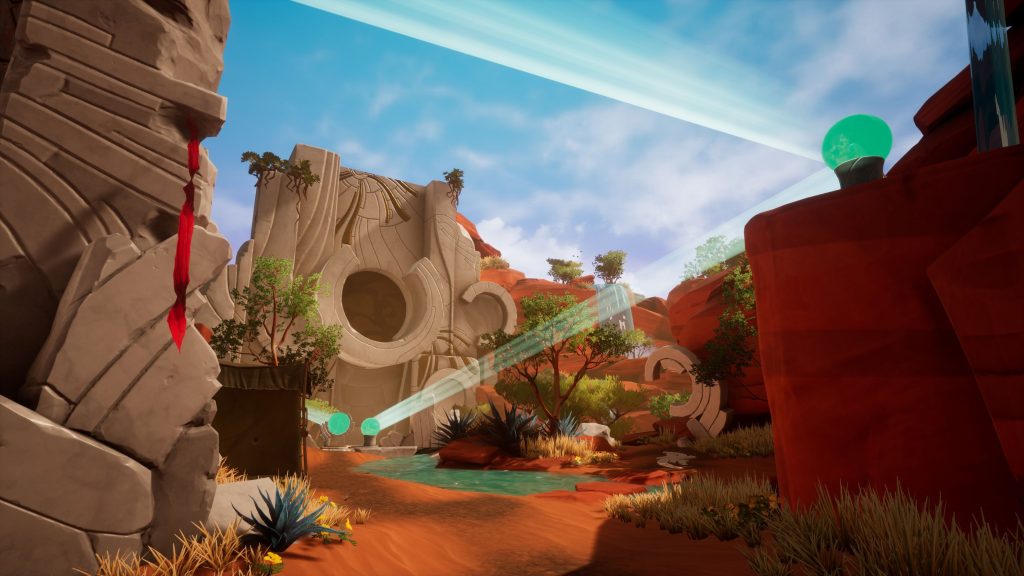
For most of the journey, Harry and Evangeline are together. At times they are separated, yes, but players usually can see one character following the other. And what makes this limitation so disappointing is that there are multiple times where being able to swap back and forth between the two characters and independently move them around would have saved time working out a puzzle’s solution. In the game’s final chapter, Harry and Evangeline find themselves in a large outdoor arena working to manipulate large lenses with beams of light. Harry is the controllable character and must run between multiple points of interest to work out the puzzle. Meanwhile, Evangeline is just standing around. What would have been great is if Evangeline, who is also younger, was able to do the walking and climbing meant to line up the beams of light. The player could have then saved the trouble of constantly running back and forth and had Harry stick around the center of the area to work on the other part of the puzzle.
Though Call of the Sea had plenty of moments where the player was moving Norah back and forth between the same space, it at least made a bit more sense in the context of her lonely, solo journey. With Call of the Elder Gods, it factors into what is probably going to be the biggest sticking point for most players: the pacing.
As a first-person narrative adventure with a hard focus on complicated puzzles, Call of the Elder Gods is by no means an action-first game. There are a number of thrilling moments but those primarily result from reveals during larger story moments. But I think this game feels a bit slower than it should primarily due to the amount of walking and investigating done around spaces.
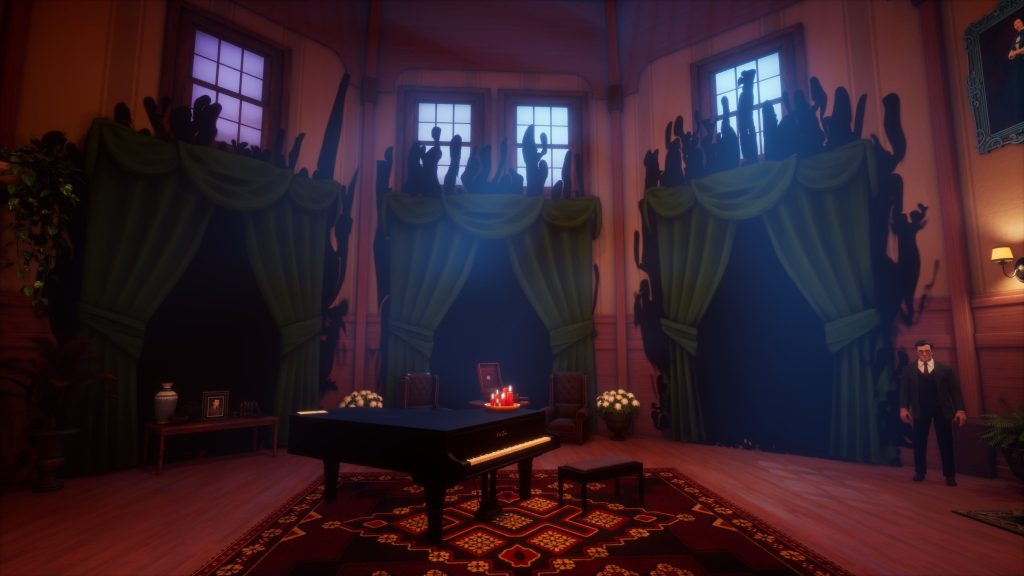
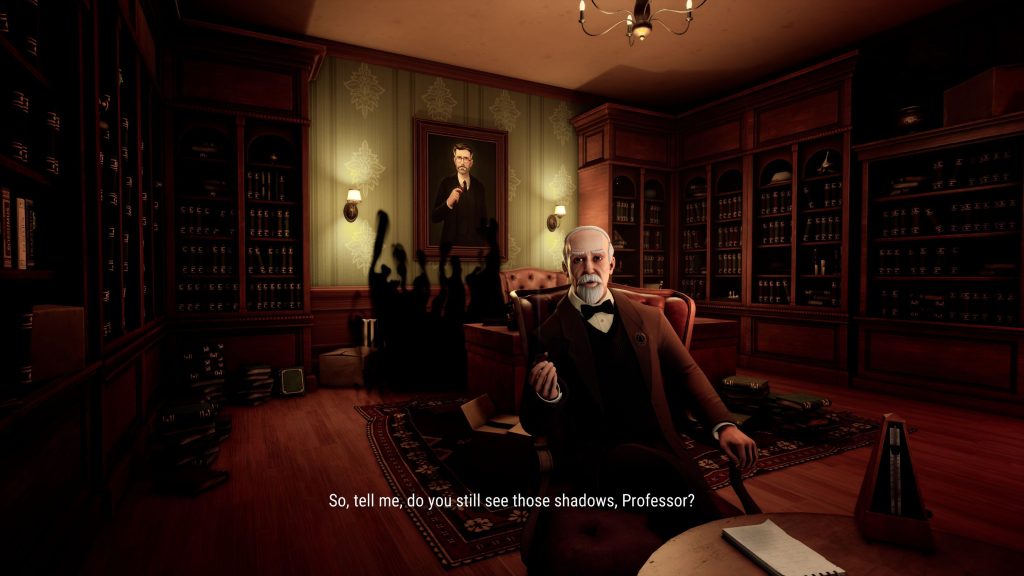
Despite a globe-hopping journey, Call of the Elder Gods has a few points where the areas Harry and Evangeline end up in simply aren’t as fantastical as I would have hoped for. The first chapter of the game consists entirely of Harry’s large mansion and the surrounding garden. Another chapter plays out in two large rooms of a building dedicated to the occult–which does have some cool focal points, to be fair.
I’m not trying to belabor what Out of the Blue’s two games did in comparison to each other but I think it’s a fair point to make. Call of the Sea certainly had its slow bits but I think for a sequel, Call of the Elder comes across as a bit more subdued at times. There are fascinating structures of ancient origin and mind-boggling vistas but they are used a bit more sparingly here. Gone is the sense on being on an island that is, more or less, alien in origin. That distinction is delegated to a few visions experienced by Evangeline and a handful of story beats but I think emphasis should have been placed more on the actual Elder Gods.
What does carry over between games is Out of the Blue’s incredible ability to make confounding and fun puzzles. For a bit of context, there was only one puzzle in Call of the Sea that I went out of my way to go on the internet and search for a solution. It felt far too obtuse as I sat there trying to wrap my brain around what was trying to be communicated to me. I might have brute forced the solution in another instance but for the most part, everything just took a tremendous amount of brain power.
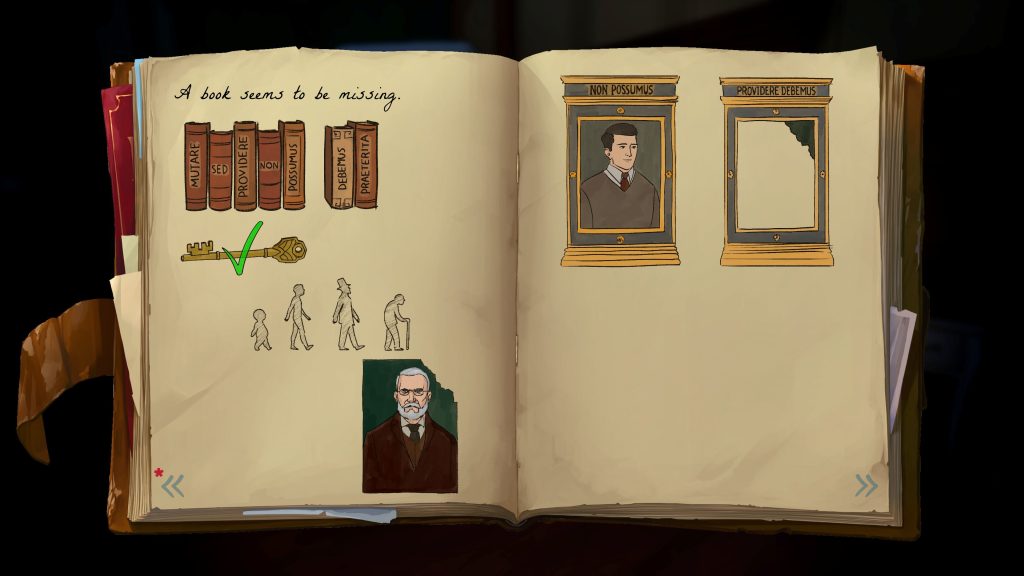
Call of the Elder Gods retains the element of investigating the surroundings and scribbling down notes in a journal that players can look through to decipher the solutions to puzzles. Vague clues are meant to tease out the ultimate answer, asking the player sometimes to infer what their gut is telling them and other times trying a bit of blind luck.
In ways, this series has created some of the hardest puzzles I have encountered in games. Ones that can sit with the player for a lot of time and require them to really think about what they are trying to figure out while searching for ways to decipher what is going on. To serve as kind of a balm to potential roadblocks, Out of the Blue has incorporated a hint system into the game that players can access from the pause menu at any time. Usually the hint system provides text and a screenshot that work to subtly suggest where the player’s thinking should lead. The player can flip through pages to offer progressively more detailed hints and, in some instances, flat out say the solution.
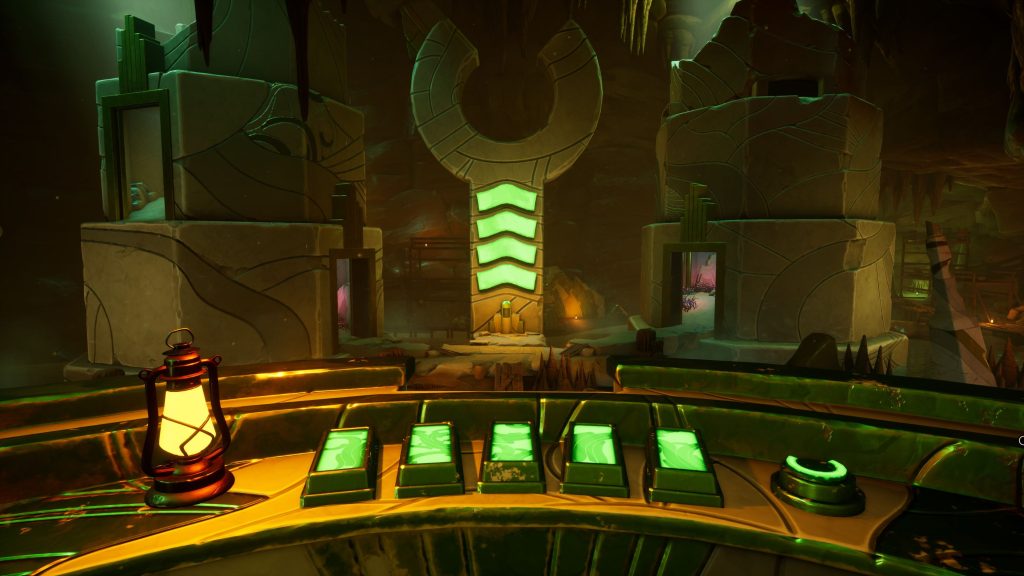
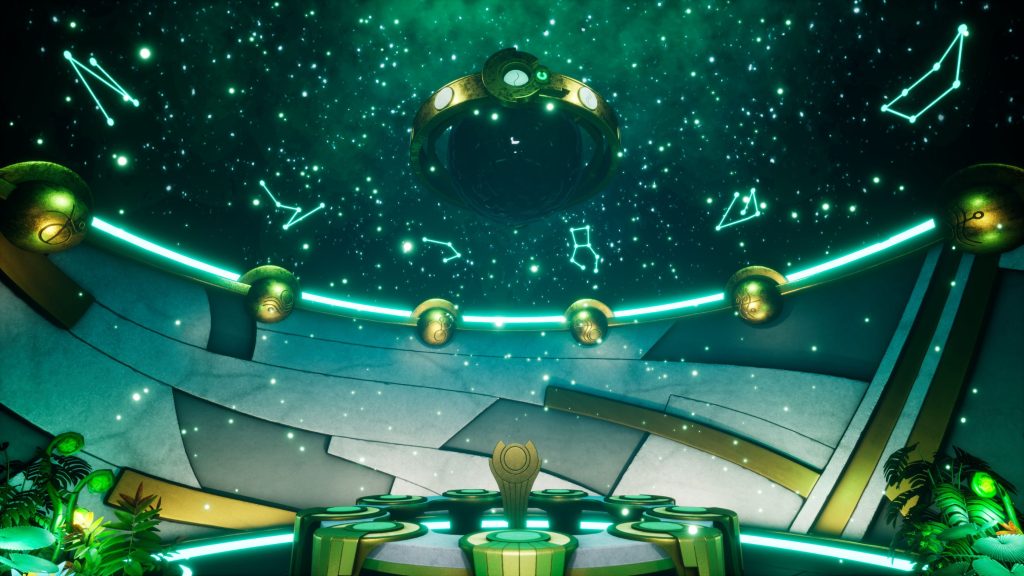
I’ll admit there was one puzzle that I eventually had to just look at the solution for. It requires the player to identify multiple distinct different statues of Egyptian gods and then correctly piece together multiple parts of the identity of a shadowy organization who masquerades as these gods. To gather the information required to solve the puzzle, the player moves around an upper chamber containing private rooms of the members. Then they head downstairs and attempt to rotate dials with the correct information. If anything is out of place, it’s incorrect and may require the player to constantly rotate different dials to adjust the exact order.
Initially, I thought I had a good grasp of what the puzzle was asking me. But some of the information simply was too vague for my level of patience, knowing that I could just look up the answer and carry on. Even after knowing the solution, I still can’t say that I understood how the game expected me to figure it out without sitting there for a long time trying to comprehend what was going on.
And honestly, that’s mostly okay. I know that there are plenty of people who can solve these types of puzzles without any issues. Sometimes I’m one of them. But because Out of the Blue didn’t want to prohibit players from progressing–or going to the internet for help–they included a hint system that works to aid the player before ultimately spelling out the answer.
I think this has a wonderful impact on the game’s pacing because you will never feel too stuck. There were times I was frustrated that my brain felt like it didn’t work but I also wanted to progress the story. Yes, I was still impressed by the development team on making such complex puzzles but felt okay getting that extra final nudge when I simply didn’t want to wait any longer for my own gears to properly turn.
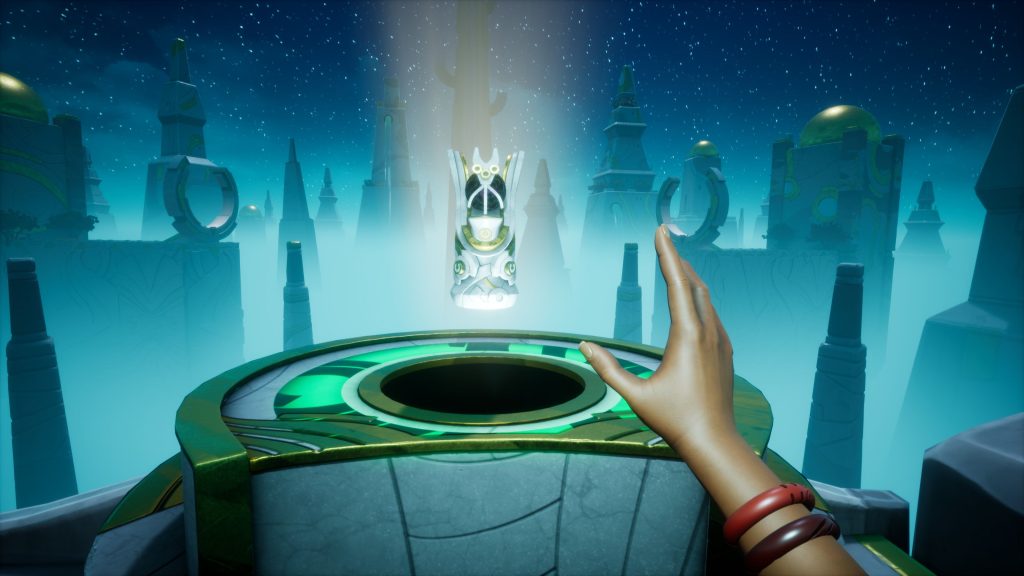
In the end I think Call of the Elder Gods lacks the same impact as Call of the Sea. That game set an extremely high bar in terms of a first-person narrative adventure that really tested the player’s ability to investigate and act on clues. As Norah, I felt like sleuth following the footsteps of a group of extremely capable people.
While sequels are usually more grandiose, they don’t necessarily have to be. And Call of the Elder Gods feels more contained, as if it serves primarily to lay the groundwork for a future entry that will work to capitalize on the greater mystery laid forth. This game takes some interesting swings to retain that feel of older fiction that had elements of treasure hunting, swashbuckling, and post-war hope. And despite my issues with it feeling like a somewhat lesser game, Call of the Elder Gods is still quite satisfying of an adventure. If the series does continue, I honestly don’t want it to stray from this formula, merely evolve the way players can interact with the world… and maybe go just a bit bigger in scale.
Call of the Elder Gods pulls from Lovecraftian mythos to create a pulpy adventure game packed with head-scratching puzzles and plenty of intrigue. While it works to build off of 2020’s Call of the Sea, it doesn’t take advantage of its multiple protagonists in interesting ways. Though the complex solutions can clash with the pace, Out of the Blue’s fascinating world ultimately makes for a brisk journey that begs for a concluding chapter that goes all out, answering all the secrets planted throughout the series.