
I’m torn about this game. On one hand, Silent Hill: Townfall is a spectacular horror game built on stealth, puzzle-solving, and unraveling a huge mystery. On the other hand, it doesn’t encourage combat, and hiding from monsters can feel like a chore. Of course, I am all for new ways to play old series, so here we are.
Silent Hill: Townfall, from developer Screen Burn and publisher Konami, offers a new way to experience the Silent Hill series. Dropping the third-person perspective, Konami’s newest entry puts the player in a terrifying first-person view and relies more on audio than visuals to drive the terror. While this new point of view and detection system heightens the horror waiting around every corner, it also introduces a new way to play that prioritizes stealth over action. Whether fans of the series welcome that direction is up in the air, but I can assure you that trying not to be detected by a ‘thing’ is far more terrifying than taking it down with weapons.
Far more terrifying.
Anyway, as with all reviews, let’s start with the story.
Simon Ordell suddenly finds himself on the island of St. Amelia. He has problems to solve, penance to pay, and mysteries to answer, which include why the townfolk, including a few people close to him, have vanished. Of course, while the people are missing, Simon must also face other horrifying beings on the island, and hopefully survive to figure out exactly what has gone terribly wrong.
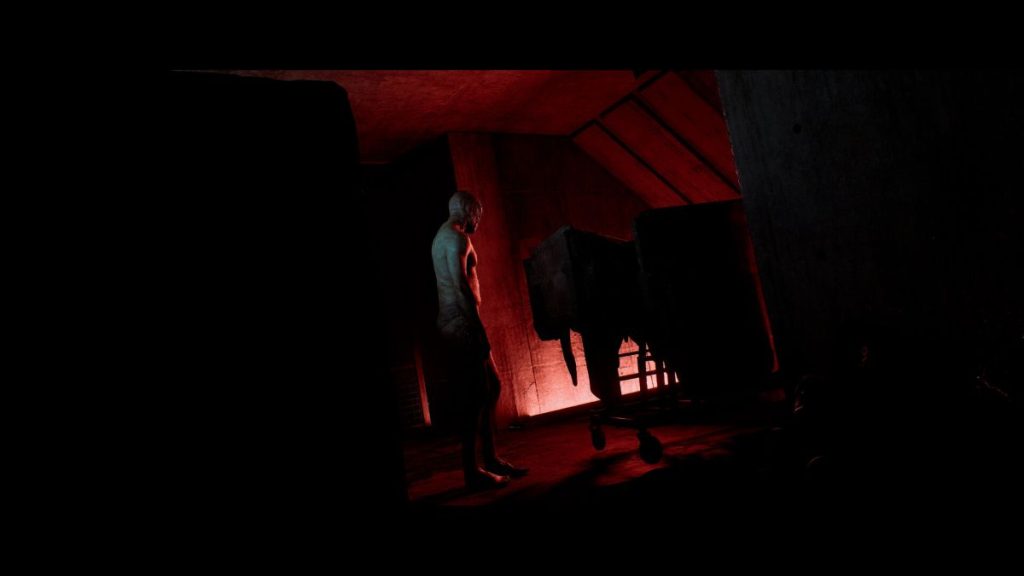
If players are looking for a Halloween game to give them the heebie-jeebies, then Silent Hill: Townfall is that game. The story is thick with uncertainty, driven by discovery and the uncovering of a larger mystery, and it’s a self-contained narrative that strays from other Silent Hill content while bringing the terror the series is known for throughout the journey. This story truly led me with the main character, not giving me an inch of detail about what might have occurred while Simon was away from the island, but providing just enough hints and motivation to keep me going. The narrative was enthralling, and the way the devs slowly pulled back the curtain on the mystery was methodical and well done. In other words, this was a worthy addition to the Silent Hill family of games.
I particularly enjoyed how Simon’s character developed as the mystery went on. While one could guess from the IV needle stuck in his hand that the story had a psychological aspect, his character was interesting in how he connected to the town, and especially one doctor, and how that played into the unraveling of the overall mystery. Honestly, without giving any spoilers, it had me daydreaming about the show Life on Mars. Breadcrumbs were everywhere, but the story was hell-bent on keeping its card reveal close to the chest. Anyway, whoever was leading the narrative construct did a great job of properly pacing the entire journey and making it worth it. The story helps drive the horror immensely.
Now, as the horror plays into the gameplay, it feels different from a normal Silent Hill adventure. The biggest change is how it’s driven by stealth rather than action. I wasn’t expecting this, since the game throws a weapon in Simon’s hands fairly quickly from the get-go, which pushes players to confront enemies as they’re revealed. The first weapon is a large wooden stick, which the player can use to beat the hell out of early enemies. So, what was the moment I knew this was a stealth game? The moment when the stick broke in the middle of a fight.
The game silently (pun intended) introduces weapons that break after a certain number of uses. To reinforce the stealth, the game also limits how many weapons Simon can find lying around the island. If that isn’t an indicator of stealth-driven gameplay, I don’t know what is. For those who love the action in the series, this is a big change of pace. Going in guns blazing isn’t encouraged, and avoiding enemy detection only heightens the game’s horror and tension. The hard shift is a bit of a kick in the teeth compared to past Silent Hill games, and it undermines expectations of how the game ‘should’ work, but that shift is so well done that it creates an entirely new and potentially more terrifying gameplay structure for the player to experience. In a way, this reminds me a lot of Kojima’s PT demo, which relied on movement and monster avoidance rather than directly attacking monsters with weapons. That worked wonders in a short demo, and Silent Hill: Townfall takes the same path.
So, long story short, players will hide and avoid rather than pack and smack. A shift, but a tonal shift that works.
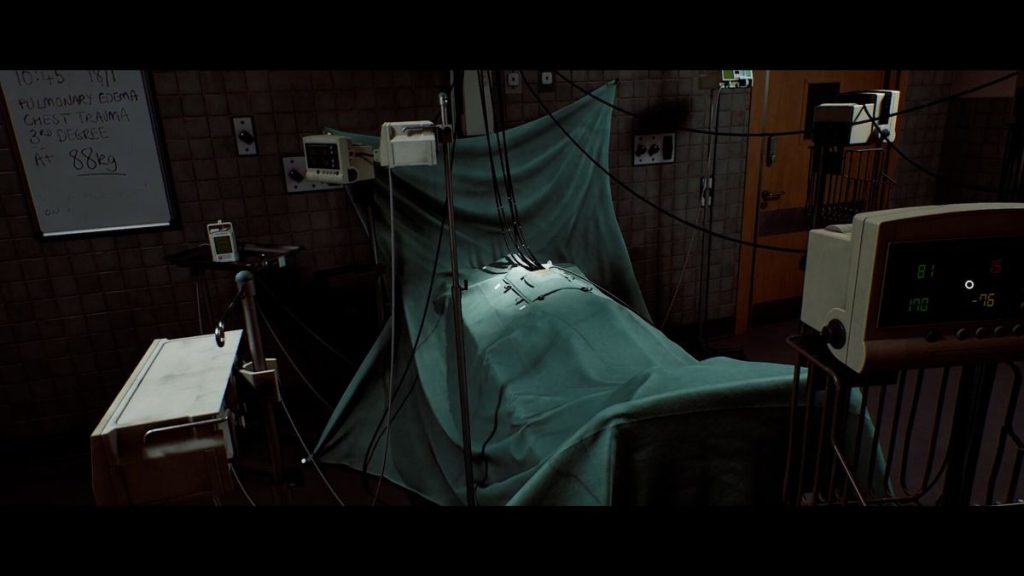
As much as being stealthy and avoiding enemies is fun, it’s only half the adventure. The other half is Simon trying to figure out why the hell everything is the way it is, and why the town looks the way it does and is occupied by terrible things. To do this, the game asks players to follow well-placed breadcrumbs and find the ‘path’ they must take to help Simon solve the mystery of St. Amelia. This might be the biggest part of the overall gameplay, and certainly the most involved. Players move from place to place, find unlocked doors, pick up notes that suggest a direction, or listen to recordings that hint at where Simon should look next. Getting from place to place and finding those breadcrumbs is hard work, as the game throws obstacles and requires the player to backtrack consistently throughout the story. One breadcrumb could lead to five more, which could lead to different paths that either contribute to the main mystery or add more context to the overall narrative. For example, early in the game, Simon must figure out a code to open a door in a doctor’s office. That code is embedded in notes and isn’t obvious until truly read carefully. Once deciphered and the door opened, it leads Simon to the next bit of mystery: a recording on the desk behind the door. Guess what the recording does? Yep, more breadcrumbs. The gameplay flows like a trickle and doesn’t reveal the narrative cards until it needs to. And it isn’t easy to guess, and it isn’t always easy to pick up on. It’s driven by puzzles and asking the player to simply pay attention to what they’re doing and finding. Gamers who enjoy puzzle games will probably fall in love with how this one works. It truly throws in some hefty brain teasers.
Like all Silent Hill games, Silent Hill: Townfall has a thick narrative mystery. Its stealth-driven gameplay drives the adventure more than in previous games. By focusing on solving the mystery of St. Amelia and Simon’s predicament and emphasizing stealth over action, it feels much closer to a horror experience than previous Silent Hill games. In a way, that makes it better than previous releases, as it brings true horror to a console.
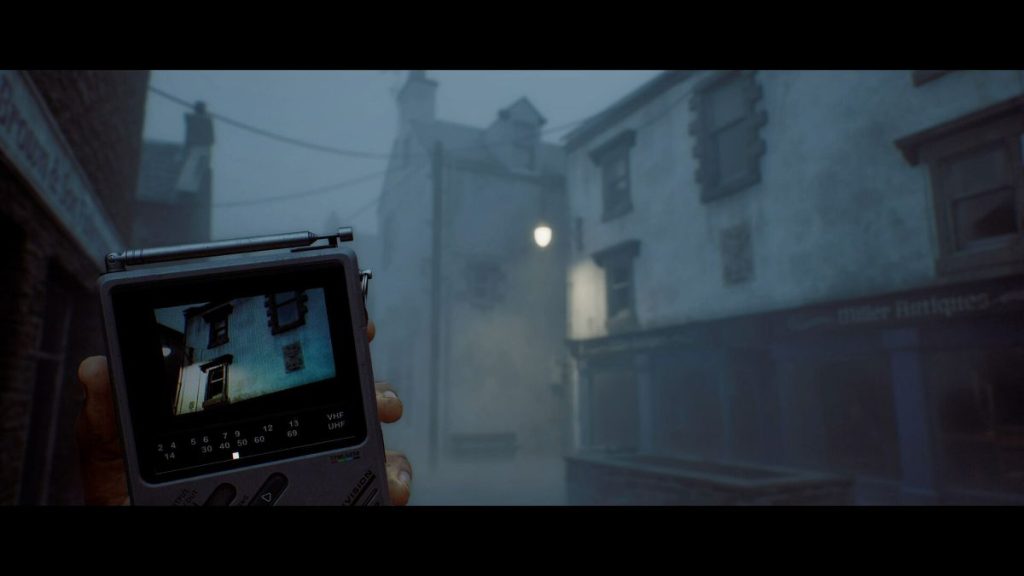
That said, a couple of gameplay aspects could have been better. Starting with one of the game’s more important elements: the small CRT portable device Simon carries. While I love the throwback to the 80s/early 90s tech, and it’s well-placed within Simon’s world, it’s a bit of a burden to use. The item serves two purposes: it detects enemies and gives hints. The former is shown by yellow marks on the set’s dial that, when tuned to, reveal the direction of nearby danger. The latter works the same way with tuning, but instead of just directional graphics, it shows pictures and plays sounds that relate to the next step in discovering the next breadcrumb.
I love the concept of the tiny set, but it feels like such a stop in gameplay when you’re using the device, especially when you’re trying to detect enemies. Looking at the screen doesn’t stop enemies from getting to the player. It’s all in real-time, so hiding and using the CRT is the best, but sometimes that isn’t an option. Anyway, using it just slows things down instead of helping you move forward promptly. It’s a cool concept, but I am not exactly in love with it.
Another issue I had with the game was how rigid and linear it became as the game unfolded. While Simon traverses St. Amelia, it’s mainly there to look pretty rather than support gameplay. Most of what the player sees during the adventure is gorgeous, but most of it is also inaccessible, which means only a handful of designated areas are open for the player to explore. I think that the game should have opened up the town, even opened up most, if not all, doors for exploration, thus making it more difficult for players to find the place they need to be to progress the story. At the very least, this would make the town feel real, bigger, more abandoned, and get the player further into Simon’s world. But as the game stands, only certain places are accessible, and the player will spend a good chunk of time testing the waters of places they can access rather than focusing purely on the mystery. I get that the last complaint sounds a bit petty, but players will quickly realize they are in a big town with few points of entry. The gameplay is built around those specific places and nothing more. The design is very linear.
Those whiny complaints aside, the game still has legs. It’s a stealth game with an amazing story that creates a new way to terrify gamers. Its departure from the old Silent Hill formula was a chance that was taken, and one that was well worth it. It breathes new life into an old series.
With that, let’s wrap up this review.
Conclusion
Silent Hill: Townfall from developer Screen Burn and publisher Konami is a step in a new and right direction for the old series. Relying more on stealth than fighting and focusing more on the narrative that builds a compelling mystery makes for a good and terrifying time.