
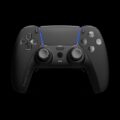
It's been very hard for me to put the SCUF Reflex Pro down in these past few weeks of reviewing PS5 and PC games. It feels just like my DualSense controller all the while featuring backmounted buttons that are natural extensions of the controller for more complex gaming needs. While I wish it had a battery life comparable to its price point, I’m comfortable just keeping it plugged in for the sake of ergonomics.
SCUF…if you’re reading this…you’ve done something I never thought would be imaginable…You have created a third-party controller that feels just like a DualSense from Sony themselves. You’ve made thoughtful additions that improve the nearly perfect controller. Best yet – you’ve created a third-party controller that I refuse to share with others…unless I’m recommending it to others as something to add to their current setup.
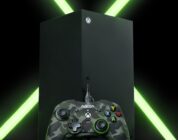
Prior to receiving my SCUF Reflex, I had used the SCUF Valor Pro controller for playing on my PC when a game required (or encouraged) me to use a controller instead of my handy dandy mechanical keyboard with ceramic keycaps. They’ve a long track record of providing high quality third-party peripherals, recently becoming incorporated into Corsair’s family of brands. They’ve also partnered with multiple esports organizations and content creators to create customizable controllers, setting them apart from the often black-and-white aesthetic of traditional console controllers.
The SCUF Reflex Pro has technically been around since 2023, but SCUF has taken the initiative to update this third-party PS5 controller to feature Hall Effect joysticks (yes, the magnets that decrease the likelihood of joystick drift)! Aside from that addition, it has all of the good benefits that came with the original Reflex, including the additional backpedals, wirelessness, compatibility with PS5 and PC, and customizable frontplates.
 Welcome to 2025, Reflex Pro – I’m thrilled you’re here.
There’s something about the Reflex Pro that feels uncanny in-hand. It feels just like a DualSense but with a few extra buttons. It has a near-exact set of bumps on the controller handles that keeps the controller firmly nestled in the palm of my hand. Adaptive triggers? Yeah, it has those, too. And the delicious haptics. Playing RETURNAL with the SCUF Reflex Pro was exactly like playing on a DualSense. I’ve never used a controller that feels like it’s an upgraded version of a first-party controller, yet here I am.
The Reflex Pro comes with a 6ft long braided USB cord (for charging the unit), a sturdy cloth carrying case, and replacement joysticks of different heights. The case feels sturdy, definitely something that would protect the controller if I chose to travel with it. The cable is of good quality, as well, just as thick as similar braided USB cables from the likes of Corsair, Turtle Beach, and Victrix. I love these cables because of how they retain their shape and have some heft to them; the stock USB cable from Sony feels too flimsy for my liking.
 One of the key differences in the SCUF Reflex Pro is its backpedals. They’re positioned in the nook where the controller handle meets the middle segment and take a decent amount of force to push, depending on where you push along with the size of your hands. Coming from a stock DualSense controller, the notion of having buttons on the backside of the controller will feel quite foreign. However, if you’re already familiar with “Pro” controllers and their additional back-positioned buttons, these buttons will feel very natural. For me, these backpedals were far more natural and easy to use than anything I’ve tested before, amd I felt even more compelled to use them when playing shooters. SCUF did well placing these buttons in a natural place without compromising the DualSense’s already-excellent ergonomics.
The Reflex Pro’s joysticks look just like the DualSense’s, but they are far more gripper. The Reflex Pro’s joysticks are textured similarly as their Valor Pro (the XBOX controller), with a light roughness that feels pleasing on the thumbs while ensuring that my thumbs were stable. When I switched from the Reflex Pro to my Switch 2’s joy-cons to play something else, I felt a noticeable difference and kept wishing that my joy-cons had the same texture as the Reflex Pro’s joysticks. There’s little else like them, and they offer excellent grip even during the most intense gaming sessions.
Should you need to adjust the joysticks, it’s easy enough to replace them by removing the frontplate (as you would if you wanted an alternate design for your controller). I’ve seen a a handful of users online mention that it can be tricky, but I disagree. It’s easy enough to replace the joysticks with a bit of patience.
At the top of this review, I mentioned that the Reflex Pro now has Hall Effect tech built into the controller. This is indeed the case, just like the recently updated Valor Pro. Hall Effect joysticks are excellent in general, and the Reflex Pro’s joysticks feel just as precise and snappy when in use as other similar joysticks. After using it for several weeks on both my PS5 and my PC, I’m relatively confident that it will hold up under heavy use cases with no issues.
 As this controller is, for the most part, a DualSense controller, you should assume that its battery life is around the same as Sony’s first party controller. I was able to hit anywhere between 3-6 hours in a single gaming session before needing to plug it in, which is on par with a brand new DualSense. I know both SCUF and Sony claim that the DualSense can last anywhere between 4 to 12 hours – I have yet to achieve that in my years of owning a PS5.
The Reflex Pro’s battery life is admittedly my biggest complaint with the controller, especially given that it costs more than Sony’s DualSense Edge (which is the comparable “Pro” PS5 controller in this category). It’s strange to see a Pro-level controller have all the bells and whistles of its competitors but last just as long as the entry-level first-party unit. I’m willing to accept a slightly heavier Reflex Pro if SCUF could add in a larger battery or a way of easily swapping out batteries ala Steelseries’ Arctic Nova Pro. Hopefully they consider upgrading the unit in the future to help it last just as long as the DualSense Edge.
In the meantime, though, I guess I’ll just use it wired on PC and plug it in after a gaming session on my PS5.
 The biggest pill to swallow here is the Reflex Pro’s price. At ~$230, you’re effectively paying for a Pro controller that’s a smidge more expensive than the DualSense Edge. The Edge is the first-party option with swappable stick caps, adjustable trigger lengths, around 6-8 hours of battery life, and back-mounted buttons that don’t feel too natural; the Reflex Pro’s back-positioned buttons are naturally placed, the joysticks can be swapped out altogether, and it the controller’s front plate can be swapped depending on what color you want. It essentially comes down to what you prefer here: If you want a more colorful Pro controller with joysticks of varying heights and naturally positioned additional buttons, the Reflex Pro should be top of mind.
It’s been very hard for me to put the SCUF Reflex Pro down in these past few weeks of reviewing PS5 and PC games. It feels just like my DualSense controller all the while featuring backmounted buttons that are natural extensions of the controller for more complex gaming needs. While I wish it had a battery life comparable to its price point, I’m comfortable just keeping it plugged in for the sake of ergonomics.