

People of Note proves the flexibility of turn-based RPGs when care is taken with both combat and content. Centering the game around its musical core pays off in dividends with a heartfelt narrative and engaging combat that frequently surprises.
People of Note‘s soundtrack has been playing in my head for days which, for a game so focused on the magic of music, is certainly worth praise.
And I swear I didn’t plan for that to rhyme but much like this game, surprises can always happen.
As one gets older, it’s easy for exhaustion to cannibalize our enthusiasm. Over the years I have watched the industry go through numerous bouts of sea change both awful and humbling. With that lethargic quality of existing, feeling jaded is almost a guarantee, even in regards to a hobby you adore. Somehow, I’ve never tired of games and always look at them with moderate optimism. Considering how much of a pessimist I normally am, it’s quite shocking.
Two months ago, Nathan previewed People of Note, dipping into the game’s opening lines. The two of us share a love of music and a love of games. Even though Nathan is a few years older than me, he mostly hasn’t lost his luster for the magic the medium can convey. I’ve seen the guy tired but never jaded, frequently positive… no idea how he does it.
When People of Note was offered to me for review, my mind had blanked on what it was. So, naturally, I looked up a trailer on YouTube to get a taste because usually that’s all the needed reference to piece together if a game will offer me enjoyment of note.
I’m not an old man who shouts at the clouds and muses what the youth are up to these days but the latent Scrooge in me had an urge to feel cringe when protagonist Cadence started to belt out her dramatic pop song. “Is this a musical?” My eyes did that incredulous squint, I probably uttered a little internal groan. My time to care much about musicals has long been expunged from my soul. I got all that out as a younger lad and I think watching Mamma Mia! killed something inside of me despite loving ABBA. I’m just kind of particular about what music I listen to and the impassioned chords and expositional lyrics in People of Note‘s trailer felt a bit alien for a story housed inside of a turn-based RPG.
But why not bite the bullet? So I did.
People of Note could be described as weird if you’ve never played a game that has experimented with tropes and genre norms. Quirky is probably an adjective that works better in this context, though. Let’s just be honest: Clair Obscur: Expedition 33 has likely revitalized the yearning for turn-based RPGs across the board, probably to the point where Square Enix has taken note. Developer Iridium Studios was toiling away at their game for a couple years, unaware of 2025’s monstrous Game of the Year forging a golden path.
That’s why People of Note feels so great for the soul. Not only is it unexpected, it’s truly unique. There’s something refreshing about a game that uses turn-based combat and weaves its intricacies to the beat of a tune.
Ah… there it is. People of Note: a tune-based RPG. Thank you, my work here is done.
Iridium Studios respects the genre but it also understands it. The hero’s journey. The rising and falling action. The tinkering of expectations in battle. The min-maxing of stats. It’s all here, housed in a colorful package that happens to feature numerous music videos meant to explain the machinations of the plot and the motivations of characters.
Exposition dumps can feel trite. They talk down to the player in hopes of filling them in on necessary information that should have already been gleaned from dialog, world-building, and cutscenes. Yet when Cadence has been met with defeat in the first hour of the game and powerfully belts out a wrenching song with rhymes, a chorus, melodies, harmonies, and layered instruments, there’s a certain power in it. That “cringe” feeling is merely the emotion poking its finger at your heartstrings, asking to pluck.
This happens once or twice in each chapter of People of Note‘s story. A character is meeting face-to-face with a guarded truth and the only way they can translate that to others and the player, is with song. And what makes these moments so powerful is that they are done with a high bar of quality across the entire spectrum of genres. Covered here are pop, rock, metal, punk, EDM, rap, country, classical, even 80s retro. The player’s ears are met with a barrage of diverse sounds and themes, often using one core track that is then iterated upon in juggling genres.
In traditional RPG fashion, the premise is only the tip of the iceberg.
Cadence is an eager pop star who wants to take center stage in Chordia and win a musical competition. Of course, it doesn’t go as planned and her simple personal journey of trying to rub elbows with contest judges to get another shot takes a turn. Akin to a Final Fantasy, Cadence will run into a world-altering event head-on but not because of her own volition. All the while she has to come to terms with her quest for fame and what really matters.
Hitting the broad strokes is something Iridium Studios does well. Right before the final act careens into place, her musical troupe is fighting super-powered humans who can float and have god-like pools of HP. I was waiting for a character to turn into a deity or a sinkhole to form in the world that acted as a wormhole through time. People of Note scratches at these lofty ambitions but never gets too carried away with itself.
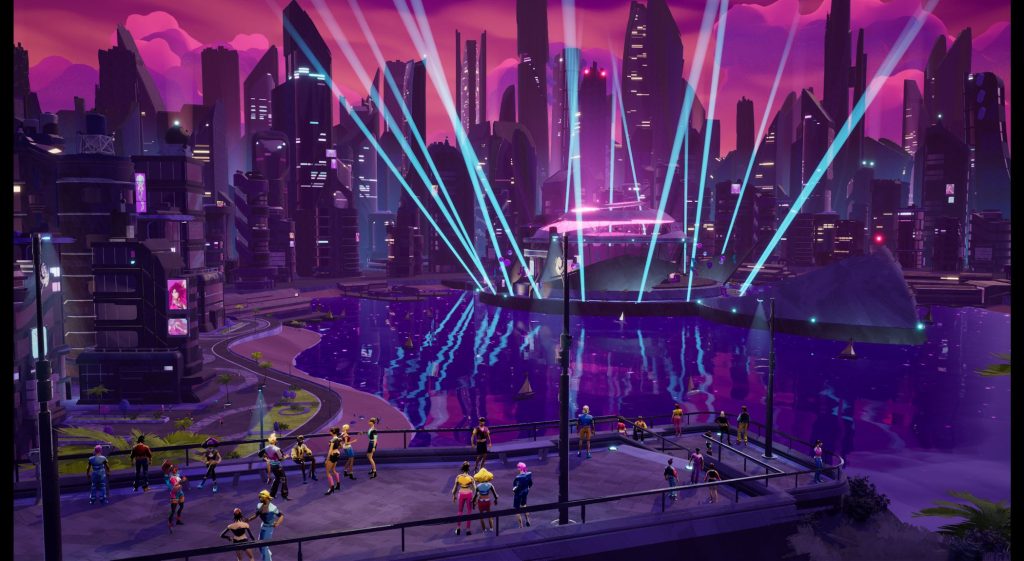
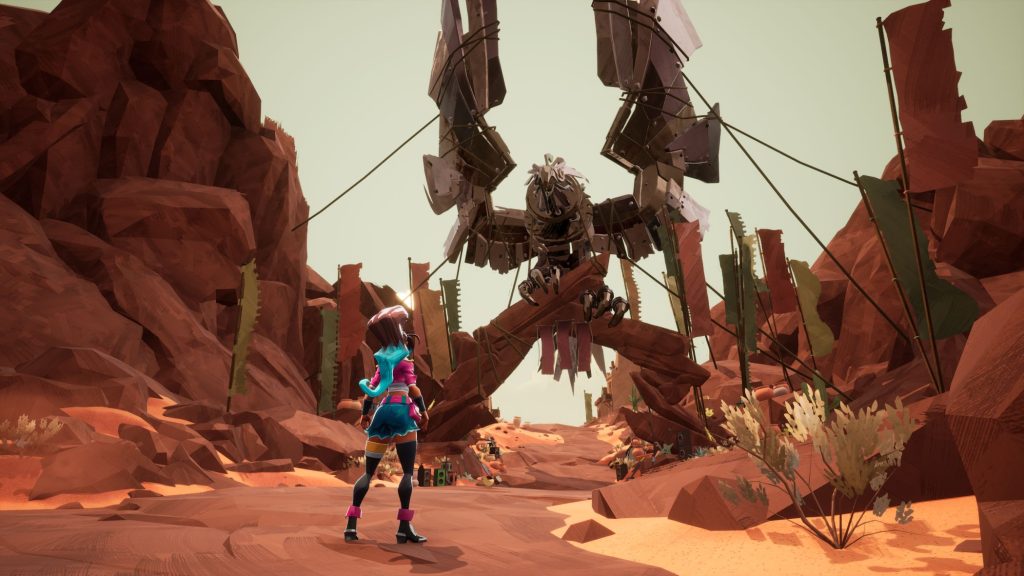
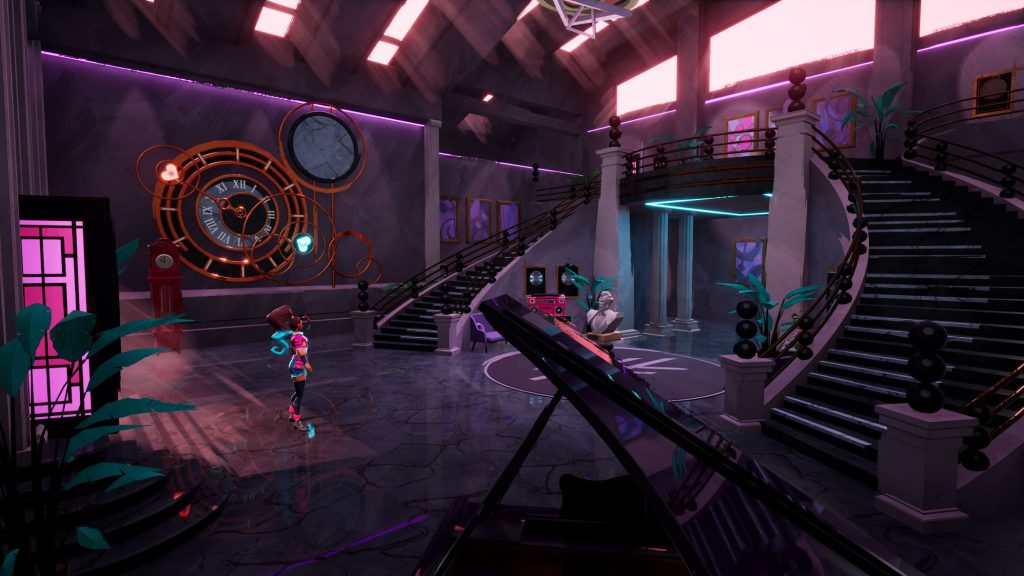
The game certainly takes place in a fantastical world that has a lore and mysticism yet still pulls from other inspirations like science fiction. Chordia is bathed in purples and pinks to match Cadence’s bubblegum pop persona where Lumina is a techno-city buzzing with neon lights and blues. The culture of rap springs from an opulent kingdom that houses a queen while metal and punk are opposing tribes in a grungy desert.
People of Note‘s strong sense of character and place beams through every screen. It all feels so real as if Iridium Studios is relaying a sight-seeing voyage that went on when seeking out inspiration for the game.
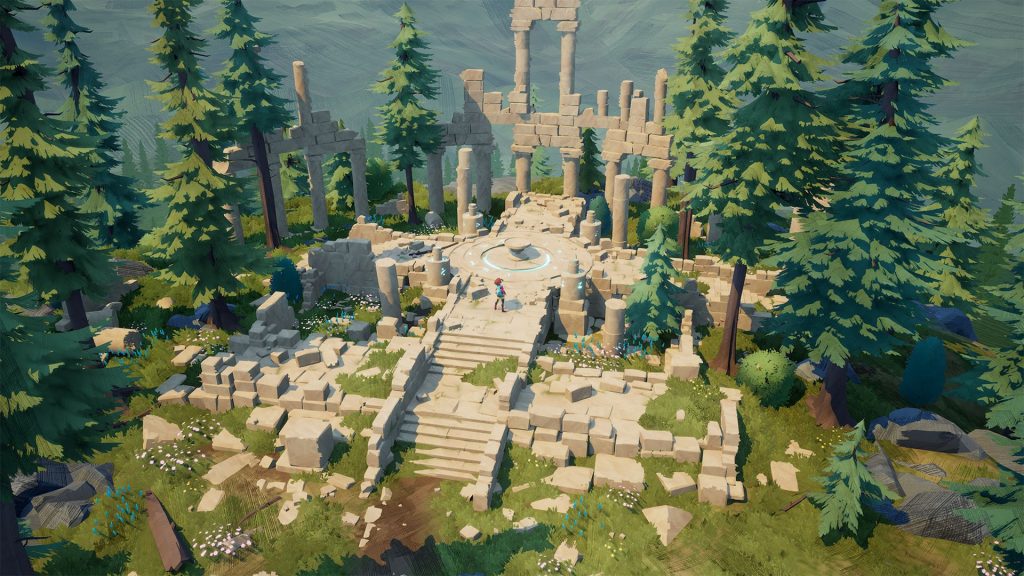
Running around the worlds is prone to a few breathtaking vistas that are framed impeccably, casting a gargantuan spectacle upon entry, only for the camera to swoop in as Cadence trots to her next destination. Fixed camera angles work nearly perfectly here, evoking the first time I walked through Zanarkand in Final Fantasy X. While there are characters to interact with and listen to, shops to purchase wares from, and fun distractions, there are moments where these big spaces can still feel a bit empty. NPCs are mainly static and don’t move from their standing spots and trying to run back and forth between areas can sometime be tedious.
Regardless, People of Note is full of life and personality. I felt like I bonded with a number of its characters, especially Cadence, Synthia, and Fret. Each gets a hefty chunk of story that details their own individual hang-ups, solving them through camaraderie and combat.
But I think there are a few notable pacing issues that get in the way of the game’s second half. By the time the crew reaches Pyre and acquires the rap prince Vox, everything was feeling rushed.
Initially, Cadence hopes to craft her own unique sound by incorporating her pop sensibilities with other styles. Considering each realm acts as its own independent kind of universe where visitors from other lands rarely travel, it’s a fun twist that a potential song that might save the day is a literal mash-up of styles. A lot of time is spent with Cadence and Fret workshopping the basis of a song but as the story continues, the focus pulls more and more to the grander plot. Because of this, Vox doesn’t get enough time to flesh out his character and the greater threat doesn’t feel as terrorizing. Yet this isn’t an RPG that lasts over 40 hours and to stretch the narrative out might risk diluting its creativity.
Supplementing the package is an incredibly strong cast of actors who speak and sing their hearts out, making each role extremely professional and sincere. On top of that, the writing is just damn clever. And I don’t necessarily mean the dialog and the plot, though those are good.
People of Note is riddled with puns and in-jokes about music. Nearly every named thing calls to musical roots. Characters, monsters, accessories; they are all a spin on a band, a song, or some music-related thing. I can’t imagine the time that went into plucking all these bits of inspiration and filtering them into the structure of the game.
Just as impressive is People of Note‘s translation of turn-based mechanics, creating one of the more memorable variations on the genre I’ve encountered in awhile.
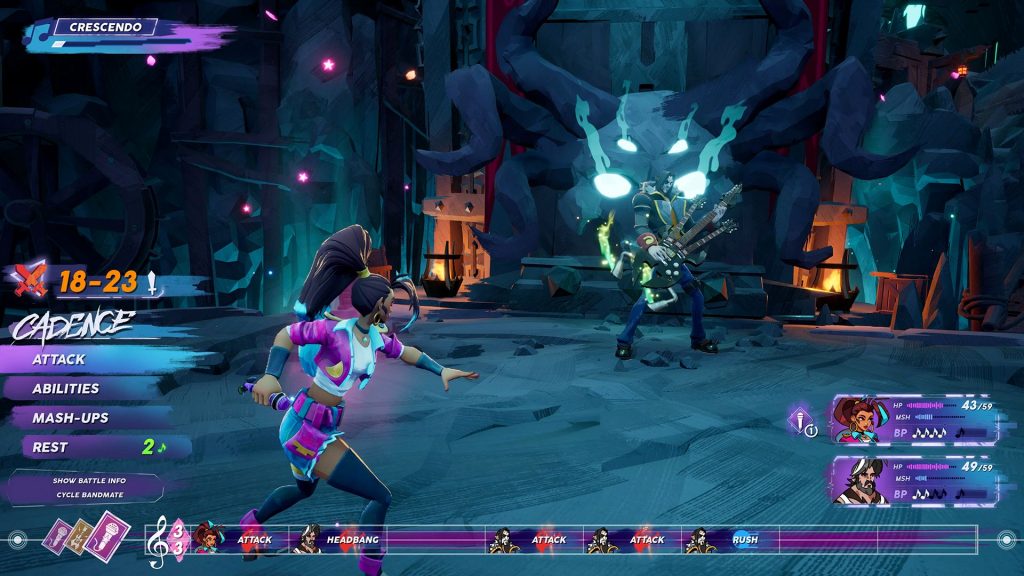
Characters have a basic attack and then a number of “spells” that are called Songstones. Songstones run the gamut of functionality from damage output, heals, buffs, and debuffs. Many of them could be granted the same names as other familiar franchise spells and it would be nearly impossible to distinguish between the two. And that’s not a slight on People of Note. Instead, it anchors the player to a kind of tradition.
Songstones use BP that will recover after a turn or when using a turn to “Rest”, earning more BP and boosting defense until the next turn. One of my favorite Songstones was used by Fret who, despite his rocker sensibilities became my white mage. Everyone can equip universal Songstones but the character-specific ones are obviously the best. Fret had a great ability that would heal the party when a member took damage, becoming a crutch in boss fights. Cadence had an ability called “Opening Act” that did double damage if it was the first action used that turn. Vox had two essential Songstones that would apply buffs to a specific turn for the remainder of the fight, asking the player to think out a plan.
After adding Fret to the band, a stanza–what the player’s or enemy’s round of turns is called-has a musical style applied to it. Purple is pop, yellow is rock, blue is EDM, and green is rap. When a character performs an action when their particular style is active, that action receives a boost. Attacks hit harder and heals recover more health.
As battles grow in complexity and difficulty, trying to map out when to conserve BP for a character’s style stanza is critical. Cadence became my primary damage dealer because I would always find ways of maximizing the “Opening Act” Songstone to usually hit an enemy for 100+ HP.
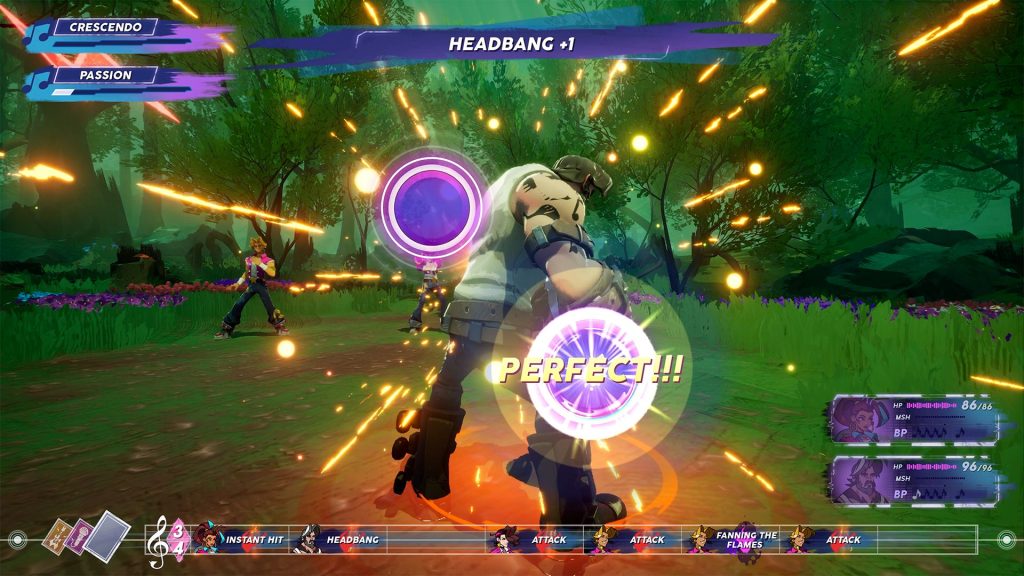
Finally, Mash-Ups are unlocked over time that blend the styles of two characters are apply an effect to the entire party or deal massive amounts of damage. But to perform a Mash-Up, those two characters need to have not performed an action for that stanza and it will subsequently boost both styles for the remainder of that stanza.
Really, the system isn’t that complicated. But as time goes on, the player begins to uncover depth. Equipment meant to boost offense and defense or add special effects will need to be accounted for. AP earned through battle can level up a Songstone but it is very costly and requires a lot of grinding. Even Songstones can have modifiers attached to them.
When it all harmonizes, the player can feel the power in each move. And if they fail, restarting is simple enough. Plus, during any “dungeon” in the game, a press of a button can throw the group into a battle. Because health resets at every battle, grinding isn’t an absolute pain, just a bit time-consuming.
My main complaint with People of Note‘s combat is that on the recommended Normal difficulty, later battles with both basic mobs and bosses can sometimes turn into wars of attrition. Though every boss in the game is unique in their own right and prove to be tests of skill, many of their moves are meant to force the player out of their comfort zone. One boss negates damage on the first attack of the round, which becomes problematic later in the fight. Another boss prevents damage dealt below or above a certain HP threshold irrelevant, often causing the player to delay a powerful attack for multiple stanzas.
There was some frustration, certainly. But overcoming some of these pesky jerks felt great. Another high point of combat were the “puzzle battles” scattered around the world. These require the player to complete a certain task like deal 200 damage in one attack or kill a group of enemies in two stanzas. It sounds easy but it’s not. Honestly, I had to do actual math for some of these puzzles, trying to discern precisely which character needed to perform an attack to shave off the required amount of XP.
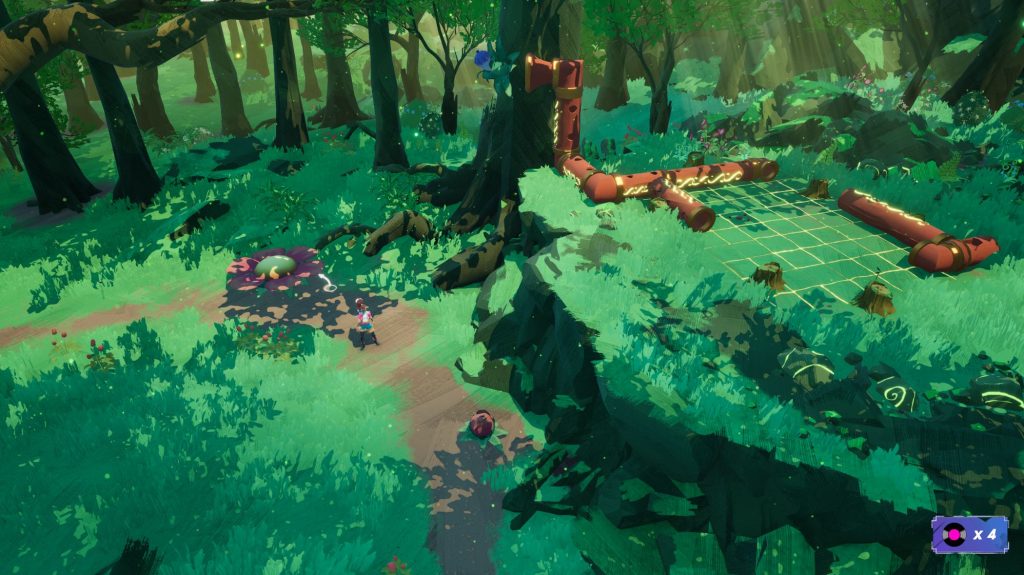
In most areas there’s also a thematic group of puzzles that block progression and also grant rewards for completing the hardest optional ones. Maybe it’s lining up some woodwind instruments to make a flower grow. Or it could be pressurizing geysers to hop over rock formations. Maybe it’s stepping over neon floor panels to reach a switch. The fact that People of Note offers so much mechanical depth truly sells me on the vision created by Iridium Studios.
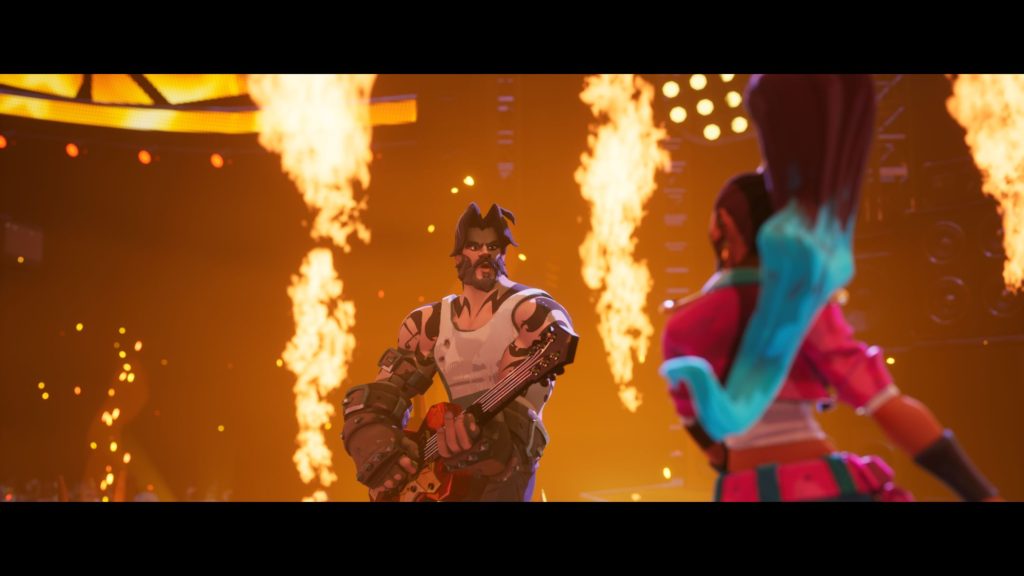
When it’s all said and done, People of Note‘s varying mechanical and narrative elements are held together by its devotion to the joy of music. Players time button presses to the rhythm of the beat, strengthening their abilities. The cohesion of seemingly disparate genres creates a powerful fusion when all characters learn to appreciate each other. And, ultimately, the music on display is phenomenal. It is so resoundingly diverse, catchy, and good. Were it to feel bland and uninspired, the whole game would fall apart. Thankfully, even a sometimes crotchety person like me can enjoy a great tune in a genre I pay little mind to.
People of Note proves that turn-based RPGs can offer synergistic fun as long as care is given to both the combat and the content. By centering the game around its musical core, Iridium Studios pays off their efforts in dividends. Not only is the narrative heartfelt and the combat engaging, the creativity used in incorporating song constantly surprises, making People of Note just as catchy as its catalog of earworms.