

When you’re expecting Silent Hill, and you get a wildly different adventure that reminds you of a Studio Ghibli film. Expectations exceeded.
OPUS Prism Peak from developer SIGONO, INC. brings an interesting adventure shrouded in melancholy memories and brimming with choices. This game leans heavily on narrative, while sporting solid branching dialogue that leads the way. In addition, there is a fair amount of camera work (literal camera work, the main mechanic of the gameplay) that feels a bit like playing Pokémon Snap. While all the gameplay elements built around the narrative do a great job of working together, the overall adventure can be slow here and there. What keeps it all in check, though, is one of the more thoughtful narratives I have seen in 2026, and some player agency to uncover the mystery of the world that the main character stumbles into.
On the narrative side of the tracks, OPUS Prism Peak follows the life of a former photographer who is dealing with loss in his family and emotional confusion and entanglement. Trying to find meaning in his own life and driven away from being a photographer, he doesn’t seem himself beyond his current status of lost without being found. On his journey to see his family, he gets in a car wreck and finds himself stranded in a mysterious land called the Dusklands with a young girl named Ren who desperately needs his help. Their first interaction drives him away from his wreck and into the Dusklands. The land that the pair travels into contains people and creatures who wander, and who also have a finite time to remember who they were and what their name was before they fade away from eternity. That is a very real fate for those who wander Dusklands, and it is a fate that Ren is racing against as well. How the wandering residents remember their name is through a person called the Seer, and a camera that the Seer carries with them. The Seer is a person who can bring them back to reality and help them on their way. As for the main villain in this magnum opus, it’s a mysterious force called the Shade. It’s violent, deadly, and unrelenting in its pursuit to trap as many spirits as it can in the Dusklands and wipe them out of existence.
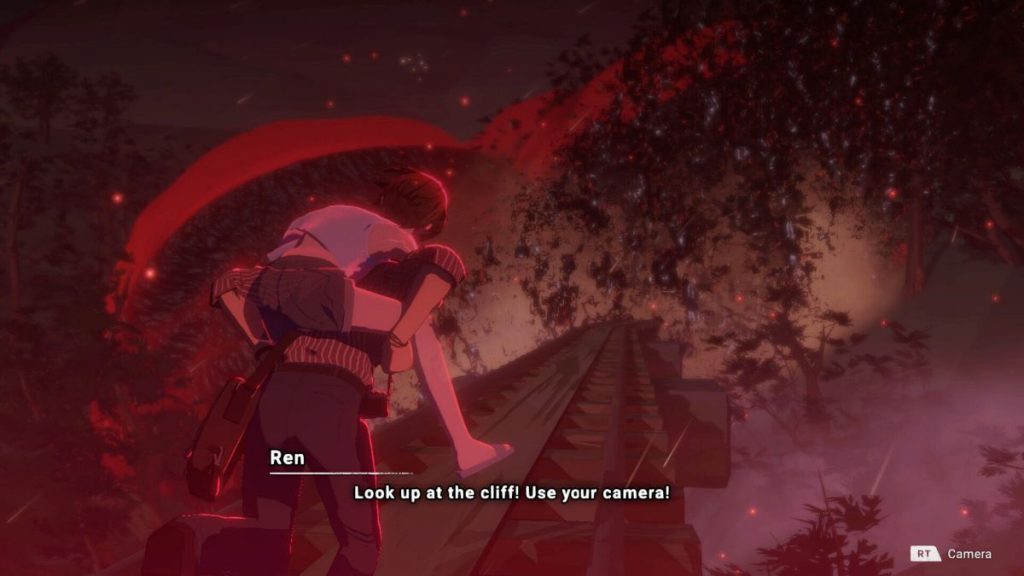
As previously stated, the best part of this game is the story. Players will be able to tell right from the get-go that this story is intense, it’s meaningful, and it’s very well built on the essence of a Miyazaki film. The story does a great job of piecing together a multi-act narrative, as the characters are well-defined. Right from the start, the narration gives you a hefty dose of what the main character has been going through in their life, and shows firmly where they stand within their own reality, which is the edge of getting permanently lost in the world. The main character is one that everyone can relate to emotionally. They show incredibly detailed human traits that make them more than just an anime knock-off. Players will sympathize with them, feel what they are feeling along their journey, and emotionally connect with them throughout the story. It’s crazy how well the characters were defined and developed, and no video game not made by Hideo Kojima should be this good with its characters. But it was and is, and because of these developed characters, the world is easy to see and know.
Because of the characters and the narrative, and the sense of urgency and loss at times, it’s so easy to fall in love with this story and connect with it. Most Hollywood writers would beg for this type of story and character development. It’s just that good.
On the gameplay side of the tracks, OPUS Prism Peak plays off that story, but at times plays it safe with what it allows the player to do in the world it builds. The main gameplay elements are led by branching dialogue, or giving the player a choice to move the story in one direction based on a chosen response during dialogue with other characters. While it didn’t go as far as Knights of the Old Republic, or one of my more recent reviews, Tides of Tomorrow, it still feels like the player gets to go the path they want to journey on and do what they want to do. That is a fun gameplay illusion.
In reality, the path is far more rigid than it looks with the branching dialogue, but with good reason. The story must go a certain direction, and it’s so well done that it’s tough to deviate from that path without deviating too far from the story itself. If you have ever played a visual novel in your life, it’s the same structure as that genre, where the player might be involved, but they aren’t truly driving the ship to the location of their choosing. Now, that said, the dialogue choices are nice and meaningful, and they all work within the narrative, giving some player agency, but not too much.
Another gameplay element for OPUS Prism Peak was the minor amount of exploration, all led by camera work. The levels of the game are built linearly, but are spruced up with multiple paths that make the world of OPUS Prism Peak feel like it can be explored, as well as the occasional camera shot that the player can perform on creatures and whatever they would like. Walking around and taking pictures with a camera, which has focus and shutter speed built into it, makes the gameplay feel a bit more complicated and bigger than it really is.
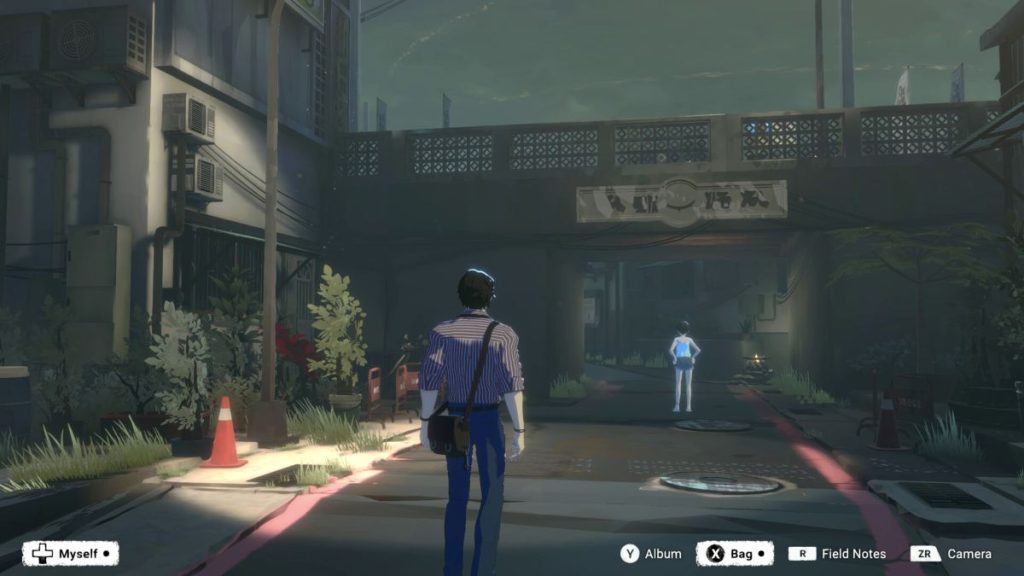
Staying with camera work, that gameplay function drives the action, helps to uncover mysteries, and pushes the story forward. The game relies on the camera to tell its story, as it establishes the main crisis of the game, Ren’s inability to appear in a picture and slowly disappearing thanks to infectious shade, while also giving the player some agency to make interesting picture choices. It’s also a device in the gameplay that allows for progression and puzzle-solving. For example, there are small fire pits lying throughout the Dusklands that give clues of photos that are needed, prompting the player to go hunt down the puzzling request made. Once an object is found and a picture taken of it, the photo can be brought back to the fire pit, and something will happen, such as story progression or the player receives an object that fills in some narrative blank. Pictures lead the way with branching dialogue and are woven into the main enjoyment of the gameplay, and help make it more interactive. It was a neat decision to make the camera a centerpiece to the gameplay, and it kind of lays out a path for younger and older gamers to enjoy the story a bit more, while not worrying about overly violent moments.
Now, that doesn’t mean there won’t be fighting somehow. There will be moments where the Shade will appear and force a boss fight of sorts. For example, the first fight that our main character and Ren get into is on a train, where the tracks are being demolished by the very violent Shade, and the main character must find a way to stop it. The weapon of choice? The camera, which requires pinpoint timing to take down the Shade. It’s crazy violent, intense, and yet, it doesn’t go over the top. The violence is driven solely by the Shade’s insane reaction to take out the characters, but there isn’t any Mortal Kombat-like violence. It’s just very intense in the moment, yet very cool.
Overall, the gameplay does a great job of connecting back with OPUS Prism Peak’s narrative and complementing it, while also making it more than just a movie to watch. The story is so good, I wouldn’t mind this being a movie at all. I think it has all the right pieces and parts to be the next Your Name or Spirited Away.
All this positivity said, the game does have stumbling blocks, which are that it is slow and sometimes frustrating. The slow part is because the game is trying to tell the story it wants to engage its player with, which isn’t a terrible idea, but it’s nonetheless something the player will feel, especially at the beginning. The story takes a little bit to get going, but once it does, it is easy to get swept up in, and the player will more than likely want to see it through. But, again, it’s a slow beginning.
As for the frustration, sometimes the gameplay photography requires pinpoint accuracy. For example, the first time I used the camera in the game, it was to help a giant ox remember who they were and what they were called. I must have taken at least 15 pictures of that creature before finally getting it right. I improved my photography skills over time, but trying to get exactly what the game wants at times is like trying to guess a sentence in Zork. It can be frustrating, especially when you understand what the story is asking for and believe that you’re delivering upon that request. It takes some adjustment, but not much. It’s just frustrating to start.
What is not slow or frustrating is how the game looks. I didn’t expect it to look as good as it did, as it takes cel-shading animations to the next level. The character models, expressions, and all the reactions that come with the superb acting are well represented graphically. In other words, this is a gorgeous game that fits the bill of the story beautifully. It’s just a notch below the story in terms of quality, but fantastic nonetheless.
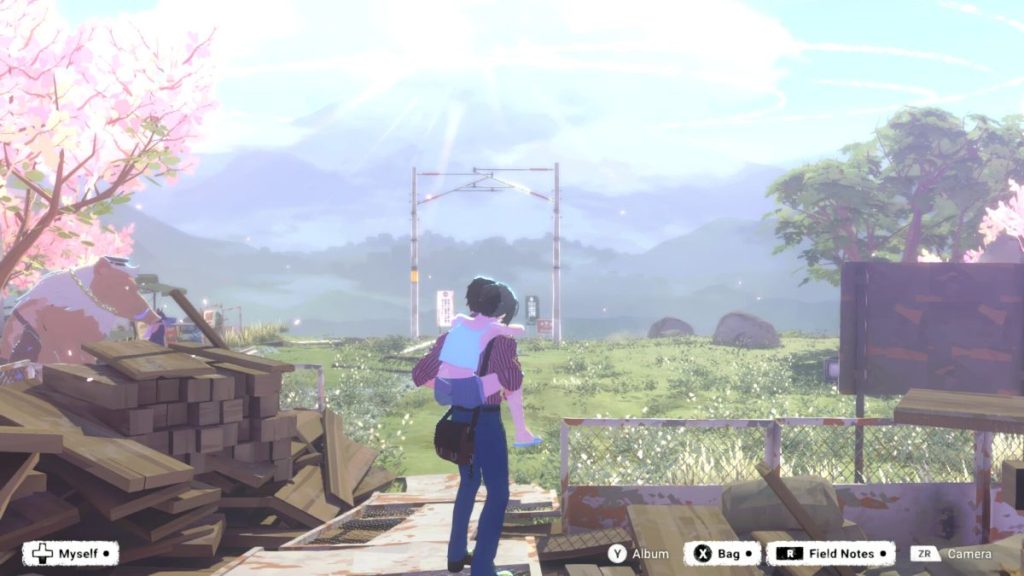
Anyway, OPUS Prism Peak is one of the best narratives that I have had the pleasure of playing in 2026. It has simple gameplay mechanics, a touch of exploration, and features some fun times with picture taking. It’s a truly exceptional game.
On that sweet note, let’s wrap up this review.
Conclusion
OPUS Prism Peak from developer SIGONO, INC. brings one solid narrative to the gaming table. It features humor, drama, compelling characters, and a worthy journey for the player to take on. All of this is wrapped in simple gameplay elements that don’t take the adventure too far away from the story.