

It has been nearly six years since Sam Bridges crossed America to connect with people and make the nation whole again. To put that in perspective, one pandemic, two presidents, and one insurrection have occurred since Sam’s last adventure. That seems like ages ago.
Well, Hideo Kojima is delivering the next chapter of Sam’s story with Kojima Productions’ Death Stranding 2: On the Beach. The game starts nearly five years removed from Sam’s disconnect with the world and his solo journey with budding baby Lou. This time, the world has gotten smaller for Sam; his focus is more on keeping his family together and connected, while avoiding any government orders to make the world a better place. Of course, that dreamscape can only last so long.
So, strap on some boots, make sure you have those packages secure, and let’s get moving on this sequel’s review.
Story – keeping it brief
DISCLAIMER: I’m putting this disclaimer in because I want to make sure you understand the vagueness of the story review section. The series is driven by its narrative, character development, and such, so I won’t be touching upon details of the story. I’m going to be vague with this, short with it, and try to keep any assumptions out of my opinion below. So, if you feel cheated by my review of the story, all I can say is, tough! I’m not here to ruin it for anyone. On that note, thank you for coming to my TED Talk on “How to avoid spoilers”.
The sequel to the gritty, yet narrative fulfilling first game, which connected with this reviewer on a very emotional level, is different than its predecessor. Death Stranding 2: On the Beach’s story is more intentional, more focused, less mysterious, and, surprisingly, a less urgent tale. The story wants Sam to take his time with no pressure added, while in the same breath gingerly doing what he does best – connecting people. It’s a welcome change of pace that makes sense considering the situation that Sam gets into during the sequel’s narrative. The feeling of impending doom brought upon gamers with Sam’s first journey isn’t as prevalent here, though it does have a path of its own to walk.
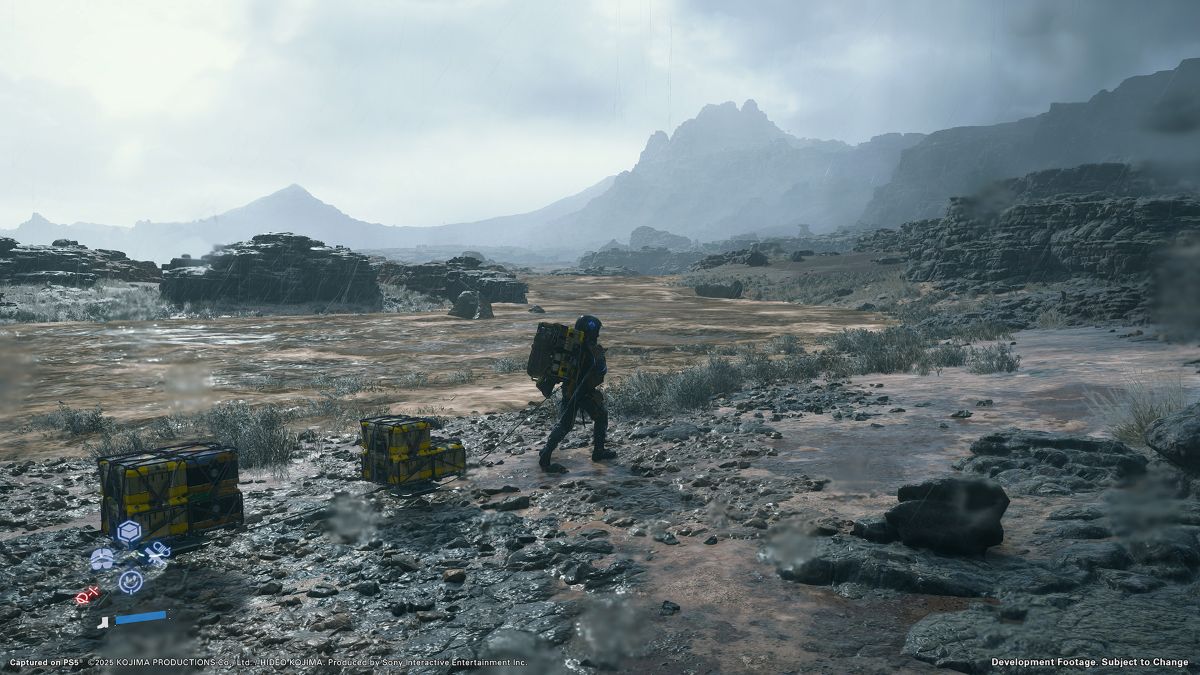
So, what is the story focused on, if not the crisis of the world? The story is more central to Sam’s life, his emotions, and how he is processing them. His shift to fatherhood at the end of the first game changed him and put him on a different path. The sequel is about his journey with Lou and how connected he feels to her. You get that from the opening scene in the game until the end. At the very least, it’s a more personal game rather than a huge fishing net cast to see what it can get.
If I keep going with this, I’m bound to let loose on a spoiler detail, so I’ll wrap up this section right now to avoid spilling the beans. Just know that while the narrative seems more personal, Sam’s going to have a rollercoaster ride that surpasses his first journey.
Overall, it was difficult to top the potential for a world-ending event in the first game, as its intensity and overbearingness during the entire journey were at the forefront all the way until the end. This time around, the rollercoaster is far more intense, as Sam is not going to have the greatest of times, nor can he take it or leave it, an attitude his character carried with him last time out.
In the end, the journey is different but equally good, as well as appropriate for Sam’s next step after saving the entire planet.
Learning some lessons
The gameplay in the 2019 title focused on Sam’s survival and how he traversed the landscape. The land he walked across was flush with BTs, or souls who wanted to drag people into certain death, and the journey was also a constant fight against nature. For those who labeled Death Stranding a walking simulator, they weren’t too far from the truth, as that was, at a core level, its gameplay construct. You walked around, you ran into BTs, you either dealt with them or avoided them, you had to keep an eye out with your goods being delivered, as the environment and BTs could damage them, and then you delivered packages to your next bit of story. Whether you enjoyed that type of gameplay or not, that is what you were served with, as it progressed the storyline through each connection made.
Death Stranding 2: On the Beach is less of that struggle. The sequel features far fewer BT interactions, while toting the same package delivering gameplay, though more meaningful this time around with every delivery that Sam completes. This game focuses more on the antagonists in the story, one that comes in a variety of flavors, which helps keep the game focused on its goals. That shift in gameplay means that you aren’t getting impeded upon by stop-and-go BT interactions, which, at times, dragged the original gameplay down, especially at the beginning of Sam’s original journey. With this sequel, you deliver packages, you acquire another piece of the story for Sam, and then you go to the next spot. The gameplay is not at all dragged down by unnecessary and random interactions.
Honestly, we don’t need the hindrance of BTs as much as we did with the first game, as we now know why they exist and what they are trying to do. Don’t get me wrong, they’re still present in more than several places during gameplay, and can be equally terrifying, but you will find less stopping and going, which only stands to progress the journey in a more positive light. Because of this gameplay tonal shift, Kojima and his crew had to fill in more blanks with more story, which only benefited what was trying to be accomplished. If you want to hook people, then you throw in moments that seem like they go nowhere, only to find that they went somewhere meaningful and were worth mentioning. Most of those breadcrumbs that Kojima Productions scatters in Death Stranding 2: On the Beach lend well to that type of gameplay, as you will willingly, and not exhaustively, want to go from point to point trying to uncover what is trying to happen with pieces and parts of the story.
Anyway, as I stated before, the story is central to this game, smaller, and more personal, which translates seamlessly to the gameplay. Having any disruptions to hinder that journey means that there is a possibility of narrative disconnect with players. Kojima crafted and catered to this gameplay to ensure that the story never dips or drops and doesn’t start any tension between the player and the story. And he and his team did a masterful job of crafting those seamless connections that don’t get interrupted.
Now, as for the actual gameplay, it feels more sewn up than the first game. You will go into the game more prepared because you understand how the original played. The game still has you cross through lands with packages on your back and still throws decision-making of what to carry and what not into the mix. You still must be thoughtful of your essentials versus your excessive ones and be prepared for the environmental elements when they crop up. On the surface, nothing changed with gameplay control or how Sam works, other than he feels far less loosey-goosey to control.
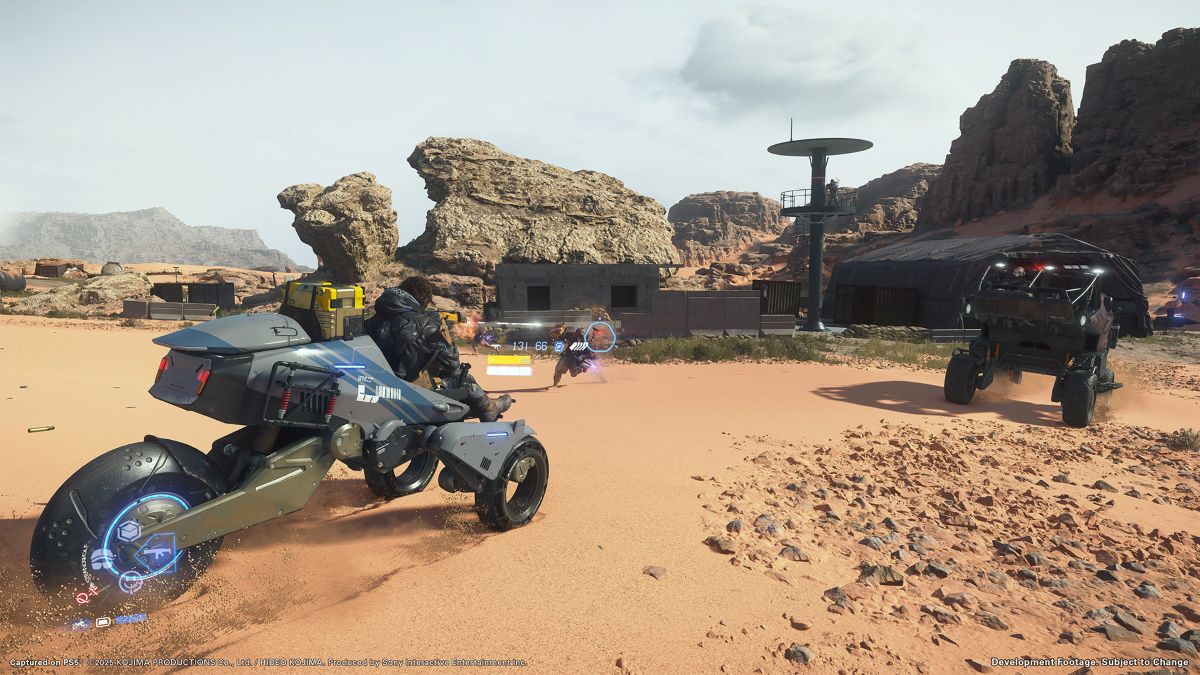
That lack of loosey-goosey is caused by landscape change, as your journey takes you into a different set of countries that contain new environments to impede your journey. For example, there is a country in the game that features dunes. While grass and rocks presented a variety of obstacles for Sam in the first game, and whatever vehicle Sam was using to get around (including his legs), environments with dunes prevent Sam’s journey from being an easy one because of the collapse and slide elements he’ll have to deal with while traveling on the sand. Riding a truck through sand, especially one that isn’t prepared to handle that texture, creates a different type of obstacle for Sam to traverse. Instead of damaging the truck, Sam simply cannot get around fast enough in it. This affects how he deals with rogue soldiers and BTs, as he simply cannot outrun them in this type of environment.
Kojima and the crew took the environment heavily into consideration as it relates to how Sam travels and what issues he must think about when planning a journey for his next delivery. The devs perfected and deepened the environmental elements in this sequel and expanded the various types of environments that Sam runs into. This made the world feel bigger, a little bit more dangerous, and gave a good variety of obstacles that were beyond hills and rocks. For that detail and effort, the game will have you thinking more about preparation and what type of journey you’re going to go through with each delivery.
Related, unlike the first game, you quickly obtain blueprints for basic vehicles and weaponry. The latter of the two is expanded quite a bit, offering different types of non-lethal guns to take enemies out with, as well as new weapons to take down BTs. Machine guns, large tar guns, shotguns, and a wide array of goodies to arm yourself with are available in the sequel. The world expanded its chiral printing, and that is well-represented in this game.
In addition, the game’s mechanics with how you point and shoot are simplified, if not perfected. Aiming is easier, connecting with your target feels less like Metal Gear Solid, and doesn’t get in the way of any potential action. The same expectations of ammo and the finite use of weaponry are still present in the sequel, but, again, it doesn’t impede the story or action of the game. I’m not saying being well-armed will have you going and picking fights, but I am saying that you won’t feel panicked about opening a gun of your choice, pointing and shooting, and then continuing your journey. It’s well built for Death Stranding 2: On the Beach.
Shifting gears to the above-mentioned targets, the game does a good job of populating baddies and giving you more of a 1v1 (or many) challenge than the first. With BTs, you’ll have to scope them out and use specific weapons on them. They’re far tougher to locate, and it requires accuracy to take them down safely. Should you bump into them and not take the proper precautions to dispose of them, you’ll still get that mini-boss fight, though the mini-bosses are of a bigger variety, so it won’t feel like the same old stuff each time.
With rogue soldiers, there are a lot more of them, they’re smarter this time, and they have a large variety of weaponry that will take you out quickly. For example, during the journey, Sam eventually runs into a large camp of soldiers. These soldiers have guns, electric javelins, grenades, rockets, and sometimes magnetic mines (the worst). They do a great job of taking advantage of Sam’s disadvantages, as well as making sure they can get Sam from all sides. They are far more dangerous than before and relentless when they have you on the ropes. They offer good progression challenges and will do their best to impede Sam’s journey every step of the way. They don’t feel like options this time; rather, they feel like honest-to-God obstacles.
As the game progresses with its story, you will occasionally run into boss fights and super-boss fights. The former is mainly what you’ve seen before with BTs, as you will be dragged into tar, a large creature of some sort will appear, and you must take them down. The boss fights are more difficult, as you must decide on the right weapon that gets the most damage, as well as look for obvious weak points. It’s more methodical with how bosses work and how they react to you, as they truly are not beautiful throwaways. They are challenging as you get deeper into the story, and downright sinister at times. When you get to the more story-focused bosses, those fights will present their own sets of difficulties and challenges. Sometimes they’re patterned, but most of the time they’re far more brutal and come in three-stage sets. Regardless, they’re a step up and seemed far more pointed and connected with the narrative. They work well and ultimately, Kojima wants you to see how they affect the story, so they won’t feel impossible to overcome.
Now, when you’re not violently connecting with enemies, you will connect with friends. The game introduces a new set of faces to the mix, each with their journey to complete and ghosts to overcome. The gameplay has a connected strand between Sam and these new faces, though some strands feel stronger than others. Regardless, the strands are there, and they are well-thought-through. One being Tarman, played by George Miller, who has developed a ship that can go from place to place via tar pits, and who carries his burden with that ship in hopes of putting it to rest at some point. As with the original game, which brought in a variety of personalities that came back together to connect with Sam in some way, this time around, Kojima has turned the connections in the opposite direction, as Sam connects with the newbies in some way. Again, the journey is personal, so a lot of focus on gameplay and narrative all come back to Sam. It’s an interesting decision to shrink the world through this method, even though the world is much bigger in scope than the first game.
When you’re not dealing with NPC-friendly interactions, you will still have other connections with other players. Much like the first game, you won’t see them, which is sad because it would be badass to play along with someone, but what you do in your world affects theirs still. Building bridges and structures in the middle of nowhere still helps other players as they have access to your build constructs. The game still encourages you to help others out that you can’t see, and returns the favor quite often on your server. I love this portion of the game, as it still feels relevant to the real world’s situation at this moment. Making connections and helping each other out through tough situations should be a mantra that every human lives by. Seeing that honored in a game only stands to benefit said game, as well as helps push its narrative. In the end, this simple gameplay construct will make you feel like a better person, even when the world is going to shit.
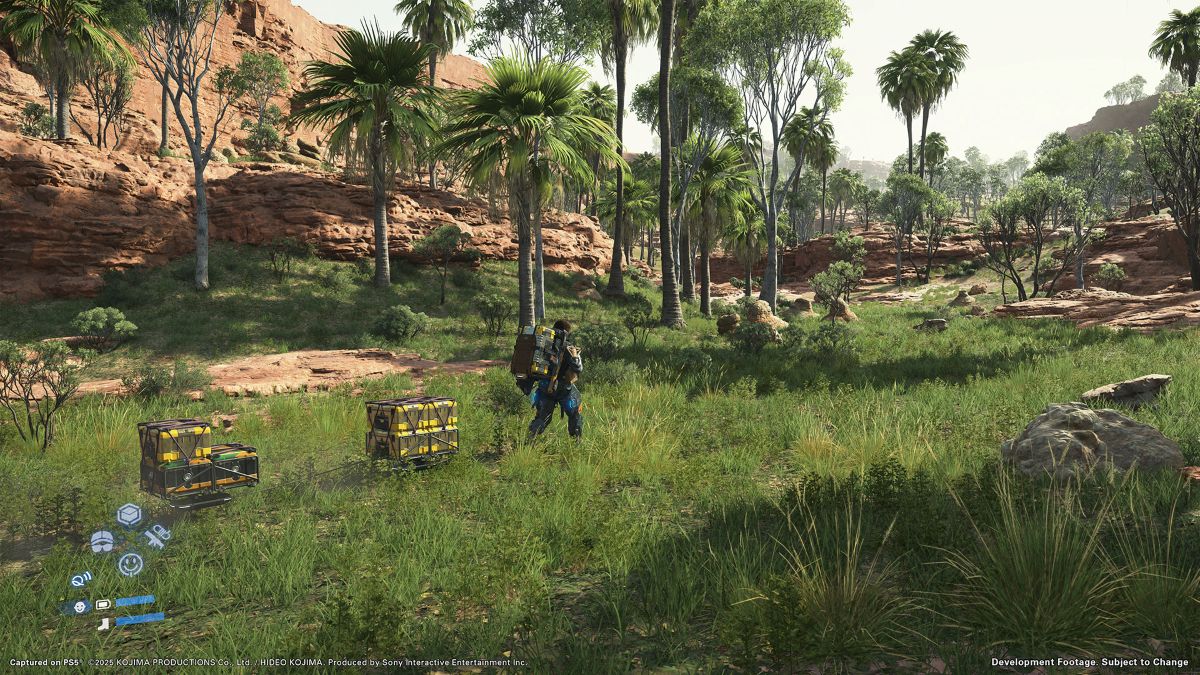
Connected to that ideal is what you need to build said structures. Material collection to make those structures happen is a bit more of an uphill battle in the sequel. While the first game explored the U.S., which seemed lush with everything the player needed to build roads, chargers, and timefall protection, this time out, it feels a bit more restricted and difficult. Finding leftover enemy residue and other materials isn’t as lush, especially when it comes to specific areas. Sometimes you must travel further to acquire materials, and sometimes they may be on the other side of a map. This portion of the game has become more difficult, even if the result is worth the hard effort put into it. I wish this were a tad bit easier in the game, maybe not as easy as the first, but more accessible. Speaking of accessible, let’s talk about the living world for a bit.
An additional feature of the frontend gameplay during my time with Death Stranding 2: On the Beach was the inclusion of wildlife. I guess Kojima took a page from Horizon Zero Dawn by including interactions with wildlife. Some of those interactions could be positive, such as rescuing animals to return them safely to a shelter, while others were more malevolent and aggressive, such is the case with squirmy eels and dangerous birds affected by the changing landscape of the world. They will impede your progress when you run into them. Adding these into the gameplay helped make the world bigger and more realistic. While humans may not survive an impending doom, nature and other lifeforms generally find a way. Malcom can’t be wrong from Jurassic Park, right? Probably not. You won’t find a ton of animals in the environment, but you’ll find the right amount to give you purpose and to give you more of a challenge.
Before we move to visuals, let me give some special kudos to Kojima’s team for creating a more accessible backend journey system. While everything feels tighter, from fighting to exploring, the biggest overhaul between Sam and his world is how he can access quests, upgrade special abilities, and see places on his map. The sequel replaced his handcuffs with a ring, which can be accessed by pressing the option button on the controller. From here, you can get cargo management, orders, a variety of goodies (such as the music player), and access enhancements. The latter of the bunch is an interesting addition to the gameplay and solid motivation to keep the game going long after it has concluded.
APAS Enhancements allow Sam to perform different gameplay mechanics. If you ever wanted to improve bullets or have an additional battery for your vehicles, then these enhancements help with that, and I won’t go into specifics to ruin them for you, but just know they’re relevant to the gameplay experience. The enhancements are acquired through XP, which is gathered by completing orders. Let me tell you, some of these enhancements are highly useful, especially some of the more XP expensive ones. They shift the gameplay to new levels without compromising it. Anyway, you can choose these enhancements in a non-linear fashion, though unlocking some enhancements is the only way to unlock others. It’s a welcome addition to the new game and something that does improve gameplay considerably, though not required to finish the game.
Pulling back a bit, let’s discuss the map. I’m not sure if you felt this way playing the first game, but having to go back and forth onto the map to see what direction I was taking when delivering an order was so disruptive. To circumvent that issue, pressing the PS5 control pad down will send out a pulse that reveals where you should be heading. This avoids stop-and-go disruptions when accessing the map. It’s a small change, but a welcome one, as it just keeps the gameplay flowing.
Overall, the gameplay is tighter, easier, and more direct with its intentions, and emulates the story being told beautifully. It has all been thoroughly improved mechanically and through other methods, like adding wildlife. While I’m not in love with the gathering material aspect of the gameplay, as it seems more restrictive, the rest is pure gold. It exceeds expectations when compared to the first game.
Stunning
One of my biggest question marks going into this game was how Kojima was going to visually top the first. In the past, when Kojima made an MGS game, every new console release brought about an upgraded set of visuals, which wowed audiences. The biggest steps taken were between MGS 4 and MGS 5, which expanded the details of Snake’s world and the man himself, while not sacrificing the narrative.
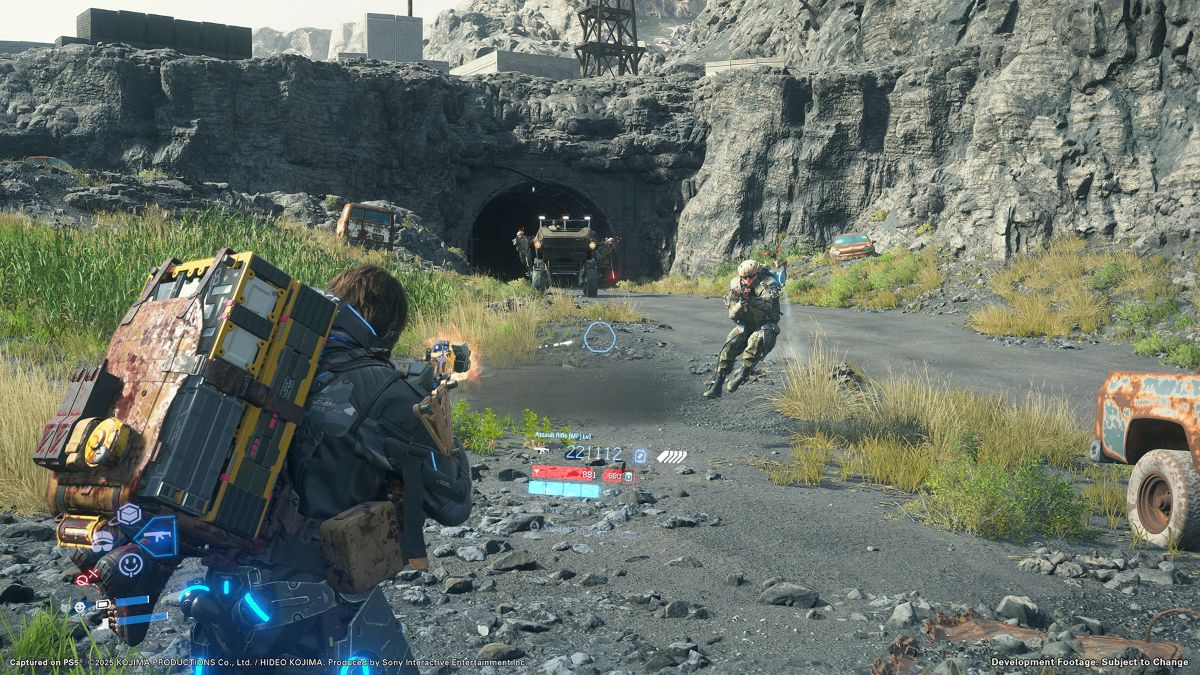
Well, it’s safe to say there was a huge bump in visuals between the first Death Stranding and this one. Using the DECIMA engine, courtesy of Guerrilla Games, Kojima’s group found a way to upgrade the visuals and bring in an almost photo-realistic environment. You’ll see the difference the moment Sam’s journey begins. It is visually stunning as it is jaw-dropping. I remember messaging another reviewer on the staff, who was helping review this, and saying, “My God, Ben. I couldn’t have imagined this series visually getting better, but here we are”. When he finally got around to starting it, he called me and was like, “What in the hell? I thought I was looking at real footage”. That’s what you should expect out of the new Death Stranding. Visually, the game is stunning and sets a new bar for bringing Sam’s world to life.
In addition to environments, the character models were captured, animated, and delivered perfectly with this game. The cutscenes are a thing of beauty and help bring to life the story trying to be told. Character expressions, small details in movements, and perfections/imperfections in skin/hair are all quite evident. Whatever update Guerrilla Games made with DECIMA, as well as whatever training session they had with Kojima’s group on GG’s engine, paid off in the end. The game is the best-looking title on the PlayStation 5. Hands-down.
Huge props to the devs for getting the most out of that engine.
On that sweet note, let me wrap up this review.
Conclusion
Death Stranding 2: On the Beach, developed by Kojima Productions and published by Sony Interactive Entertainment, is a new journey with a tonal shift compared to its predecessor, as the narrative is smaller in scope and far more personal. On the gameplay side of the tracks, the new game tightens a lot of loose ends from the first game, expands the world of Death Stranding through new environments and gameplay improvements, and exceeds all expectations with how a game should look on PlayStation 5. This is a solid contender for Game of the Year.