

Oh, the grind is real.
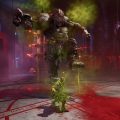
Crimson Moon from developer ProbablyMonsters is an action role-playing roguelike (say that three times) that looks gorgeous but sometimes fumbles its intentions. The positives are that the game looks good, is well put together, and has the right amount of grind to feel like there is a healthy amount of player progression (or a chance to get better as you progress through the game). That last part is important, especially when you are throwing everything and the kitchen sink at your player.
The stumbling block for this game lies within its controls, which are a bit stiff and unruly at times, and with the game’s updates, which can be a mixed bag when it comes to functionality (at least in my experience). Most of these stumbles are fixable, especially on the control side, so the game has tremendous upside.
Let’s get into that all right now.
Starting with story, the game’s narrative is comparable to a storyline from Supernatural. It’s good versus evil, faith leads the charge, and your character is sent out on quests to rid the world of demons. Every death means a revival for the main character, and every revival gives the main character another chance to take down more demons. The goal of the story is to annihilate all demons plaguing the world.

The narrative isn’t earth-shattering in its creativity, but it’s entertaining and sets a good tone for the amount of violence that goes down during gameplay. It also gives off a Dark Souls/Bloodborne eeriness that lies over every demon, location, and situation that the main character runs into. Again, the narrative sets the tone for the world very well and sells the whole ‘good vs. evil’ that it’s trying to perpetuate. At the very least, the narrative is a good primer for the gameplay.
Now, about that gameplay, it’s got two very distinct sides to it. On the surface, it’s a pure action RPG that pushes the player to keep improving and work through the grind of dying. The reward for doing so is the other side of the coin: skill trees, leveling, and weapon/armor upgrades await after each success or failure.
For a $19.99 game, a lot is going on between the front end and backend. I have seen bigger-budgeted games fail to balance action and reward well. For Crimson Moon, which does a great job of balancing, the more the player takes on in battle and the more risks they take, the easier it is to upgrade their character and the better their chance of success. At the beginning of this game, I wasn’t sure I could hang with it, as enemies were difficult, at times overpowering, and the game pushed my success rate forward by inches. But with every death, I came back with the spoils I collected from enemies (coins and equipment) and slowly but surely turned inches of success into feet. Upgrading weapons, buying new armor/weaponry, and gaining access to smaller missions through bounties started to increase my success in completing levels in the game. While the chance of success seemed far away and unobtainable at the beginning, everything started to kick into gear about 3-4 hours into the game. It just took time, even when the game was rather unforgiving.
My point with this ramble is to say that the game has a slow start to the rewards. The grind is very real in Crimson Moon, and the difficult gameplay doesn’t hold back, throwing it at the player right out of the gate. It’s true to its action RPG and roguelike monikers, especially the latter, and does its best to make clear this isn’t a game you can breeze through (even on ‘easy’). It presents and executes a large series of challenges, mainly clearing out multiple levels of demons within locations without using up all the character’s lives, and guarantees that the player will die a lot.

Despite the difficulty, it also offers hopeful avenues for improvement, good rewards for risks, and constant hope that the next run will be better. Adding solid leveling, equipment upgrades, and additional goals and bounties helps speed up the previously mentioned ‘improvement’ for the player, which only improves the gameplay experience. It’s a tough gameplay experience, as the player will repeat meeting the same demons over and over again for every failed run. But that difficulty is worth the effort and journey, thanks to the hope of improving and moving forward. It’s a rush to go back out and try a level again after the character gets a bit stronger, and the player gets a bit wiser. That said, some improvements still need to happen beyond the action.
The controls in Crimson Moon feel tight and unforgiving to me. They are akin to the controls in Demon Souls, where character movement feels much slower and clunkier than the enemy’s. I can’t tell you how many times I was in the scrum of battle, trying to parry an attack, and felt like my character was moving in slow motion compared to the enemy. I think the only parry I ever managed to time right and achieve during my review session was in the tutorial. I know that I am 50 years old, but my reaction timing in games isn’t quite dull yet.
Anyway, I did manage to find a workaround for parrying, as I had better control by rolling away from danger and then stabbing my way back into it (wash, rinse, repeat). While lower-level enemies can be managed by rolling out of danger, bigger, badder bosses require more sophistication. The controls simply don’t offer that sophistication in those scenarios, as parrying, rolling, or even breaking offensive animations in the midst of a big fight felt slow and out of reach. It was frustrating, especially breaking from animations.
The controls need to let the player swing a sword and immediately parry or roll out of trouble when they see fit. By not allowing that break, Crimson Moon can feel frustrating to control. Add mistimed parrying that is unforgiving to the mix (there is no bend to this action, only break), and you’ve got a recipe for gameplay disaster and player unhappiness. Thankfully, those are improvements that could probably happen within an update. Since the game throws so much at the player at once and requires precision, players need every movement to land exactly when they want it to. Again, this is fixable and will work wonders when fixed for enjoying Crimson Moon.
My only other complaint is the game’s inconsistent updates. Over the past weekend, I ran this game on epic quality mode from my laptop. I enjoyed the gorgeous lighting, beautiful texture details, and the stunning environments the game brought with it. I am not sure what changed since Monday, but now I can’t even run the game in low-quality mode without frame-rate stuttering. Since I am not running any other software on my machine and it’s a 50 series card, this shouldn’t be happening. Again, I have no idea what changed, but currently my system absolutely hates running it. And before you ask, I turned off any major background processes and confirmed the GPU was the primary option, but that didn’t make a lick of difference. So, again, I am not sure what changed, but the quality is dragging quite a bit. I am positive it will improve over time, but right now it’s tough to play.

So, updates and controls aside, when the game is running smoothly, it’s a treat. It does what it should: it encourages players to keep trying through failure, and it gives them a reason through great upgrades and leveling. While I may not have enjoyed it much at the beginning, after sticking with it over time, I can now see not only hope but also a hefty amount of fun waiting on the other side of success and failure. It’s a good game, folks, but it will need some tweaking to enjoy fully.
On that sweet note, let’s wrap up this review.
Conclusion
Crimson Moon from developer ProbablyMonsters is a gorgeous action RPG roguelike that is quite the uphill battle at the get-go. Still, thanks to good backend and frontend rewards, it makes the difficulty worthwhile. The controls do need some work, as do consistent updates, but in the end it’s more fun than not.