
-scaled-120x120.jpg?x20290)
BrokenLore: UNFOLLOW admirably delves into the murky evils of topics like social media obsession, bullying, and overbearing parents. Enough genuine psychological scares and clever moments make up for predictable gameplay and unresolved plot threads.
One of my gold standards for first-person horror games is Frictional Games’ SOMA. Released a few years after the studio’s own Amnesia: The Dark Descent, SOMA sailed to the top in a world that had become obsessed with slow-burn horror games. Layers of Fear, Outlast, and even Alien: Isolation worked to torment near-helpless players using horror both psychological and physical. But over time SOMA has always stood at the top of the pack. Even with its subpar stealth moments where players had to slink around monsters, SOMA‘s story constantly evolved, ratcheting up the terror in unexpected ways.
The summer of 2020 I reviewed Those Who Remain, a haphazard attempt at psychological horror that ultimately received one of the lowest scores I’ve ever given a game. Often, when playing games in this extremely busy genre, I think of all the shovelware that I scroll past on the PlayStation Store. Game after game of a first-person perspective with muddy graphics promising a Five Nights at Freddy’s-esque tormentor that will hopefully be worthy enough of a blind purchase for a Twitch stream.
I try my best to avoid playing games I wouldn’t have a natural interest in. After all, there’s so much to play and so little time. Those Who Remain looked interesting enough but its flaws were glaring from the jump. You watch enough movies and you play enough games and psychological twists become harder to obscure. It’s easier to tell high-quality from low.
Through no fault of my own, I always think of SOMA and Those Who Remain when playing and reviewing a first-person horror game–the high bar and the low bar.
BrokenLore: UNFOLLOW, naturally, is scrutinized similarly. And while this short foray into unexpected topics has its flaws, I still enjoyed my time with the big swings it made constantly attempting to evolve itself.
From what I gather, BrokenLore is a series of horror games that are all seemingly interconnected. But UNFOLLOW is the first time the series has come across my path. Prolific developer Serafini Productions released two BrokenLore games in 2025 and looks to release three in 2026, with UNFOLLOW being the first. If there is a common thread between the prior two, I’m certainly not aware of it but later this year, BrokenLore: FOLLOW will be released, serving as a prequel to the events of UNFOLLOW.
UNFOLLOW made an impact on me because it tackled some of the most familiar monsters players can encounter in life. As Anne, players find themselves trapped in varying symbolic locations, working to escape the real-life demons she has faced throughout her life. Anne was a victim of bullying, her classmates and mother making fun of her weight. Over the course of the game we learn of how Anne’s younger years shaped her relationships and caused her to spiral into a woman obsessed with fame through social media. Snippets of Anne’s life are found in collectible documents and the game’s dialog serves to provide further context.
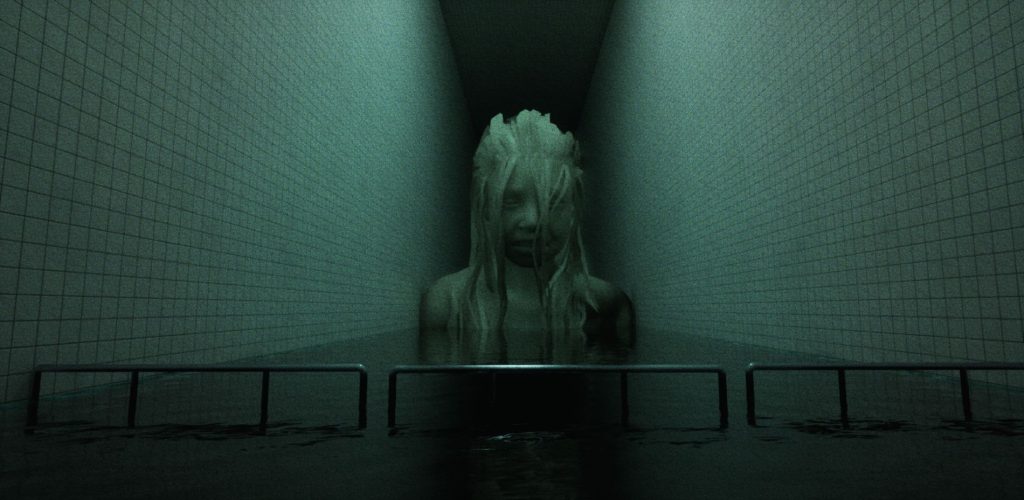
Players start out in Anne’s house, the game framing it as a kind of escape room to piece together where they need to go in order to progress. The constrained hallways and small rooms of the home add a sense of claustrophobia, exacerbated when the walls begin to shift and noises creep around the periphery. In atypical fashion, each level of UNFOLLOW throws a different kind of threat at the player and it’s this constant change that constantly kept me intrigued. From Anne’s house, to her school, to a hospital, to a squelching prison of flesh, the player isn’t allowed to acclimate themselves to one part of the horror.
What initially made me nervous about UNFOLLOW was that it would rely too heavily on jump scares. The first chapter of the game is rife with them. Moments of abstract silence are forcefully punctuated by a loud noise out of nowhere. Players will go to open a door only to have a masked pursuer slam it open, initiating a chase. Jump scares have their place, being a great way to have the player on edge and dousing them with uncertainty. But the problem is that having too many jump scares can have a numbing effect as well, becoming exhausted at frequent adrenaline spikes. To UNFOLLOW‘s credit, the three or four back-to-back moments in the first level that startled me had the intended effect. And by the time I had grown leery of being forcefully frightened again, the game knew when to dial it back.
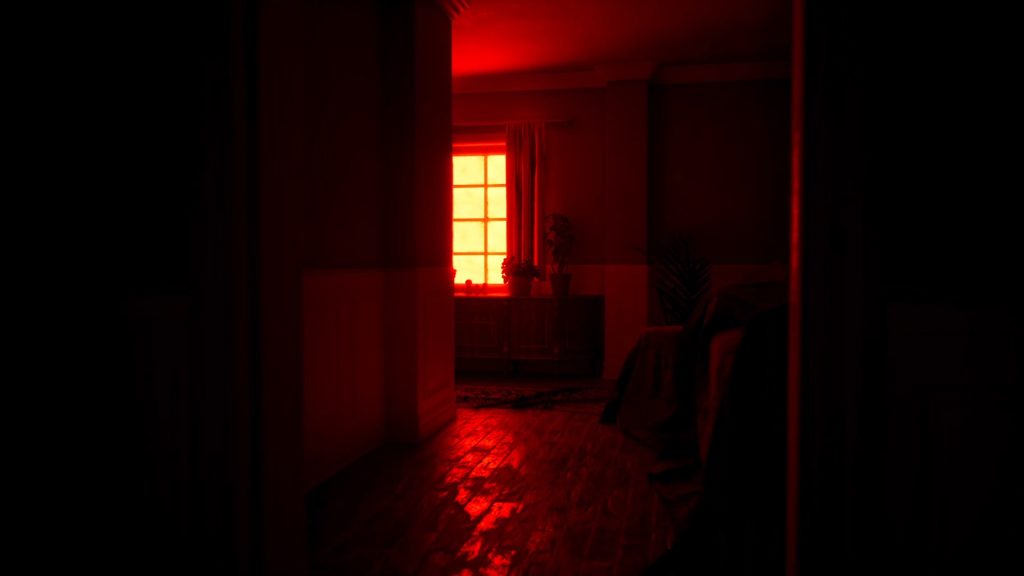
However, UNFOLLOW does suffer from that awkward duality of methodical tension building and somewhat clumsy chase sequences. When I’m pursued by a monster in a horror game and have been given no tools to defend myself, I know it will be time to kite around hallways and beeline to the exit. Unsurprisingly, the first “chase” in UNFOLLOW has Anne trying to avoid a cloaked figure in the basement. I thought I was being sneaky turning off my flashlight and crouching behind a corner but the second it came into view it immediately initiated a chase. There’s not really stealth in the traditional sense here as Anne isn’t obscured by shadows or anything. The moment a pursuer finds line of sight, they give chase.
Some of these sequences are easy to cheese as it takes three “hits” before Anne is truly caught and getting touched will usually cause Anne to be turned around in the right direction to bolt away. But there are also the silly moments where Anne squeezes through a pathway with a foe inches away and if the player turns around, the AI pathing merely has the enemy walking around as if they lost complete interest in the person they were just trying to kill.
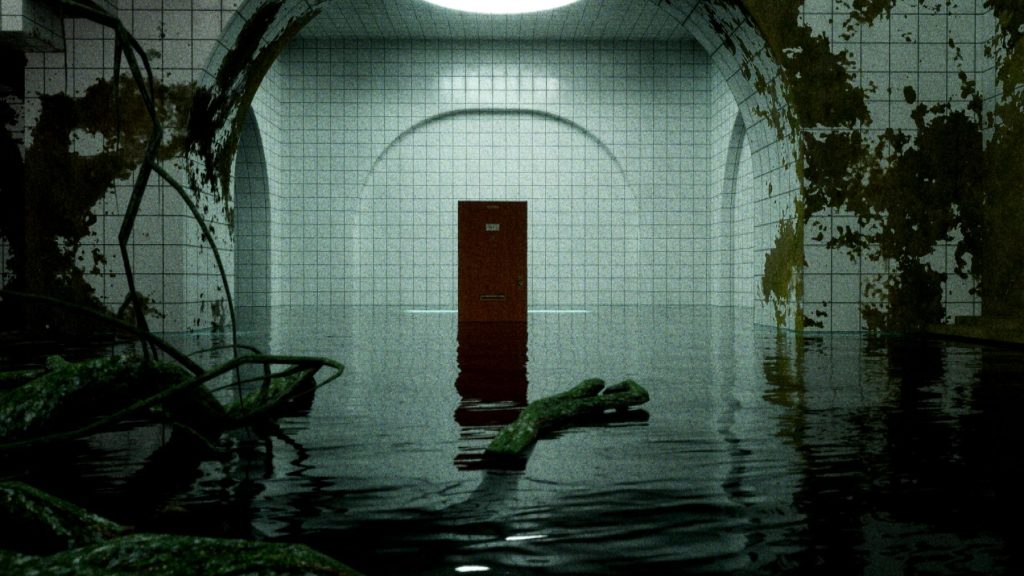
Personally, I prefer when games like this don’t place an emphasis on scary pursuits. While it can garner tension for the player, often enough I just want them to be either shorter or not exist at all. One particularly lengthy sequence later in the game has Anne fleeing explosive balloons and an ever-moving malformation of inflatable balloons. While these creatures can be interesting from a visual or narrative standpoint, the player is primarily meant to run away from them, rarely making eye contact because that would mean they are about to fail. Thankfully, UNFOLLOW makes it relatively clear where the path forward is, rarely having me feel like I was confused on where to go.
What was more interesting to me was how UNFOLLOW works to deconstruct how Anne was shackled to this desire to be better. Using grotesque interpretations of her own self image, her mother, her bullies, and the real-life struggles she felt, UNFOLLOW is a rare peek into this aspect of a horror subject matter. It doesn’t always have to be about killers and monsters lurking in the distance. Though the game sensationalizes some things in terms of exaggerated visuals, it doesn’t feel too on the nose, There’s no blaring sign saying “SYMBOLISM!” where a humanoid figure has exaggerated features or genitalia to emphasize shame.
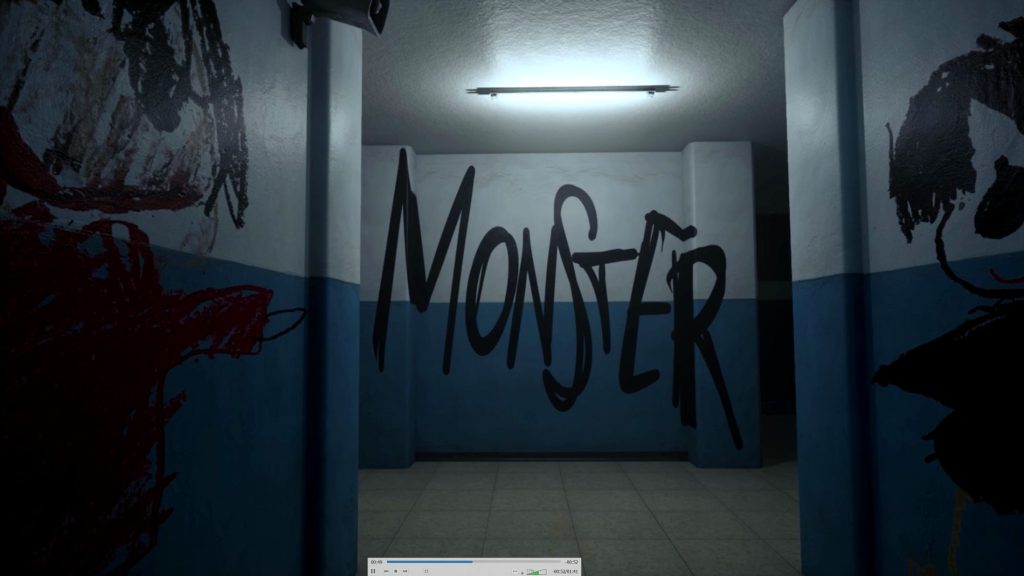
Gross-out moments exist but are spaced apart to maximize discomfort. Early on, Anne must make a meal for a recurring worm-like monster who seemingly represents her “insatiable” appetite as deemed by her mother. The game simply asks players to wander the house to find the ingredients. One of them is pasta and because minutes ago, Anne vomited up her food in the toilet, I knew what I had to do. Moments like this give UNFOLLOW a much-needed edge, truly emphasizing that this is a game about societal pressure and similar hard topics.
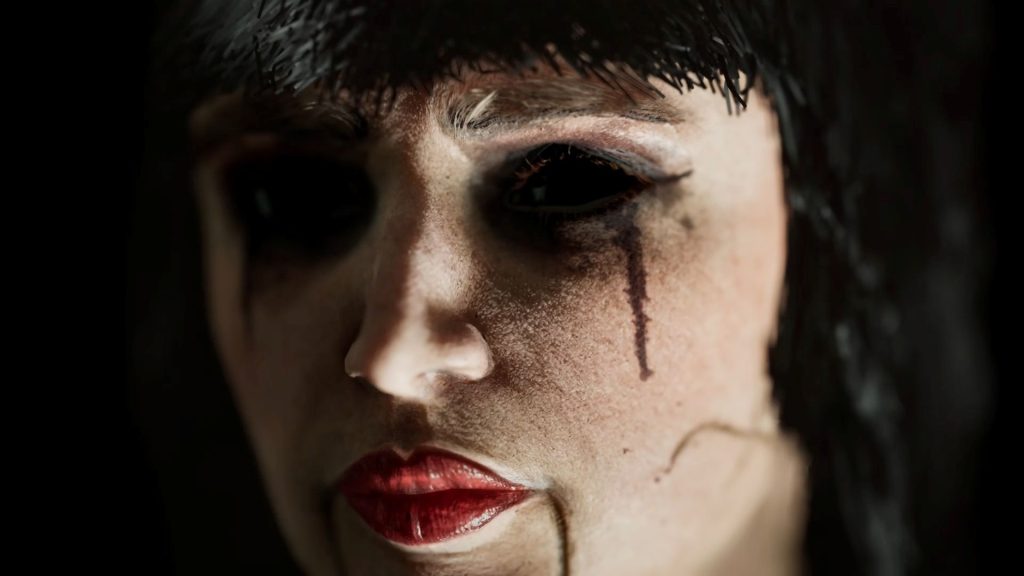
Because the game shifts around to different locations and throws different threats at the player, there’s ample opportunities to incorporate familiar horror game motifs without feeling too tired. Faceless dolls are plentiful–though at one point the game cheekily breaks the fourth wall and comments on the trope, which for someone like me can have mixed results. Liminal spaces with impossible construction are presented in an unsettling way. And at one point, the game’s visuals shift to the polygonal style of old PlayStation 1 horror games.
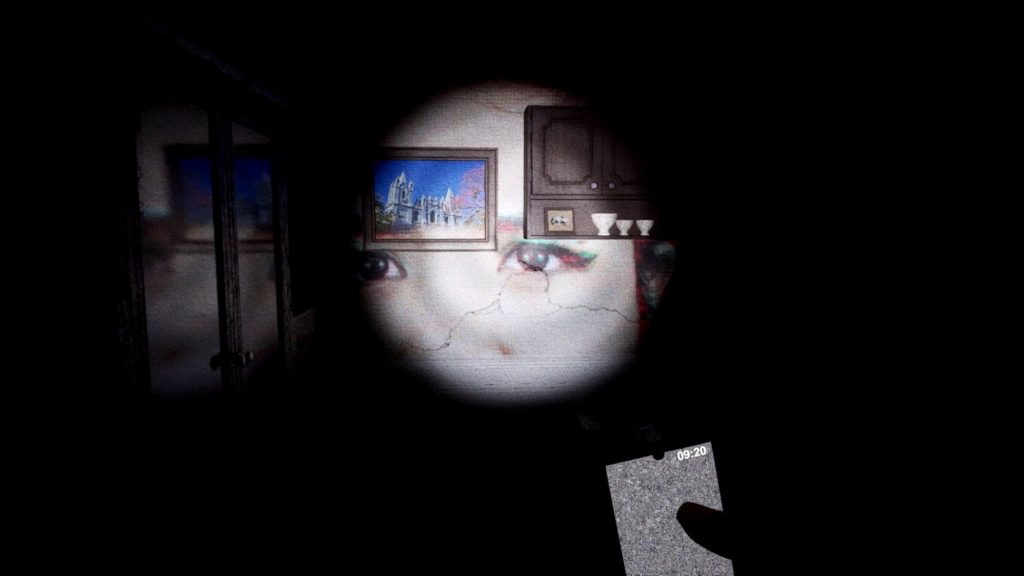
UNFOLLOW never had me bored but the game, running about 3 hours, can at times feel rushed. By the time I had reached its conclusion I felt like there were plot elements that had been suddenly introduced or ones that had entirely been abandoned. Anne’s boyfriend is hinted at but then given focus in a later chapter seemingly out of nowhere. Throughout the game Anne loses and gains followers and one chapter has text messages and comments pop up on the screen in a clever way. And while it was obvious Anne wanted to be famous on social media to make up for people not liking her in the past, I feel like this aspect of her personality could have been given more attention. There also seems to be a secondary story involving a content creator Anne was a fan of. But I wasn’t certain if I missed this thread being wrapped up or if it just didn’t have an explicit resolution.
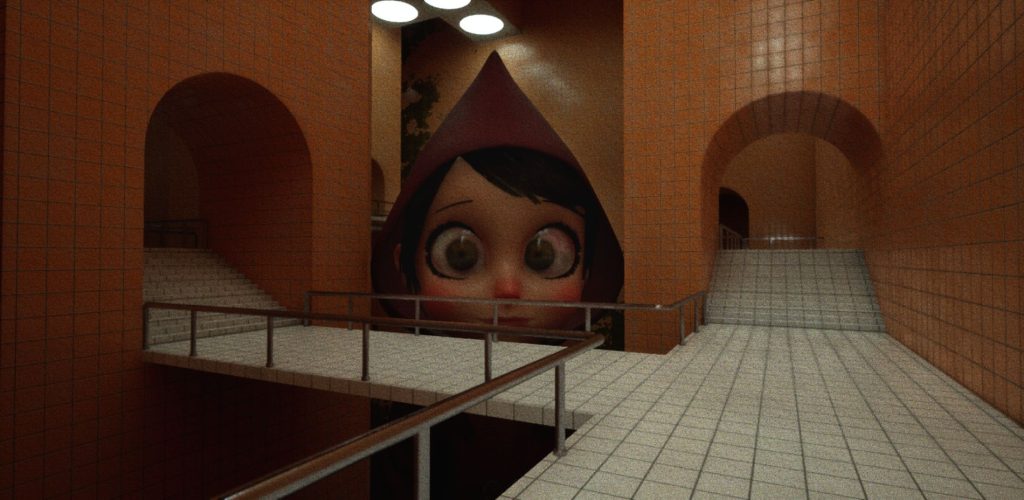
Elements like this strip UNFOLLOW of a bit of its cohesion. The game is definitely stylistic and incorporates some great unsettling visuals. The sound design certainly infuses the environments and the action with a sense of dread but the chase music can be somewhat repetitive. If anything, this is an ambitious game that works to approach horrific and scary things from an angle that is often not visited in games, which is reason alone to appreciate it.
BrokenLore: UNFOLLOW uses the real horror of societal pressure and unrealistic standards to craft an unsettling, psychological narrative that players often won’t find in games. Its short length does have numerous impactful moments but it may leave some wanting more developed plot threads and less monster chases. Should the BrokenLore series continue with this framework in future installments, I will be interested to see what new ways they can not only scare players but make them think.