


Ever since the emergence of strategy games in the late 80s, thank you, Battletech, and the quality of the genre reaching its zenith in the 90s, courtesy of Command and Conquer and World of Warcraft, the gaming world has been gifted thousands, if not tens of thousands, of strategy-based games. Most strategy games have turned out less than perfect, while the ones mentioned above became the best of the best, detailing a blueprint of how to do things right.
Now, we have another game in the genre entering the gaming arena, and quite frankly, it is simple fun that brings the right amount of complication with it. Yield! Fall of Rome, from developer Billionworlds, starts slow with what is perceived as overwhelming instructions and a steep learning curve, but quickly finds focus with what it’s delivering to the player. While it doesn’t do anything that we haven’t seen before in strategy games, it doesn’t make your life miserable by juggling too many elements that the player must balance all at once to succeed in the game (see Dune: Spice Wars, for example).
Don’t get me wrong, complicated strategy games like Dune: Spice Wars have their place in the genre, and I’m sure there are a lot of gamers who just gulp that complication down happily, but having something simple and fun can be just as rewarding.
So, let’s get on our high-horses from Rome and discuss the ins and outs of Yield! Fall of Rome.
Going from complicated to consuming
Truthfully speaking/writing, I have the attention span of a goldfish. I see things, I remember them during the moment, but quickly forget them once the game gets going. I mainly learn by doing, rather than being told step-by-step what to do. And that is how my experience with Yield! Fall of Rome began. The tutorial took me through a lot of steps, and it all felt like I couldn’t miss a beat with them, as it quickly gave me that Dune-vibe of complication. But then the game shifted gears and presented a ‘let’s show you how this works by throwing you into the mix’ side, which immediately locked my attention in place.
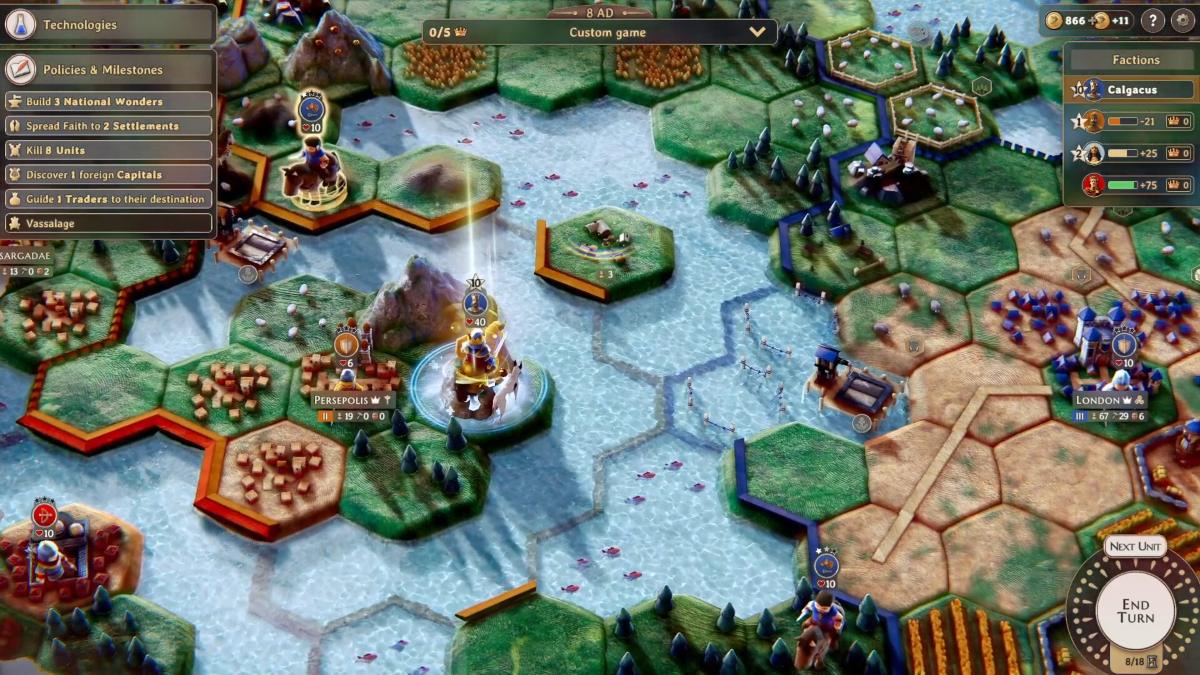
From this point, the gameplay of Yield! Fall of Rome started to slow down, and what the devs had put together was gradually coming into focus. At its core, the gameplay is a very uncomplicated construction of a typical strategy game. You are tasked with a mission, goals are thrown at you, the game provides you with X amount of turns to accomplish said goals, while also providing you with multiple ways to achieve it. And it doesn’t go beyond those gameplay elements, which makes the game fun because it’s easily uncomplicated.
The gameplay works as such: you establish a kingdom at the beginning of a mission. From that kingdom, you have the choice to create a type of kingdom worker (could be a scout, could be a knight/archer, or it could be someone who searches for more land to conquer), which translates to your next move.
If you make a soldier, you can go and try to take down enemies in a simple turn-based method. The neat part about the soldiers is that you can strategically make multiple ones, move them across the hexagon board, and surround enemies to overwhelm them to defeat them. While nothing incredibly too complicated about this method of strategy, it’s still cognitively rewarding strategizing how to properly execute soldiers into a proper battle invasion.
Now, if you go a scout route, you can unlock parts of the map covered by fog (though the boundary is limited by the map and goals). Scouts are terrible soldiers, but they’re great at quickly moving across a map and discovering landmarks, gold, or other goodies. They serve a good purpose in the game as literal scouts and add variety to the kingdom worker-type.
The last worker is essentially your pioneer type. These types of kingdom workers can go and find new lands to establish cities under the same flag. The pioneers are devoid of attack abilities and move slowly, but once they reach an icon representative of them on the hexagon map, then they can establish a new city. The advantage of establishing a new city in the game is that more resources can be gained. The disadvantage is that the player has more mouths to feed and people to keep happy.
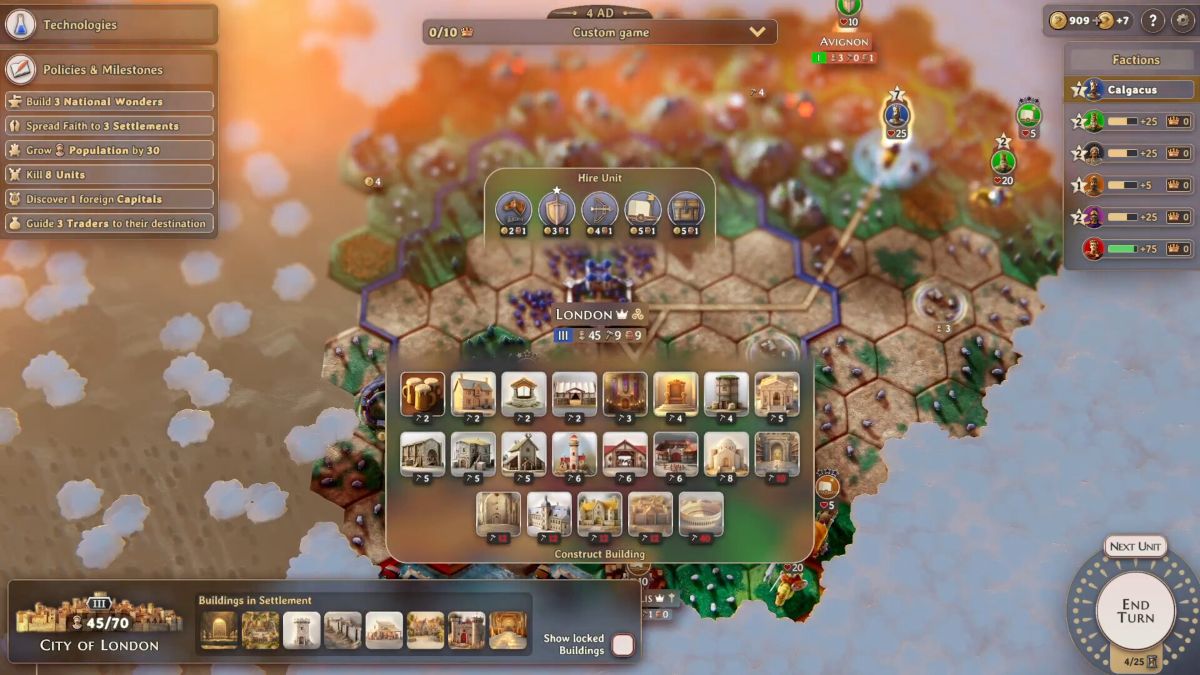
The first time I played this game, my goal was to either gain a ‘crown’ through large achievements in the game, such as taking back a religious site or taking down enemies to conquer a town. While trying to do this, I established multiple cities, thinking that would help, as I could build up an army. But in doing so, I slowly began to use up a lot of resources, while accidentally ignoring the happiness of my people. Eventually, I ran out of turns, was in a negative number for crowd happiness, and failed my mission without even ‘almost’ accomplishing my goals. You must keep your peeps happy and not get too big for your britches, while at the same time stretching out your resources. It’s a small strategy juggling act, but it’s understood in how it works, and fun when you get this portion of your rule right.
To keep your people happy in the game, another element you must pay attention to is the construction of your town. The construction aspect is meant to protect your people, make the kingdom prosper, and give them enough mead to keep them happy. The game allows such kingdom depth by said construction aspect.
The game presents various types of buildings at your disposal, such as watch towers, walls, bars, and homes. The more you have, the better your kingdom will be and thrive, as you can earn good coins with each round you complete during a mission. More importantly, you will be popular amongst the peeps in your kingdom for taking care of them. As with everything in the game, there is an element of strategy to consider, such as building out a kingdom to keep your people happy and your pocket lined with coin, all of which cost construction resources.
The construction resources are labeled on the hexagon map by a hammer icon and are finite in number. For every city established, you must give up a number of construction resources. The game ensures that you don’t build huge kingdoms quickly by limiting these resources, which I think is the right move. By limiting them, the strategic part of the game is magnified, and forces you to give some real thought about what your mission is and how best to accomplish it.
Going back to the first mission in the game, it can be completed by taking down an enemy troop and conquering their town. To do so, you must build up and out a kingdom, protect your people, and send soldiers to take down said army. Do you build that kingdom out first to gain coins to make soldiers? Or do you limit the kingdom, find coins elsewhere on the map that will afford you more soldiers? These seem like simple strategic decisions, but making one or the other dictates how quickly you can reach your goals for the mission given to you. It also dictates how you use your limited construction resources, which means short-term solutions for success or failure. If you hoard the resources, then you can use them for other kingdoms and prosper far more.
The game also features a nice backend that allows you to develop and improve ways to gather resources or improve troops. It also features the choice of implementing policies with newly conquered lands/people that shape how you’re perceived as a leader. The depth of the game grows through these types of gameplay elements and expands how much strategy you have at your fingertips to win missions.
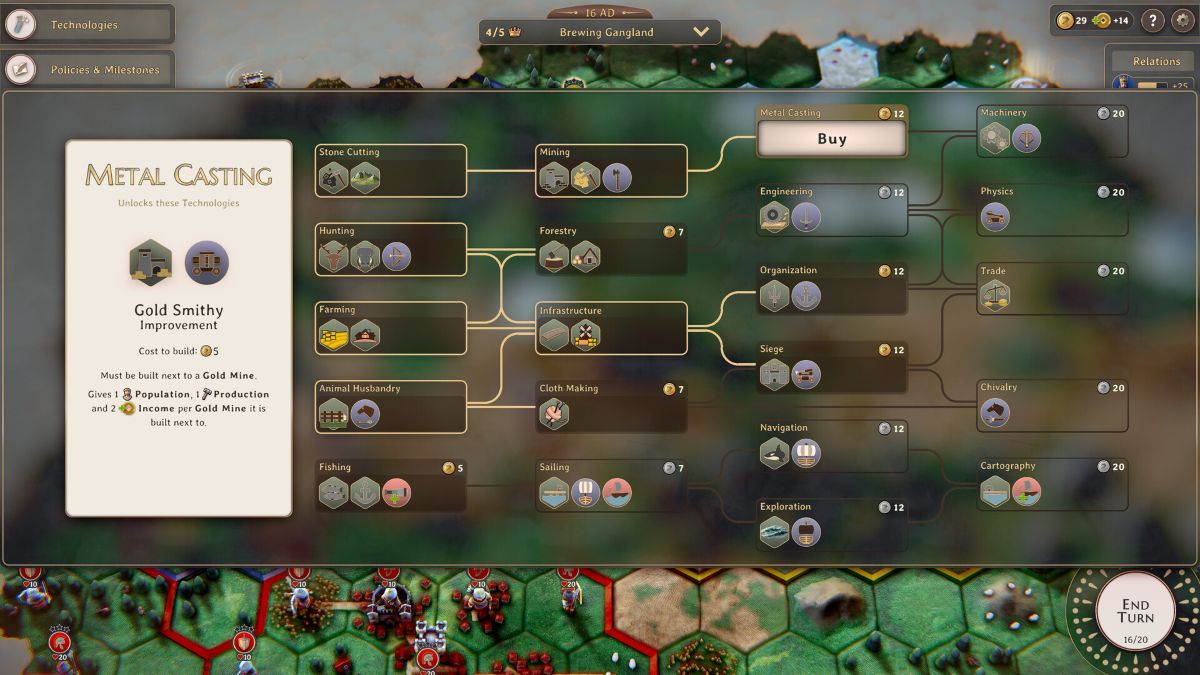
Again, this game isn’t overly complicated once it gets going, nor is it hard to understand how it functions, but that doesn’t make it less enjoyable when it comes to choosing and developing a strategy for success. Adding limited resources into the mix makes decisions more meaningful and the gameplay more entertaining while also engaging and hooking the player into the gameplay.
For me, the gameplay of Yield! Fall of Rome became fun midway through the first mission, as the gameplay elements I had to work with to develop a strategy became clear. Once those were locked down, all I had to do was concentrate on the mission goals, which were the right amount of variety to keep playing.
Conclusion
Ultimately, Yield! Fall of Rome from developer Billionworlds is a simple and entertaining experience that brings enough complication to make it a good strategy game.