
Yakuza Kiwami 3 is a delight of a remake, retaining the core story that you and I love alongside a new combat system that makes battles more fluid and frenetic than ever before. Dark Ties is an excellent side story, albeit one far darker in contrast to Yakuza’s tried-and-true storytelling thematics.
The Yakuza franchise has been hard to recommend to others over the past few years. It’s not because they’re not fun; they are very fun. It’s not because of a boring plot; their plot and subsequent side stories are hilarious and engaging. The series is tough to recommend because it’s confusing to figure out where a new player should start. For a Yakuza super fan like you and I who’ve been around for the series’ 20-year lifespan, the answer might seem simple: Just play 2016’s Yakuza Kiwami (now available on the Nintendo Switch 2, mind you) and go from there…but these titles are long action RPGs.
They’re not games that can be completed over a long weekend, nor is the series one with a condensed plot. There are tons of Yakuza games available today that attempting to play chronologically is a gargantuan task. Year after year of the 2010s and early 2020s resulted in remakes in the form of Kiwami titles, prologues, and Like a Dragon spinoffs that ended up being mainline installments that continued the story that seemingly ended with Yakuza 6: The Song of Life. There’s so much Yakuza to play, yet so little time.
The longevity and depth of Ryu Ga Gotoku studio’s catalogue is a good problem to have. I have no problem starting or replaying a Yakuza title every year, simply because I can’t miss out on the series’ approach to a story that is equally serious and satirical. I am a super fan, though. Unfamiliar players have more to navigate.
It’s gotten to a point where I’ve told my friends, family, and colleagues that it doesn’t matter which Yakuza game to start first. Instead, you should just…jump into whichever you can come across. In 2025, that title was Like a Dragon: Pirate Yakuza in Hawaii. Now…it’s Yakuza Kiwami 3.
Pour yourself a beer, coffee, or a cocktail, and let’s strap in for the newest Yakuza remake.
Yakuza Kiwami 3 is an extreme remake of Yakuza 3 that has elevated just about every aspect of the source material. Graphical improvements galore. New combat. New minigames! New cutscenes! You name it – Ryu Ga Gotoku has made significant improvements to this game to make it the better iteration of Yakuza 3 that’s a joy to play. Frankly, I’m glad that RGG has continued their path of remaking their older games. While their stories are captivating and tug on the heartstrings, Yakuza 1-4 (and in some ways, 5) feel almost archaic compared to the smoothness of Yakuza 6 and the recent Like a Dragon. I’ll admit that I have some recency bias here, but I notice a distinct set of improvements going from playing Yakuza 3 Remastered (a mainly graphical remaster released in 2021) to what is now Yakuza Kiwami 3.
 I digress.
Yakuza Kiwami 3 kicks off immediately after the explosive events of Yakuza 2 in which Kazama Kiryu opts to move to Okinawa to run an orphanage and leave his underworld background behind. That is, until he’s pulled back in over a land dispute and a ghost from his past. He’s still fighting to protect those he cares about (peak Kiryu, I know), but now he’s taking that fight to the island of Okinawa as well as his Kamurocho home turf.
A common theme found within Yakuza is how the protagonist is portrayed as gullible, impressionable, unsuspecting, or otherwise forgetful (from amnesia). This iteration of Yakuza pulls Kazuma Kiryu out from his isolated role as manager of the Morning Glory orphanage and back into the fray of an underworld protector. His unsuspecting nature is masked by being an Uncle Papa Bear-esque protector, a stark contrast from being known as the Dragon of Dojima. What makes things more confusing is that despite being known as the Fourth Chairman of the Tojo Clan, random punks and other yakuza continue to approach him for combat right from the start of the story prior to his initial departure from Kamurocho.
It’s here where Yakuza 3 falls short in figuring out Kiryu’s notoriety during the initial worldbuilding. Either he’s a well-known and highly-respected member of the Tojo clan’s Dojima family or he’s an obscure relic of the Tojo clan who can easily be mistaken for another rando on the streets of Kamurocho. It cannot be both.
My nitpicky worldbuilding criticism aside, Yakuza Kiwami 3 steps away from older Yakuza titles in getting right to the action in short order. Rather than frontloading the player with hours of exposition that won’t really matter until later in the story, I was given the option (yes, the option!) of getting caught up as to the events of the first two Yakuza titles. The intro cutscenes were a few minutes, and then I was shown the ropes of Kiryu’s combat along with a taste of Kamurocho’s minigames.
I cannot stress this enough, Yakuza games can have longwinded cinematics and even more dense introductory chapters. Even in their remakes, Yakuza Kiwami 1 and 2 struggle in letting players off their leashes and given the freedom to explore Kamurocho as they see fit. Imagine my surprise when the world opened up, bit by bit, within the first hour!
Like its predecessors, Yakuza Kiwami 3’s storytelling is broken up into chapters that divvy up a feature-length film into an episodic J-Drama series. These chapters are lightly gated, allowing the player to breathe in and accept the seriousness associated with Tokyo’s organized crime. These serious thematics are offset by chaotic heroics, relieving the player of shouldering the burden of playing as an antihero.
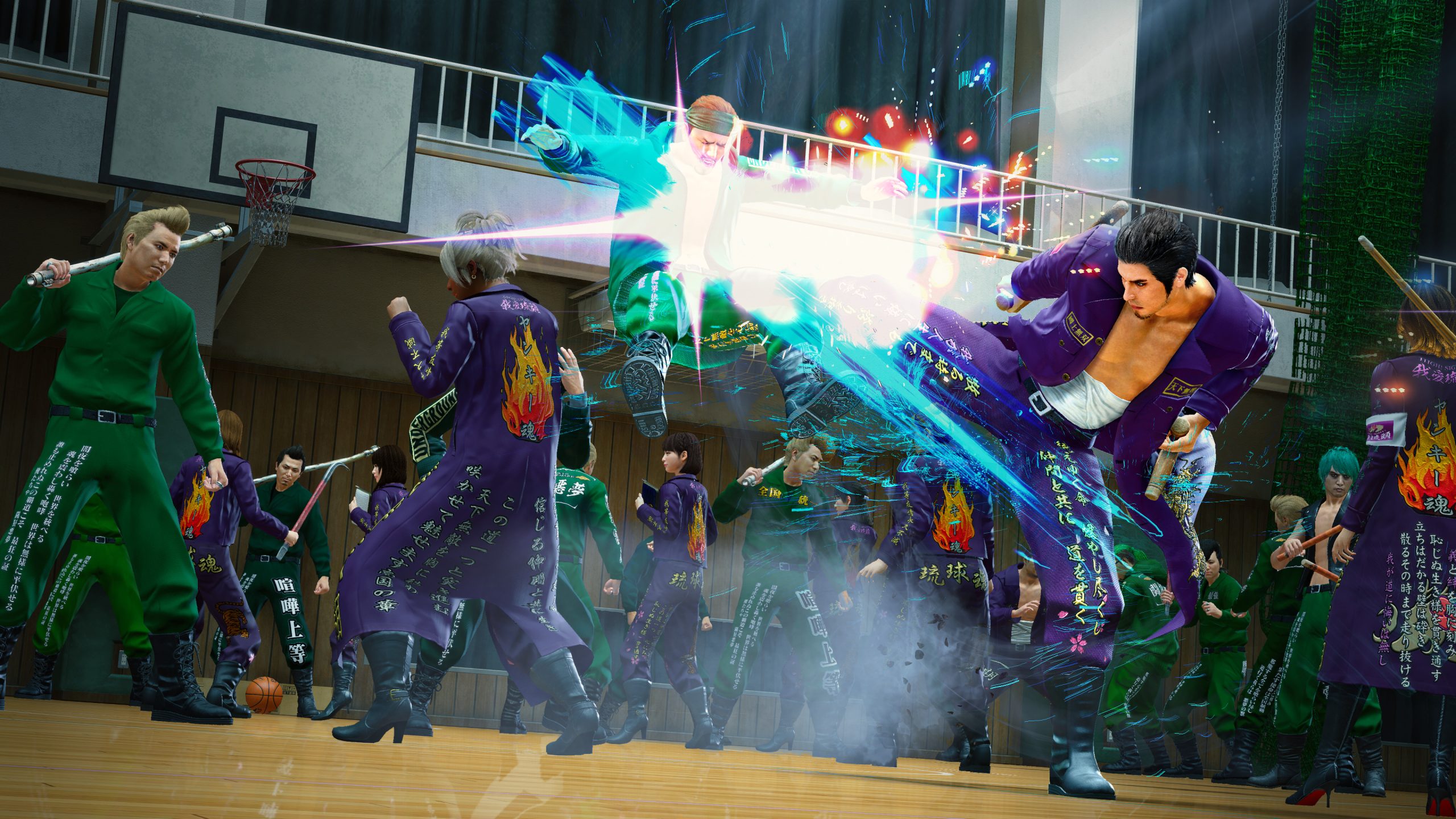
Ryu Ga Gotoku did the unthinkable with Yakuza Kiwami 3’s combat: They made it fun as hell. From my experience, the original Yakuza 3’s combat was clunky and addled with NPCs whose gun instinct is to block. Yakuza Kiwami 3’s combat errs on fluidity and refinement. Kiryu’s classic fighting style, Dragon of Dojima: Kiwami Style, returns and brings with it familiar punches, kicks, throws, and access to weapons laying around the environment. After landing enough punches, Kiryu can execute brutal finishers like piledriving an opponent into the ground or smashing their face into a brick wall.
An additional stance, Ryukyu Style, gives Kiryu eight Okinawan weapons that can be unleashed in thrilling fashions. It’s an excellent supplement to the simple yet brutal Kiwami moveset. Where Kiwami moves are fluid and powerful, Ryukyu combos are bloody and lighting quick. This stance comes in handy for group battles, as well.
Taking down enemies is satisfying as all get out. Parrying and dodging are forgiving because of enemies’ clearly telegraphed attacks, giving me windows to slow down time and follow up with a counterattack to keep combat going. The timing has improved to the point of Kiryu having an easier time switching from target to target. For the first time, Yakuza’s combat feels exhilarating and achieves the peaks I would have expected from a Bruce Lee film.
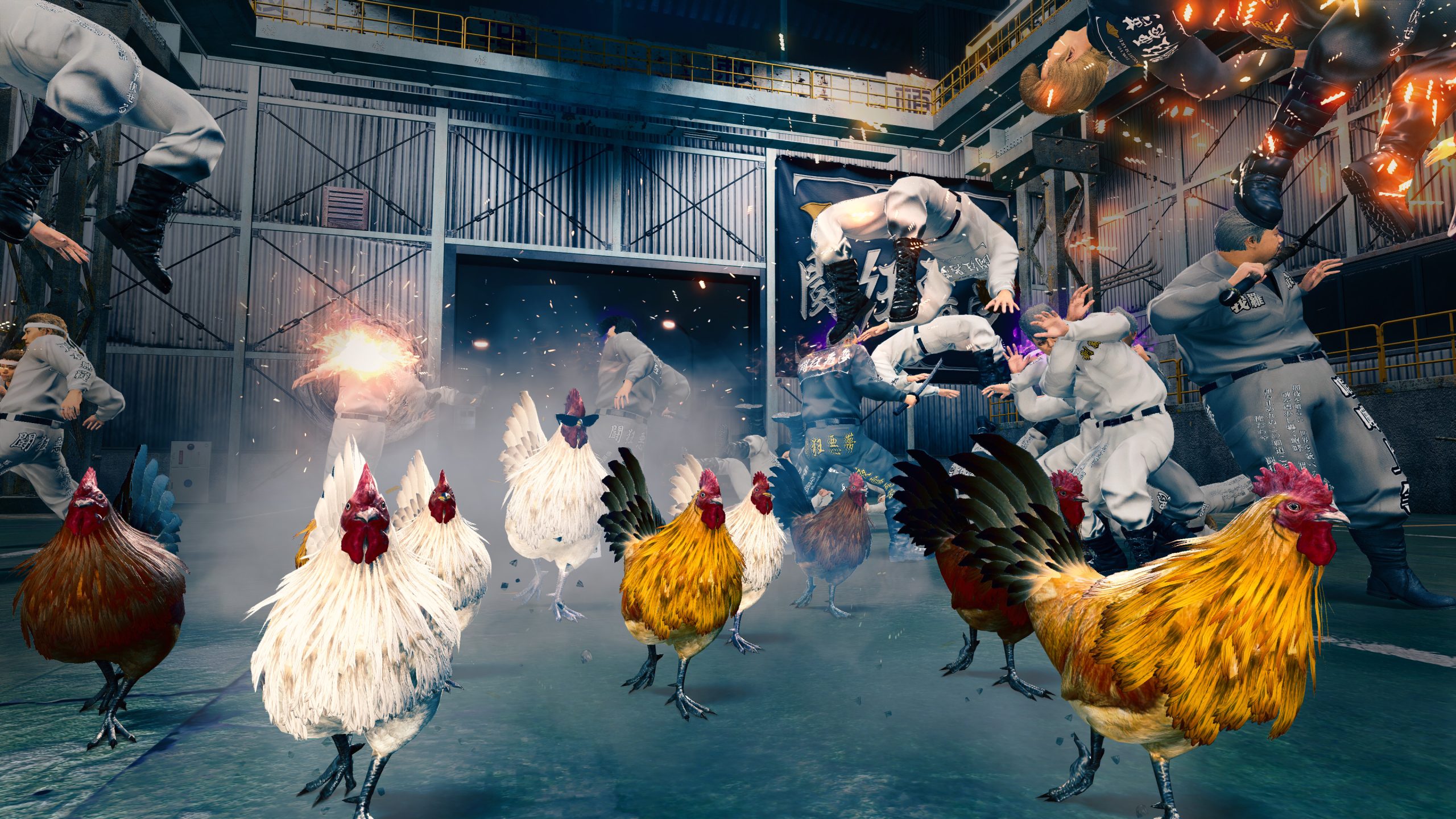
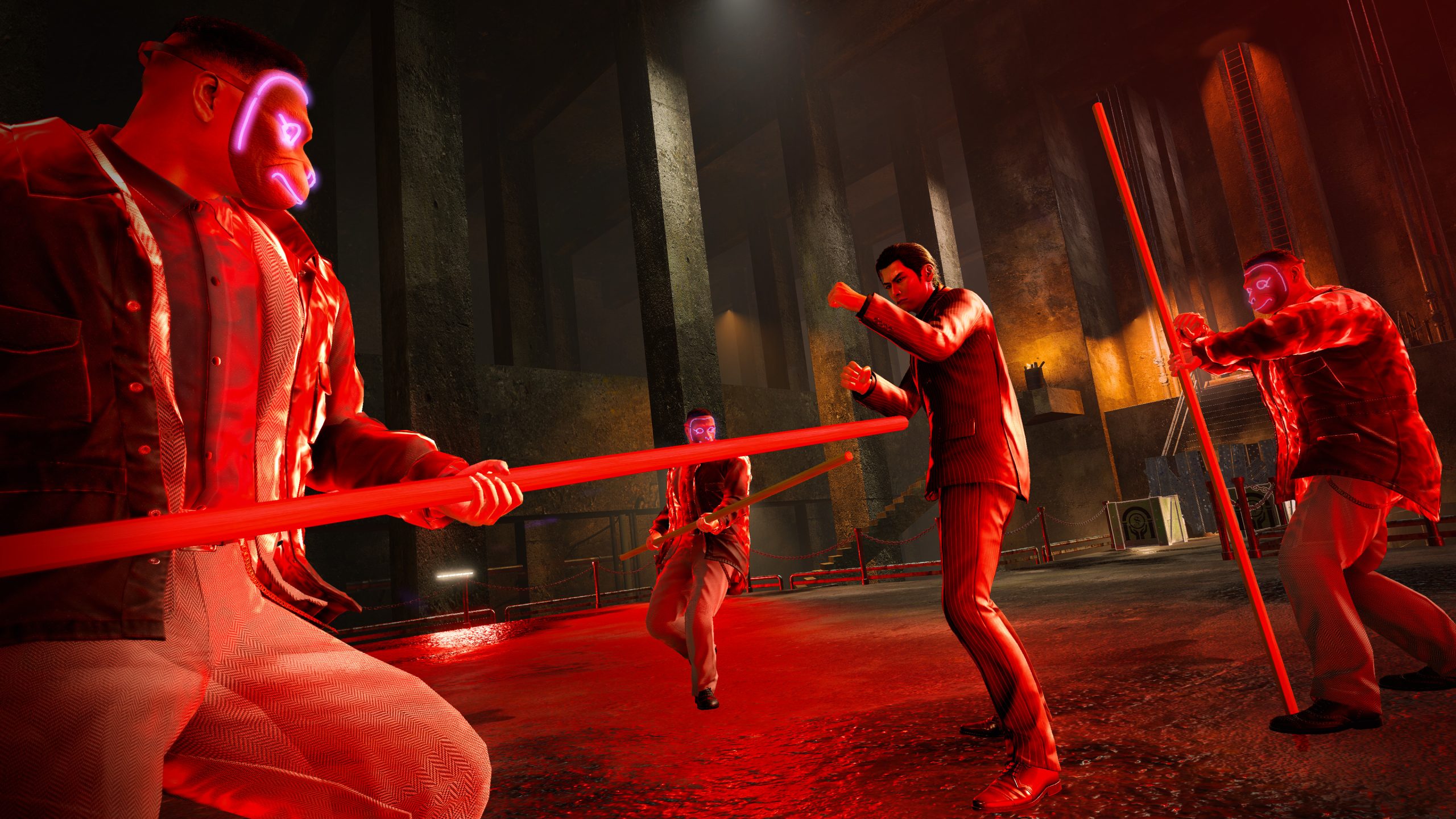 With the upgraded and refined combat, Yakuza Kiwami 3 pushes the envelope with group battles that pitted Kiryu and an ally against a large group of enemies. My first group battle pitted Kiryu and Rikiya Shumabukuro (the “Fighting Viper” of Okinawa’s Ryudo Family) against 10 rival punks. This battle was one of many that allowed Kiryu to work together with his allies to take down hordes of enemies. For instance, after I took down one enemy, I would turn around and see Rikiya holding another enemy in a headlock. This allowed us to efficiently take down an enemy with a double KO before separating to fight other enemies.
The team battles don’t stop there, mind you. A core minigame in Kiwami 3 surrounds forming and building my own gang of “baddies.” In some battles, I would bring 5 of my allies along and fight upwards of 10 opponents at a time. Remember how I said that Ryukyu style came in clutch? Yeah, some of the special moves of Ryukyu stance had massive reach and would apply a global stun to give my group an upper hand.
It’s refreshing to see Ryu Ga Gotoku take meaningful steps in changing up what would have been the traditional Yakuza action-packed combat.
Yakuza titles are known for their wild minigames and even wilder substories. At any time during a chapter, I could go off on my own and explore the town I was in. Often, I would come across another individual in distress and in need of my assistance. One such substory had me coach a socially awkward young man into professing his love for a cashier at a burger joint. Another substory asked me to stop a drama troupe from scamming unsuspecting members of the public. I know these minigames sound quite tame for Ryu Ga Gotoku, but things go off the rails very quickly.
Yakuza Kiwami 3 wouldn’t be a Yakuza game without its minigames. In older Yakuza titles, Kiryu can walk into an arcade and play classic SEGA titles (like Sonic or Virtua Fighter. This is here, too, but with additional Game Gear titles that are available in my home base. While these minigames can feel clunky, it’s a nice way of celebrating SEGA’s library of classic games. If classic video games aren’t your jam, there are opportunities to play billiards and darts in some bars. The Joy-Con 2’s joysticks weren’t the best for precision in billiards/darts, but they held up fine with the rest of the minigames.
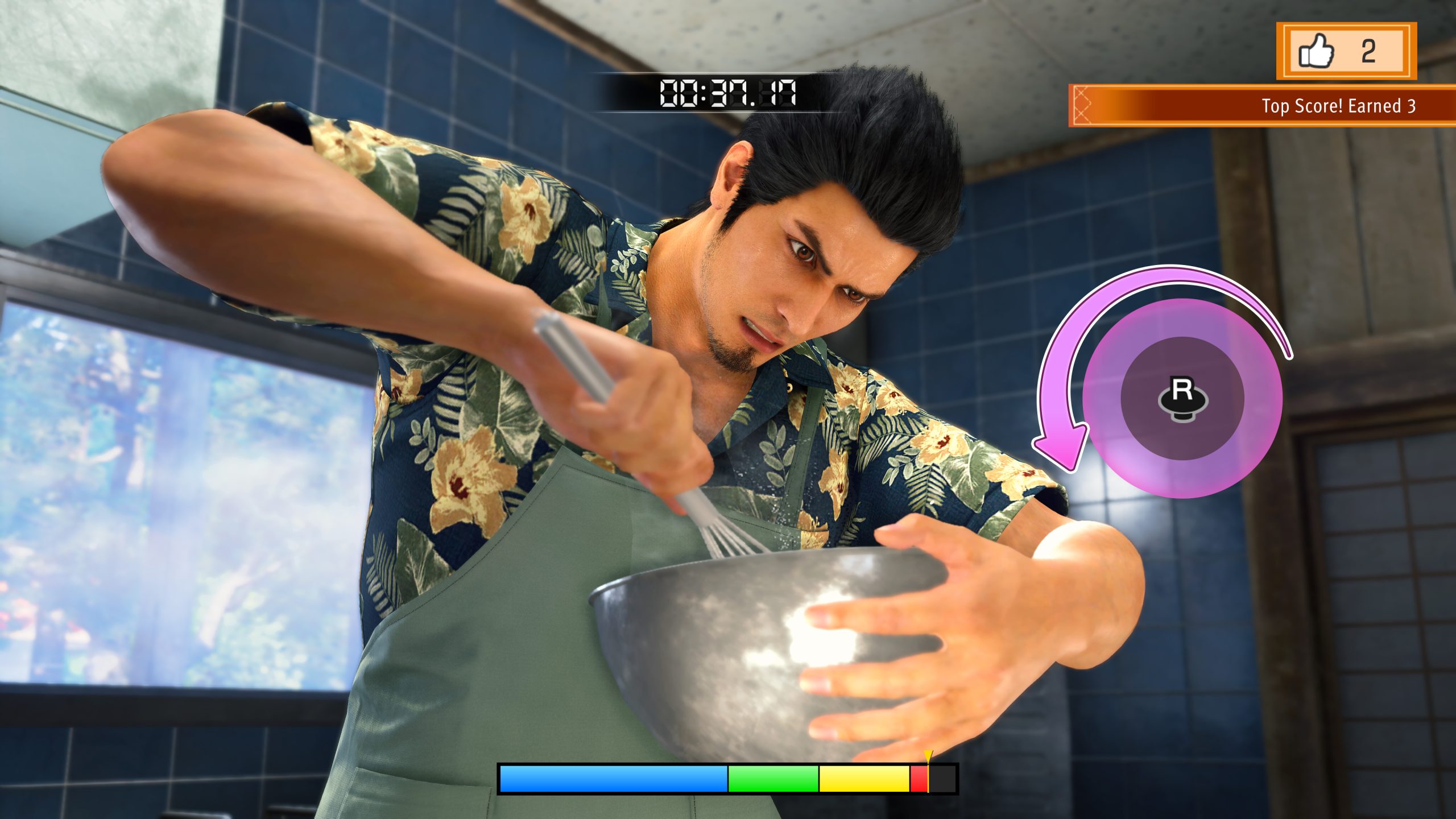 The neighborhoods of Komurocho and Okinawa feel lively and look fantastic in the new engine. Some NPCs talk to each other while others wander around in set paths. The open-world exploration here feels fuller than previous games, building on the traditional mechanics that set Yakuza apart from its competitors. Beyond the substory sidequests and endless minigames, my keen eyes were rewarded when I happened across randomly placed items and thoughtfully placed Easter Eggs that would often lead to weapons and new cosmetics. There’s also a friendship minigame in the overworld called “LaLaLa LoveLand” that tasked me with connecting threads of fate with random NPCs by pointing my flip phone at them third-person-shooter-style.
Open-world exploration in Yakuza Kiwami 3 feels innately rewarding because of how much there is to do, and all of it is optional. Instead of walking through alleys of lifeless NPCs and unenterable shops, I could take Kiryu into a little restaurant to refill his health or sing karaoke songs. When I felt the need to fight, I had a list of combat training objectives to complete and Reaper minibosses to defeat. All of these main quest distractions had a thoughtful place and felt rewarding to discover.
If you’re worried about pacing being interrupted by spending too much time walking around, don’t be. Fast travel via car opens up relatively early on in Chapter 2 alongside a substory that unlocks a Segway (the Street Surfer!) that drastically boosted my movements around town. If you’ve played Pirate Yakuza in Hawaii, this Segway should look and feel familiar.
As one who loves nostalgia, seeing Yakuza Kiwami 3 lean into early aughts aesthetic brought me so much joy. The flip phone I obtained at the start of the story could be customized and accessorized with charms, stickers, rhinestones, and silly ringtones. Remember the LG Chocolate flip phone? I do. I got to relive my high school and college days and cringe at the extent to which I could make my phone extra tacky. I got some bonus stats for doing so in-game, which is a nice touch.
Included in Yakuza Kiwami 3 is the Dark Ties side story. It’s similar to Yakuza Kiwami 2’s Majima Saga but instead stars one of the series’ most compelling antagonists, Yoshitaka Mine. Dark Ties’ approach to humanizing Mine is much needed backstory. The battle system of Dark Ties is largely the same as Yakuza Kiwami 3, but Mine’s fighting style errs more on lightweight boxing combos and aerial attacks. I won’t comment on the story here, as it’s best to be experienced, but I get the feeling that RGG is hoping to tie up loose ends with their cast of characters.
 And now we have the fateful question: How does it run on the Nintendo Switch 2? Short answer: Surprisingly well. Long answer: It’s nowhere near the reigning champion of Switch 2 ports that is Final Fantasy VII REMAKE INTERGRADE, but it’s pretty close. Animations are crisp, yet smooth. Even when a battlefield is dense with enemies, framerates are consistent and there’s no noticeable dip in graphical quality. Loading screens can vary, however. Most overworld battles fluidly transition from exploration to battle back to exploration with no cutscene whatsoever. Shifts between chapters/cutscenes and subscenes have some loadtimes, though. It’s a noticeable step up from Yakuza 0: Director’s Cut, though.
Speaking of Yakuza 0: Director’s Cut, I remember asking questions about what the future of Yakuza look like for the Nintendo Switch 2. If Yakuza Kiwami 3 is any indication, the future of Yakuza on Nintendo’s newest console is as bright as ever. If future Yakuza Switch 2 titles run this smoothly and are released at the same time as on other consoles, then I’m excited to play Yakuza on my Switch 2 going forward.
Yakuza Kiwami 3 is a delight of a remake, retaining the core story that you and I love alongside a new combat system that makes battles more fluid and frenetic than ever before. Dark Ties is an excellent side story, albeit one far darker in contrast to Yakuza’s tried-and-true storytelling thematics.