

Wizordum from developer Emberheart Games is an experience that contains a 90s first-person shooter backbone with modern gameplay elements to keep it fun and relevant. Not all gamers will buy into this mix of old and new, which will be a missed opportunity on their part.
I can’t believe I will start a review this way, but here goes.
*AHEM*
In the 90s, the core construct for the modern-day first-person 3D shooter was put together through Doom, Hexen, and Heretic. With each progression of the genre, games started to find ways to push the boundaries of a 3D landscape and get the player closer and closer to first-person believability. It was fun to see the huge leaps the genre took and what new ways to play within that genre came out of it. How the 90s started with FPS was a mere shadow of how that decade ended.
In other words, what a time to be alive.
While the world has fallen into bigger landscapes, better graphics, and perfecting a virtual reality experience through the eyes of a hero (or villain), there is some charm about turning the clock back and seeing what modern gaming concepts can do within that original core construct.
Welcome to Wizordum.
Wizordum from developer Emberheart Games looks like something built on id Software’s original Doom engine and features a charismatic wizard character leading the way with the destruction. The game contains all the beautiful core constructs of the id Software classic, but with a hefty amount of modernization that makes sense. The only downer is remembering the restrictions that came with such a simple gameplay scheme and accepting that old-timie gameplay mindset.
So, sit back, polish those wizard rings of yours, and let’s cast our way into this review.
Story is the starter, not the engine.
The story of Wizordum is as simple as the game. You play a mage that must figure out why the heck an all-knowing object called the Ancient Seal of Terrabruma has been destroyed and how the baddies responsible were released upon the world. To solve the mystery and absolve the world of its corruption, your character must take down ogres, armored warriors, and sometimes poisonous buckets of ooze, as well as solve puzzles and discover secrets.
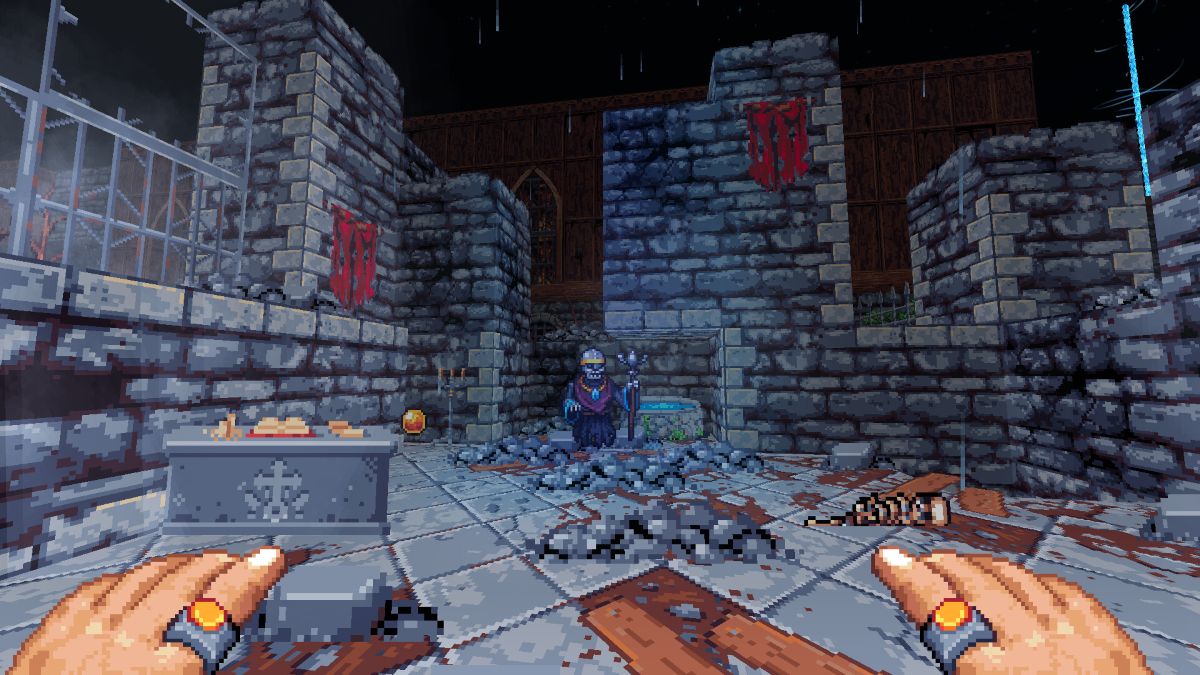
To be frank, I don’t think I kept up with any part of the game’s narrative during my review session. I’m not mad or disappointed about that because this is what 90s-era games did with their gameplay and story. They gave you enough information to send you on your way, but they didn’t require you to keep up with the lore or get invested in any of the characters. The purpose of this game was to point and shoot, and if that works, then you’re square with the amount of entertainment you can cipher from the experience.
Overall, stories like this prove that you don’t need to give the player solid direction through narrative. It just gives enough push to get you going with the gameplay.
Old familiar
Once your character is off and running, you will start to understand what this game is trying to do and what old/new elements it contains to get there. At its core, it is an old, familiar 90s construction, where you’re running around in a 3D pixelated environment with flat environmental features, trying to take down enemies while avoiding their ranged or close attacks. This type of gameplay is mainly about patience and detecting patterns.
Starting with the latter, much like the old Doom and Wolfenstein 3D days, there are only certain angles and patterns enemies can attack during the game. Your job as the hero is to figure out what you can do within those patterns and how you can actively avoid enemy fire. For example, at the beginning of the game, you’ll have ogre mages that can shoot long-range fireballs at you. Timing their patterns of when they shoot, how long you must avoid the fireballs, and when you can return fire is critical for success. It’s easy to pick up on these patterns, and nothing gets too wildly crazy enough to throw you off from them. On the surface, the gameplay and its patterns regarding enemies are simple to pick up on.
The craziness of enemy attacks is when the game throws a ton of enemies at you at once. For example, the last level of the first map has a wild boss fight featuring a big, armored ogre, two vampire ogres, and a small army of ogres behind them. If you stand still and try to take everyone down using their patterns, then you’re going to get overrun and die (trust me – I’ve done it multiple times). If you keep moving and separating each monster from one another, while detecting their patterns, the gameplay becomes a lot more manageable. Regardless, patterns are easy, but they become less so when the enemy numbers increase. It’s fun as hell, though, dealing with a pack of enemies and trying to strategically figure out where to start.
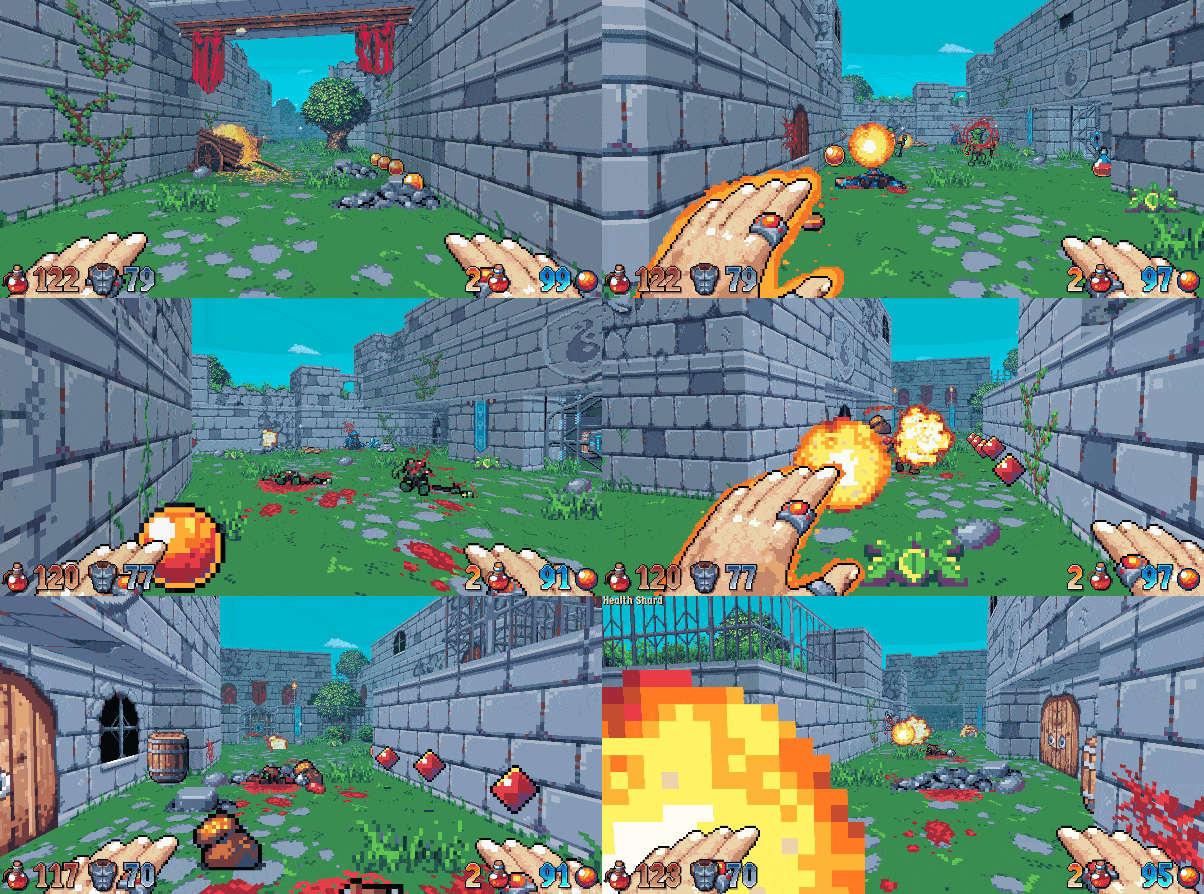
I love that most about this game, as the devs had a firm grasp on a perfectly emulated 90s FPS experience. They found all the details that created that type of gameplay, and they executed it brilliantly. The first hour of this game had me locked in purely because of the nostalgic ’90s feeling it created. They captured this early 90s gameplay perfectly.
New hotness
While Wizordum’s basic construction is 90s, the devs at Emberheart Games shaped a few modern pieces to work with the old design. The first big part of this game is the various weapons you can obtain to keep the gameplay fresh. On the first level, you’ll find things like rings that allow you to cast fireballs, multiple staffs that contain powers, such as freezing enemies, a mace that can cause some up-close and personal damage, and even flaming shields that you can use to inflict further damage on enemies.
Also included with offense and defense are spells you can gather and then use against groups of enemies to get out of sticky situations. There is also a coin collection and upgrade system at the end of each level, which makes you gradually more powerful in the game. You can upgrade equipment and be the fireball-casting badass you’ve always wanted to be. This aspect separates the 90s and modern gameplay elements of Wizordum, while strangely working well. It makes sense, the little touch of modern gameplay that was thrown into the mix, as well as placing small attainable goals in the gameplay to make it even better.
It should be noted that there are a ton of weapons and items that you will run into during the game. Back in the day, there were maybe a handful of weapons and plain armor you could pick up. In Wizordum, there is a wide variety of goodies that can help the gameplay, and, most of all, keep it fresh and interesting. All of this is new for this type of game, and, again, it works well. If anything, it pushes what would be stale’90ss nostalgia into a middle ground of feeling new but also feeling familiar.
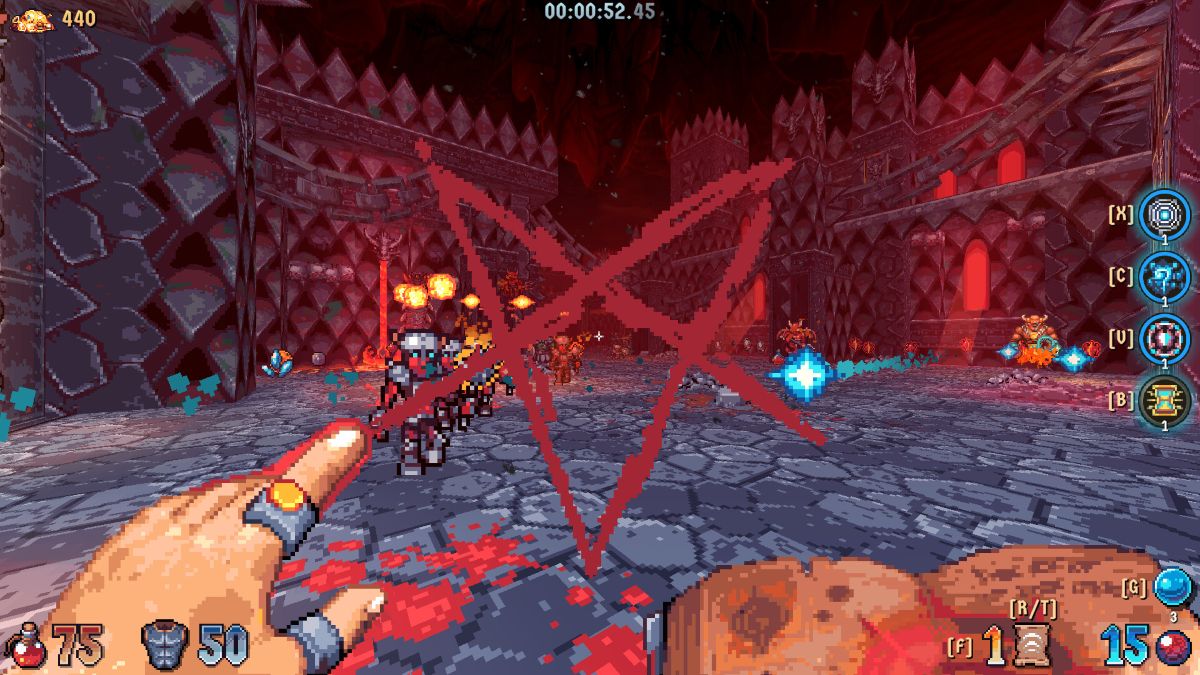
While having a well-armed brute of a wizard bowling through an endless number of enemies is fun and all, this game needed to be more than just that, and it is. Half of Wizordum’s gameplay is trying to figure out puzzles and mazes so that you can progress. The puzzles can be overwhelmingly irritating at times, though this part of the gameplay is supposed to be difficult, so that makes sense.
The puzzles are essentially led by mazes that require you to explore environments to find keys or switches so that you can open the next area as you progress. For example, in the second level, which is a sewer map, right out of the gate, you must figure out how to open a door that is locked in front of you. The game forces you to jump into the surrounding sewage, travel quickly through tunnels, and find a switch that helps you progress through said stage.
From there, you must hit the right switches, find the right rooms, and eventually obtain a key to go through the original door mentioned. You’re talking about a 20–30-minute adventure for one key and the maze and puzzles laid out in front of you, with obstacles, enemies, or otherwise in your way can be tough to handle. It’s the joy of the experience, though, and you must appreciate the amount of effort to make this simple type of game even deeper than expected, with huge puzzles and mazes to navigate and progress through. The game does its best to balance enemies and puzzles/mazes, but ends up with more of the latter than the former.
Now, that said, the level design of each map is quite impressive. You will have large maps with multi-tiered buildings containing certain steps you must complete to move on in the game. Games like Doom or Heretic could never have this much detail or space to work with during their time to shine. Wizordum feels big because of its maps and maze constructs. Because of this, the game feels more like a journey than just a typical FPS.
To make the puzzles and mazes even more engaging and meaningful, the game throws in traditional FPS secret rooms. You can push walls, shelves, and whatnot to reveal hidden rooms with hidden goodies. The goodies can be treasure chests, health, armor, a key to a treasure chest, or possibly a new weapon. While it isn’t necessary to find these rooms to complete the game, having hidden gameplay elements will expand a map’s engagement and explorability. It’s a secondary goal for the players to complete, and I’m sure completionists will enjoy the hell out of these secret places. It had me revisiting locations and keeping a watchful eye on any secret room indicators. Including this portion of the game was also brilliant, as it politely forces gamers to explore every inch of the levels.
Overall, Wizordum harkens back to a simpler time for first-person shooters, while dragging along modern concepts like bigger levels, more interesting weapons/items, and upgrades. There is a lot to love about this game, and the only hiccup for most gamers is probably going to be getting used to a good game that looks like it’s 30 years old. Hopefully, most people can appreciate the core construction and the nostalgic design, but I’m sure some will hesitate to buy in.
On that sweet note, let’s wrap up this review.
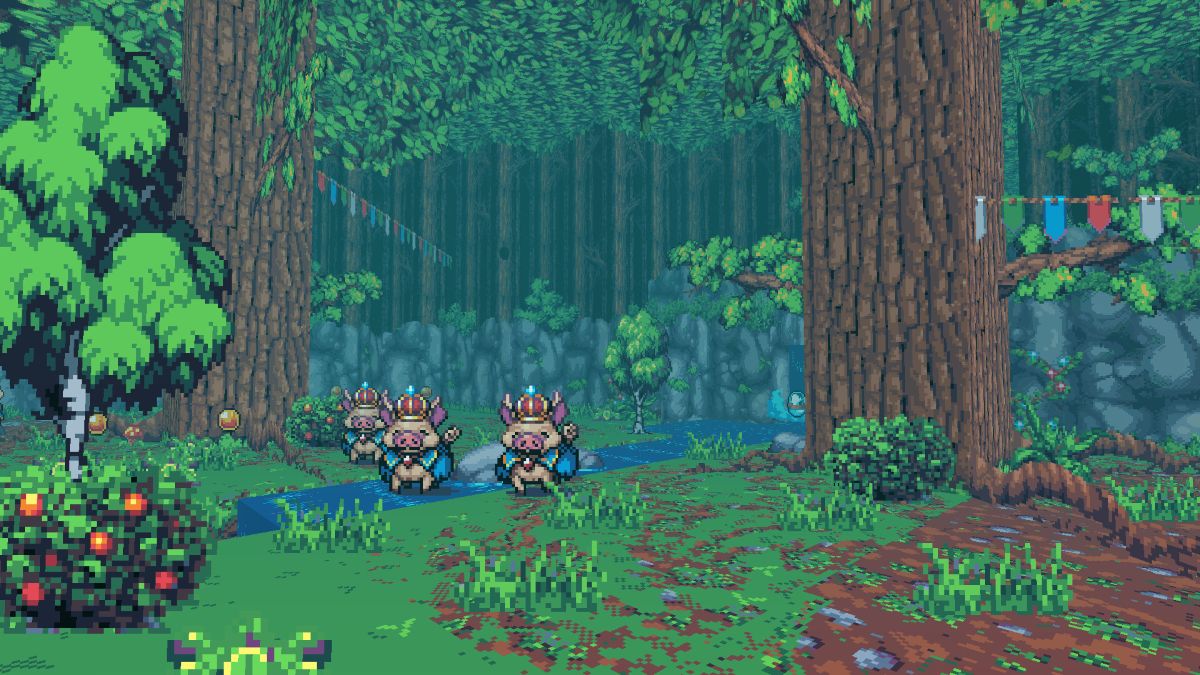
Wizordum from developer Emberheart Games is an experience that contains a 90s first-person shooter backbone with modern gameplay elements to keep it fun and relevant. Not all gamers will buy into this mix of old and new, which will be a missed opportunity on their part.