


Transport Fever 3 is looking to present the kind of intricate simulation sandbox that celebrates micromanagement. By giving players free reign to craft and tune all aspects of transport, Urban Games may create a new obsession.
Micromanagement is not an easy concept for me to execute in video games.
The most successful I’ve ever been at it is usually organizing my inventory of equipment to try and find the most optimal gear for my playstyle. Often, I understand what I want to actually do but have trouble making the time to fully explore what the full potential particular games can allow me.
As an example, I think of the original Little Big Planet. When I played it, I had all these ideas of levels I could create for Sackboy to run around in. The kinds of platforms and tricks I could implement to make a creative and mildly challenging course for others and myself. For about an hour I used the relatively intuitive controls the game provided me to make the foundations of a level, carving out pieces of platforms and placing enemies. But nothing was coming together the way I envisioned it. Worse, I wasn’t playing anything, just trying to create something that would eventually, maybe be slightly worthwhile.
So I gave up and moved on and tried to play the other cool things other people designed that not only had the patience but skill to make their vision tangible.
Little Big Planet isn’t a simulation game in the traditional sense of what most would see the genre as. But I would argue it’s a level-editing simulator, like Mario Maker. Despite having the word in the title, PowerWash Simulator doesn’t really strike me as a stalwart of the genre but it was the last “simulation” game I’ve played. And in PowerWash Simulator, I used different nozzles and soaps to blast crud off of objects and landscapes in different levels which, to be fair, is a pretty accurate simulation of pressure washing.
Though it was considered kind of a meme, PowerWash Simulator scratched an itch, the one where people want to be in control of “satisfying” content rather than watching videos online. Similarly, The Sims wasn’t an entirely accurate expression of living a life but it allowed players to manage a town of people in whatever way they pleased.
Transport Fever 3 is one of the only hardcore simulation games I’ve ever laid my hands on for more than a few minutes. Honestly, the genre both fascinates and terrifies me. I could go on the Steam store right now and find countless games with “Simulator” in the title and be witness to hideous visuals, paltry gameplay, and an obvious lack of effort… not to mention numerous asset flips. But there is a genuine market for developers creating games that allow players unbridled control over a particular aspect of existence.

Sim City is one of the more timeless standards, an example of giving players the tools to be a kind of God Mayor. As a person from Kentucky, Farming Simulator has fascinated me by the sheer amount of people who want to micromanage their own pristine farm. Euro Truck Simulator has popped up on my radar numerous times. And Microsoft Flight Simulator has received numerous accolades over its long existence. While the genre has created zany takes that don’t always focus on realism but still retain hardcore elements, it’s obvious players crave these intensely deep experiences.
During a recent hands-on preview for Transport Fever 3, I was able to spend time with a game that frankly intimidated me. And I always think it’s okay and somewhat encouraged to dabble into genres of games you’re not only unfamiliar with but would traditionally avoid. After all, being the third game in a series, there’s likely a wealth of improvements and new ideas that would only make the game that much more involved.
Transport Fever 3 and developer Urban Games should always be open to the idea of curious newcomers. Marketing a simulation game about creating transportation lines for a city’s industry needs to a player who only spends time with Call of Duty is going to be nearly impossible. But the heavy flood of “cozy” management games that Stardew Valley has inspired has generated players who could find a wealth of enjoyment in something like Transport Fever 3.
Because I have enough experience with building towns here and there and making them somewhat function, Transport Fever 3 didn’t fill me with terror. Coming six years after the previous game, Urban Games told us that while Transport Fever 3 will have a larger focus on its tycoon mode and late game systems to give hardcore players more to do, the game is also being designed to be more accessible. Because things are still being developed and finalized, there is no tutorial in place as the mechanics could still change slightly.
Outside of a dedicated tutorial, Transport Fever 3‘s campaign is meant to act as an increasingly complex and difficult translation of the game’s intricate systems. It was with these two hour-long missions that I quickly understood how and why players become so obsessed with games like this.
In Transport Fever 3, players will have access to over 300 vehicles, 35 industries, and 40 types of cargo. This entry will grant players more control over cargo management and how it gets transported around the cities and town players craft. The ability to build landmarks and offshore industries are being introduced, as is a shift away from money being the sole indicator of a player’s success.
My preview was the first time for hands-on experience with Transport Fever 3‘s campaign. Obviously, the game’s generous sandbox will allow players to create a thriving industrial hub of varying sizes, spread across different types of terrain. But that campaign is meant to push the formula creatively and narratively for the team at Urban Games.
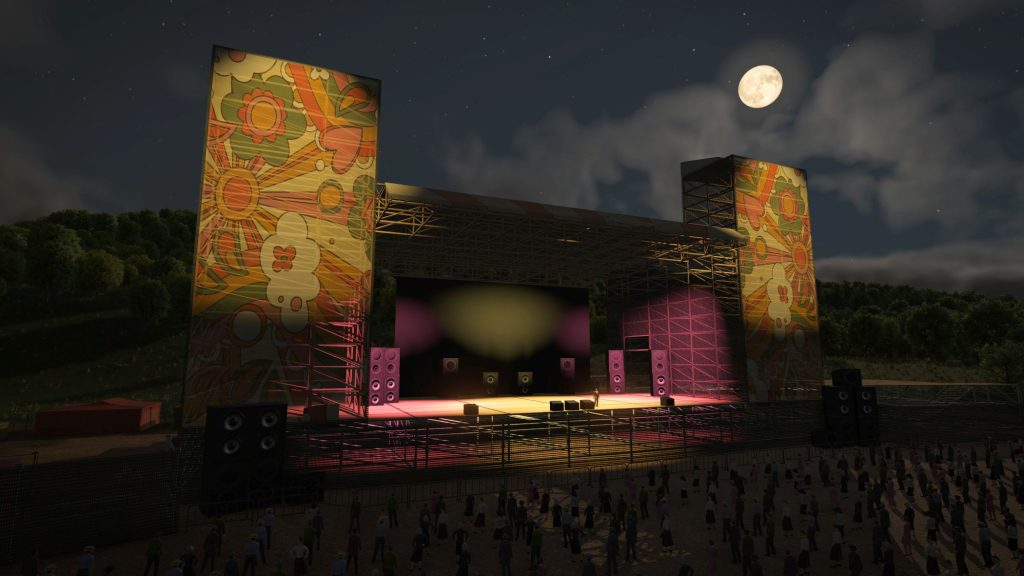
Consisting of 8 missions of increasing difficulty, the campaign starts out in 1900s New Orleans and then takes players across different decades, leading up to current day and slightly into the future of 2033. For my preview, I was able to experience 1900s New Orleans in the days leading up to preparations for Mardi Gras. Then I was able to play the campaign’s fourth mission, a 1960s spin on the Summer of Love and working to build the Woodstock festival and play a bit of local politics.
Urban Games implements a loose take on history, spinning it with humor and sincerity while working to maintain a sense of accuracy. The developer wants the campaign to feel different, an extension of the sandbox they give players. Each mission will have objectives that can grant up to three stars but it isn’t expected that most players will be able to earn all three on the first try. These campaign missions will help players familiarize themselves with the wealth of options Transport Fever 3 has available.
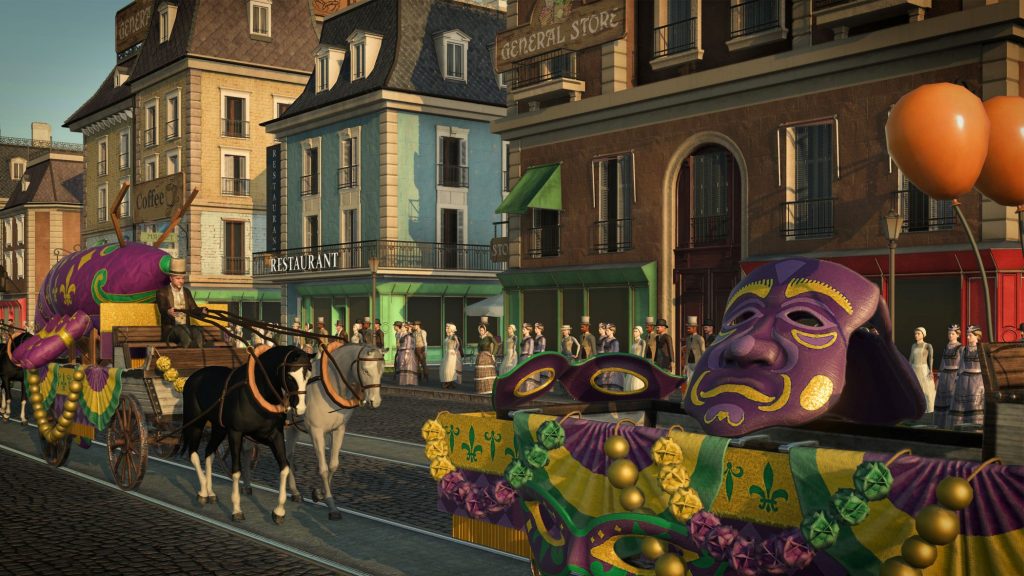
In terms of narrative, there was a certain sense of levity to both the Mardi Gras and Woodstock missions I played. The player is viewed through the lens of a jovial builder or character that is working to meet the demands of the characters in each mission. For Mardi Gras, players need to contend with the mayor of New Orleans attempting to bring people in for the festivities, especially providing food from the waters. There’s a back-and-forth between the mayor, a young city worker, and a black woman who is working to integrate Creole culture into the proceedings to spice up the Mayor’s ideas. In the 1960s, the hippy minds behind Woodstock are attempting to navigate the needs of the surrounding town as they work to build the stage and festival grounds. The stubborn and old-fashioned local law enforcement acts as a kind of thorn to incorporate the idea of maintaining a populations’ happiness.
The storytelling done in Transport Fever 3 sets a casual and friendly pace for the players. The spoken dialog in the two missions I played had admirable voice acting that went for regional and cultural accents to instill a sense of time and place. The writing established a purpose for why the player was building shipping lines, how roads were being managed, and how to connect transportation to all these needs.
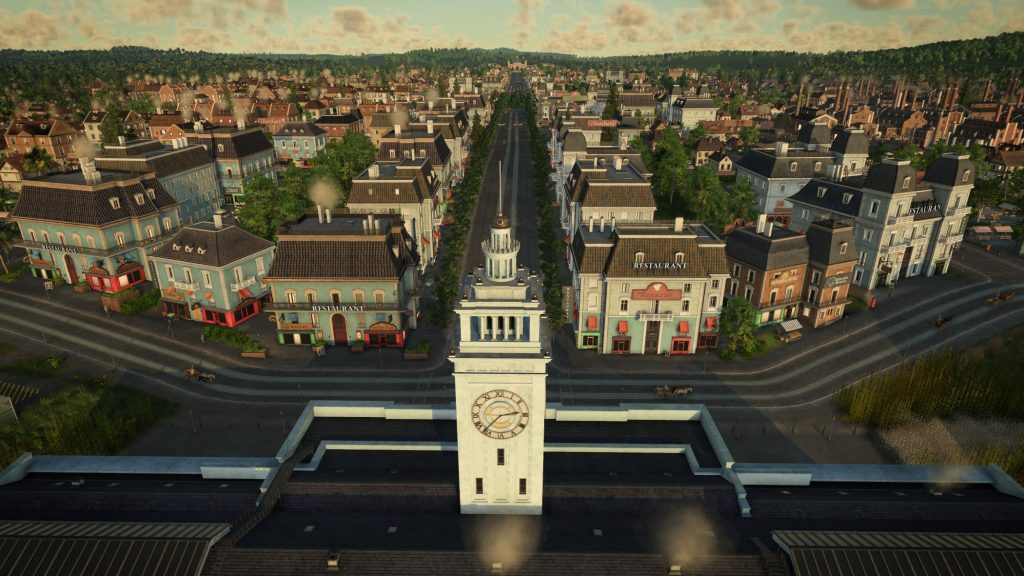
Aesthetically, I found myself impressed with the density of Transport Fever 3. This is a game more about sheer scope rather than fine detail. No, character models are not going to be flawless and this isn’t some crafted world like a Grand Theft Auto or Horizon where every detail is custom-made.
What should be commended is that the worlds in Transport Fever 3 are meant to be completely malleable to the player’s whim. Sinkholes and mountains and fields can be formed almost instantaneously using a terrain tool that will carve through the world. In New Orleans, I was able to zoom in at the street level, hover over a horse-drawn carriage, and see the randomly generated name of the person driving it.
Then you begin to just watch the game exist. For a few minutes in that opening campaign mission, I watched the bustling hub of New Orleans move about its day before I pursued any new objectives. Traffic–as simple as it was back then–would pause to allow for right-of-way to pass. These “units” followed predetermined paths and literally were living whatever digital existence Urban Games had programmed.
After that moment, my mind sparked with similar possibility as I did with Little Big Planet or any other game that has given me a wealth of agency over crafting something.
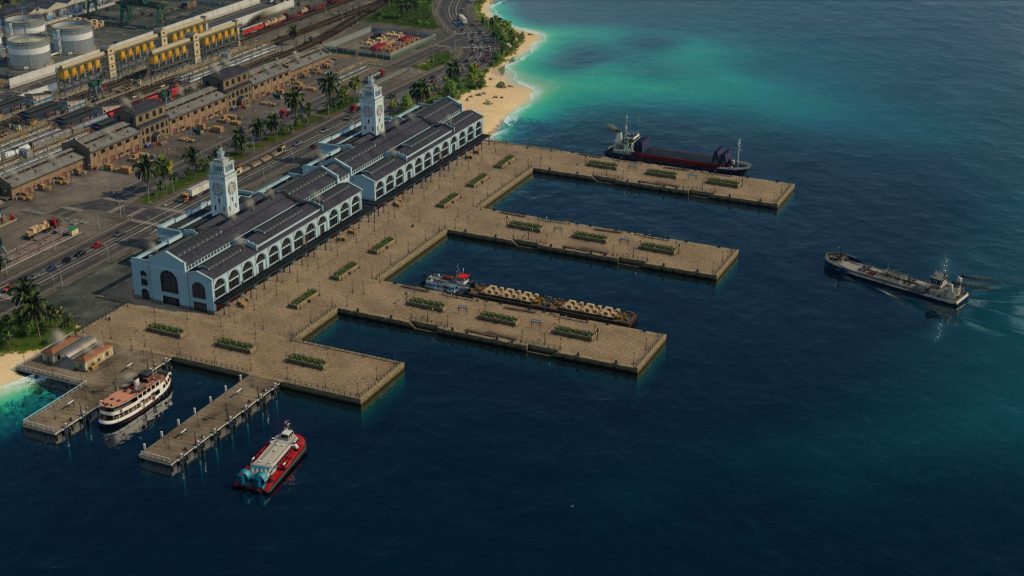
What these few missions of Transport Fever 3 did were to show me the ropes so that I would eventually feel comfortable enough to do more. For the New Orleans portion, I was shown how hubs could be built to harvest lumber or fish and shrimp. From there, I was taught to build warehouses to store these things and set up an entire path for a cargo carriage to come by that warehouse and then transport the wood or shrimp to the hotel. I built roads to connect towns to each other and had my hand held rather gently.
When it came time to build Woodstock, I felt like I knew what I needed to do to begin construction on the stage but needed a shove in the right direction from a developer to ensure my thinking was correct. Do I need to build a warehouse next to the stage? Do I need to create a stop in front of the building location so the trucks know where to go?
Admittedly, a game like Transport Fever 3 is insanely complicated. For a player like me who has never touched the first two games and barely dipped my toe into simulation and management games, it’s certainly daunting. I sat down at the mouse and keyboard expecting to be overwhelmed almost instantly. The fact that I wasn’t is a testament to what Urban Games is attempting to craft here.
A campaign is a worthwhile effort to allow the development team to flex their creative muscles but also figure out a concise way to communicate the scope of a game. I imagine in shifting from Transport Fever 3‘s first mission to its fourth, I missed out on some hand-holding from the other two missions. But the tools are obviously in place to ensure that player’s aren’t completely lost.
Additionally, the campaign is a fantastic way to express that Transport Fever 3 allows players the control of over a century’s worth of vehicles. Each individual unit can be controlled in such a specific way for a singular purpose that it’s kind of baffling. And, as a personal anecdote, I loved that I could add a flair of customization to a horse-drawn carriage from the 1900s and give it a neon green accent just because it was so wrong. Urban Games wants players to be able to have fun, whether that fun be for serious simulation or casual shenanigans.
So here’s the question: is Transport Fever 3 fun?
I think so, especially for people who love simulation games. But my preview of the game was focused on the campaign. And to be fair, for a player like myself, that is an extremely important aspect of the game to do right. It allows the inexperienced a warm and inviting welcome into what the full game has to offer. Trying to blindly jump into a game that has so many knobs and levers that can change so many things would instantly overwhelm and likely turn many players away.
After being let loose in Transport Fever 3’s sandbox mode, I was given the option to create a canvas. Map size, terrain type, city sizes, they all felt like initial difficulty levels that would dictate further complexity. The game will generate spots where materials are produced and have big cities and smaller towns scattered around the map that have various needs. From there, it’s up to the player to figure out where they want to go from there.
At that point, the player can work on their own personal objectives they want to fulfill. That can be terrifying for those who need more direction but freeing for the kind of audience Urban Games has fostered through this third entry.
Not every game has to appeal to every player. But I think every game should have some kind of entry point that anyone willing can step through and feel welcome. In Transport Fever 3, players can create an entire growing industry of logging. They can start out with a simple warehouse and facility and use a four-wheel truck to take it where it needs to go. But as the player accrues money and the population demands more, they can expand those capabilities, requiring intricate systems of delivery that expand to shipping boats to air transportation.
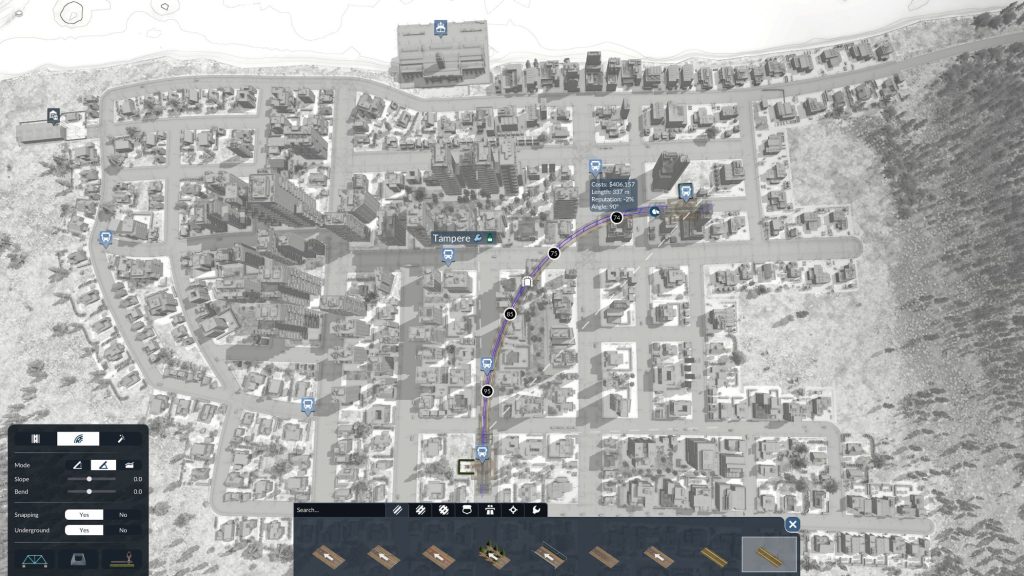
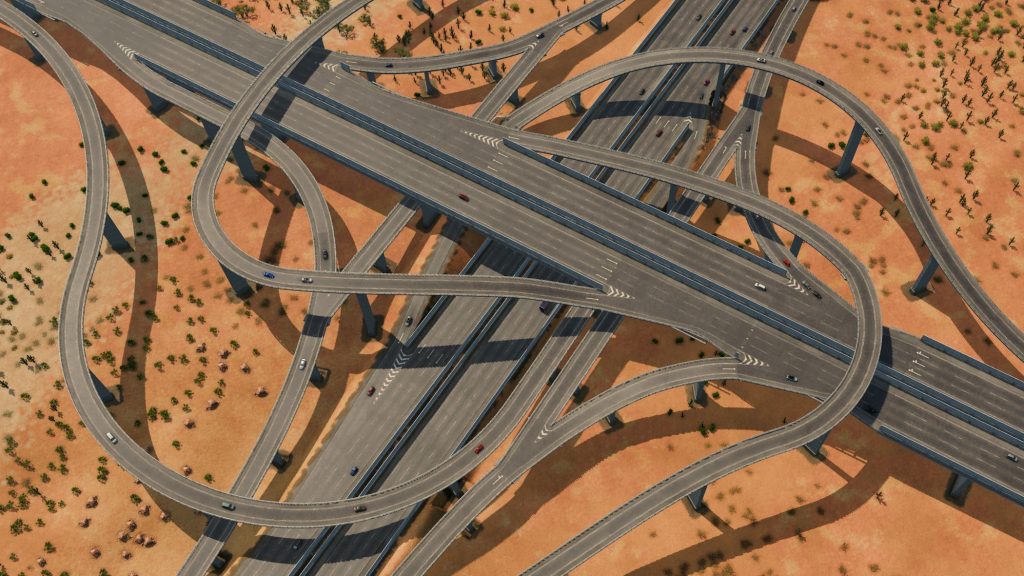
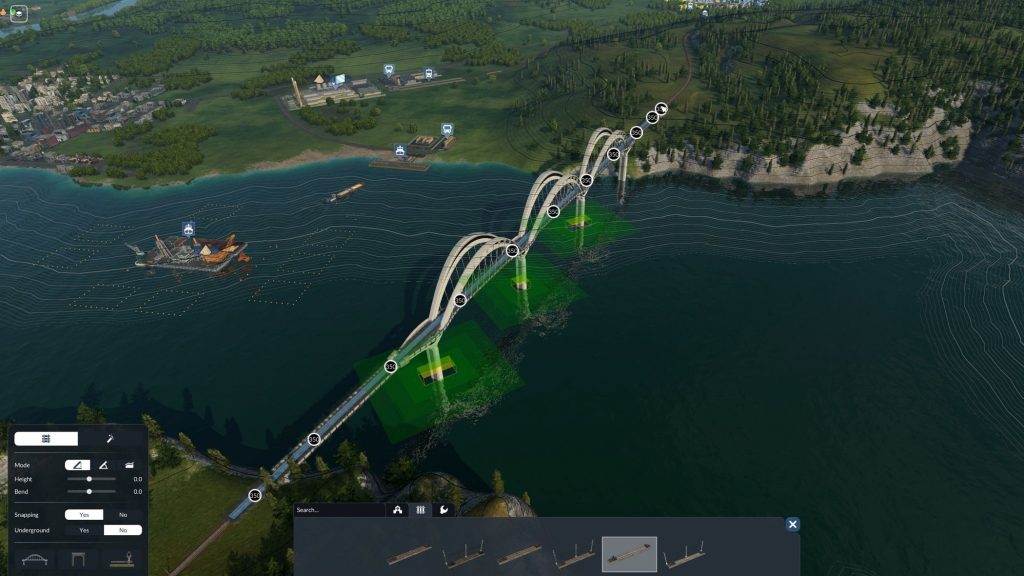
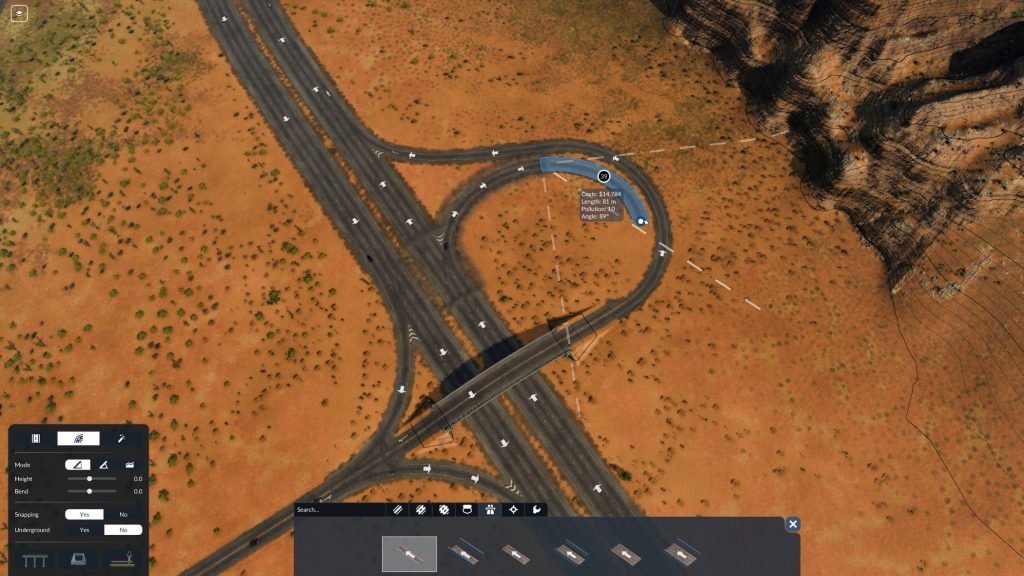
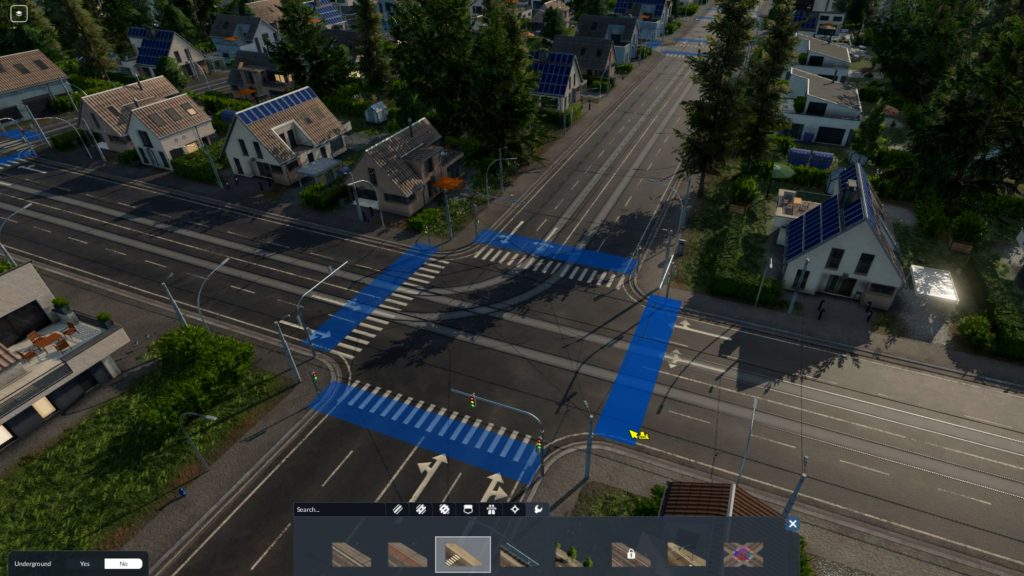
I watched a demonstration showing lines being drawn for specific paths for these vehicles to drive. I imagined roads being built over tunnels that trains drove through. I can see the numerous types of roads that support multiple lanes of traffic and how some can have sound dampening that will help keep the noise down and the population pleased.
I see the vision here. I see the types of hyper-vigilant players who will spend days connecting all these dots together, making micro-adjustments to ensure every car runs smooth and that the right kind of truck is used to transport the cargo it was made for. And I imagine those players then spending hours watching it all run effortlessly, like a deity observing all their hard work.
For several minutes I switched the camera over to a first-person view of one of my units driving from one part of town into the next and taking the path I had laid out for them. Should a player wish, they can observe their hard work from that angle from every step of the way. And while I’m not that kind of player, I see Transport Fever 3‘s potential to becoming a prominent game in the simulation space that gives city-building players everything they could have ever hoped for.
Transport Fever 3 is being developed by Urban Games for PC, PlayStation 5, and Xbox Series X/S. While no launch date has been set, the game is aiming for a 2026 release.