


The more Blumhouse horror films I ingest, the more I believe they’re slowly becoming the Annapurna Interactive of horror films. Much like Annapurna, not all of what they make is gold, but the chances they take with new ways to tell horror are commendable at worst.
Their latest digital release and chance taken is The Woman in the Yard, a story that digs up mystery, intensity, and a heavy amount of underlying understanding about the human condition. While its storytelling was a bit shaky at times, the message was quite clear about what it was focusing on. It will most certainly do a wonderful job of leaving the viewer arguing about what they have just seen. Its ending is a lighter version of Inception with a huge dose of melancholy.
Let’s get right into this tale of woe.
Official Synopsis
“When the sun is bright and the wind is still, she comes to you like a sudden chill. Draped in black from head to toe, how she got there, you’ll never know.” With that cryptic warning, an otherworldly woman sends a family into a seemingly inescapable nightmare. Already grieving the death of her husband, Ramona faces a new fear when this mysterious figure appears outside her farmhouse. With the woman continually creeping closer, Ramona must protect her children from the chilling grasp of this haunting entity whose unknown intentions are anything but peaceful.
Thoughts
While The Woman in the Yard instantly shows its hand at the beginning, it does a great job of hiding and building upon it. It’s not an easy task to say what you are and then help everyone watching conveniently forget that you said it. That takes some solid storytelling and sleight of hand.
The film begins with the disconnectedness of the main protagonist, Ramona (Danielle Deadwyler), who is recovering from a car crash that took her husband’s life and left her family in disarray. She struggles to get back on her feet, both literally and figuratively, as she drags her responsibility of being a mother because she is trying to become a human being again. Her recovery is taking a toll on her household, her kids, and the broken family’s future. Behind on bills, unable to take care of animals on their newly purchased farm, Ramona struggles to move on and get back on track with everything. It’s a tale that is all too familiar with people out in the real world, and one that hits home for those who have gone through tragedy before.
If you have never been in a situation like this, then you have no idea how accurate and powerful director Jaume Collet-Serra and writer Sam Stefanak have made Ramona’s situation. They sell the subtlety of the situation well without revealing the heaviness that comes with it. They treat their characters appropriately, as tension and tiredness dance together through microaggressive moments between mother and children. Through their actions, expressions, and dialogue, you can see without being told that the family is in crisis. It’s powerful, potent, and it does a commendable job of setting up the atmosphere for the rest of the film.
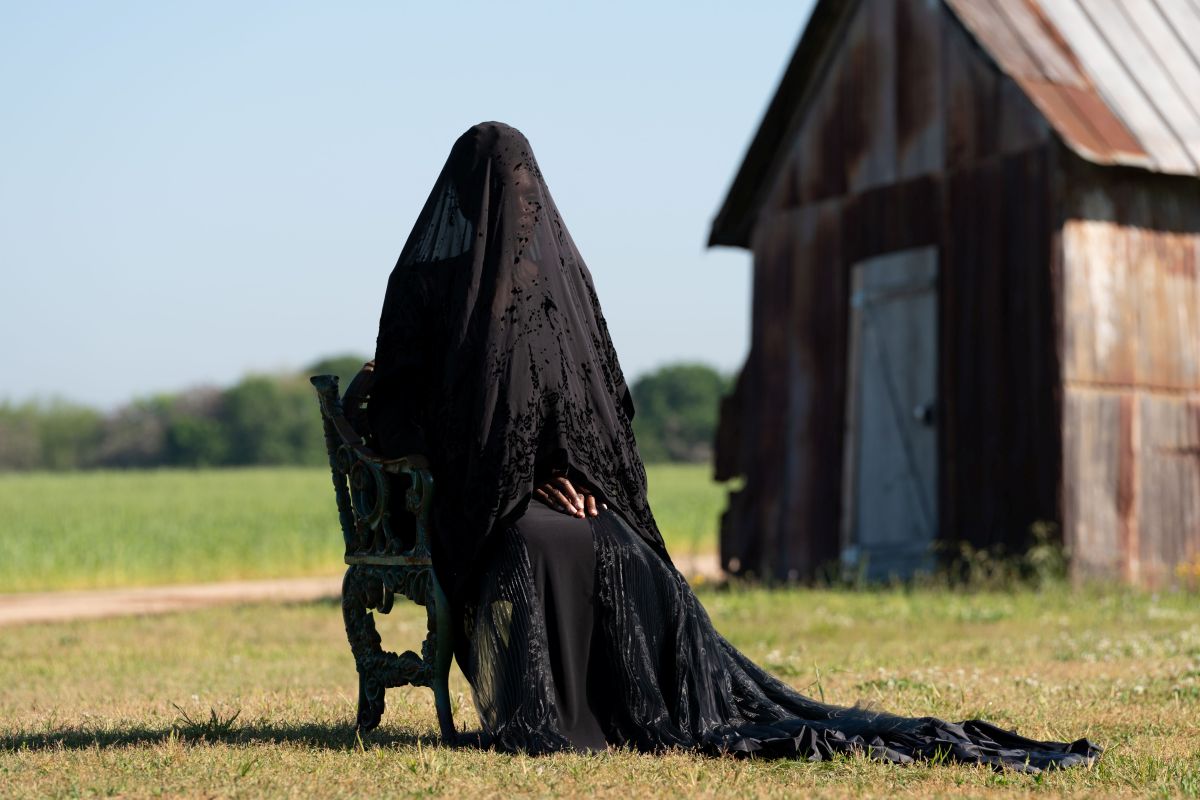
As the story of a collapsing family continues, a strange woman in a black veil appears in their yard. She sits and watches the household, seemingly waiting for something or someone to light a spark so that she can do her work. At first, the family bickers about the reason why she is in the yard. Then they shift to logical reasons why someone would suddenly appear and just sit there. Finally, Ramona takes it upon herself to go talk to the woman and find out exactly why she is doing what she is doing. And the woman tells her exactly why she is there. From that moment, the second act takes off, the family’s crisis becomes an emergency, and the film spends a fair amount of time just hanging its hat on what is going to happen and how they can prevent it.
The second act is simply unnerving, as each family member is trying to hang on to each other and their sanity. In this act, the two characters, Ramona and her son Taylor (Peyton Jackson), spend a fair amount of time yelling back and forth. Taylor wants to take out the woman, while Ramona wants to sit and wait, fearful of any repercussions. The tension between the two characters and Ramona’s blatant inaction to protect her family play into the overall storyline of the film. While most of their bickering seems to go on far too long, it does support how act three ends up, especially the reveal.
Seeing how this all plays out and builds on the tension between the characters helps to add some much-needed context to Ramona’s situation. She has gone through a tragedy and lost the only person who was her rock, her husband David (Russell Hornsby). She has a lot of guilt and shame about his death weighing her down, things anyone would have given her situation, and it is difficult for her to pick up and become a super mom.
Opposite of her character, Taylor doesn’t have any of that weighing on him; rather just wants to make sure that his family is safe and no one else dies. His need for fight instead of flight is justified and warranted. He does what he should do in the moment and helps to magnify Ramona’s lack of action, thus bringing up the constant reminder about her state of mind. Taylor is well-built for this situation and does a good job of appropriately playing things out.
But the two characters’ bickering does go on too long, even if it is effective in laying down breadcrumbs toward the third act of the film. I feel like a bit more context could have been injected into the second act, some more hardcore details about the family, and how this woman in the yard relates to them. The story seems to wander a bit about where it is trying to go and how it is leading the viewer. I do like the character development in this act and the juxtaposition between Taylor and Ramona, as it lays down the groundwork for the rest of the story, but it felt a bit repetitive with how that groundwork was laid down. We know they have competing opinions about how to handle the woman in the yard, but those opinions seem to just dance in circles instead of pushing the narrative forward.
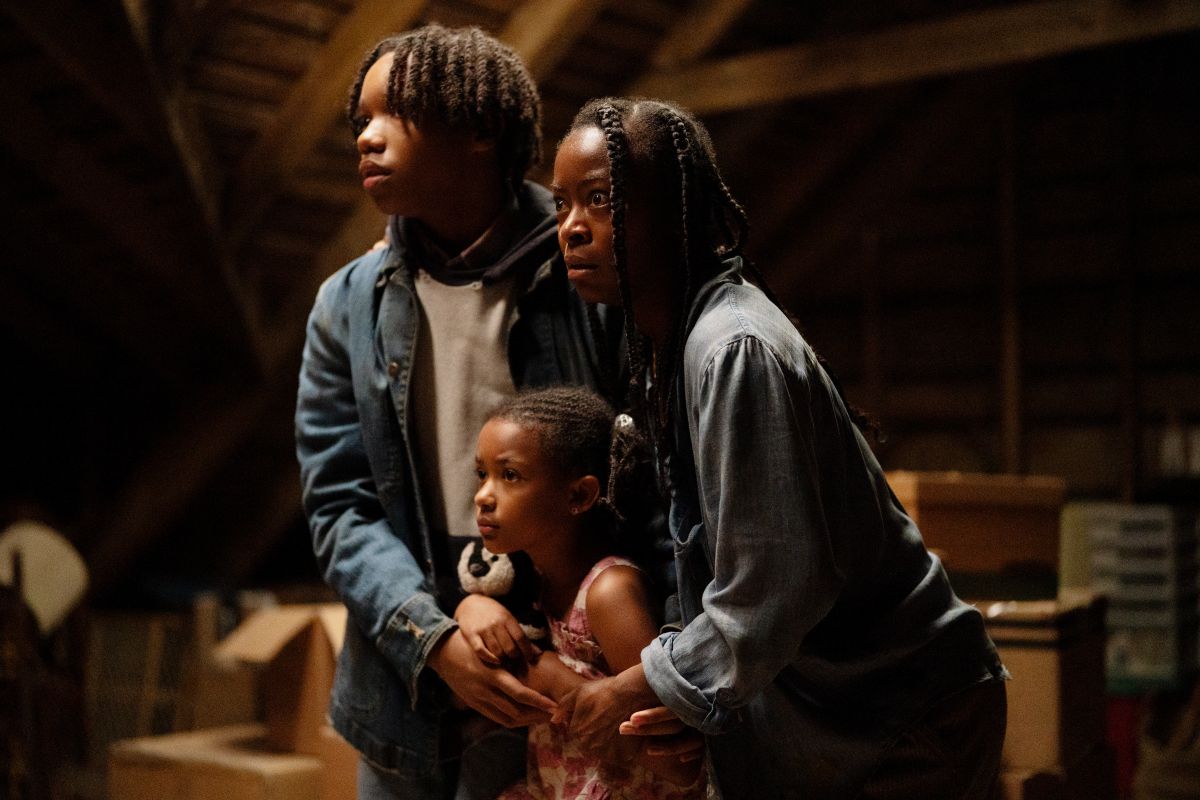
When the third act of the film begins and the family finds itself face-to-face with the mysterious woman, the movie starts to twist in its direction and creates a storytelling mess. When you have a lot of lines to tie together by the end, you’re probably not going to do it well. And the second act laid out some lines that were subtle, unfinished, and needed resolving.
The lines needing binding were about Ramona’s state of mind, how the woman in the yard relates directly to Ramona, and how both relate to the children. While I won’t go into too much detail with the big reveal, the story does a great job of resolving the main dilemma, revealing who the woman in the yard is, and leaving the film hanging on a vague ending that is certain to cause discussion.
All this said, the film is good, but not great. It does seem long in the tooth with the second act and tends to waste time on repeating arguments and moments. It lacks the time to resolve everything, and creating a more complete picture of Ramona’s role as a parent and wife hurts the story. It’s not perfect in those respects at all.
BUT! The story is a lot deeper than most critics and audience give it credit for being, and I’m almost positive it will hit home hard for some once they get to the ending. You won’t walk away from this film with a happy-go-lucky feeling, mainly due to it being heavy on the psychological and light on the horror.
Overall, I recommend The Woman in the Yard, but go into it with light expectations and keep those eyes and ears open. Otherwise, you might just miss its message.