


The Outlast Trials presents a surprising success story: turning a single-player horror game built around stealth and tension into a cooperative multiplayer experience. It shouldn't work but it often does, maintaining Red Barrels' macabre gore and twisted antagonists.
Outlast was a game that left me emotionally and mentally depleted. Wrought with terror, Red Barrels’ intense first-person horror game never relinquished. It wasn’t just because the player was trapped in a nightmare insane asylum with twisted murderers, mutilated remains, and shrouded secrecy. It wasn’t just because the player was constantly abandoned in the dark, fearfully scrounging for batteries to power their camcorder’s night vision mode. Helplessly hiding in any tight space and fleeing at the closest startling sound. Being submerged in inky blacks, desperately trying to open doors and power on devices before a psychotic human sniffed out your location.
There was a bleak maturity to Outlast and its sequel. Red Barrels culled from a deep well of film and other games feeling particularly unique in its approach to gore and violence. This was a twisted world where humans and their flesh were experimented on, stretched past physical limits. At times it was played for laughs, other times shock. But the singular approach was to never allow the player to grow too comfortable in any semblance of safety.
The dizzying amount of ways Outlast stoked fear allowed the game to feel distinct in a pack of numerous other first-person horror games, all attempting to claw attention from players. So, naturally, the question becomes, “How do we translate this into a cooperative multiplayer game?”
Set against the backdrop of the Cold War, The Outlast Trials acts as a predecessor to Outlast and its sequel. The Murkoff Corporation responsible for events behind the games has recruited and subsequently kidnapped the player character into its program meant to create sleeper cell agents that will be activated when deemed necessary. Known as Reagents, the player and the other humans encountered through this nightmare perform tasks during a series of Trials meant to forge them into these husks.
Murkoff’s trials are violent, inhumane, and almost clinical in their approach. It’s a shocking framing device that works in the context of the Outlast universe and the structure of the game. After being psychologically tortured, it’s easy to imagine why a person would eventually be prone to brainwashing. The world made here is vile and adult, which is absolutely the intent.
The Outlast Trials embraces the carnival of horrors that are emblematic of Red Barrels’ work. I think it’s important to keep in mind that the sheer level of violence and gore and the relishing of death won’t be for everyone. One might consider the single-player games relatively abhorrent in how people are brutalized. And some of this horror certainly can be seen through the lens of torture porn. But when those games’ credits roll, it’s over. Aspects of repetition, leveling up, and completing challenges means that The Outlast Trials is a constant bath of what one might expect.
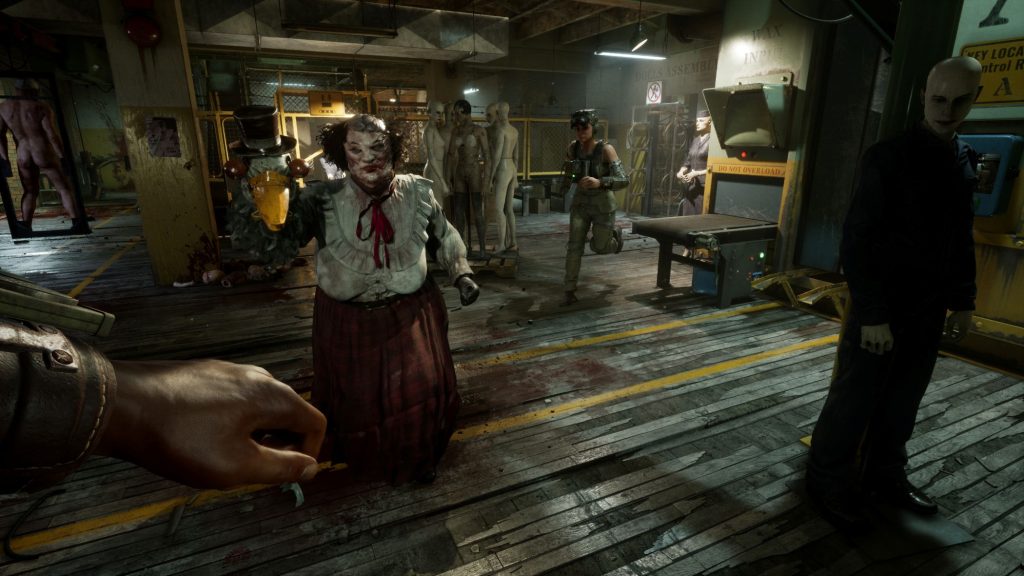
Genitalia both mutilated and not are present here. Displays are made of organs and bodies that, while sickly, are likely meant to evoke comedy to the perpetrators. The maps players exist in are madhouses where they are being stalked by psychopaths who gleefully kill. Deemed the Experimental Population, or Ex-Pops, these menaces are Murkoff’s failures that become tools to better shape the player into a sleeper agent. The always delightful former children’s television host Mother Gooseberry, conjoined aristocrats, and a priestess are just a sampling of the major, unkillable foes who lurk around waiting to execute helpless Reagents.
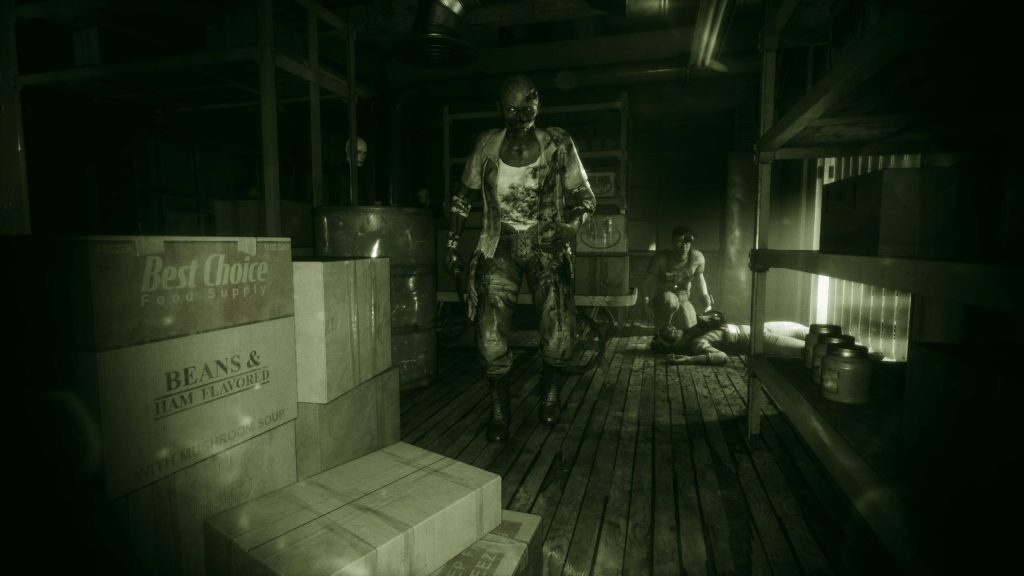
Surprisingly, the narrative feels strong considering the type of game. Outlast wasn’t a paragon of direct storytelling, delegating a lot to notes and letting the world speak for itself, bleeding and festering. The Outlast Trials does an admirable job, especially considering I had no expectations for it. The levels themselves tell a story, where the player is left wondering how and why Murkoff procured these places for this specific purpose. Researchers can often be seen on the periphery through unbreakable glass and walls, simply observing the ensuing bloodbath–fascinatingly grim stuff.
Brief respite can be found in the player lobby where all the Reagents are housed. NPCs can be spoken to who provide exposition and context. And it’s here the player can interact with others online and have the space to breathe. Who would have thought to include chess, arm wrestling, and other minigames as a distraction? But it kind of works in its own morbidly cute way. These sleeper agents have to have some shreds of humanity left before their agency is stripped from them right?
When I first landed into this common social space, I was taken aback by how odd it all felt. Am I really in a cooperative Outlast game? It felt kind of goofy running around the Sleep Room. This is a game where players go into matches, succeed, fail, level up, and unlock things. You can unlock cosmetic outfits and decorations for your room. It’s almost startling in how odd and out of place it all felt.
There’s a justifiable fear that Red Barrels could have made The Outlast Trials a revolving door of microtransactional hell. But there’s a decent glut of stuff the player can earn themselves over the course of playing. Items and reward tracks that can be purchased don’t provide any tangible benefits and are merely there to make your character look more sick and twisted.
In the Sleep Room, players purchase upgrades and abilities using vouchers that are rewarded when increasing their Therapy Level. Because the game centers around a series of trials, performance during them is constantly being graded. Players will receive an Evaluation Report that awards or subtracts point from an overall letter grade that ultimately dictates how much experience is gained.
Though the player will never feel outright strong, the power creep of feeling more capable of survival is tangible. Prescriptions allow for flat increases in health, stamina, and storage space but they also expand the player’s moveset and gives them new abilities that can make a harrowing situation less bleak. When the player knows they can start throwing objects to provide distractions, break free of traps faster, or run for longer without becoming exhausted, it opens up a kind of confidence that allows the player to try new things or not be despondent when everything goes to hell. No matter what, improvements can be achieved with persistence.
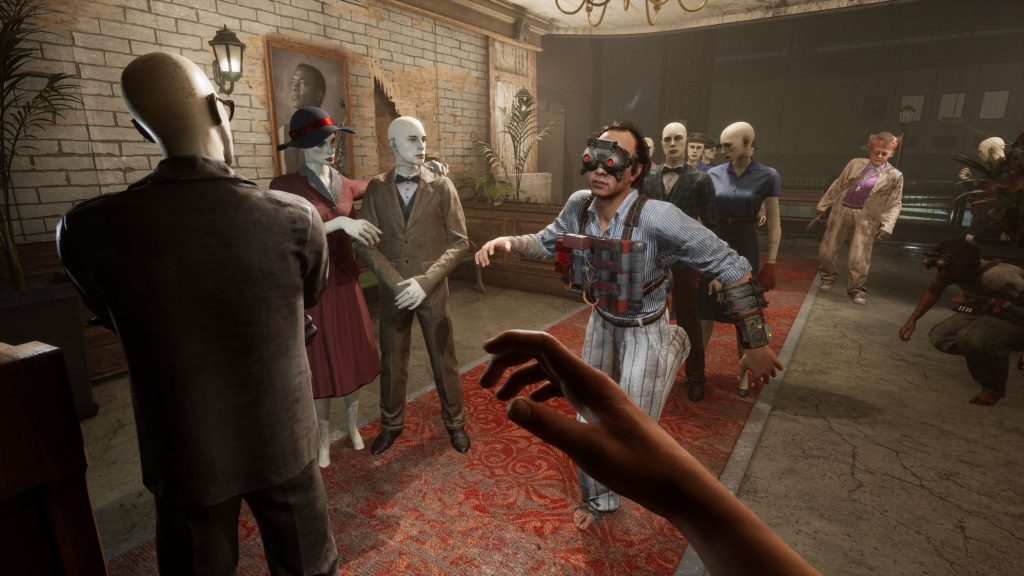
Amps provide added benefits and are unlocked after hitting level ten. Your idea of a match can change when you can purchase slippers that prevent you from making noise when walking on broken glass. Other amps amplify how the player can heal or escape from danger, or make items stronger. Rigs are worn during a match’s entirety and, when used in coordination with other players, can often give an edge against Ex-Pops. The Stun rig allows a shock device to be thrown that stuns enemies, while the Blind rig puts down a mine that will pop a blinding smoke when an enemy walks over it. The powerful Heal rig emits a gas that heals you and any nearby player. The X-Ray rig allows the player to see enemies and teammates through walls and the Jammer rig acts like an EMP for electronic devices but can also crack open locked doors and boxes. The Barricade rig puts down an obstacle in a doorway that will temporarily impede the pursuit of an enemy.
The Outlast Trials is absolutely a tense game. As a solo player, there is an unbridled stress knowing that numerous enemies–some which can’t be killed–are hunting you down. Because another player isn’t controlling the pursuing Ex-Pops, it gives me a sense of longevity about The Outlast Trials. Certainly other players can be threatening because that’s a person with intelligence and an agenda working to beat you. But if a player wishes to go into the game solo, they don’t have to worry about lobbies and someone else.
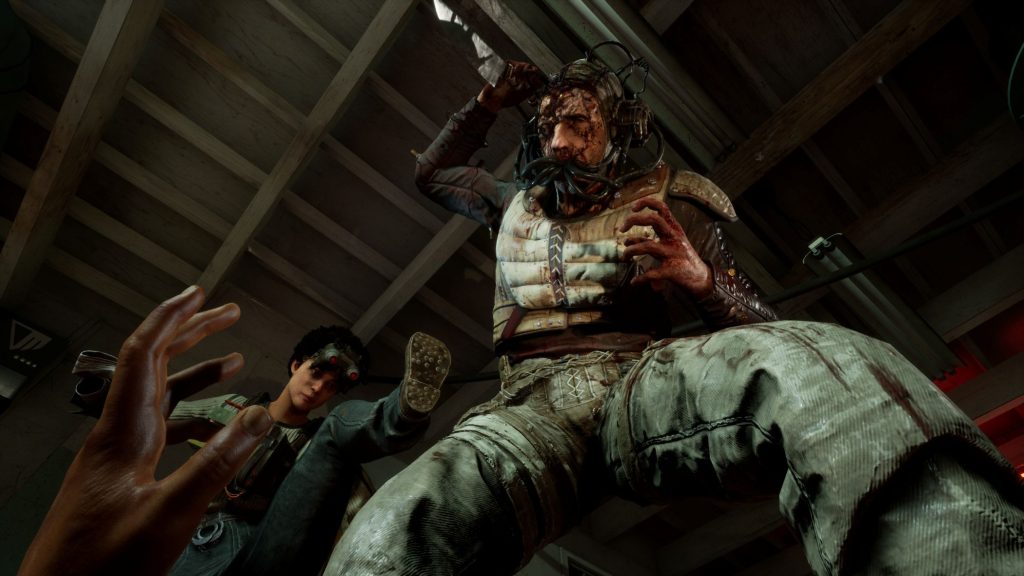
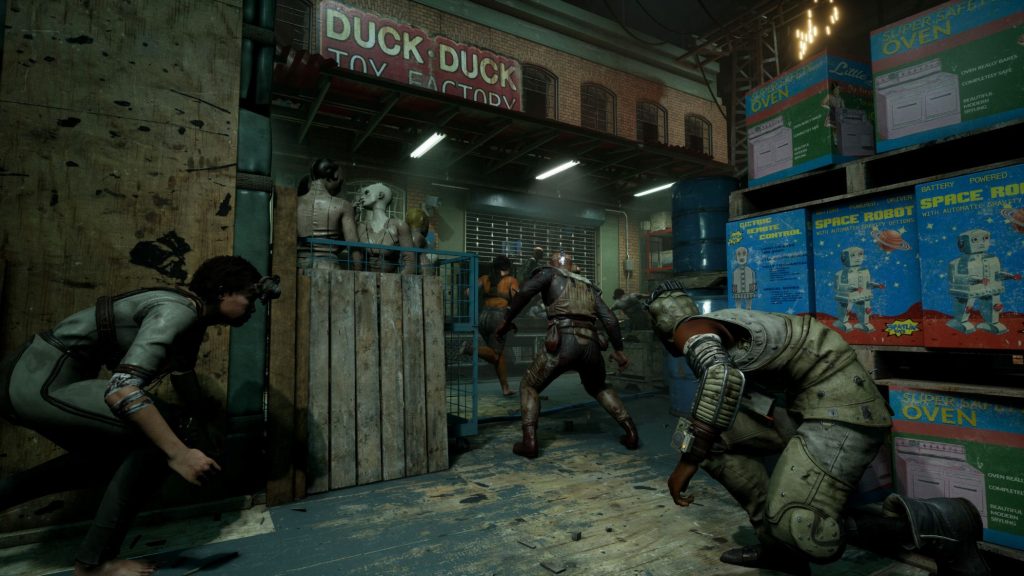
Red Barrels’ established formula of hiding in closets and under things and hearing the sickly breathing of a monstrous person is here. But it’s amplified knowing that you have to do more than just slink past. These bizarre environments house a number of objectives that must be accomplished before escape can occur. Whether its the Orphanage, the Toy Factory, the Carnival, or one of the game’s other unsettling maps, just know that a solo player might have a slightly harder time. All the attention is laser-focused on you but you’re also the only one you have to rely on as well. Activities like killing snitches, destroying sex toys, turning on generators, and doing things with human organs are completed with small minigame button presses to make them challenging and stressful in the moment. Noise will be made and the player has to be aware of their surroundings and any potential avenues of escape.
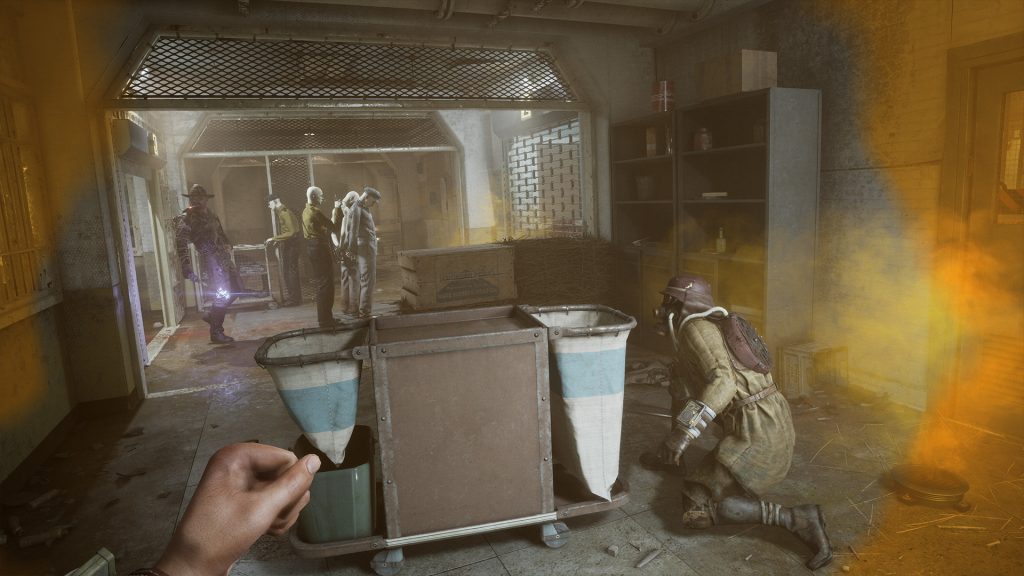
But what happens when other players are added to the mix? Honestly, the game becomes a great time. If you can find a group of friends who can either look past the game’s extreme content or relish in it, there’s a lot of game to be had here. While it may strip out a bit of the horror at times, it’s not a constant. You’re guaranteed to laugh at some of The Outlast Trials‘ more insane bits, especially if you become acclimated to the game’s pace and familiarize yourself with the map. I think of how Destiny raids eventually became second nature and my team could idly chatter in between callouts. But the communal tension of having to complete the tasks and coordinate loadouts provides a lot of fun and does make the game feel less lonely.
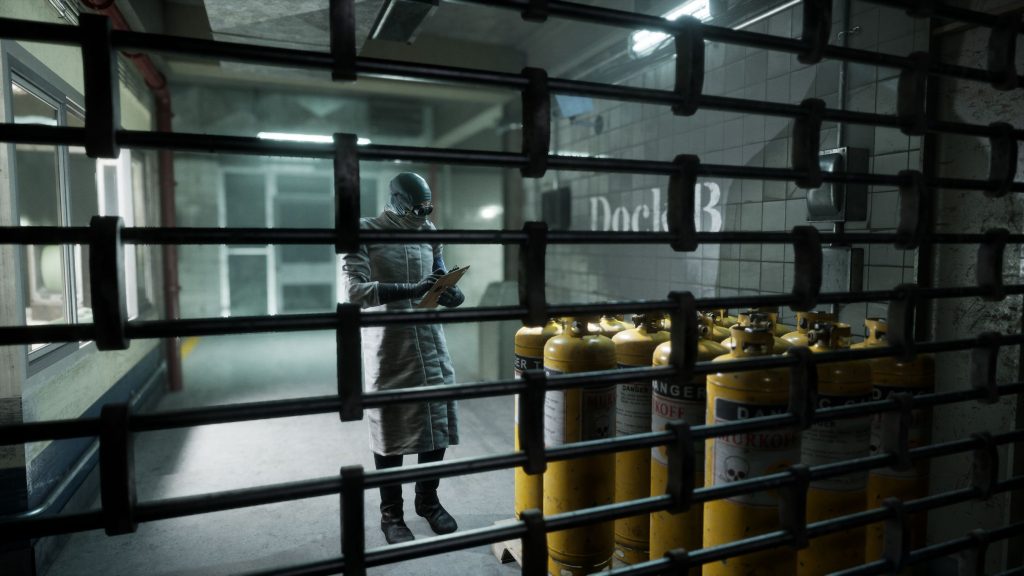
What Red Barrels has done here is pretty admirable to be quite honest. Since The Outlast Trials fully launched in March of 2024, the game has been updated and content has been added. It’s very much a game that is alive with a community that thrives. Difficulty modes test veterans more. A Prestige system allows players to start from scratch with a few permanent unlocks. During the time of playing, the Chemical Leak event is taking place which had toxic gas filling the area, requiring players to shut off valves to stay alive. And with these events both major and minor, updates continue to flow and the game is improved upon and cosmetics are added.
Ultimately, The Outlast Trials‘ health depends on the people playing it. There does come a point where you’re going to have played through maps and objectives numerous times. At that point you continue to play because it’s fun, you enjoy testing your honed skills, or just want to earn cosmetics. And many live service games exist in that way. The only way they ever truly end is with the servers shutting down and thankfully, that doesn’t seem to be happening anytime soon.
The Outlast Trials presents a surprising success story: turning a single-player horror game built around stealth and tension into a cooperative multiplayer experience. It shouldn’t work but it often does, maintaining Red Barrels’ macabre gore and twisted antagonists.