


If you enjoyed Trails from Zero, then The Legend of Heroes: Trails to Azure is a delightful complement with an even more gripping story. The Crossbell Duology is some of Nihon Falcom’s most compelling work and worth playing if you haven’t yet had the chance.
The second half of The Legend of Heroes’ Crossbell Duology, Trails to Azure, was remastered and released on the Nintendo Switch 2. Like its predecessor, Trails from Zero, which I also reviewed as part of this review cycle, Nihon Falcom has used this release on the newest Nintendo hardware to bring the game up to parity with modern graphical expectations. You know, things like 120fps, upscaled textures, and other tidbits. While it’s not a full remake, there’s enough work done here to make the game feel like it’s been refreshed (not necessarily modernized) from its earlier 2023 release on the OG Switch.
Some of this review will echo the sentiment I expressed in my Trails from Zero review. The simultaneous release of Trails from Zero and Trails to Azure was smart in that players can relive the full Crossbell Duology, but…there’s very little that has been changed since the original remaster. Again, I struggle to imagine a longtime Legend of Heroes fan who skipped the rerelease three years back. If you already own it on the original Nintendo Switch or PS4, it’s hard for me to recommend this version on the Switch 2. The new textures don’t justify the price of admission. It’s also lacking in skippable cutscenes – spaces where the game doesn’t hold back on dumping a colossal amount of lore on the player’s head and expects them to keep track.
I don’t have the same attachment as many longtime fans to the Crossbell Duology. My early experiences with The Legend of Heroes on the PSP ended with A Tear of Vermillion and Prophecy of the Moonlight Witch. Yet, I’ve seen many players describe Trails to Azure as containing one of the best stories in a Trails game, let alone a modern RPG. From this review (and an earlier playthrough of Trails to Azure on another platform), I can recognize that Trails to Azure is indeed notable in its incredible storytelling…but I cannot ignore that there’s a painfully slow introduction that stands in the way of players getting to the most compelling moments.
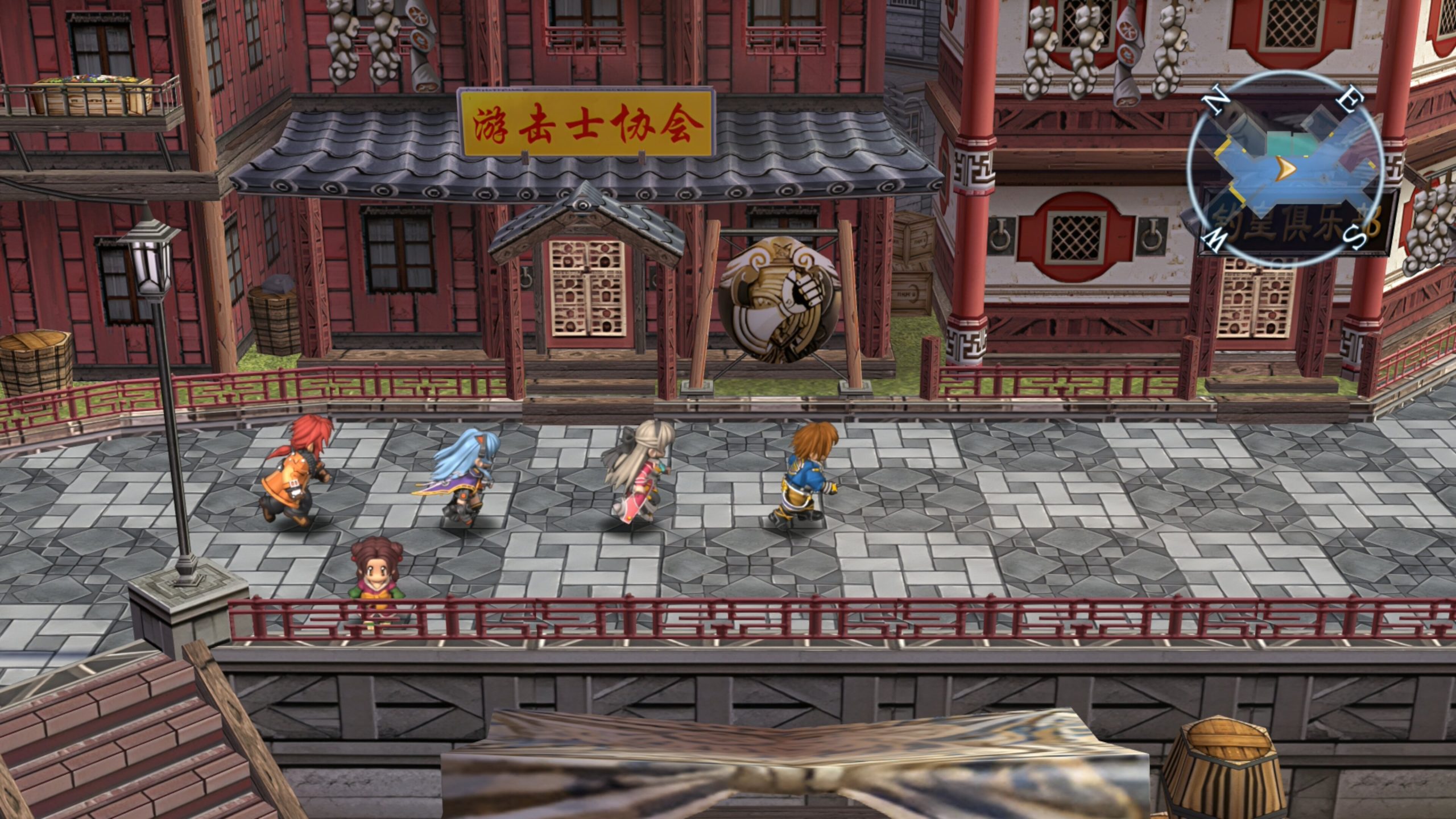 Trails to Azure kicks off shortly after the events of Trails from Zero. Lloyd Bannings and the SSS return with some new characters. It contains the same political themes as Trails from Zero, albeit with more seriousness that is fitting for today’s climate. It takes place in the same gargantuan city-state of Crossbell, too. There are many reused assets present in Trails to Azure alongside a small handful of new characters. It’s a true extension of Trails from Zero that thoughtfully continues the story up until the events of Trails of Cold Steel.
The first chapters are arguably the slowest bit of the game. The sidequests and introductory challenges feel like arbitrarily added tutorials that add little to the game, but once you’re able to proceed further…it’s glorious. I’m disappointed that there wasn’t a way to skip through some content, especially for those who want to relive the second half of Azure’s incredible story. This was an opportunity for Nihon Falcom to add content skips or a mode that features a condensed introduction.
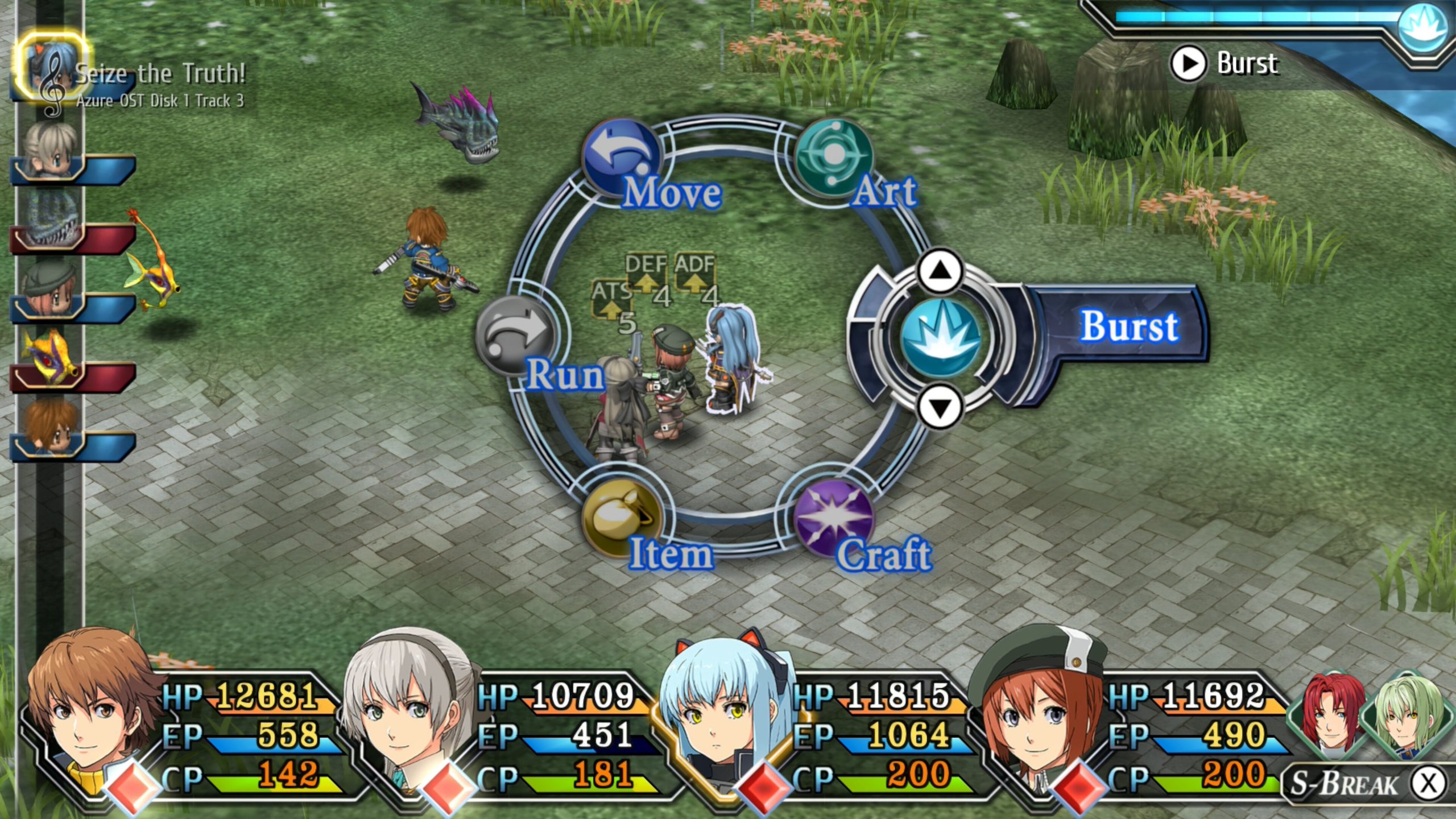 The familiar world of Crossbell and most of Azure’s cast made for an enjoyable playthrough. Like Trails from Zero, there are many character arcs that are worth seeing through to the end. With much of the initial worldbuilding done in Zero, more time can be spent focusing on the heightened stakes and relationships between the new characters.
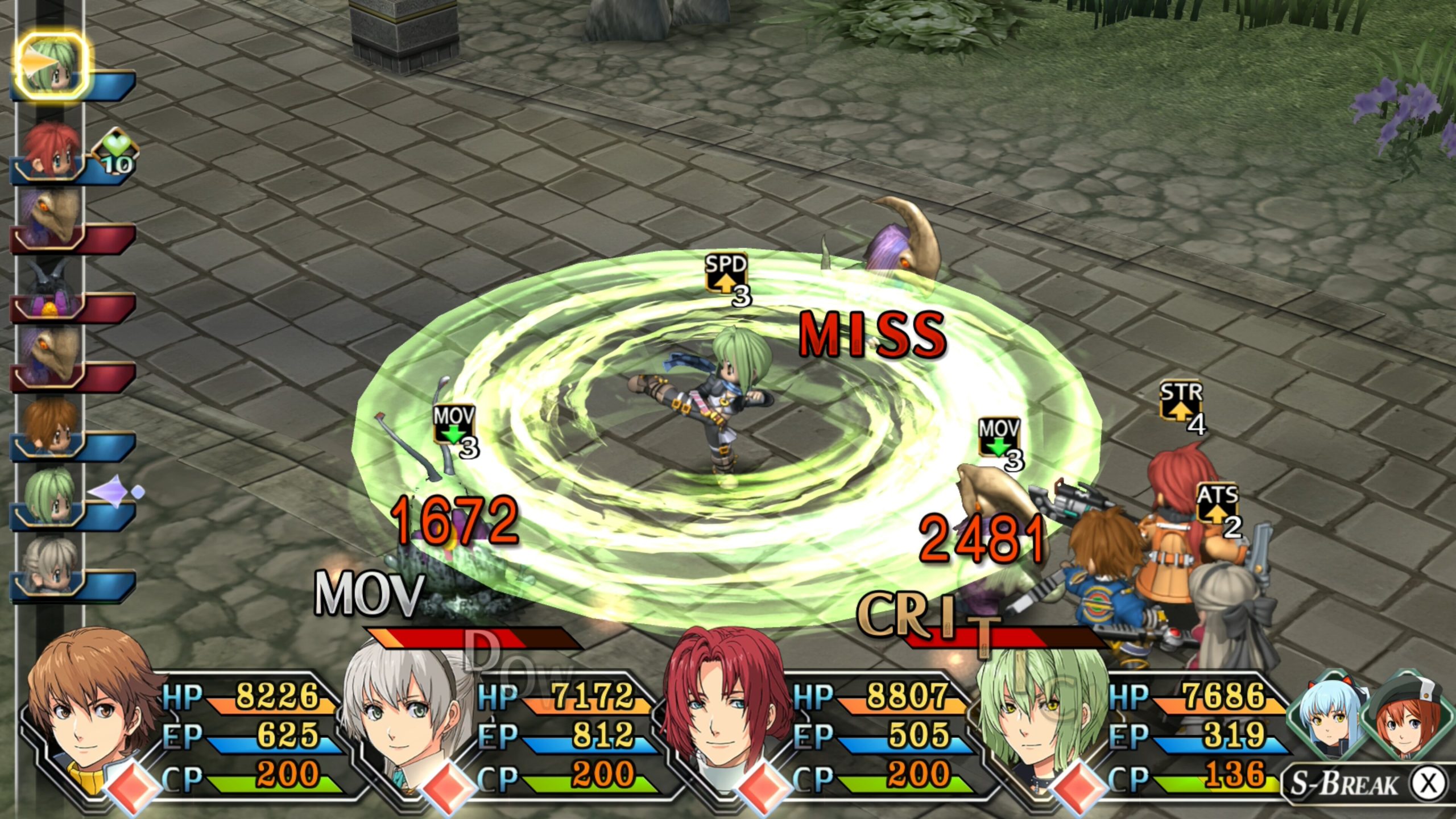
That said, battles in Trails to Azure are nearly identical to Trails from Zero. If you enjoyed the turb-based-combat-in-a-grid from Zero, you’ll enjoy it in Azure, too. If it wasn’t your cup of tea, well…you’ll probably be hankering for an iced coffee. There are some new intermission chapters that lack combat altogether that breaks up the pacing in refreshing fashions. The Azure-specific Burst mechanic heightens combat in a way that accelerates spellcasting and removes delays altogether. As a result, some battles are made artificially harder for the sake of balancing out the scales. Battles will occasionally skew annoying because of how enemies will stun my party into oblivion or cast wave after wave of status effects. Equipment and character customization are more important than ever before.
Remember how I criticized Trails from Zero for lacking meaningful fast travel? There’s a car now, but…there’s still work to be done on making traveling between Crossbell’s huge districts less of a chore.
 Trails to Azure complements Trails from Zero exceptionally well. Having the ability to import a completed save file from Zero into Azure adds some nice new bits to the worldbuilding, but you aren’t fully expected to have gone through the hundred-or-so hours needed for full completion. You can pick up Azure and get right to it, with a “catch up” walkthrough that gets you up to speed of the story beats if you need.
Coming out of reviewing the Crossbell Duology, I’m torn. I want to live in a world where as many players as possible can enjoy games that were originally locked to the PSP for a decade before making their way to modern consoles in 2023. However, I want today’s players (read: someone living in Q3 2026) to have access to the most enjoyable bits of some of Nihon Falcom’s best work. Both Zero and Azure come with baggage that isn’t made any less heavy with the inclusion of a High-Speed Mode and smoother textures.
If you enjoyed Trails from Zero, then The Legend of Heroes: Trails to Azure is a delightful complement with an even more gripping story. The Crossbell Duology is some of Nihon Falcom’s most compelling work and worth playing if you haven’t yet had the chance.