

I’m willing to look past my smaller form graphical quibbles of Tales of Xillia Remastered, as should you. The base Xillia content is notable for its incredible combat and emotional story, and the additional quality of life content makes the game more palatable than ever before. If you’re wanting to relive Tales of Xillia or are down to experience it for the first time, Tales of Xillia Remastered will give you the nostalgia and emotional depth you need.
Tales of Xillia has rightfully earned its cult following. The 2011 PS3 title is one of the best in Bandai Namco’s Tales series. While it’s not my personal favorite from Tales, it’s hard for me to ignore the success of the entry. Its fast-paced combat, engaging gameplay loop, and investing plot elevate it above other JRPGs from the aughts. So, when I saw that Tales of Xillia was being remastered, I was cautiously optimistic about the final product.
For the most part, Bandai Namco has made some positive steps in improving the original product into something that today’s JRPG fans will enjoy. This is especially true when considering some of the other JRPGs of today come with these improvements by default. On the graphical front, however, Tales of Xillia looks and feels too similar and arguably lifeless as it did back on the PlayStation 3.
Lifeless is a strong word, I know, but it’s warranted within the context of a remaster. When I think of a modern-day remaster, I think of games that preserved a game’s original state while making meaningful adjustments to its balance, progression, gameplay systems, and graphics as a means to bringing it parity with what you and I may come to expect from open world RPGs. If I see large swaths of open fields with blocky objects, overly smoothed textures, and flora/fauna that doesn’t react to the world, it leads me to believe that the lightest of touches was made to refresh the world beyond that which was restricted by the PS3’s hardware.
Let’s take a step back, though.
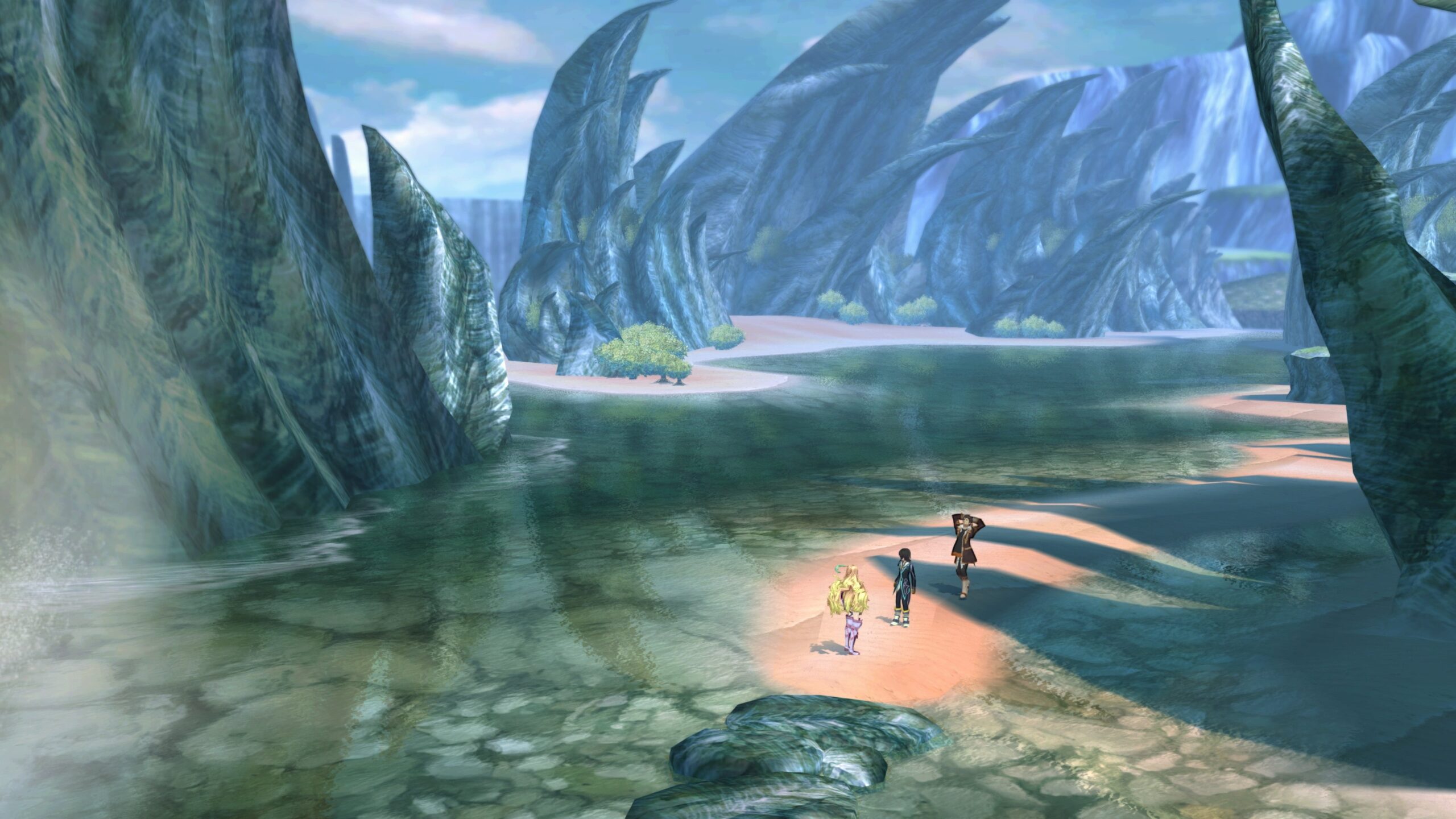 Tales of Xillia takes place in Rieze Maxia, a world of humans and spirits coexisting. The game’s dual protagonists, Milla Maxwell and Jude Mathis, begin on a journey of preventing a military force from taking advantage of the spirits’ energy but end up on a path with far greater stakes. While Milla’s initial obstacle involves gaining her spirit powers back, Jude’s journey is that of growing up and understanding his place in a world that has branded him as a hostile terrorist. Along with several other side characters, Milla and Jude’s story is far more serious in tone than you would expect. It’s because of this that Xillia is praised for its shirking of traditional character archetypes in favor of telling a compelling story with two protagonists.
Outside of the main story’s beautiful animated cutscenes, much is told across optional (unvoiced) conversations that occur when exploring the world. These little skits add depth to the characters and their relationships with each other. Compared to some other RPGs, character development in Xillia is far more holistic.
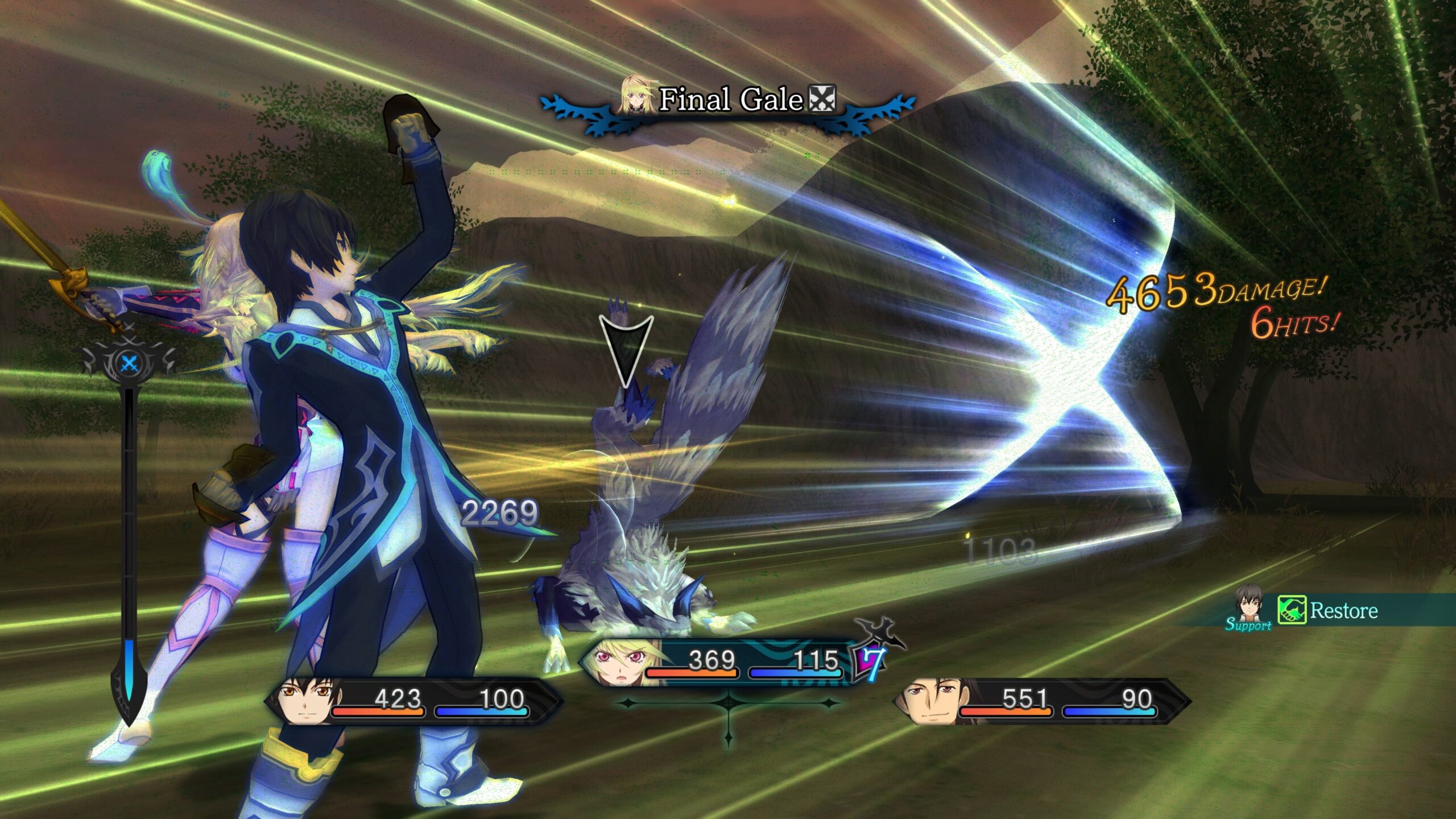
Combat is fast, furious, and fun. Xillia introduced the Dual Raid Linear Motion Battle System (an evolution from Tales Linear Motion Battle System) that heavily emphasizes coordination and linking two characters together for devastating synchronized combat. The same fluid movement and attacks exist in Dual Raid, but it’s far more satisfying to set those combinations off in battle. The strategic depth of timing attacks, selecting optimal strategies, and swapping between partners is stellar and continuously had me assessing optimal loadouts and patterns to get battles done quickly. With each character having unique passive and active abilities, it felt like I had so much to work with.
With the remaster’s updates, Xillia’s combat is at its best. Boss battles feel flashy and momentous, especially when I successfully pull off the synergy moves with other characters. Even against larger mobs of enemies, Xillia Remastered runs at a stable framerate and looks ever so crisp.
 Moving on to some of the other QoL improvements, I am very thrilled to see the Grade Shop (an otherwise New Game+ feature) available for players right at the start of the game. The Grade Shop features gameplay modifiers like bonus EXP and bonus currency toggleable, perfect for a player like me who wants to play through the game and relive the nostalgia instead of getting bogged down by grinding. The ability to dash (what a concept, I know), toggleable enemy encounters, and autosaving have been implemented, too. These additions make the game easier to handle, especially when time is tight. Far too often do I feel like JRPGs devolve into a cycle of grinding with little payoff, so having levers that expedite that process is a welcome change.
In terms of graphics, I mentioned at the start that some of the world feels too similar and lifeless. Yes, the character models and environments need some additional polish. I appreciate the cel-shaded and colorful art direction, but it’s not enough to feel like Xillia Remastered is visually remastered. Some elements might look HD at first, but I wanted the world to feel HD as I navigated from room to room.
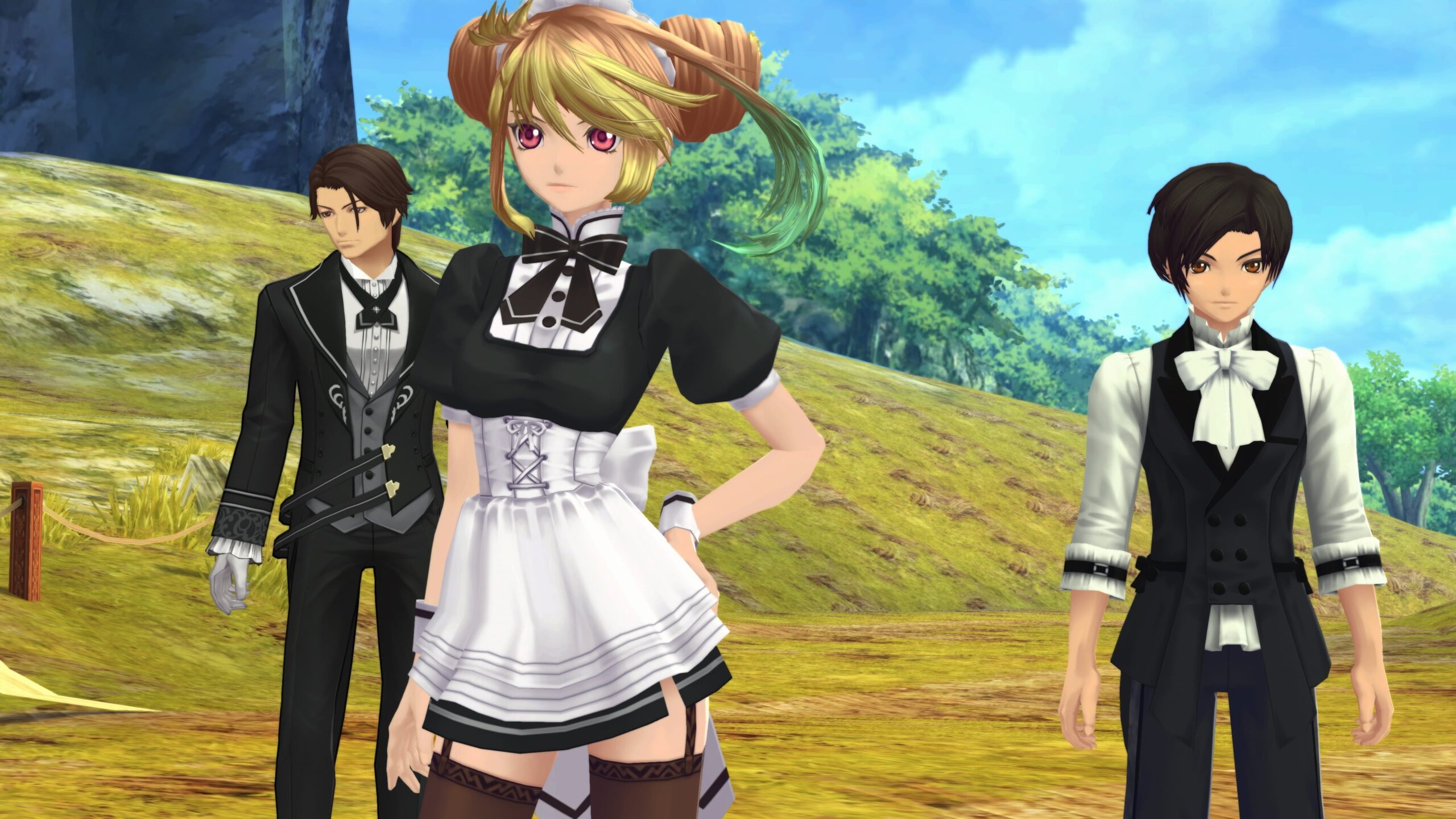 With the Remaster, Western audiences can now experience the stellar Japanese VO which is far superior to the English dub. I usually avoid English dubs in JRPGs and opted to do so here, as enabling it did the game a disservice. Somehow, the English dub sounded crunchy and did not line up with some of the emotional nuance that the Japanese VO successfully captured along with the game’s tone.
I cannot help but wonder if Bandai Namco is doing its original titles a disservice by opting to remaster instead of remaking them altogether. Xillia is a great example of this, as several elements in Xillia Remastered show their age in ways that many of us players would like to forget. From the not-so-smooth character models to the sparse environments to the arguably difficult midgame slog (you’ll know it when you see it, trust me), Xillia Remastered deserved the Persona 3 Reload treatment instead of the Persona 3 Portable remaster.
I’m willing to look past my smaller form graphical quibbles of Tales of Xillia Remastered, as should you. The base Xillia content is notable for its incredible combat and emotional story, and the additional quality of life content makes the game more palatable than ever before. If you’re wanting to relive Tales of Xillia or are down to experience it for the first time, Tales of Xillia Remastered will give you the nostalgia and emotional depth you need.