

Starfield crystallizes the good and less good quintessential to Bethesda's DNA over the last few decades. Finally arriving on PlayStation 5, the studio's first new IP in forever is open to a wider audience, beckoning players to find themselves lost.
Were I marooned on an island with convenient access to electricity and just enough internet to download a Day One patch, games like Starfield or Crimson Desert or Baldur’s Gate 3 would be enough to indefinitely sustain my need for entertainment.
The allure of an all-encompassing video game is perhaps too hard to ignore. Why else has Bethesda cemented its legacy with the one-two punch of Fallout 3 and Skyrim?
PC players may have had a buffet of role-playing agency for years but Bethesda brought it to consoles, to the mainstream. Open-world games had existed before but not to the vast, palatable degree the late 2000s heralded. Looking back on it now, Skyrim endures because for so many it was a kind of first. A world where players could read books of lore, enriching Tamriel’s history. Homes could be built that would be filled with wheels of cheese. Character classes and races invited variation to almost any scenario that could be encountered. We were that child in the sandbox of possibility and Bethesda were the engineers of our imagination.
Time, however, lurches on.
One might argue that Bethesda has been victimized by timing. When Fallout 4 released in November 2015, The Witcher 3 had already been in the collective conscious for six months. While Fallout 4 was certainly an upgrade, it was very much a Bethesda game that hadn’t fundamentally changed the developer’s formula in a way that felt like a significant step up like Skyrim did. On the other hand, The Witcher 3 captured the open-world fantasy and gave meaning to its quests and choices–plus it was incredibly beautiful and (mostly) polished.
In September 2023, Starfield released one month after Baldur’s Gate 3. For many, Baldur’s Gate 3 is considered a watershed title in the RPG space. Larian spoiled players with choice, where conflicts could be solved in countless ways and the world was brimming with life. Starfield‘s reception felt less definitive, releasing to a broad spectrum of critical and fan judgement. Many felt like the game was very much another Bethesda game, with all its quirks, flaws, highs, and lows. That after almost ten years without releasing a single-player RPG, the developer hadn’t evolved from the cozy confines of their breakout hits.
And while that year I wanted to experience Starfield myself, I merely couldn’t. The game was one of the premiere “victims” of Microsoft’s acquisition of Bethesda in the corporation’s massive power grab that also saw Activision Blizzard consumed into the whole. For almost three years, Starfield would remain exclusive for Xbox and PC players and a PlayStation 5 person like myself without a decent enough PC rig would just eventually wait for a potential opportunity to try out the game themselves.
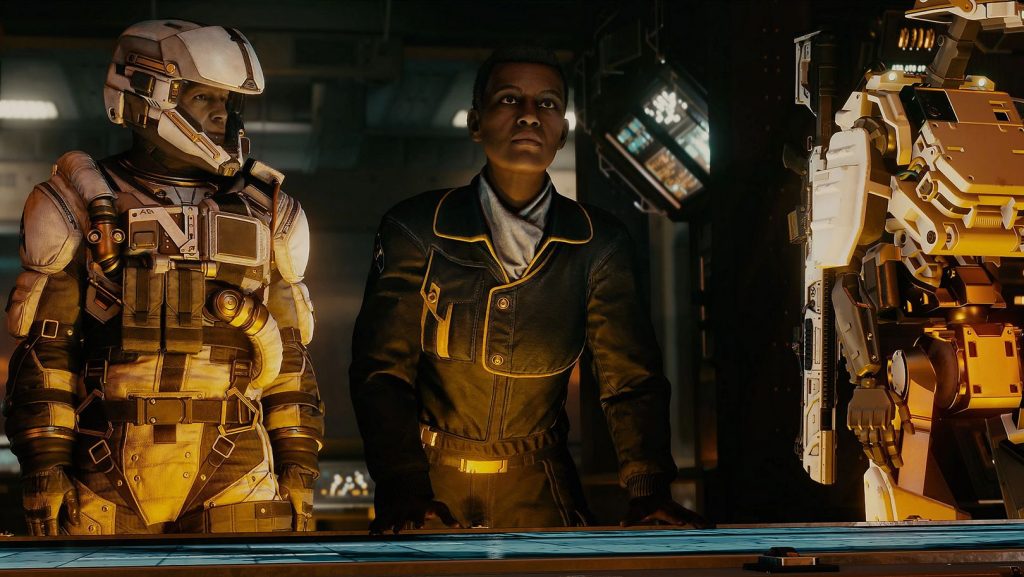
Should you wish, I would recommend reading our original review for Starfield when it launched. Will and Nathan spent over 5000 words covering their dozens of hours into the game, picking it apart and seeing how it held up.
Often I find it difficult to stray from the established judgement of a game. That notion fizzled out in the waning years of the PlayStation 3/Xbox 360/Nintendo Wii era. Back then, it was common practice for a publication to review multiple versions of a game, often because certain ones were objectively better and multiple reviews mean multiple clicks. Where the Wii version might add motion controls, it also wouldn’t look as good. But I remember Skyrim on PlayStation 3 being poorly optimized compared to the Xbox 360 version. And let’s not forget that back in the day, games on Genesis and Super Nintendo or PlayStation and Nintendo 64 could be vastly different from each other.
No, outside of some DualSense capabilities, trophy support, and some other Sony-centric details, Starfield on PlayStation 5 is very much the same game on the Xbox Series–PC is obviously always a different story.
When playing Starfield, I knew that a lot of my time with the game would be looking at it through the lens of the last few years and, possibly, a few years into the future. So, on this journey across the stars I hope you don’t mind engaging in a bit of navel-gazing with me in trying to piece together the puzzle that is Starfield.
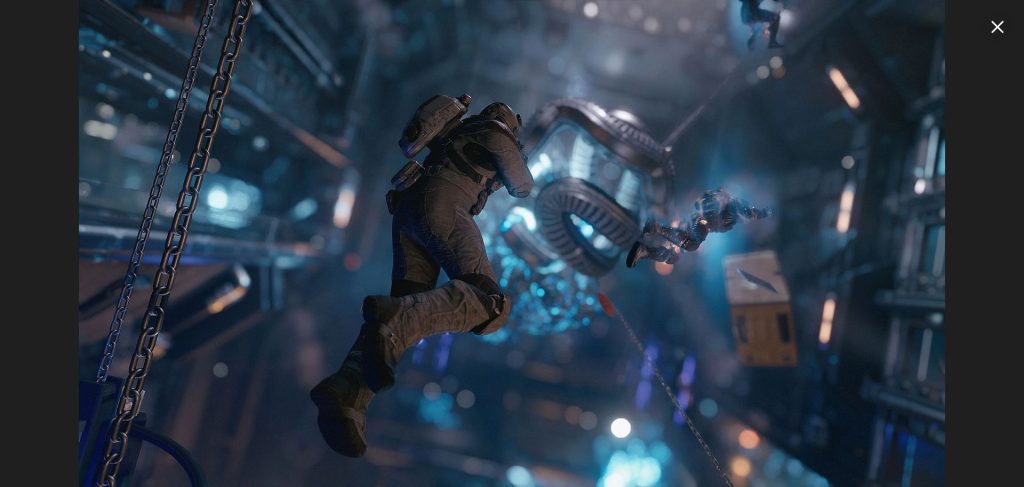
Starfield is vast, bigger than anything Bethesda has ever done. That, of course, is due to the fact that the storied developer has finally gone into space and provided players the opportunity to scour the stars and explore numerous planets that are both hand-crafted and randomly generated. This allows for players to stretch the boundaries of time investment, building their own dedicated characters who can exist inside of this universe, playing a role.
In recent years I have come to terms with the notion that games like Crimson Desert and Starfield are simply not as approachable for this iteration of myself. One of the primary examples of this is Horizon: Forbidden West. I played Guerilla’s sequel with anticipation after thoroughly enjoying Horizon: Zero Dawn. And then, the hours got away from me. You see, I am a player who cannot break from wanting to see and do everything that I can in a game. A massive team of people made that content for me to play and damnit, I want to experience it. But in a life where I want to play a broad range of games, it’s simply not feasible to do everything in every game. After juggling Elden Ring and Forbidden West, I eventually had to move on from both and free up my time and hard drive space. Months later, I returned to Forbidden West again, played for another chunk of time and plowed through a significant portion of the game. Apparently I’m pretty close to the end of the main story but I couldn’t force myself to stay on the golden path. Despite the daunting size of the map, surely I could hit every point of interest, right? Well… maybe one day, before the third game because I eventually uninstalled it a second time.
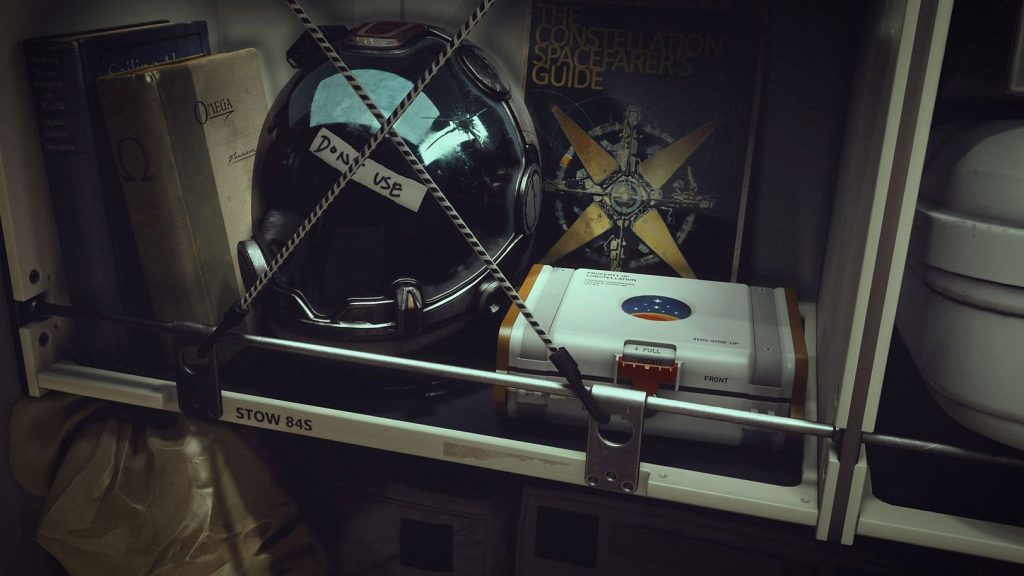
Once I landed on my first planet after the introductory bits in Starfield I felt that familiar wave crest over my psyche. Hundreds of little objects tucked away in lockers or planted on desks. Each one I could grab and put in my inventory and maybe scrap it for materials right? My recent attachment to Fallout 76 had my head in that mindset.
No. I couldn’t do that. It would be both impractical and patently insane. It would consume far too much time looking at every little thing and opening every little container knowing that potential profit could be waiting. So I pressed on, killed some space raiders and jettisoned off to a bustling city on another distant planet to continue the story.
Players can engage with these games in any way they see fit. That’s truly meant to be the beauty of them. You aren’t a Geralt or an Aloy or a Kliff. In Starfield, you are who you want to be. An asshole marauder who hijacks other ships. A gun-toting space cowboy who seeks out bounties and glory. Or a homebody that just wants to spend untold hours building the perfect ship and home somewhere out on a distant world. And you can spend however long you want trying to make your character look the way you want them to.
Honestly, Starfield helps players live in that fantasy but nestled in the developer’s tried and true DNA. Those who have been involved in their key franchises aren’t going to feel fundamentally lost and there’s a kind of beauty and comfort in that. Starfield doesn’t demand anything from the player and offers them a number of avenues to traverse.
A lot of my time with the game was spent ignoring the story and just soaking up the numerous spaces I had access to while building up my crew and vessel. Seeking out research and wondering what skills I would invest in to offer tangible improvement to my character. Trying to succeed with charisma checks to avoid shootouts. Enjoying the different gravity levels and boosting around on a jetpack. These were all things I hoped I would be able to do and here they are, ripe for the plucking.
With the PlayStation 5 version comes the Free Lanes update which has altered the way space traversal is conducted. Despite not having played the initial release, I know that flying between planets was not seamless and showed the game’s edges in an unflattering light. Now, players can fly between planets in real-time within that particular system, should they wish. Auto-pilot can be engaged and the player can conduct business, all while your custom, stolen, or purchased ship heads to its destination.
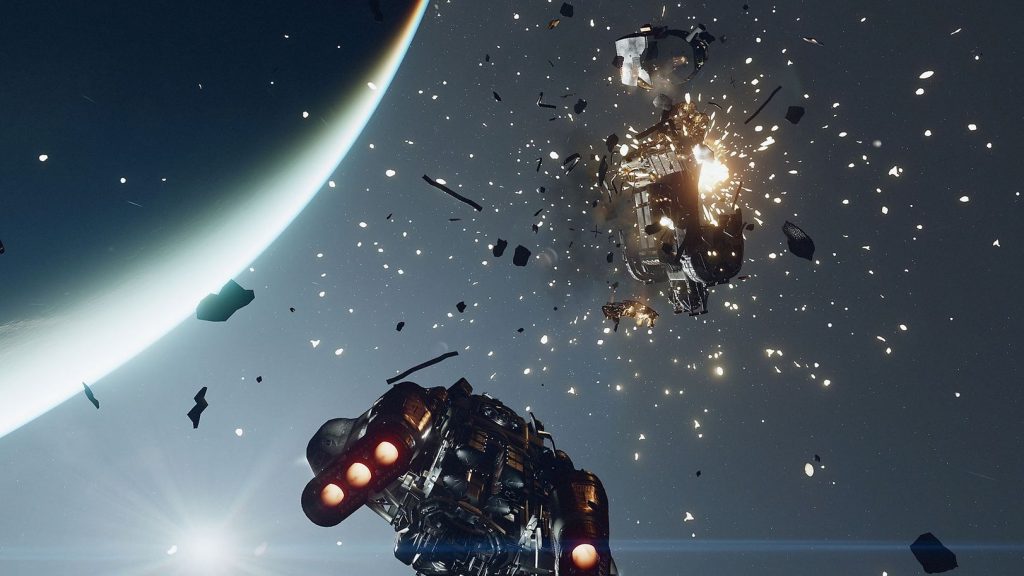
I know a lot of people expected or desired Starfield to be more like No Man’s Sky where one could launch off a planet, travel through space, and land on another planet seamlessly. And the Free Lanes update attempts to capture some of the magic. But there are still limitations, especially in how players still need to land in specific parts of the planet and aren’t free to drop down anywhere. The guardrails present here do serve to limit the scope of Starfield and make it feel less boundless
Ultimately, that becomes one of the larger problems that Starfield encounters when looking at it with a sterner eye. Players who become lost in the fiction of whatever story they wish to create are still going to butt heads with limitations.
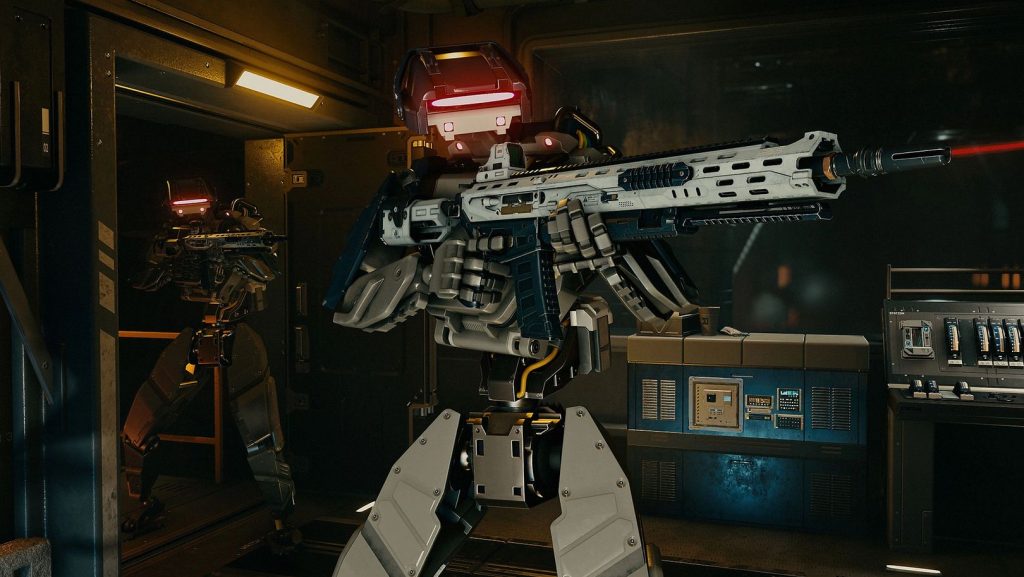
Annoyances like a clunky menu and a complex UI can be overcome with time. But I lamented Bethesda’s reliance on their same model for NPC interactions. Players speak to a character and that character stares straight ahead at the screen. It is an extremely dated technique that has lost its charm over the years as other developers have attempted workarounds for the problem. And because this is an open-world RPG where rules are a little flexible, players rarely are going to have bombastic cinematic moments where all kinds of things are happening on screen. Certain missions and main story beats will have impressive bits of action but most everything is dictated by the pace of the player.
Fandoms are a fascinating thing. I have a few friends that will revisit Fallout: New Vegas regularly. Many of us have these comfort games regardless of the size and investment they require of us. I’m certain that for many, Starfield is their favorite Bethesda game because it retains what they love out of the developer except it’s all futuristic science fiction. And who am I to take away from that? Yet I also understand why this game would feel incomplete for those who wanted something not only grandiose in scale but drastically fresher than what was presented.
We are often weak to the things we love the most. I am deeply attached to the Assassin’s Creed games and have always found a place in my heart for them. Even as they began to shift in mechanical tone with Assassin’s Creed: Origins, the series has managed to take me to worlds I want to become lost in, to do everything in. But again, it is almost too hard to put on the lead boots and stick around. Life is often just too turbulent.
When Starfield released I noticed how a large portion of the reviews referenced a moment in the game where players can be piloting their spaceship and be hailed by an old woman who wants them to join her for food on her ship. While playing the game in the pre-launch state, I imagine reviewers were overcome with a bit of whimsy at this kind of bespoke moment Bethesda so eloquently captures. It felt special and different for everyone who happened upon it.
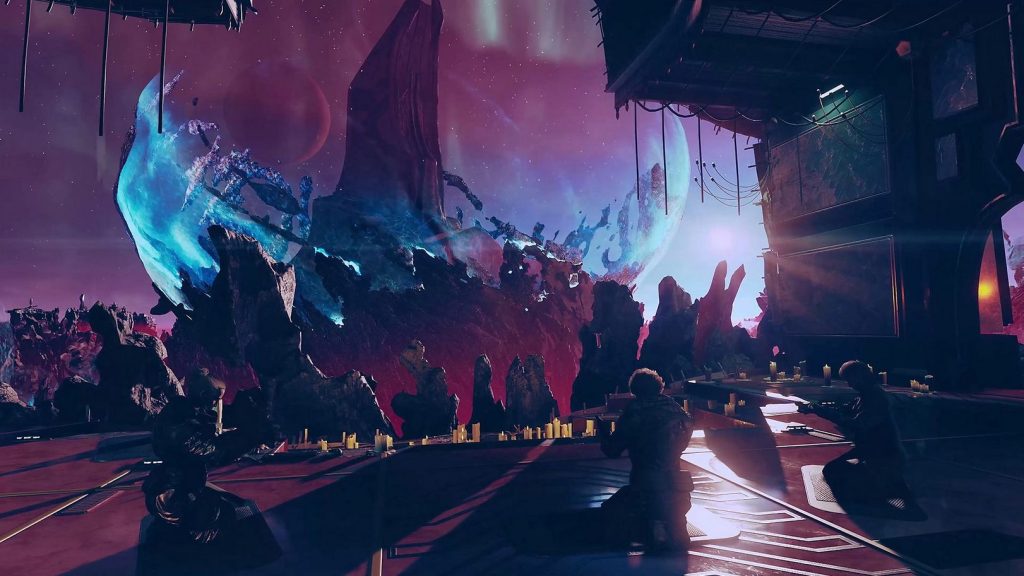
Because so many people regaled of that particular encounter when reflecting on Starfield, does it make it less special? Yes and no. It merely depends on the user. Countless players will play this game and want to do everything they can, live in it as long as possible. Others will mainline the story or put in a good chunk of time and feel satisfied when they reach whatever invisible line has been set for them. But I guarantee you, given enough time and enough space, Bethesda will have made Starfield unique and special, tailor made just for you. For just a small amount of time, you were transported to another world and felt like you could live whatever life you wanted. And there’s always magic in that.
Starfield crystallizes the good and less good quintessential to Bethesda’s DNA over the last few decades. Finally arriving on PlayStation 5, the studio’s first new IP in forever is open to a wider audience, beckoning players to find themselves lost.