

If you were to tell me that I would be playing a Windows 3.11-simulated game that involves cooking the books for the sake of fun, I would have kindly told you that you’re crazy. But here we are.
SpreadCheat from developer Games People Play is a comedically cute math game that offers ridiculous scenarios for your chance to keep a job and cook some books. While it cleverly delivers insanely dumb yet funny setups led by a number-manipulating CEO, at its core, the game just presents tricky math problems. Is that good or bad? Well, I’m a huge fan of gamification, so you be the judge. Wait, no, I’ll be the judge. That’s why I’m reviewing this.
ANYWAY!
Fire up that Pentium II IBM machine and let’s get crunching on the simplicity and complication of this math-driven comedic title.
Simple, yet complicated
Just a fair warning, readers, this is going to be the shortest review I have ever written in my 20+ years of being a critic. When you get to the end, you’ll ask yourself, “That’s it?”, and the answer will be a resounding, “That’s it”. Why? Because there isn’t much to SpreadCheat. It’s a simple game that is set up by ridiculous scenarios and empty characters. You’re just sitting around and doing math problems. There truly isn’t much to it except for understanding what you’re looking at onscreen and trying to do your best to translate the right answer to move on.
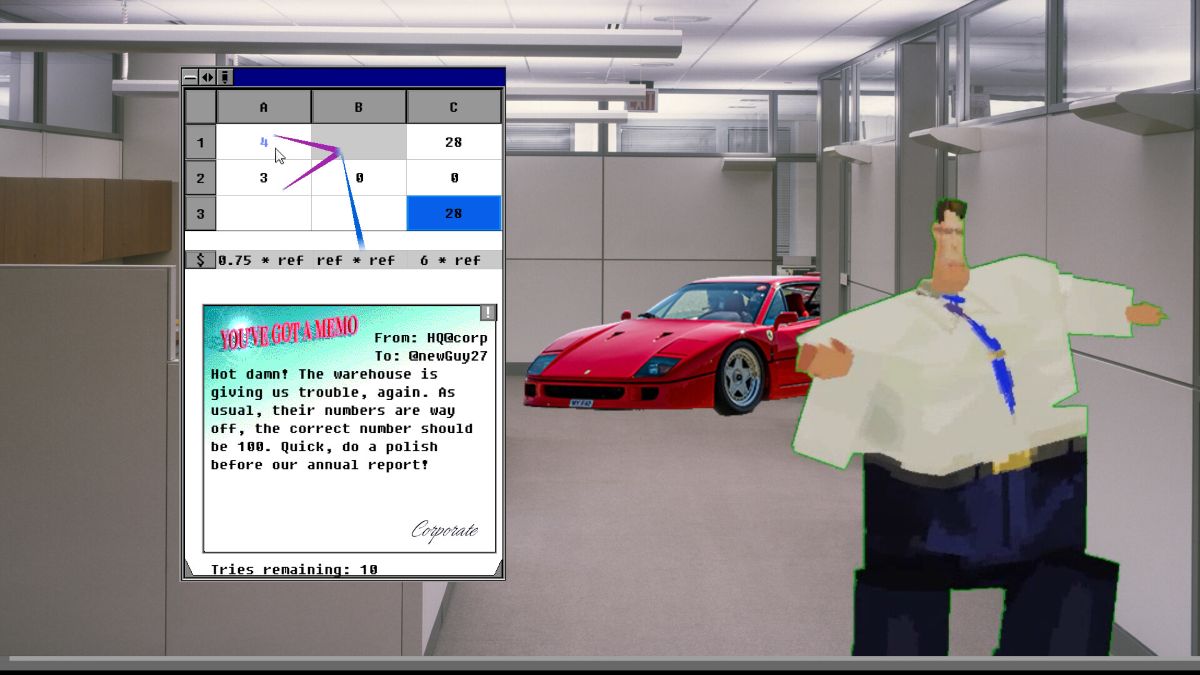
The game’s core is essentially taking what you’re given with cell formulas on a make-believe Excel spreadsheet and trying to mathematically manipulate the numbers to meet the requested goals. This could be as simple as making the final number equal 16 or turning a positive solution into a negative one. It’s not difficult on paper, but it is difficult given the restrictions the game provides.
Those restrictions are locked in cell formulas that you cannot change. The game provides you with a handful of tools in the form of set formulas, and you must sit and think about how they would best work to get to the solution requested. As math games go, this one is a doozy because it does challenge your intellect and creates an addictive scenario where you must get the right answer. And trust me, the game is incredibly challenging.
Currently, I am stuck on the sixth problem, and I can’t quite figure out what the hell I’m supposed to be doing. The number requested by the CEO is achievable, but the fields provided are rather complicated. There were several times when I thought I had the right answer, only to be smacked down by the game and brought back to square one. That is the challenge and core gameplay of this title. It’s supposed to be sipped and not gulped with its content, and sometimes the content is tough to drink.
Pricepoint
As torturous gamification titles go, this one is decently priced for the mathematical hassle you’ll be going through. I would buy this game for $6.99 just to see what it is about. It’s simple to pick up and play, complicated as it gradually becomes more difficult as the game rolls on, and it’s a come-and-go type of gameplay flow. You aren’t meant to beat this game in one sitting, and if you do, then you belong in an Ivy League school.
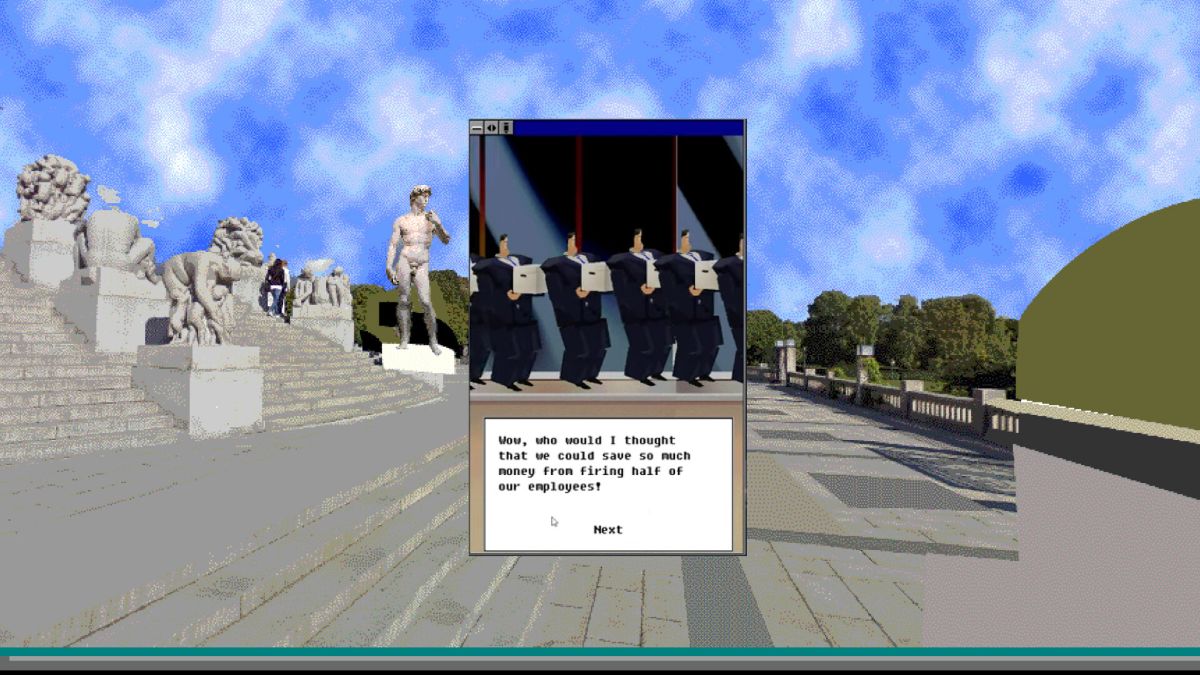
In addition to the low price, the game also features daily challenges. That helps to keep the longevity of the game intact. Anytime you can keep a math game fresh is a good time.
The devs did a great job of offering good gameplay at a respectable price.
Visuals and presentation
Now, the Windows 3.11-like visuals help to keep the frustration of this game to a minimum. Visually, the game sticks to its early 90s guns and provides a goofy, remedial set of visuals that sell the era it is trying to emulate. It’s spot on with what it is trying to bring to the table visually with its 256-color palette and goofy 3D graphics made of huge polygons that only Cybertruck owners could fawn over. The visuals help to tame any sort of head scratching you will be continually performing during your time with the game.
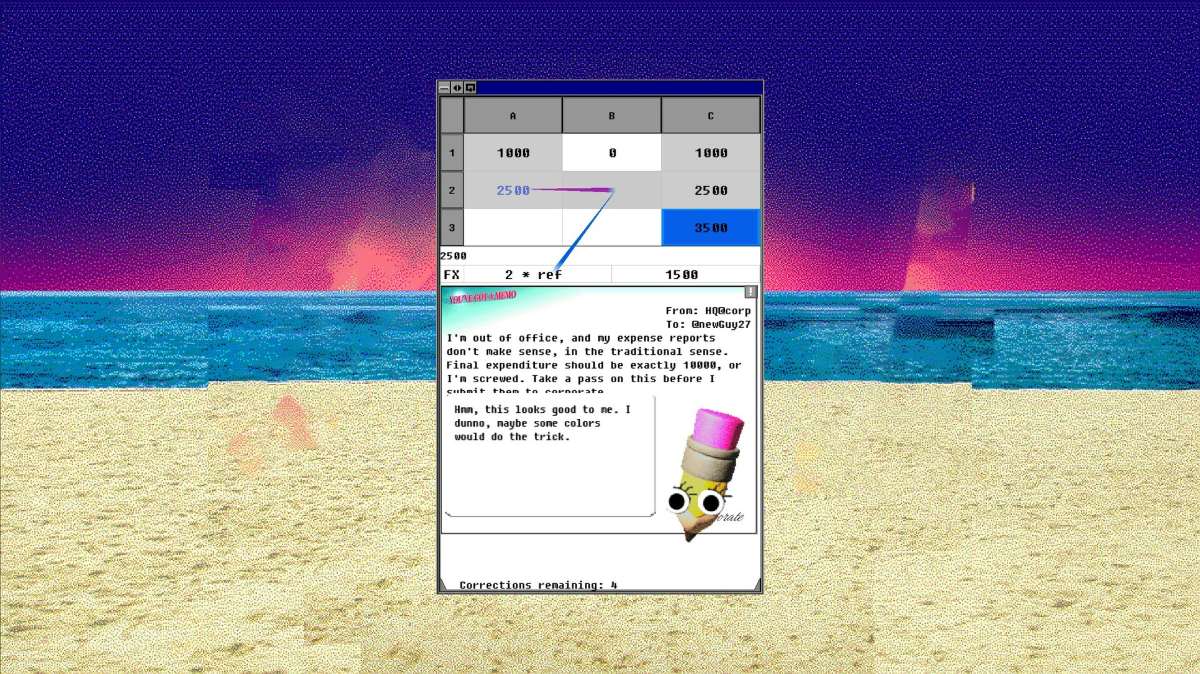
In addition, the game also has an assistant that will occasionally not help you. Rather, it will pop out on the screen and tell you something useless and comedic, then disappear into the ether. Honestly, this is the accurate extent of Clippy, the virtual assistant that exists within any Microsoft application, and it adds to the era-selling value of the presentation. In other words, it’s welcome to the experience.
Finally, the music might be the most annoying part of the entire presentation package. You get MIDI compositions that would only make Sound Blaster fans proud. The music is put on full-repeat, which means you will be hearing it haunt your life for weeks after the game experience is over.
All the above combined make for a wonderfully replicated early 90s computing experience that you’ll either appreciate or thank your lucky stars you weren’t privy to when you were young. I appreciate the accurate depiction.
On that sweet note, let’s wrap up this review.
Conclusion
If you enjoy mathematical problems with comedic setups straight from early 90s computing, then this game is for you.