

You can call me old if you want, but this is my jam for action-RPG-style games.
Spindle from developer Let’s GameDev and publisher Deck 13 was released a few weeks ago on the Nintendo Switch, and I was assured that this was a Zelda-esque type of experience. That is a tall order to meet, considering the epic-ness of that classic franchise. What came out of that experience was exactly what was assured.
Spindle features a long journey that is driven by action and RPG elements, while relying on good writing and a nice dose of exploration. Is it as deep as Nintendo’s Legend of Zelda games? Not quite, nor does it bring anything particularly new to its genre, but its entertainment value is caught somewhere between the first and second games on the NES, and a step below the SNES release. I would take that any day of the week.
So, let’s get ready for some soul-searching and get this review going.
Story
The story begins with the lack of death, a topic that has been broached in a few stories and movies before. The fewer people dying means the more strain, struggle, and chaos the world experiences. There’s only one solution to rectify that: become Death (Dengel), travel with a useful pig, and try to set right what has gone wrong on the dark side of life.
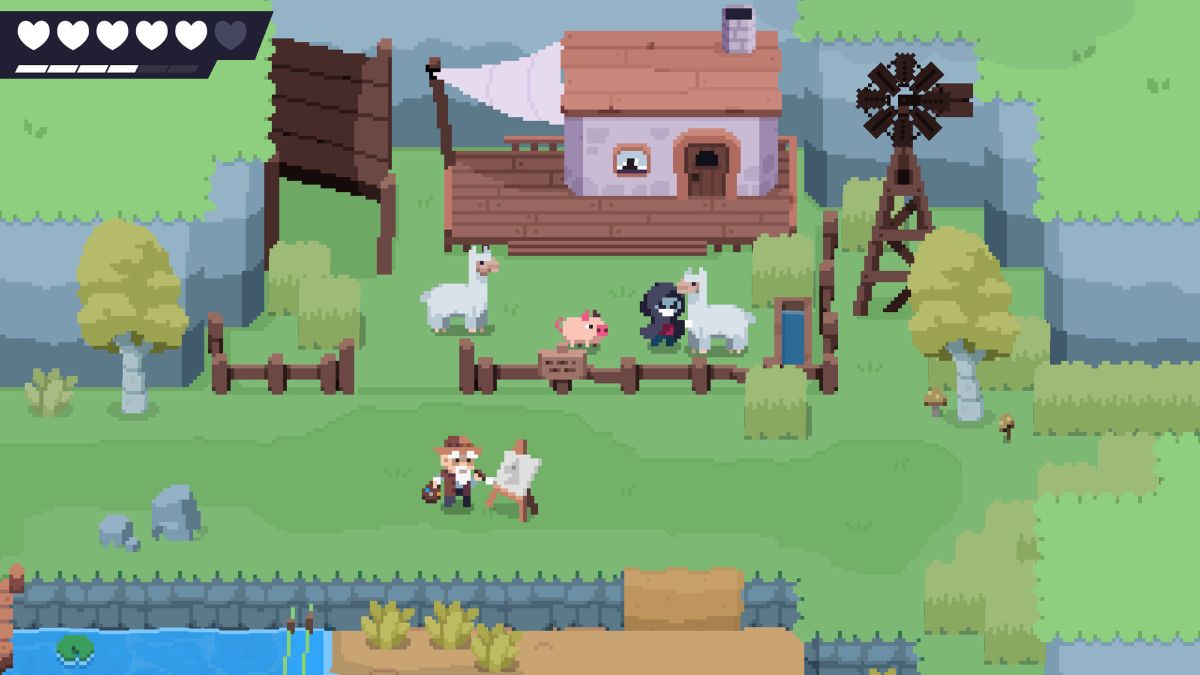
The story is light in its structure and solid in its delivery. The light structure means that it doesn’t over-complicate itself with a deep, rich story structure; rather, it simplifies the journey and gives the player agency to set the world right. Along the way, there are shorter sub-stories that push the main one along, which gives players short bursts of entertainment and emotion. Some of these smaller stories can be as simple as just solving how to rebuild a bridge. Others can be emotionally sticky as trying to retrieve a soul and stop a person’s loved one from destroying a town. Regardless of the actual narrative, the subs are short and add some sort of context to the overall narrative. In other words, they’re worth your time and attention.
As for the solid delivery, I think that Let’s GameDev methodically and meticulously put these pieces and parts together and made the adventure something players can lock into pretty easily. There isn’t a lot of heavy frontend with the story, meaning you won’t be required to sit and watch endless cutscenes setting up the rest of the narrative acts. Nor is there a lack of story setup; rather, it’s just a perfectly balanced story that delivers a good amount of entertainment from beginning to end. It hits the right notes with emotions and humor, and crafts the gameplay perfectly around it as it flows. That’s all you can ask from a game like this, and that is exactly what it delivers.
Gameplay
Like I mentioned at the beginning, there is a lot of influence from the Legend of Zelda franchise with this game. We’re talking about large maps to explore, places to discover, caves to dive into, and obstacles that block your path until you are further along with the story. Also, it’s pure action driven by a scythe, pig, and plenty of things to cut down, similar to Link’s sword-singing in his first few games. BUT! It should be noted that this game is a tip-of-the-hat to Zelda, and not a copy of it, so there are unique aspects of the game that separate it from that legendary franchise.
And on that note, let’s talk about what type of gameplay to expect.
Discovery
Much like every type of action-RPG game on the planet, this game wants players to go explore its giant map and discover what is around. Spindle comes with a big sandbox to play within that starts off restrictive until certain quests are completed and items are obtained. For example, early in the game, as a player is wandering around, they may bump into a cave that is blocked by a large spiky tentacle plant. Using the normal scythe to try and remove it won’t do the trick with this obstacle, so players must go seek out quests that are scattered throughout the land and discover the solution that isn’t at all obvious, but is worth the time.
By discovering said solution, the game can and does open up. The joy of this type of gameplay is that players can freely explore a good chunk of Spindle’s world and make a mental note when running into an obstacle, and have an ah-ha moment when the right tool to get past the obstacle reveals itself. That self-discovery, then seeking out a solution to the obstacle, is what drives this game pretty easily, and why it is comparable to the early Zelda franchise. The reward a player will feel for accomplishing a task that leads to overcoming obstacles and opening the map up a bit more work beautifully hand-in-hand, and is the leading factor in hooking one’s attention to this game.
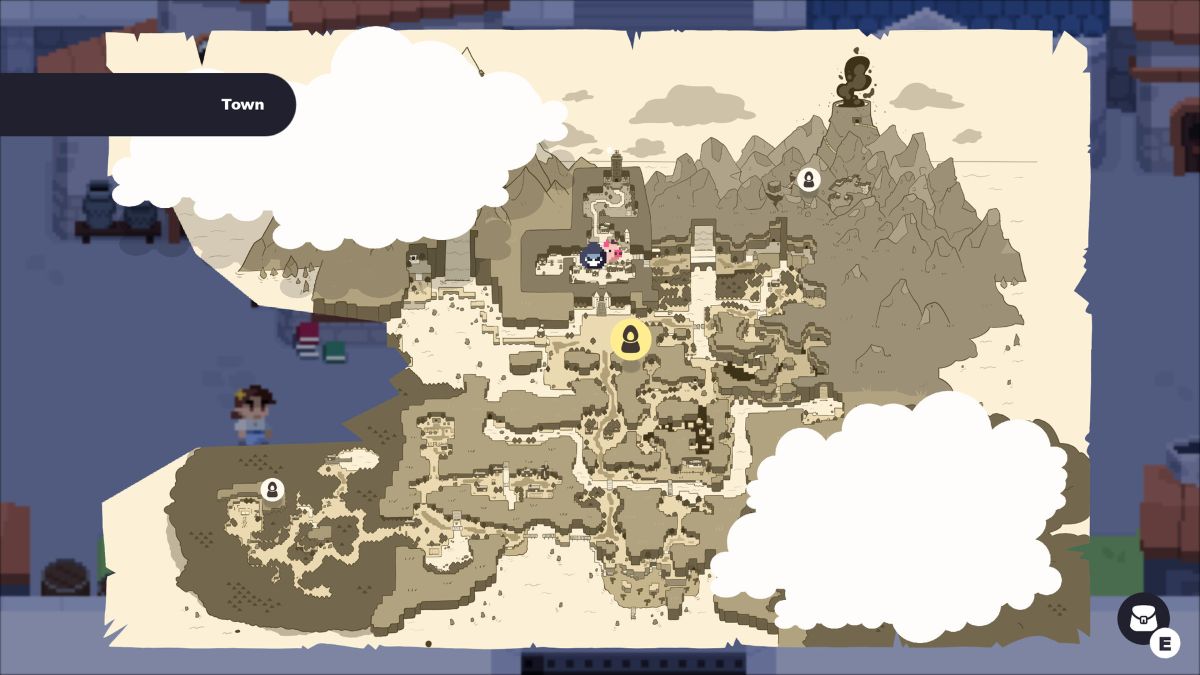
Simply, it’s discovering the world, finding a quest that unlocks more of that world, and reaping the benefits from that solution to expand the gameplay. It’s circular in design, and it steadily works beautifully with the game.
And trust me, folks, there is a lot of world to unlock in this game, which means there is an abundance of different adventures to go on.
Exploration
While the world is big, what use is a big world without plenty of variety and exploration? Well, that would be a useless world if it didn’t meet those measurements. Spindle’s world is a variety of landscapes. Some of them are forest-driven, lots of trees with wildlife hanging out. Some of the exploration leads to deep, dark caverns that hide people, objects, or just goodies. Still others can be worlds on a different plane of existence, which fits right into the story nicely. And that is a surface-level description for each type of place (and there are far more than what I just rambled off).
What I thought was most intriguing about the exploration in this game is its hidden and random gems. This might mean discovering a secret cave that lies underneath a rock, which contains goodies, such as Death Coins. This also might mean finding an ancient cavern behind a waterfall and tearing into a long series of action and puzzles that contain even more great items of interest, including shards of power that the main character is after.
Bumping into places and finding attached stories that lead to valuable objects is just a motivating factor in continuing to play this game. The exploration is deep, it’s worthwhile, and finding one cool thing keeps you looking for others. It’s a big chunk of the entertainment, and it doesn’t feel like it has a lull at all.
Puzzles
Now, within some of these places, the player will find a series of puzzles. Early in the game, the puzzles started simple. For example, to cross a bridge, my dude had to roll a log to fill a gap. As the game continued, the stories became far more complicated and involved. For example, there is a piece of the story that has a one-eyed black goo trying to get to a shard piece before the main character can get to it. That race to get to the shard is led by Dengel’s ability to freeze objects and move them, while also getting help from the small, cute pig to navigate tiny holes to access solutions to not-so-obvious puzzles. Combined, the back and forth between the characters helps to move puzzles along, but it also requires the player to think a bit more about how to navigate said puzzles. For example, there is a moment on this level where the small pig must ingest a spinning cog, place it on a cog stand, and then spin it to progress. The problem with this? There are multiple cog stands and only one cog. And getting the pig through one hole to access the cog stand means that Dengel is left out in the cold until the pig solves the puzzle with their own power, and needs Dengel back in the mix to finish the overall puzzle.
As the game moves further into the narrative, the puzzles become more complicated, and the use of multiple characters to solve said puzzles becomes a necessity. It’s a gradual climb upward with puzzles, and nothing feels out of reach, though sometimes the puzzles can be true brainteasers, which only stands to benefit the game’s longevity and cognitive complication.
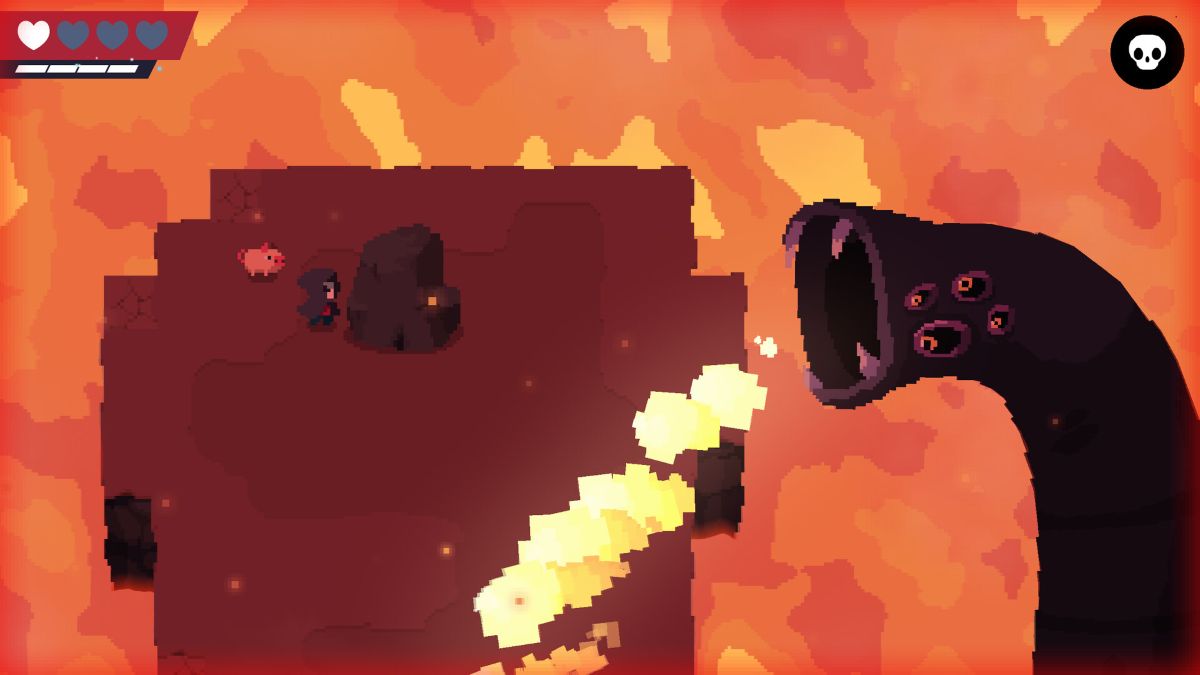
Anyway, the added puzzle element to an action-driven RPG helps to break up any monotony that games of this type might haphazardly create. With Spindle, the puzzles balance well with action and the story to create a solid foundation of entertainment.
Payoff
The payoff for effort in this game comes in a few forms. The first is the power shards that Dengel must obtain to progress. The shards give powers that can be used as tools to move through obstacles. These shards are scattered throughout the land and are mostly obtainable after a major fight or a major puzzle. They are also markers to progression, so the more you obtain, and there is a base of five, the more you access on the map to discover and explore. Much like how the puzzles are, the payoff is circular with the rest of the gameplay elements.
Now, smaller payoffs can happen in the form of Death Coins, which, when the right number is collected and deposited into random Death statues on the map, can mean more life for the Dengel. If you need a comparison, think about how the hot springs work in the Ghost of Yotei or Ghost of Tsushima. Finding one means you expand your life, and finding a certain number of coins in Spindle means that as well. The more life the player has in the game, the more chances they can take on as they continue to go through the adventure.
Other odds and ends of the game that make it more worthwhile include fishing, which is a staple of most games of this type, and collecting other random goodies as the player adventures forward. I don’t want to ruin them here, so I won’t specify.
Ultimately, Spindle does a fantastic job of paying the player for their efforts. It could be in coins, objects, or another level of power that continues to open the world. The pacing and balance for the payoffs work so well with the adventure and exploration components of gameplay. The game constantly makes you feel like you have earned something for the amount of time put into it. You want that with an action-RPG game, and you get that with Spindle.
On that sweet note, let’s wrap up this review.
Conclusion
Spindle from developer Let’s GameDev and publisher Deck 13 is a marvelous action-RPG adventure that hits all the right notes when it comes to action, puzzles, and payoff. It’s incredibly balanced with all three, which makes it feel like you don’t waste a minute playing it.