

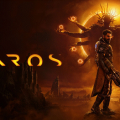
Saros pushes the envelope on multiple fronts, changing the roguelike genre in ways that’s more player-friendly than ever while taking advantage of the PS5’s DualSense controller in novel fashions. It’s near perfect in several ways, even if its story lacks the satisfaction that its gunplay otherwise provides.
It’s 2026. I am still incredibly, massively, monumentally, [insert word that ends in -ly here] salty that Housemarque’s RETURNAL did not win game of the year in 2021. This is not a knock against It Takes 2 – a game that rightfully earned its critical acclaim. I just…loved what RETURNAL brought to the table. It effortlessly showcased the beauty of the new PS5 generation while giving players a taste of what the DualSense controller could offer. Its rug-pull of a finale is memorable for several reasons, chief of which is its deep allegorical approach to illustrating trauma. Its gameplay showcased flow in ways that few games attempted to accomplish.
Knowing this, Housemarque had very big shoes to fill with Saros. In most ways, their toes are poking out from the metaphorical shoe. To say that Saros is game of the year nearly halfway through 2026 might be putting the cart before the horse, but it’s a contender for sure. I had an absolute blast playing Saros all the way to its end credits and then some.
Before continuing on, it’s important to recognize that Saros is not, and should not be, considered a sequel to 2021’s RETURNAL. Thematic and gameplay similarities aside, Saros stands on its own two feet as a punishing game that utilizes more of the PlayStation 5’s hardware than any other PS5 title (other than maaaaaybe Astro Bot) to date. If you’re going into this expecting Returnal, but with Rahul Kohli voicing the protagonist, you’ll probably be disappointed with the lack of a musical biome. Stepping away from your RETURNAL-fueled expectations will benefit you here, as Saros is truly incredible when it’s treated as its own novel experience. Its flow is as satisfying as all get out.
For those unfamiliar, Saros is a third-person action title that combines bullet hell and roguelike elements. It places you in the shoes of Arjun Devraj, a Soltari enforcer who is looking for someone on the alien planet of Carcosa. It follows the gameplay loop of receiving a weapon, dodging/navigating creative arrays of deadly bullets, and getting as far as I can before having to start fresh with a new set of weapons and benefits. If you’ve played any roguelike in the past five years, it’s just like that…but with far more gorgeous effects, satisfying tactile responses thanks to the PlayStation 5’s DualSense controller, and more player-friendly gameplay mechanics than ever before.
Carcosa is an alien planet that leans hard into Lovecraftian horrors and Robert W. Chambers’ reality-bending mystique. The initial biome, Shattered Rise, is marble-clad and smattered with red and blue hues. Imagine if you were exploring Ashgabat (in Turkmenistan) but with crumbling architecture and navy hues. Well within this first biome is a shrine comprised of writhing limbs and hands with dangerously sharp claws. As I approach this shrine, I’m pulled into it, setting off a drastic change in Carcosa’s environment in the form of a solar eclipse. This solar eclipse acts as a north star in Saros’ environment, transforming an otherwise benign world into something far more dangerous, Tentacles emerge from crevices, hands emerge from shiny walls, and enemies become more dangerous than ever before.
The eclipse is both a boon and a narrative device for something far greater than Arjun Devraj’s internal struggles. It’s a mid-level lever that dramatically transforms the essence of Saros’ environment into something darker, perhaps more deadly than the typical Carcosan mystique.
 Saros takes no time in accelerating its pace and giving players a visually stunning and satisfyingly tangible experience. Sony and Housemarque weren’t joking when they described Saros’ gameplay as a bullet ballet. They’re everywhere. Within my first few minutes as Arjun, I was tasked with walking through an endless waterfall of bullets. Yes, a waterfall of bullets was in front of me, and I was to walk through them. Arjun’s Soltari shield came in handy here. At any given moment I could bring up my shield and absorb bullets (for a time), restoring energy and powering up some of my other special abilities. Using the shield effectively is key in keeping Arjun alive against the seemingly endless array of bullets from the dangers of Carcosa.
It feels great to have another defensive option in a Housemarque bullet hell. Beyond the tried-and-true art of memorizing enemies’ attack patterns and attempting to dodge them, the Soltari shield is a treat for those who want to get up close and personal with enemies. This is especially true when using a shotgun or breaking an enemy’s shield with a melee attack. In boss fights, the shield acts as a light source of protection amidst bullet patterns that fill the screen with typically end runs.
Housemarque didn’t stop there with the new gameplay additions. Let’s talk about the alt-fire modes that are attached to each weapon. Saros has the player push the L2 trigger halfway down to where it stops (if you’re familiar with the DualSense’s adaptive triggers, you’ll know what I mean) to change up how Arjun’s current weapon functions. A traditional assault rifle’s secondary firing mode changes up its rate of fire. A shotgun’s alt-fire mode rotates its spray patterns, making it easy to shoot and stun taller enemies from afar. One of Saros‘ disc-launching weapons, the Riptorn Chakra, embeds its blades within enemies and deals continuous damage for however long I could hold the alt-fire input.
 To my knowledge, this is the first shooter that has utilized the adaptive triggers in such fashion. Holding the trigger down halfway feels weird at first, as most players have been conditioned to push all the way down to fire a gun in games like Call of Duty and the like. Saros’ implementation rewards the player for using every weapon to its fullest extent while rewarding the player for being a PlayStation owner. It’s games like Saros that make it feel like the DualSense is being utilized to its fullest extent and a proper use of modern controller hardware.
Like Returnal, I could feel everything thanks to the DualSense controller. From absorbing each bullet to impactful moments during Saros’ fleeting cutscenes, the DualSense’s rumbles and variable haptics make the game a satisfyingly tactile experience. It feels great to experience and even better to play. More games need to follow Housemarque’s lead in making PlayStation titles immersive like what’s been done here. Even if it’s in the form of the half-pulled left-trigger, there’s more space in the gaming category for the DualSense to be used as a complement to Sony’s approach to cinematic and explosive gameplay that should be felt.
Back to my Saros experience, my Carcosan runs were just like any other roguelike. I would explore for as long as possible until I either succumbed or was forced back to the Passage, the space where Arjun reconnected with his Echelon IV teammates. Most runs ended with a cutscene of some sort, giving me a glimpse of Arjun’s relationships with his crew. There were a few select moments where the Banyan tree on the upper floor opened itself up and teleported me to an unfamiliar space…but I’ll leave that for you to experience.
 Being forced back to the Passage after defeating a boss is a foreign concept in the roguelike space…but it’s also a welcome one. It breaks runs up into manageable chunks and ensures that there are consistent moments where the player can experience something new beyond longer, harder, and faster runs. There’s no having to backtrack for 60+ minutes to reach the newest biome. What’s even better about Saros’ implementation of this gameplay shift is that I could fast-travel to any biome I had previously unlocked, allowing me to quickly resume my exploration of a current biome when I had succumbed to a particularly difficult boss. As a result, runs are almost always 15-30 minutes long – perfectly manageable arcade experiences after a long day of working.
The fast travel system doesn’t mean that I could go from the third biome to the second biome, though. Saros has a concrete path across its multiple biomes that increases in difficulty over time. With fast-traveling, however, my time was far from wasted. I had the option of resuming my progress from a checkpoint, keeping things manageable despite the inevitable loss after loss. Roguelike fans might balk at this, but let’s face it: No one should be required to undergo replaying basic biomes for the sake of memorization.
Carcosan modifiers give players additional levers to customize their runs, and these modifiers are introduced quite early on in the game. The Carcosan Modifier system has players granularly customize runs with positive and negative modifiers based on their preferences. If getting to the current boss is difficult, this system gives players the power to change up their ruleset. For instance, one of my runs benefitted from me boosting the lucinite gain (and thus the weapon power) of my run along with ensuring that my health was fully restored when I reached the boss; the negative modifier I had chosen for this run made it so that I was forced to give up a random artifact (persistent perk that increased my power) after defeating a boss. Knowing that I was going to return to the Passage anyway, I took on a negative modifier that didn’t truly matter.
It’s clear to me that Housemarque has learned from being criticized that RETURNAL’s runs were too long and too difficult. The Carcosan modifier being introduced at the literal 25% point (if that) is proof that they’re encouraging players of all kinds, even roguelike bullet hell sickos like me, that getting to the end of the game is worth it if not for getting new mechanics and new weapons. During the review period, I spoke with fellow Chump Ben (who also contributed to this review) about the modifier system, we came to the conclusion that it alleviated the pain of defeating the current biome/boss without compromising the game’s overall difficulty.
Frankly, that’s refreshing during a time where just about every three games added to Steam are roguelikes of different flavors. It’s an indication that there’s still potential for innovation in an otherwise oversaturated genre that appeals to players’ preferences of highly variable yet highly engaging gameplay.
 Saros’ marketing brightly features the notion of “COME BACK STRONGER,” a tagline that’s manifested into a much-needed progression feature that RETURNAL lacked: The Armor Matrix. Upon talking to Primary, a sentient computer in the Passage that served as my overseer, I could upgrade Arjun’s armor with permanent benefits using the lucinite and halcyon currency I accumulated from my runs. These ranged from simple stat upgrades (like more health) to meaningful survival tools like stronger starting weapons and second chances that brought me back to life upon taking fatal damage. With each benefit unlocked, Arjun legitimately came back stronger and more equipped to deal with the trials ahead.
Saros’ difficulty is manageable because of the Carcosan Modifiers and Armor Matrix. Arjun becoming permanently stronger makes it so that I didn’t have to go into the settings and enable accessibility modifiers just to reach the end game. I needed to be patient, unlock just enough upgrades, and enable a handful of modifiers to make the game a smidge easier to get past my current struggle. If you were worried about Saros being as difficult as RETURNAL, don’t be. Its first biome is easy, while its second biome amps the difficulty with claustrophobic rooms and devastating enemies. It’s the epitome of being easier, yet more difficult, than its predecessor.
On the topic of the narrative direction, Arjun is an unlikable protagonist. He’s one who’s selfish and lacking a meaningful connection to those around him. It’s early in the story where he’s criticized for having ulterior motives and disobeying his missives on Carcosa. Saros’ atmospheric storytelling that portrayed Arjun’s internal moral struggles didn’t do enough for me to care about why he was on Carcosa, or even why he was searching for the one he was missing. There was even less reason for me to emotionally connect with him and his backstory. Heck, far too often I wanted to stop watching and get back to the satisfyingly fluid gameplay.
There were multiple times where I questioned: Who plays a roguelike shooter for the story? The game is fun, but how much should I actually care about Arjun?
Don’t answer that.
Stories in roguelikes act as vehicles that push the player forward to taking on one more run. And then one more. And then one more after that until it’s 3:30am and you have work in a few hours so you should probably get to bed to get some shut eye. When used correctly, the story gives the player a taste of the context of the game’s universe or the beats prior to the present time. When the storytelling mechanism excels, it has the player planning multiple runs all the while taking the time to poke and prod at the universe’s boundaries. Saros encourages the latter, but there wasn’t enough meat to satisfy my cravings for understanding Arjun’s presence on Carcosa. When that curtain was finally pulled back to show me what I was missing after the time-skipping storytelling (a Housemarque classic), I was dissatisfied with the conclusion before me.
Perhaps the most egregious sin that was committed here wasn’t the storytelling vehicle, but the lack of meaningful endgame discovery and replayability. Finishing the endgame content took an hour of time and had me retracing steps with the briefest of new content in previously explored spaces. But even then, it didn’t pay off. I set my controller down and didn’t feel compelled to retrace my steps again.
It wouldn’t have hurt to get one more twist… maybe one more novelty in a liminal space of Lovecraftian horrors. Heck, it would have been great for Saros to have been given a Tower of Sisyphus-like endless mode where I could push Arjun’s armor and weapons to their fullest extent and get a smidge more worldbuilding. But alas…there were none at this time.
The 24 hours and 10 minutes I spent in game were absolutely fantastic, don’t get me wrong. There were several nights where I, myself, had succumbed to the “one more run” addiction just so I could try my hand at defeating a particularly nasty boss or getting just a smidge farther in a biome to unlock a new segment of my Armor Matrix. Now that I’m finished with the game, however, it feels like I need a good long break from Saros. Perhaps that’s a good thing – not all games need to be infinitely replayable.
I am not a PlayStation 5 Pro owner, so I cannot comment on its bleeding-edge graphical benefits. Our head honcho, Nathan, can. Here’s what he had to say in a nutshell: “Everything loads at once. Carcosa was detailed as hell. Saros utilized amazing lighting that is perfectly reflective of the materials of its world. It runs perfectly.” Frankly, that sounds like it’s one of the few games out there that’s taking advantage of Sony’s mid-generation top-tier hardware. If Saros ever makes its way to PC…I’m hoping to see that graphical delight on my rig.
With that said, let’s wrap this review up.
Saros pushes the envelope on multiple fronts, changing the roguelike genre in ways that’s more player-friendly than ever while taking advantage of the PS5’s DualSense controller in novel fashions. It’s near perfect in several ways, even if its story lacks the satisfaction that its gunplay otherwise provides.