

Space. Horror. Puzzles. Space-horror-puzzles. SPACEHORRORPUZZLES. I think a new genre name has been invented.
Routine, developed by Lunar Software and published by Raw Fury, is a survival horror game of sorts that borrows its controls from the original Resident Evil game, its scares from Dead Space, and its uncomfortable environment from Alien: Isolation. Combined, players get a game that is built on constant roadblocks and slow-moving decisions. That is quite the combo.
So, put on that helmet, make sure to always have your badge on you, like, literally, and let’s creep through this new survival horror game.
Requires brainpower
Routine’s story starts with the awakening of a passenger on a Lunar Research Station. That passenger has found themselves quite alone in a not-so-healthy environment. All they have is a helmet, a printed badge, and a large amount of confusion about what happened to everyone on the station, as well as the mystery of why they survived. From the very beginning of the game, it kicks off with confusion, mystery, and asks the player to find out what exactly happened in this unknown and strange station.
The story of Routine does not reveal its hand quickly. It truly asks the player for help and isn’t kind enough to leave obvious breadcrumbs behind for any aspect of the game as the player progresses. I guess that is a good thing when devs are trying to throw players for a loop and send them spiraling in different directions. The story’s lack of details makes it more intriguing, as it makes it difficult during gameplay, as slow and steady pieces of the puzzle start coming together. Is that a brilliant way of going about it? It all depends on what players are expecting from the experience.
I found myself locked in on the game’s mystery. I understood right from the first task of printing an ID badge that nothing was going to be given to me, and I would have to find solutions and details by myself using only logic and common sense to guide the way. On one side of this narrative design coin, it was refreshing not to be given answers or plot indicators in the game. It made everything more mysterious, uncomfortable, and uncertain. Not knowing friend from foe, what worked to open door A or B, and how to navigate the area that was unmapped, created a barren feeling that emulated what the main character was supposed to feel.
In short, the story was beautifully intertwined with the gameplay and made complete sense when feeling the extremely steep uphill battle to find out what the hell was going on at the Lunar Research Station. At the very least, the story will force players to stop and think, like they were playing some warped version of MYST. That is a great ‘90s style of narrative.
Love it or hate it, Routine wants the player’s attention and their best brainpower to finish or complete the story setup. You couldn’t ask for a more well-constructed setup about a person trapped on a space station.
Lack of details, but solid gameplay
While the story might lack a lot of detail, which, again, will force players to actively figure out what the narrative is about, the gameplay holds up solidly throughout the journey. In nearly every aspect of the game, from its stealth, horror, and puzzles, the gameplay runs side-by-side with the story and helps to add more context to the situation. The only element of gameplay lacking in the experience is some shoddy controls, which feel like they were on purpose, but are too complicated for their own good. Let’s talk positively first.
Isolation and stealth
If someone had told me that stealth was waiting for me in a space horror game, I would have said ‘fat chance’. But stealth is exactly what drives the experience. As players progress through places in Routine, they will happen upon shadowy figures, uncertain scenarios, and plenty of enemies that are just out to get them. It’s partly psychological terror that leads the gameplay into a stealth mode, but the other half is stealthily moving around the station, trying to figure out where to go next without tipping off any unwanted entities.
Staying out of sight while strategizing a plan through the station is a heavy piece of the gameplay puzzle. From the moment that the character leaves their room, the player will immediately discover that something is not right, and the best course of action is to keep an eye out for whatever caused the ruckus in the station while navigating places, trying to stay out of sight. The creepiness of the environment and the uncertain answers to what happened in the station create a strong sense of ‘being cautious’ in the back of one’s mind. The game doesn’t straight-up tell you to be cautious; you’ll just instinctively become cautious as you move around.
That cautiousness only leads to wanting to be stealthy and exploring the environment without actively being known. It’s direct and effective in its gameplay intentions. It sets up the rest of the gameplay, as well as a mental panic button, should players encounter anything along the way. What this also does is it turns the creepy factor of the gameplay up to 11, something that should happen when a game like Routine is trying to sell horror and uneasiness factor.
The environment will give birth to the players’ gameplay approach, and that’s how this should be. Stealthy and cautious all the way through. That creates a constant uncomfortable feeling and only magnifies how scary this game could get.
That horror
The environment is broken, there is no living person in sight, and the only communication the main character has during the adventure is through past recordings from former station residents, and the occasional robot that could be friendly or foe. Combined, that’s enough to get a horror element kick-started into the gameplay.
Much like Ridley Scott’s original Alien film, which played with the viewer’s sense of sound, Routine plays that same game. There is so much silence during the adventure, and mostly very jarring. The lack of sound while traveling around only helps to create anticipation for what could be a jump scare when something or a sound appears. For example, at the beginning of the game, as my character was getting their bearings, I ran into a small robot that was hiding beside the bottom of a people mover escalator. I didn’t see it or hear it until I came to the end of the escalator, and it shouted out in computer speak, like it was from the movie War Games, and scared the holy hell out of me. The game plays with sound to emphasize the horror, even when it’s false.
Now, as I progressed further into the game, I ran into other moments where the game would use sounds that were ‘slams’ and ‘steps’ to keep me focused on my environment and not have me let go of that sense of ‘fight or flight’. I’m not sure that I’ve felt this uncomfortable with a gaming environment since the original Resident Evil hit, when the damn dogs jump through the window suddenly and chase the RE crew. The silence is thick, which only makes sudden sounds and movements more magnified and scarier.
While sound is a good element used properly to expand the horror aspect of Routine, the enemies will only make it worse (in a good way).
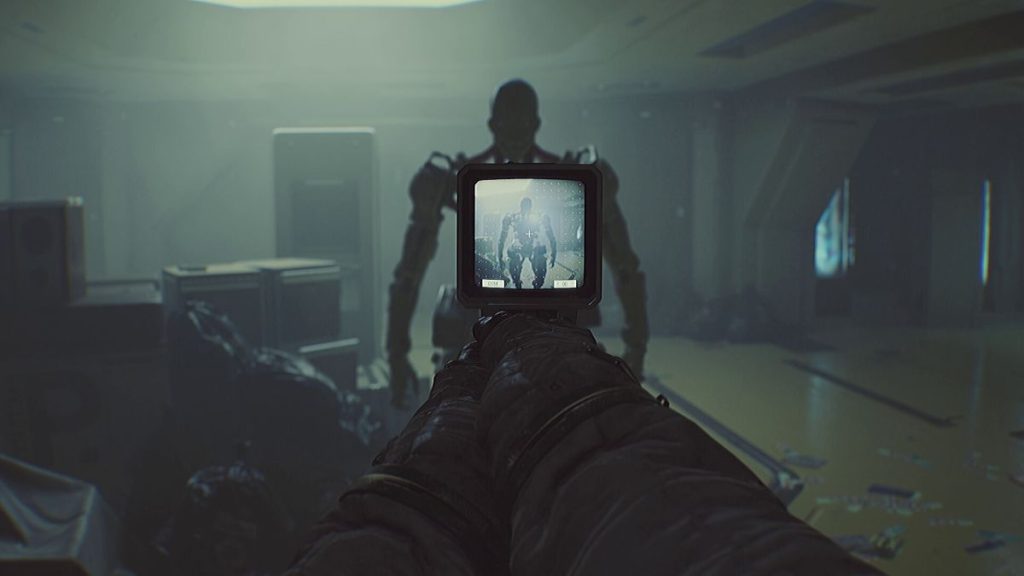
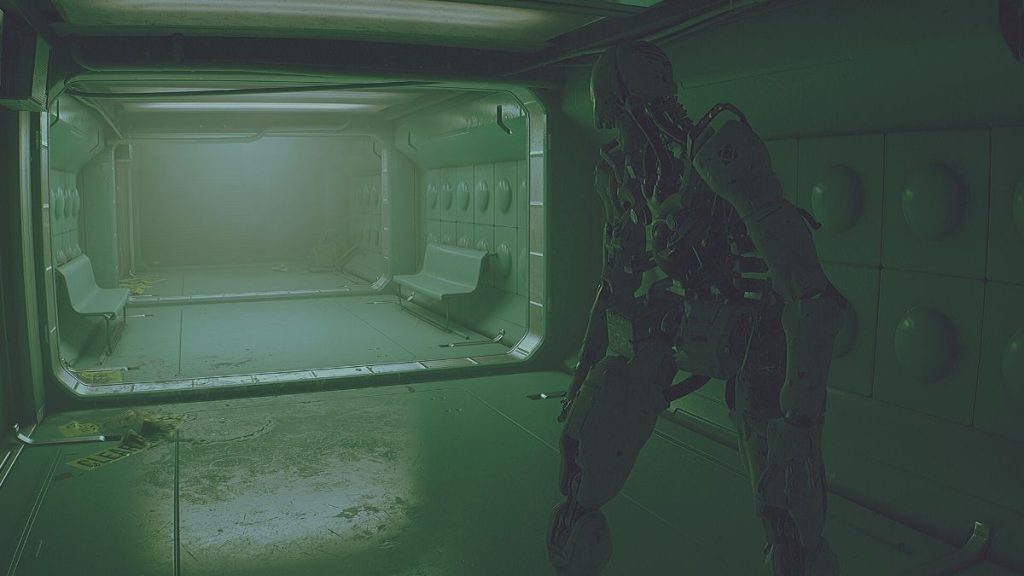
The first enemy that you will encounter is at the mall portion of the space station. It’s a creepy robot that has pin-hole eyes, a moving jaw, and a confusing method of being stopped…temporarily. It’s akin to the robot out of the movie Saturn 3, which felt unstoppable throughout that narrative, and was always hunting the main characters as they were trying to figure out a way to escape. These robots feel like that, and even worse, they can only be temporarily stopped at the beginning of the game, which means that players will constantly be hunted by them, and only time can be bought to leave an intense situation.
I hate those types of creatures in horror games, as they can create a constant sense of unease. Of course, that is the point of the game; it wants players to feel uneasy and always on guard, which can be exhilarating as it can be exhausting. That is just another wonderful horror element. Anyway, let’s discuss how these creatures are stopped.
The game features a multi-tool that can open doors, fire bolts of electricity, and help solve puzzles. The item can be shot three times before the battery is completely dead. The player can only carry one battery at a time (initially), and they will have to use the tool wisely when the moment calls for it. One of those moments is stunning and stops the above robots. The tool can fire three times into the robot, which shuts it down temporarily while the player finds a place to escape and hide. The tool doesn’t seem built for a first-person shooter experience; rather, it is a temporary solution to many problems in the game, such as stopping a charging robot from killing the main character.
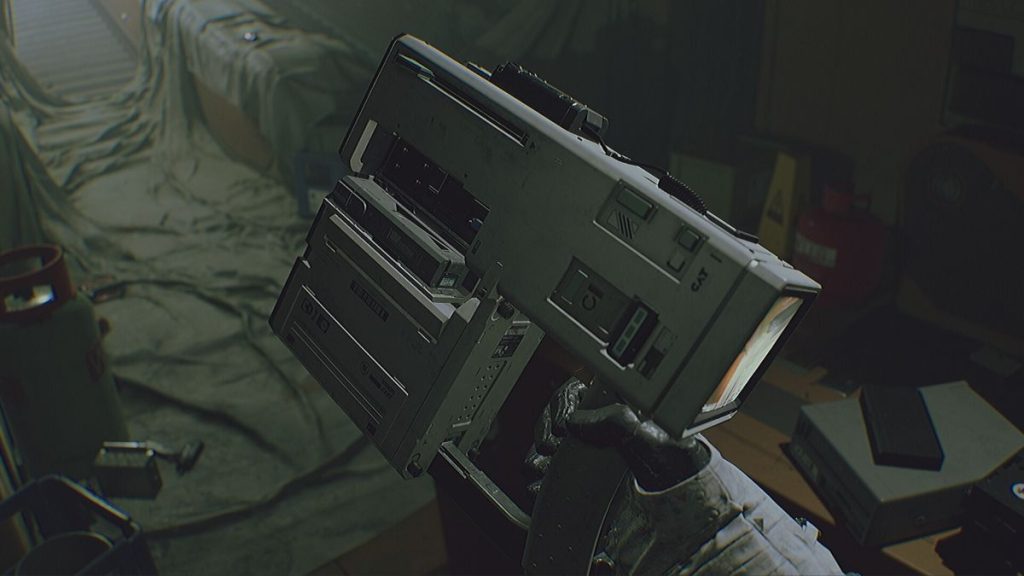
Having a non-dedicated tool to help with multiple problems in Routine only adds more compelling decision-making and gameplay to the experience. It does suck that it won’t destroy a robot right out of the gate, but it’s a nice tool to have around when one needs only to get out of a sticky situation. That lack of retention with a battery charge also just compounds more horror and uneasiness into the gameplay. It’s lovely if you enjoy those types of moments. I’m sure people who pick up Routine are looking for that type of gameplay and a limited tool to make that dose of horror thick.
So, with stealth and horror firmly placed within the narrative, what other uneasy hindrance can up the ante on the experience? Puzzles.
No, seriously. Puzzles.
Puzzles
While the player is creeping around deadly robots and traversing through creepy-ass hallways that are dimly lit, the gameplay experience will feature a hefty amount of puzzle-solving moments. And having puzzles nicely placed within the story, and the puzzles make sense with the gameplay progression, only stands to make the player experience that more anxious.
What this means is that while the player is being stealthy, keeping an eye on the environment, and preparing for a battle at any given moment, the game will require you to figure out how to progress through the journey. For example, at the very beginning, the game requires the player to activate an elevator. To do so, the player must seek out clues that lead them to an elevator code. These clues are hiding in plain sight, but the gameplay never gives you hints on where you should be looking to find said clues. This happens throughout the entire experience.
Routine seems hellbent on making the player use logic, common sense, and caution to discover how to open doors, take down shields, and find out what they should be doing next. The game doesn’t hold a person’s hand, and the clues are not at all obvious. This is like playing The Witness, if someone was actively hunting you while you’re trying to figure out how to unlock the next part of the game.
Love it or hate it, the lack of handholding and guidance makes Routine incredibly difficult, but once a puzzle is figured out, the reward of progression is ten times more satisfying. But, having said that, I can understand why this might turn some gamers off. For the better part of three decades, rarely have some games just dropped players somewhere without giving them much rhyme or reason. Generally, for puzzle-heavy games, there are obvious clues for solutions, but this one didn’t feel the need to go that route. If players are going to complete it, then players will have to do it on their own. In a way, that’s remarkably fun, even if it is remarkably frustrating. There’s nothing like having to use your brain to guide yourself.
Anyway, games like Routine are tough; they’re not for everyone, but they’re well worth the aggravation and intensity created by their puzzles and lack of details.
The only fault in those stars
While stealth, horror, and puzzles lead the way, Routine does have a bit of a shortcoming that is never resolved throughout the experience. That shortcoming is the complicated, sluggish controls.
Right at the get-go, players will see that the controls are overly complicated. To bend down and look underneath something (or hide) requires players to hit B, press down on the left stick, while holding down RB in the process. Doing that while panicking is nearly impossible to pull off perfectly. If you need proof, try to panic and hide from the first enemy robot encounter. It will not go well.
Players will get a bevy of instructions from the onset of the adventure, which will be promptly forgotten. The controls are unnecessarily complicated in their design, although I get it when horror and unease are trying to be multiplied in panicky moments. In a way, the complication works well in that type of environment. In another way, you’re stretching your audience’s perception and coordination too thin.
Now, what also doesn’t work well with the controls is how to run and aim down sights. Starting with running, when the main character goes into a full-on sprint, the running will continue until the player physically pulls back on the movement thumbstick. Most of the time, if you forget to hit the brakes, the main character will zoom past the intended destination. It’s so weird and sluggish. Most of us have been trained to simply let go of the thumbstick to return to walking or standing still in first-person games, but this one requires a little extra to get that full stop. I’m not a fan of that type of controller movement.
As for aiming, should you want to whip out the multi-tool to take down a robot, the game will provide you with a non-zoomed view, which is tough to aim, and then an ADS view, which is worse because the screen on the tool is in 10 frames per second movement mode, and it doesn’t engulf the entire screen. While visually the game looks wonky with these movements, unnecessary frustration can bloom from this because shooting is restricted to three shots before another battery is needed. Misfiring or simply not hitting the target intended is frustrating. While this does cause more stress and intensity in the game, it’s more frustrating than anything else.
If that wasn’t enough to not be crazy about the controls, there are times when the player will be required to move a mouse icon on a computer/terminal screen. That requires the player to move the right thumbstick gingerly. If the player doesn’t, the mouse icon will overshoot its intended button target, and the player will have to reset and slow down. This same movement is also sensitive when exploring or picking up objects. It feels very janky and makes the controls unnecessarily frustrating.
I do wish the controls were tightened up a bit, and during the computer/terminal moments, it would just jump from button to button instead of scrolling across. I don’t think it would take any horror or uneasiness away from the experience, as much as it would eliminate unnecessary frustration.
Anyhoo, the controls are manageable at the end of the day, but I do wish they were easier to handle.
Presentation
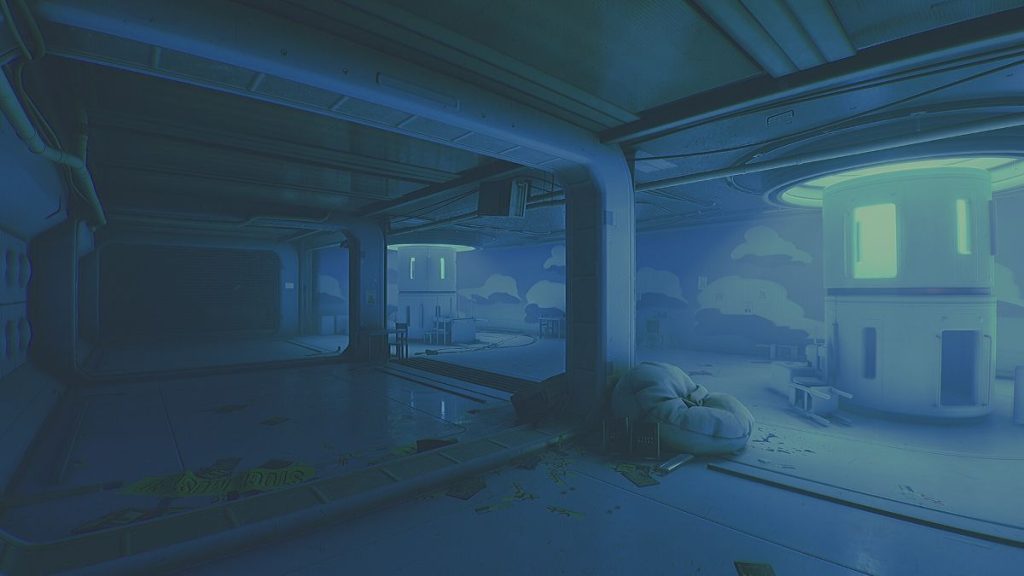
One quick note before this review is wrapped is that the presentation of Routine is nothing short of stunning. Built on Unreal Engine 5, the game uses gorgeous lighting techniques, beautiful textures, and gross visual elements to emphasize the horror aspect of the experience. The game looks and plays beautifully, and it’s certainly one of the prettier releases in 2025.
On that sweet note, let’s wrap up this review.
Conclusion
Routine from developer Lunar Software and Raw Fury is a good space horror game filled with the right amount of intensity and fear, which is complemented by its gameplay elements. The only improvement needed is with the controls.