


Romeo is a Dead Man is classic Suda51--an irreverent fever dream that constantly threatens to topple any notion of what a game can or should be. Like many of Suda's other works, it will be polarizing regardless of finding a method to the madness.
Being able to appreciate and enjoy the work of an auteur often falls on one’s ability to be enveloped by the unique way they process and express creativity.
In 2015 I sat in a theater with my uncle and watched Robert Eggers’ The Witch. At the end of the film he apologized for not taking me to a different movie for my birthday. I was confused, surprised that he didn’t enjoy himself, especially being a horror aficionado. Maybe it was the period-accurate dialog. Maybe it was the scene that implied a baby was ground into a sickly paste and smeared on the skin of a naked woman, granting her the ability to fly. But I loved the whole thing. The same with The Lighthouse.
Hideo Kojima has always been the subject of scrutiny. Is he merely a wannabe film director, trapped in a genre he’s been working in for decades? I mean, sure, maybe some people feel that way. But after microdosing Metal Gear Solid 4: Guns of the Patriots over the course of several summer days in 2008, I thought the guy was brilliant. Dual-screen action? Fake commercials that break the fourth wall? More poop jokes?
These people have a vision. And we choose to open our minds up to appreciating it, critiquing it, and possibly having an experience that no one else could provide.
While not a constant goal of mine, I often wish to write most of my reviews in somewhat unique ways. The first several years of typing out game reviews, I stuck to a certain format, breaking down a game in the old guard of categories like “graphics” and “sound” and “story” to make them digestible. Along the way, I realized that my brain merely didn’t want to process things in such a way. The moving pieces making up a game don’t work in such finite borders. Music and sound can influence the mood and therefore the narrative and its emotional impact. A visual language isn’t always about polygons, especially as developers have more freedom than ever to make a game look a certain way. Gameplay often flows and changes over the course of the title, hard to pin down without becoming long-winded.
Personally, it is difficult not to pour the contents of my brain out over a specific game in whatever method my mind and my fingers dictate. When I reviewed No More Heroes 3 back in 2021, I made a lot of random swings when I wrote. I took a picture of Travis Touchdown and incorporated my dog into it because it made sense in the context of my recollection of the game. The review wasn’t disjointed to me but I’m sure some could read it that way. I think of Eric Layman’s review of Just Cause 4, primarily written as protagonist Rico Rodriguez (a brilliant review if you ever read this, sir). Or what about my somewhat anti-review for Baby Steps, a game that actively works to defy any kind of expectations one can place on the concept of a game? I had a great time with that one but I imagine any number of my college professors would look at that thing and give me a failing grade. No idea what professor and Digital Chumps EIC Nathan Stevens would grade it, though.
Goichi Suda–best known as Suda51–is an obvious gaming auteur. His name has been attached to numerous projects that have been acclaimed for their execution. I imagine Suda51 wants a lot of people to like the work he puts out. But I imagine he is just as happy having a rabid, devoted fanbase that gobbles up the delirious corners of his brain that have been put to code.
Tens of thousands of people will buy a new Zelda game sight unseen. The same with Call of Duty, or Madden. Certain works are a known quantity and people will accept them regardless of potential quality, counting on past experience to drive a purchase. I imagine Suda51 has an admirable install base who will buy Romeo is a Dead Man simply because his name is on it.
The only guarantee when playing Romeo is a Dead Man is that it will be weird… and likely polarizing. If that wasn’t the case would it really be a Suda51 game?
Look, I absolutely understand the argument that can be made for Romeo is a Dead Man being a mediocre or frustrating game. It eschews traditional format but also hearkens back to the illustrious days of PlayStation 2 action games that swung for the fences. But in doing so this is another Grasshopper Manufacture product that makes bizarre tangents, has disparate plot and mechanical detours that don’t necessarily make sense, and gives the player a sense of structural and directional whiplash.
The fact that Romeo is a Dead Man centers around the conceit of time travel makes it especially harrowing to dissect. Still, we can do our best, right?
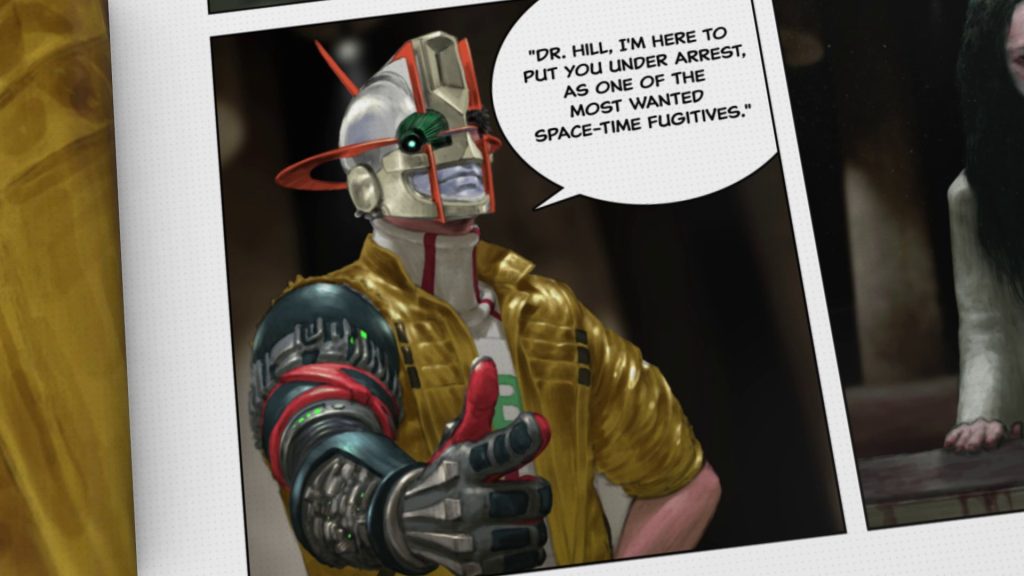
Romeo Stargazer is a sheriff’s deputy in Deadford, Pennsylvania. One day, Romeo gets his face bitten off by a strange creature after making a stop in the middle of the road. Seconds before he dies, Romeo’s grandfather Benjamin appears from the future and injects him with some kind of serum that keeps him alive, turning him into DeadMan. “Thanks grandpa!” Romeo says after a strange futuristic helmet adorns him, seemingly accepting of this new normal in a manner too enthusiastic to be flippant but still getting a cackle out of me.
The game starts in the midst of the story. Romeo has met Juliet already. Juliet is a time-traveling super villain that needs to be killed multiple times? Romeo is now training to be a part of the FBI’s division of the Space-Time Police. Zombies and other gnarly monsters are overtaking Deadford. Other pesky villains are abusing time and must be taken out in other decades. Oh and this is all delivered through varying forms of mixed media. Comic pages, in-engine cutscenes, claymation, scaled models.
Please don’t ask me to recollect all the specific details that have been remixed in my brain over the course of the game’s 20 hours I spent playing on the hardest available difficulty. What is most fascinating about Romeo is a Dead Man‘s world is that it feels wholly unique, even when navigating the common speed bumps of time travel media. Suda and crew work to craft their own fiction about how time travel works within the context of the game. It adds a dash of Timecop having the Space-Time Police hunting down baddies that have abused time over the centuries and decades.
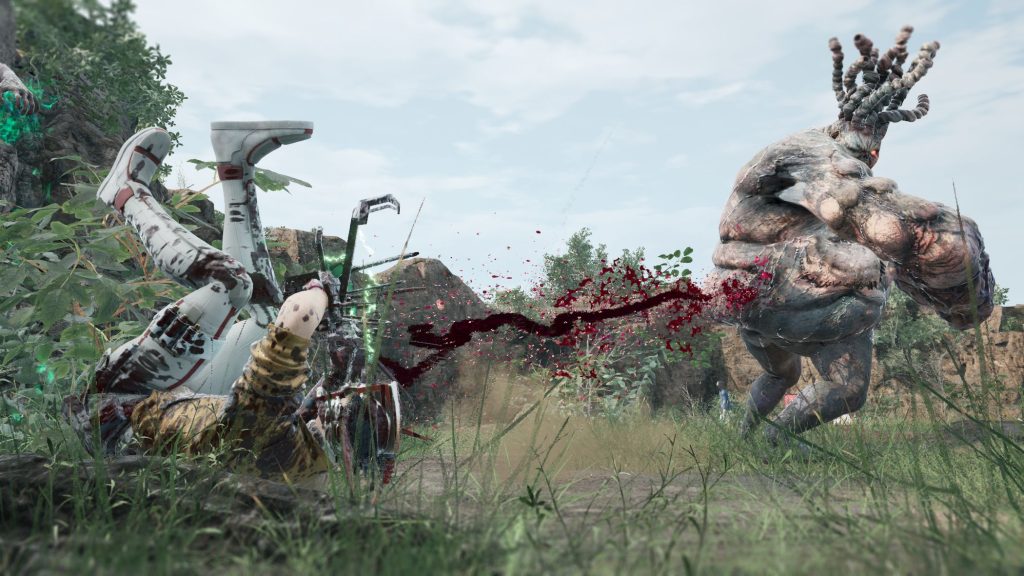
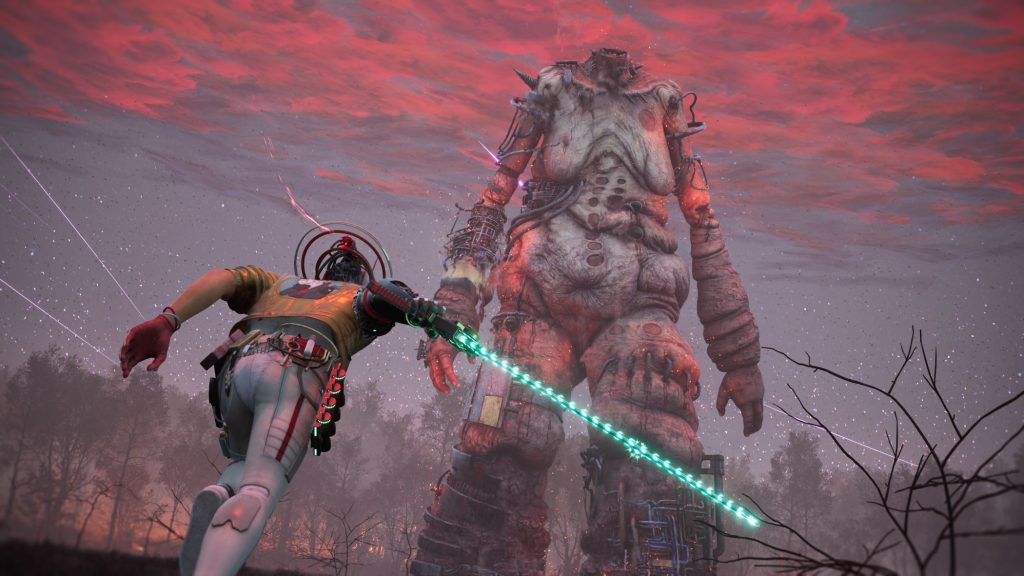
My favorite part about the narrative as a whole was how unconventional everything is and how the gameplay works to support these quirks. The spaceship the team uses? Sure, it’s called The Last Night and we don’t need to question it. Romeo races a motorcycle across an interdimensional road and flies out of a toothy maw into the 1980s. Hell yeah, why not? He builds up blood while attacking to unleash a flashy attack called “Bloody Summer” that inflicts major damage in an area.
Suda51’s work bleeds style, even if that style is batshit crazy and doesn’t seem to serve a purpose outside of just being a wacky cool idea that adds a flourish. Clear out a room of enemies and when that final slice kills an enemy, time freezes and the word “DEAD” appears on-screen in a flash of color and voice. There’s a mini-game to cook curry that ranks how long the power-up will be effective based on if you time a button press at the exact right moment.
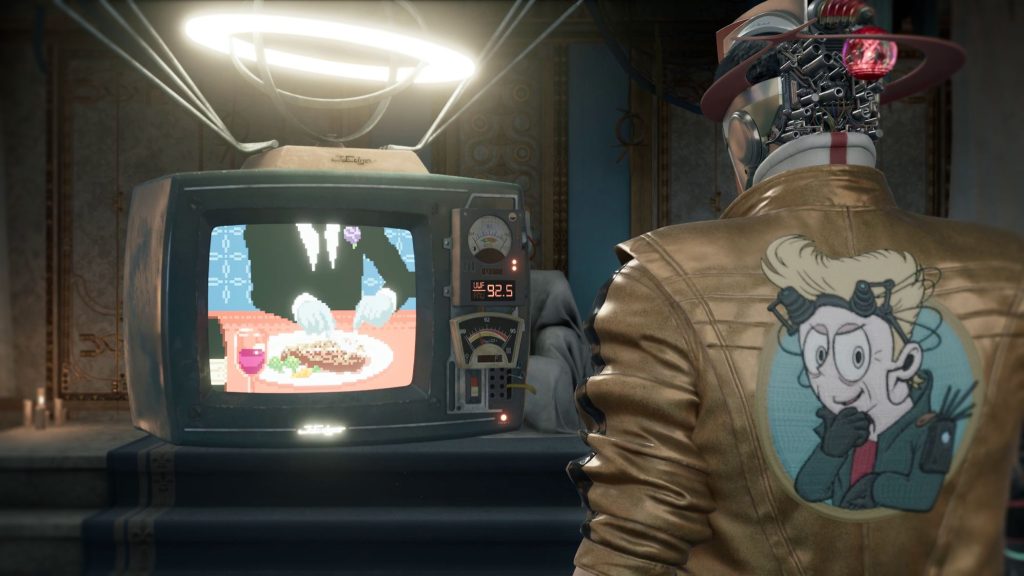
While the overall narrative of Romeo is a Dead Man isn’t convoluted or entirely complex, I can’t say I didn’t enjoy it. There is a breezy pace that everything is revealed and expounded upon, with just enough intrigue to ensure that it’s not all just smoke and mirrors world building. While it’s cool that a mysterious chief only speaks to Romeo through a floating 8-bit television before sending him in and out of subspace, it would be mere window dressing if there wasn’t actually substance to it… or at least clever, obtuse writing. My eyebrows raised several times when characters began to act off–and not merely because they were being quirky. Romeo waking up every morning and spilling his coffee but only seeing a shooting star out of his window on certain days made me wonder if timelines were being played with.
When it call comes to a head it’s certainly okay if you feel confused, bamboozled, or satisfied at the end of the game. Romeo is a Dead Man has fun with its cast of characters and its ridiculous world, inviting the player in for this journey alone and hoping they leave with answers satiated. Frankly, I would be disappointed if a game with a title like “Romeo is a Dead Man” that threw around all these proper nouns and absurdity was normal or average. I’d actually rather be stumped than bored.
Having the game be polarizing is kind of the point. If an attempt were made to play it safe, I’m not even sure Romeo is a Dead Man would be a middle of the road game worth a curiosity play when it was dirt cheap. No, this is a game for those players who existed for shot-in-the-dark/flash-in-the-pan titles from Japan that permeated the space from the mid-2000s to mid-2010s.
Thankfully, there are too many ideas here where the entire game buckles under the weight of lofty decisions. There’s definitely an effort here to keep expectations level. Because of that, Romeo is a Dead Man is a hack-and-slash title that focuses on combat. Players can equip and upgrade four melee weapons and four ranged weapons. A fast-slashing katana, a heavy broadsword, gauntlets, a weird spear-blade, a pistol, a shotgun, a machine gun, and a rocket launcher–archetypes we’ve all heard of.
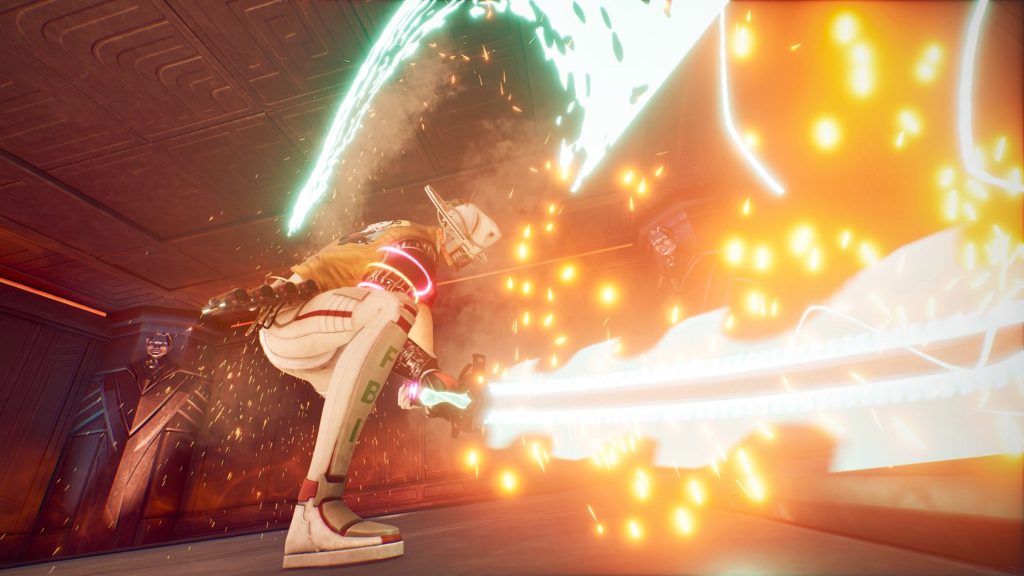
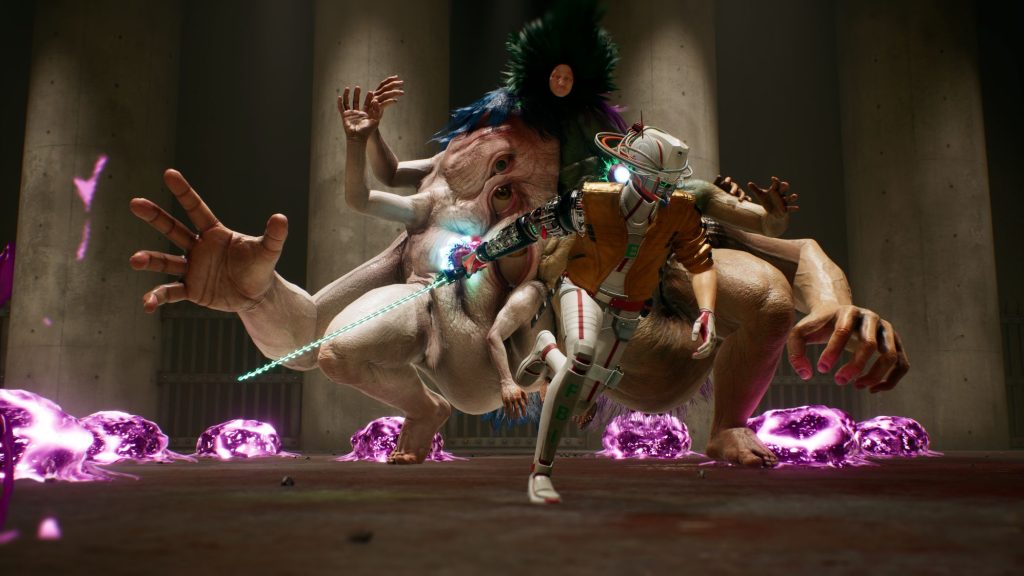
Fights are the standard blend of light and heavy attacks and Romeo can effortlessly combo from one into the other. Trash mobs of zombies will sluggishly shamble towards him while some can stand away and fire off guns. From there, numerous enemies that are harder to kill have glowing flowers on them that can be shot with a gun, exposing them as a weakpoint. Shooting that spot enough times will inflict massive damage on enemies. Attacking with weapons also builds up a blood meter to charge up the “Bloody Summer” attack which can also heal Romeo depending on how many enemies are hit.
Combat in Romeo is a Dead Man is relatively enjoyable and has great feedback when slicing through hordes of enemies. It can get relatively repetitive over time, especially with the limited pool of enemies of the game’s chapters. Plus, frustration can also arise from a few incredibly hard to avoid attacks that require extremely precise timing.
For context, I played the game on the hardest available difficulty, which can’t be changed after selected. Apparently after dying on easier difficulties, a roulette wheel shows up to grant players a temporary buff. And while there were some challenging moments, I do think many of the bosses had exceptionally frustrating attacks that couldn’t be avoided without expertly precise timing.
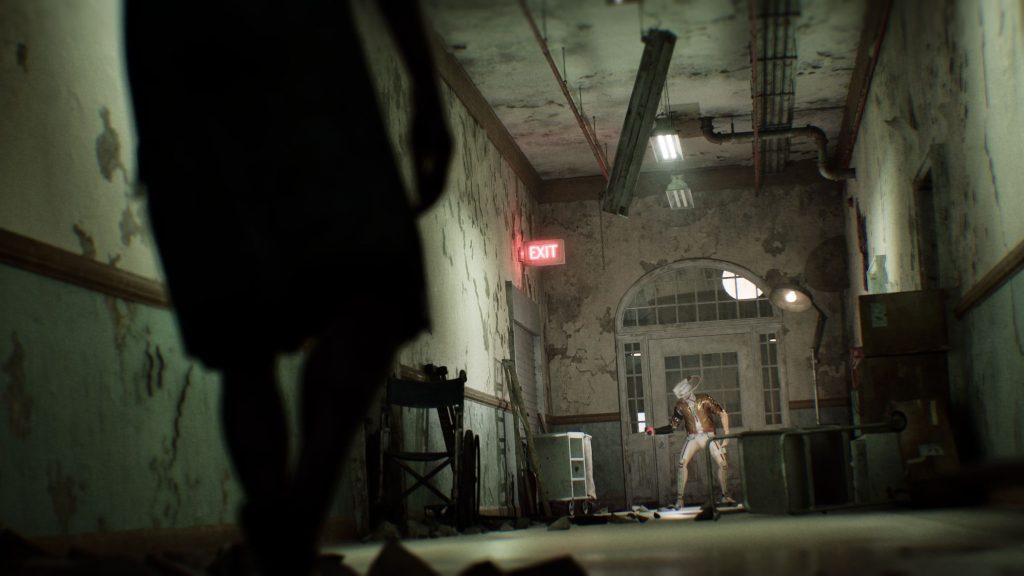
Would Romeo Is a Dead Man simply give players room after room and arena after arena of goons to kill, it would have grown incredibly stale. The game does attempt to heighten the stakes with tense spaces and harder enemies, pure variety, and some tonal shifts. Halfway through the game there is a shift into slight horror that slows down the pace and is strikingly gruesome, contrasting with the humorous tone before it.

And there are also other silly things that raise the eyebrows just enough to be unique. Players upgrade Romeo’s skills through a Pac-Man-like mini-game where a trail is traced through a maze to plot out specific upgrade nodes that definitely impact performance. Players can acquire seeds for “Bastards” that are zombie creatures that can be planted and harvested. Bastards act as cooldown-use moves that can do things like freeze enemies in place, place a healing aura for Romeo, or suicide bomb groups of enemies. Bastards can be merged to create new forms as well, locking the best forms behind experimentation.
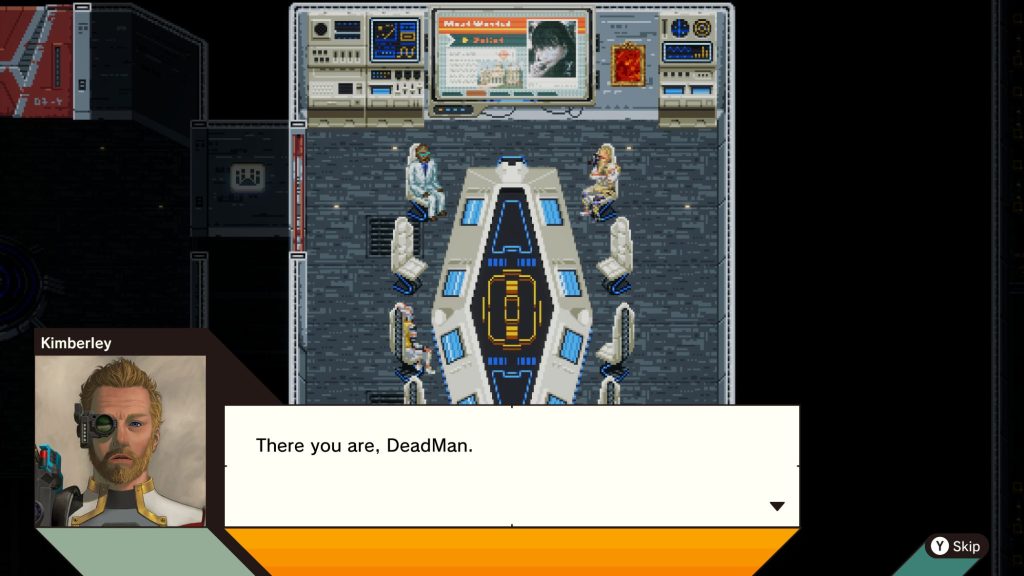
As I wandered the 16-bit, top-down perspective of The Last Night, I couldn’t help but be impressed by the sheer number of risks and opportunities Romeo is a Dead Man takes. Suda51 has never really played it safe and this newest game is no exception. No part of me will blame anyone who finds its old-school thrills and disparate parts too much to handle. But I’m the kind of player that gobbles up this kind of absurdity. I play a lot of games and few things are like this one.
Romeo is a Dead Man is classic Suda51–an irreverent fever dream that constantly threatens to topple any notion of what a game can or should be. By challenging expectations, the game certainly has the potential to be polarizing to a wide swath of players. Yet there is a method to the madness and sometimes the most insane approach can make for the most enjoyable journeys.


