


Riftbound: Vendetta has smartly adopted a refined approach to the TCG’s existing ruleset. There’s nothing too meta warping with the new Flow and Empower keywords, thank goodness, but they still feel like suitable additions to one’s existing decks without needing to start over from scratch. If you’re wanting to play Riftbound with your friend who’s new to the TCG, the Showdown precon is a fantastic way to get your friend up to speed while remaining fun.
Can you hear that sound? That sound of clashing titans? That sound of longstanding rivalries? That sound of deep-seated resentment? That, dear reader, is the sound of Riftbound’s newest set, Vendetta. Waxing poetic and creative literature aside, the fourth set of Riftbound is available now with some light mechanical additions without dramatically shifting the existing Riftbound meta. As an off-and-on Riftbound player, Vendetta retains the gameplay formula that has won me over: It’s approachable as hell, the cards are gorgeous, and the gameplay loop is fluid.
Looking from the outside in, Vendetta is the smallest Riftbound release thus far. The previous sets released with anywhere from 200 to nearly 300 cards, Vendetta brings 166 new cards to the standard rotation. You shouldn’t balk at the drop in card numbers, especially with a game as complex as Riftbound. You should consider Vendetta as equivalent to the recent iOS 27 changes – this is Riftbound’s refinement set. It’s a set where there’s just enough nuance added to the set without dramatically overhauling the meta. It’s a set where there’s just enough complexity for longtime players to flex a smidge of new cards into their existing decks. It’s a set where collectors can remain on their never-ending path of collecting chase cards without being too distracted by Riftbound’s beautifully designed cards.
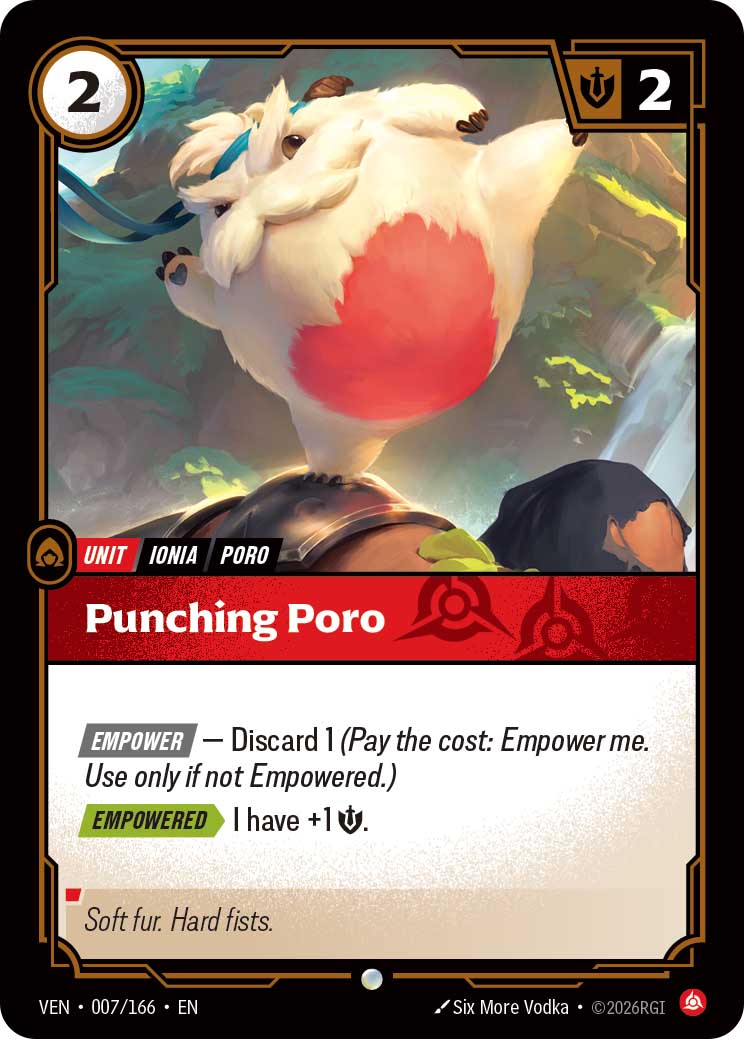
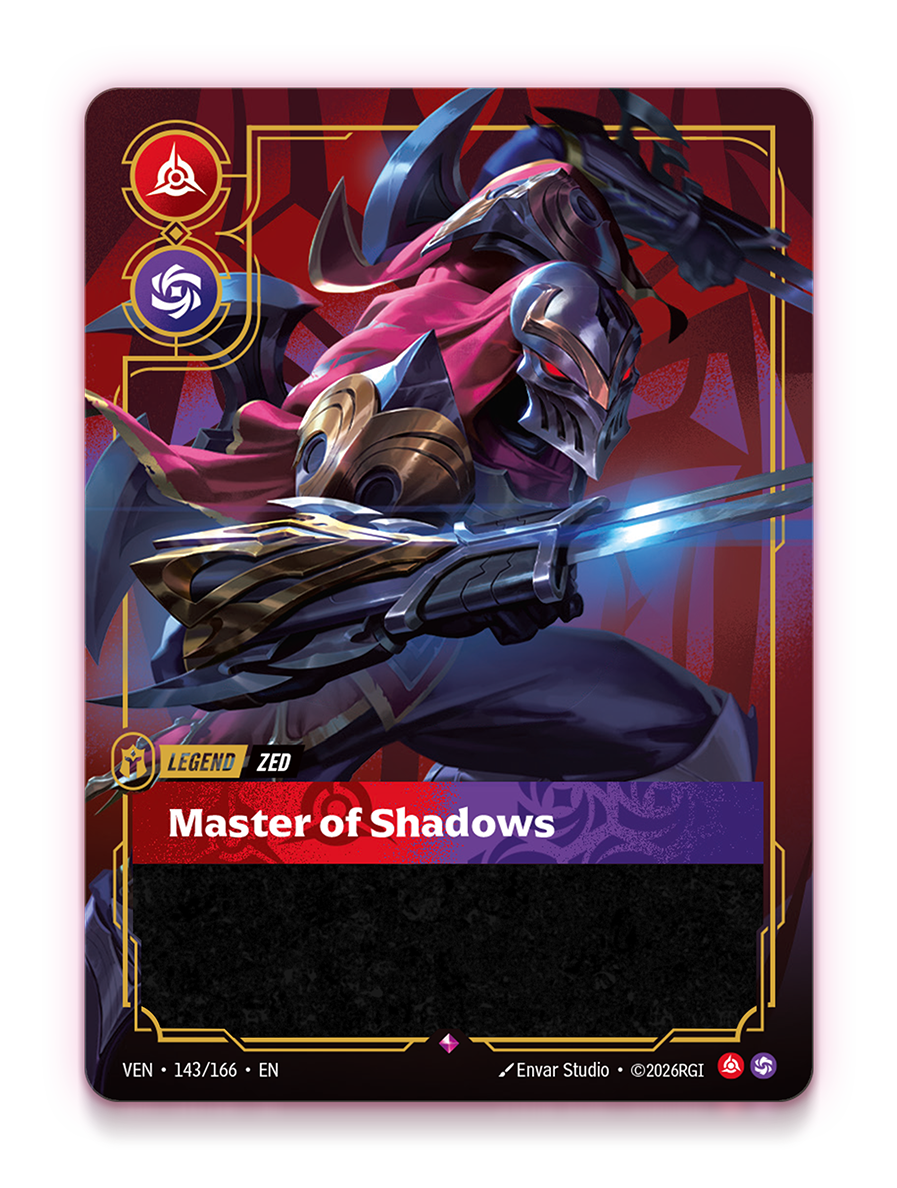
Let’s start with the new mechanics. Vendetta introduces Empower (see also: Empowered, Disempower), Flow, and Burn as the unique keywords for some of the new cards. Empower is an indefinite status effect that can be applied to a card. Most empowered cards have an exhaust (tap) ability, in which exhausting an empowered card yields an ability thus disempowering the card (i.e., removing the empowered keyword). Compared to Unleashed and the XP mechanic that was attached to most of the cards, think of Empowered states as active/inactive abilities. It’s a straightforward mechanic that yields interesting possibilities that can change the game’s pace. For instance, Zed – Master of Shadows can become empowered when you banish a card. Disempowering that Zed results in you discarding a card to the trash and then drawing a card.
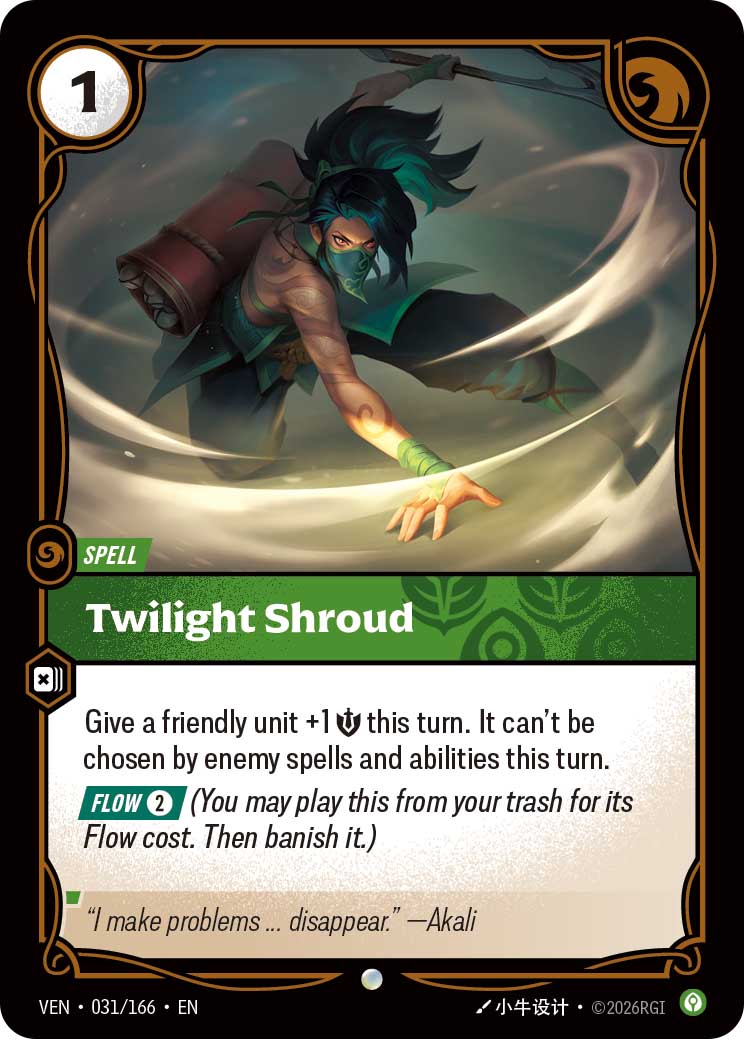
 Speaking of the trash, Flow is Riftbound’s play on MtG’s Flashback mechanic for spells. Spells with the Flow keywords have an alternative cost. If a card with Flow is in your trash, you can play the Flow cost and play it immediately from your graveyard…but you have to banish it after the spell’s effect expires. For decks that involve drawing and discarding cards, Flow enables some unique and trashy shenanigans. Just be mindful of the Flow costs – some Flow costs are more expensive than playing normally!
 Empower and Flow are fine additions to Riftbound’s library of mechanics. They have natural fit with existing playstyles while not requiring a player to go all in on building a deck around one specific mechanic. One of my biggest criticisms of Unleashed’s XP system was it being self-contained and having a siloing effect on the deckbuilding front. Either you build a deck that takes advantage of XP, or you miss out on XP’s fullest power potential. Empower and Flow add just enough variance without cards being pigeon-holed. I’m curious to see how players incorporate Mel (and other Empower champions) into some of their existing decks.
Beyond that, Vendetta feels pretty light on the changes. That’s a good thing, folks. Too much variance and changes too quickly can be rough.
Moving onto the Legends in this set, I’m happy to report that Vendetta has added 9 Legends (champion cards that act as the backbone for any deck) to the currently available pool of Legends. None of the new Legends were reprints, either. In terms of Legends/Champion diversity, Vendetta is continuing on the path of expanding deck possibilities without relying on the same set of champions. I know that there will come a time when Set Rotation occurs and makes the first five sets ineligible for competitive play, but we’re still many sets away from that reality.
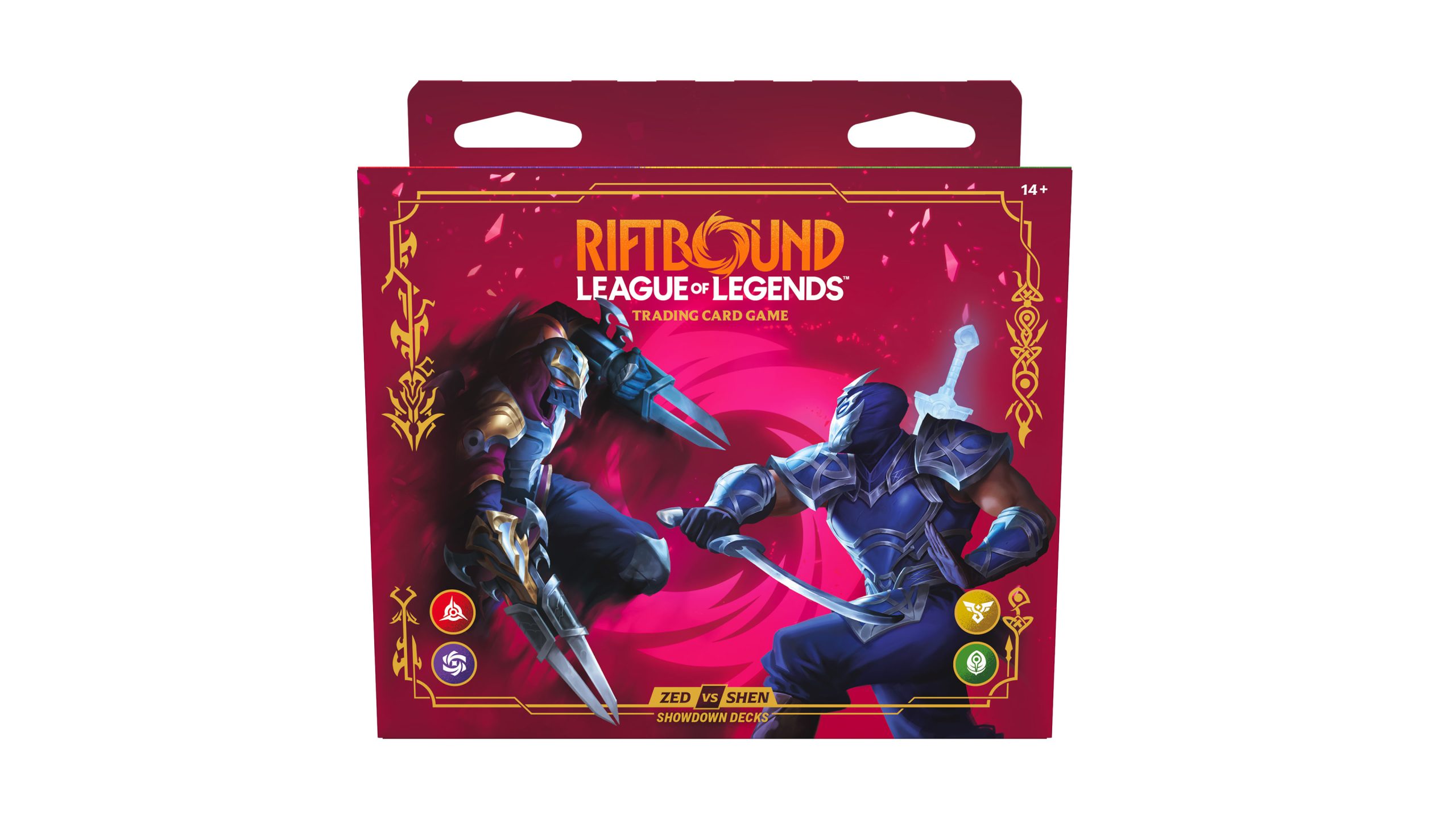 Riot Games sent us Vendetta’s Showdown Deck – a product that comes with two preconstructed decks in the box. This time around, the Showdown is between Zed vs. Shen, Riot’s Ionian ninjas with a deep vendetta (heh). The idea of the Showdown deck is Riftbound’s first attempt at bringing forth a Runeterran rivalry into the physical card game while also having enough content for two players to enjoy. It’s a welcome addition for current players who want to teach their best friend how to play Riftbound in a smaller setting. If you missed out on Proving Grounds last year, the Showdown deck is your next best option. It’s the better option because the two decks in Showdown are fully constructed compared to the Proving Grounds’ smaller and notably weaker decks.
How do they play, though? The Zed deck is built around the Zed – Master of Shadows legend introduced in Vendetta. This legend and the rest of the deck involve discarding cards and playing them from the discard pile. For a more seasoned Riftbound player, the Zed deck features a deep well of strategy by way of discarding cards from hand, playing and/or banishing cards from the discard pile, and then creating a small army of powerful shadow clones that can assault battlefields while Zed retreats to safety. Once the intricate cycle of burning cards from the Main Deck into the trash, discarding cards from hand into the trash, playing cards from the trash and then banishing them, and then attacking with shadow clones is figured out, the deck ends up playing quite smoothly. My main criticism regarding the Zed deck is of its flexibility – there aren’t that many cards outside of the precon that naturally fit into the Zed – Master of Shadows loop. You can swap a Fizz – Trickster in favor of Mel – Defiant Soul for the purposes of playing cards from the trash and recycling cards. You could also remove Morgana – Vindictive and replace her with Kennen – Storm of Shuriken just so you can get Zed online earlier. Beyond that, I struggle to see what else could feasibly work without impacting the deck’s flow.
Shen, on the other hand, plays far more defensively. It’s a straightforward deck that worked well for teaching a novice how to play. The Shen legend card grants one friendly unit the tank keyword, potentially disrupting Zed and his clones’ attacks. There are also a wealth of cards that involve drawing and playing cards from the trash (taking full advantage of the new Flow keyword). The main champions in this deck are (shocking) Shen – Scourge of Shadows and Shen – Kinkou, with Kennen – Keeper of Balance added in line with the trend of buffing friendly units with additional might or granting them the Tank keyword. Taken together, the Shen deck’s straightforward nature helps in teaching unfamiliar players with how to shore up defenses from multiple angles and attacking only when necessary. It’s the literal embodiment of Shen! This deck is one that shouldn’t be tweaked, even if you’re wanting to take this specific precon to a Nexus Night against what I assume will be an endless array of Zed players. I say this because the value of this deck lies in its educational ability rather than its strength. I critiqued the Zed deck for lacking flexibility, I know. For the Shen deck, this is a case of don’t fix what isn’t broken. Some of the other Shen cards in this precon might work well for decks, so consider that a nice bonus if you’re on the hunt for additional cards.
 The idea of the Showdown product is quite smart. First, it’s in line with Vendetta’s thematic and the notion of lore-driven rivalries. The decks complement each other exceptionally well and make for fun matches. Second, it offers a two-for-one combo of fully-built decks that not only function on their own but need very little tweaking to get online. They might not be leading the Riftbound meta, but they have several compelling options that can be used in other decks. Finally, and most importantly, they’re winning on the 1v1 aspect for newer players. Rather than halfhearted decks of weak cards from Proving Grounds, Showdown precons are built to properly emulate a 1v1 matchup without compromising on depth. Taking all of this together, the Showdown precon package should be the blueprint for future sets’ precons going forward.
Oh, and the Kayle vs. Morgana playmat? It’s stunning. The lack of outlined zones might make things harder to place, but it’s so worth it just so I can look at Morg battling it out with her sister, Kayle.
I find it hard to imagine that there are folks who are still on the fence about whether or not to play Riftbound. Then again, there are so many good TCGs (let alone console/PC) games out there. I’m sure there are folks who try the likes of Lorcana, One Piece TCG, or even Magic: The Gathering and don’t fully vibe with the gameplay loop. I remain a fan of Riftbound beyond its attachment to League of Legends because playing it is a relaxed experience for multiple audiences. Collecting the beautifully drawn cards is icing on the cake. I know there may come a time where Riftbound may dramatically overhaul its meta by way of banning multiple sets at once in competitive play, but that day is not today. I’m going to enjoy the laidback Riftbound experience while I can, folks.
Riftbound: Vendetta has smartly adopted a refined approach to the TCG’s existing ruleset. There’s nothing too meta warping with the new Flow and Empower keywords, thank goodness, but they still feel like suitable additions to one’s existing decks without needing to start over from scratch. If you’re wanting to play Riftbound with your friend who’s new to the TCG, the Showdown precon is a fantastic way to get your friend up to speed while remaining fun.