


Resonance: A Plague Tale Legacy enshrines Asobo Studio's incredible ability to deliver emotional narratives wrought with tension and adventure. Sophia's sprawling journey is a harrowing spectacle that truly masters what makes an adventure game memorable.
Resonance: A Plague Tale Legacy constantly builds on its own momentum.
The game is a kinetic one, yet that adjective isn’t merely applicable to the sense of action one would come to expect from an adventure game. That sense of movement drives the player towards emotional resonance. Fear, relief, shock, intrigue, hopelessness, triumph. Setpieces unfold to reveal an imposing truth. A character emotes with anguish at devastating loss. Blood is shed with furious button taps until breathless.
This is a journey. This is an adventure. And it is quite unforgettable.
When A Plague Tale: Innocence released in 2019, I’m not sure of how reception of the game was gearing up. One of the last E3s I went to had me attending a number of appointments for games being released by publisher Focus Entertainment–back then known as Focus Home Interactive. Over the last few years I had come to appreciate the cluster of games it supported, usually from European developers with a modest budget and admirable aspirations. A Plague Tale: Innocence was yet another closed-door viewing I had of a game early in progress but intriguing nonetheless.
A brother and sister were innocents trapped in the ungodly hell of the Black Plague during 14th century France. It echoed the zeitgeist established by The Last of Us years prior, where companions were put through an emotional crucible trying to survive. At the time, A Plague Tale: Innocence felt relatively unassuming. As Amicia, players guided her and her brother Hugo around the dangers of lurking soldiers and thousands of infested rats–both foes that could easily kill the defenseless siblings. I watched a representative from developer Asobo Studio talk about how light was a mechanic in the game, distracting foes and fending off rat swarms. It was all very simple but intriguing, one to keep on the radar.
In 2019, A Plague Tale: Innocence contended with the likes of Control, Disco Elysium, Death Stranding, Sekiro: Shadows Die Twice, and Gris, ultimately becoming one of my favorite games I played that year. Yes, it was unassuming at first. A tale that weaved tragedy throughout its digital fabric. One that emphasized stealth and minimal combat over action.
But it constantly gained momentum.
Asobo Studio began to escalate the stakes. New characters filtered into the story, allowing Amicia and Hugo to develop camaraderie with others suffering under the weight of the Plauge. Puzzles and mechanical challenges nudged themselves towards diversity and complexity. It was also quite stunning to look at, despite the world growing continuously bleak and decayed. A Plague Tale: Innocence also housed one of the most impactful soundtracks I’d ever heard in a game. Sweeping, layered, and emotional, Olivier Derivière’s score made the game that much more powerful to take in.
And despite my endearing love for A Plague Tale: Innocence, I allowed its sequel, A Plague Tale: Requiem, to pass me by. Which is why I was initially hesitant to blindly dive into Resonance: A Plague Tale Legacy.
Resonance focuses its lens on Sophia, who appeared through Requiem. Would the game impact me less were I not to experience how its protagonist was established? I only spent a few hours in Requiem before life or something got in the way, always yearning to go back–and I will–but I think Resonance stands on its own barring what may likely be a handful of callbacks and context.
I’m sure many of us wonder if Naughty Dog used a cheat code back in 2013. It wasn’t as if our medium had reached a point of stagnation or immaturity. Developers had been striving for complexity and deeper meaning for years. Games were blossoming into more experimental territory, playing around with how to tell stories and execute mechanics. Perhaps The Last of Us was the first to be seen as a “prestige” product, much like the television shows created for HBO and Showtime back in the day. Suddenly, everyone was talking about it. You had to see it. You had to play it. It would grip you and not let go.
Like many games since, Resonance achieves a synergy between its design pillars. Story, visuals, gameplay. They simmer and bubble in the delicate broth that is a video game and come out unspoiled, the player able to taste each element and it appreciate how one uplifts the other.
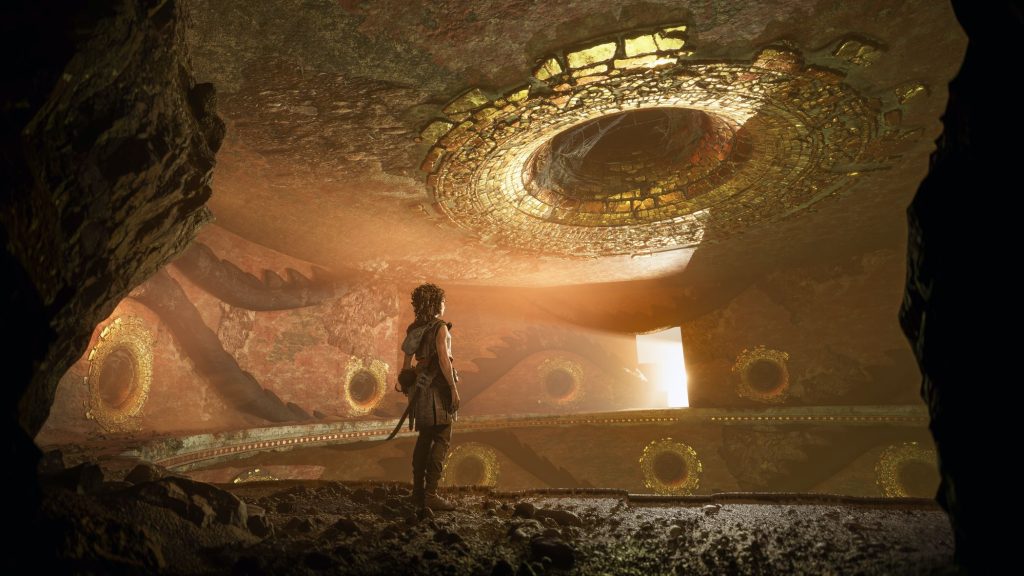
Third-person action games are infinitely easy to appreciate. While they may lack the immersion and agency a first-person perspective invites, developers can use the third-person perspective to direct the player–the audience–around worlds. A crack the protagonist squeezes through doesn’t merely need to be a mask for loading screens. That brief claustrophobia and tight angle can be used as a metaphorical inhalation before the player’s view is widened, camera panning out to a breathtaking vista that hints at a future narrative or gameplay opportunity.
That scale is one of the things I adore most about games like Resonance. Regardless of the genre, there are always fantastical ways for the player to exist in the world, ways to bind them to the action and the drama. We can be tucked right behind the shoulder of Leon Kennedy firing at Las Plagas and then whip around to him running frantically from a towering mechanical man. We can watch Joel and Ellie pet giraffes in a solitary moment of peace. We can track Kratos in one shot as he and Atreus journey to the top of the mountain.
Central to that action should also be characters we care about, ones that we grow emotionally invested in as they face seemingly insurmountable odds. Constantly throughout Resonance, Asobo Studio justifies Sophia’s value, engendering us to her desperate quest for answers.
Resonance opens on a painfully young Sophia being experimented on by a group of nuns who inject a noxious substance directly into her veins. For an unknown amount of time these experiments have been happening to her. These injections cause Sophia to have visions of a far-off island, one where ancient warriors fought and a wrathful Minotaur dwells. As these visions are inflicted on her, Sophia draws in a journal in a trance-like state.
Though for the player she is soon rescued by her father Alec and taken back home, Sophia’s visions persist. Living in a makeshift colony of smugglers, thieves, and pirates who operate as a tight-knit civilization, Alec determines that he will seek out this island in hopes of finding answers to Sophia’s visions. His right-hand man Faro believes the island also houses ancient treasures that could change the fortunes of their colony.
Tragedy and loss are very much catalysts for the events that transpire in Resonance and they ground Sophia’s character, making every moment of victory or revelation that much more meaningful. She persists and we as players aid her in that struggle to get back up and continue moving.
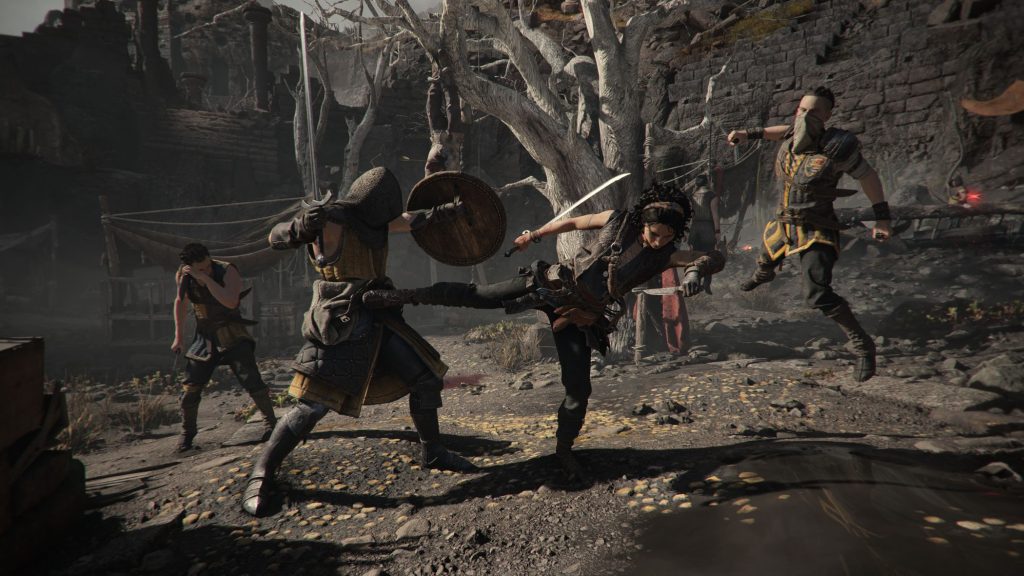
As expected, the opening chapters of the game establish what is at stake for Sophia and her home. The player is tutorialized through combat basics in a sequence of Sophia training to fight alongside her father for when she eventually is allowed to join him on those fateful trips to the island, one where she wields a wooden sword and rubs elbows with the locals who adore her. And despite knowing that pain is coming for Sophia due to the nature of this series, it still felt earned and pained when it happened.
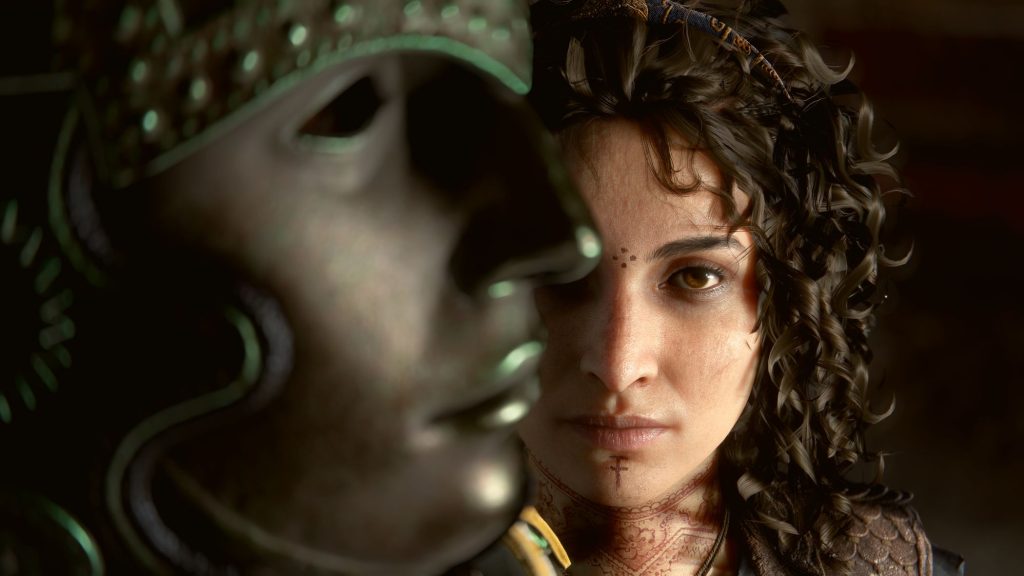
Anna Demetriou, Sophia’s voice actress, carries the weight of Resonance. Demetriou’s range is pushed in the hopeless rage Sophia undertakes as her body and mind are wrung out. But she isn’t an actress forced to scream and shout in agony over 15 hours of playtime. There is nuance to the performance as you feel Sophia’s blood boiling as the stakes become more desperate and the forces trying to stop her grow more overwhelming.
Across Resonance, Asobo Studio’s expert direction can be seen and heard. Much of the journey has Sophia’s best friend Leni tagging along, the two bantering and supporting each other. But the performance doesn’t just stand out because of the voice performances. Resonance is a beautiful game with incredible detail and much of that extends to the subtle performances of the motion capture. Often when dealing with games in third-person, unless the camera turns to face the character during a cutscene, we are seeing their backside as dialog plays out. Frequently I would rotate the camera around Sophia and watch as her character model animated with genuine emotion, her hands covering her eyes in horror or exhaustion, a look of stress or sadness written across her brow and mouth that would linger for several seconds.
These nuanced touches transform what would merely be a performance of reading lines into passionate acting. Those of us who have watched enough movies can usually tell when an actor is invested not only in a role but their craft. Voice actors frequently sell roles where the characters don’t actually perform. I think of the many visual novels I’ve played or RPGs where dialog happens over text portraits and speech bubbles. When the player can watch the character model move and act out the script, it feels more natural and genuine.
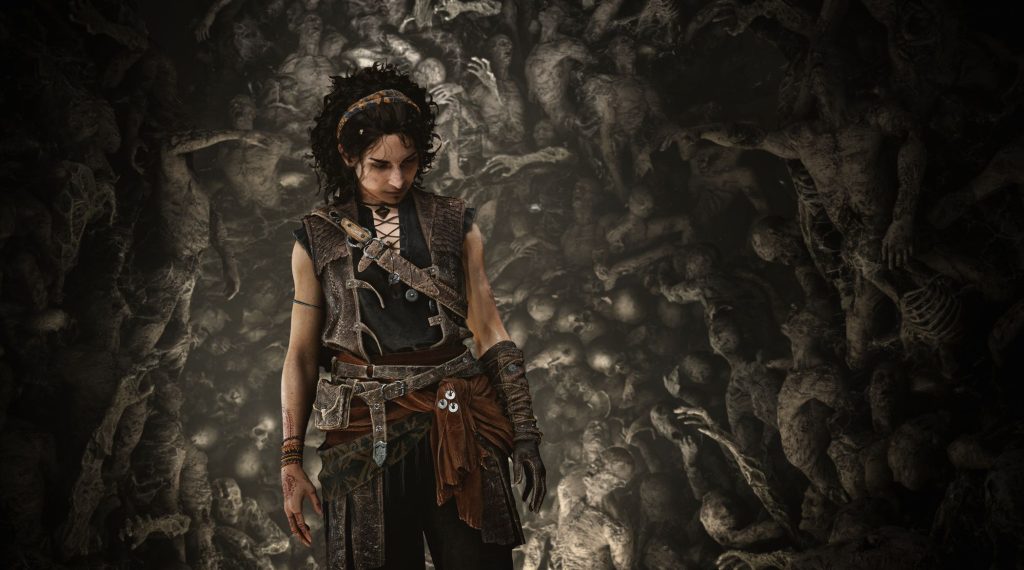
Sophia is an outstanding character and despite not having Requiem for context, I found myself naturally drawn to her. Resonance is very much a game driven by the incredible and strange things happening in its world. We are linked to Sophia’s quest for answers because much like the player, we are discovering much of this alongside her.
It is difficult not to naturally place Resonance next to obvious inspirations. Tomb Raider and Uncharted being the most obvious ones. And I think there is a path Asobo Studio could have taken where the game felt much like imitation. Outside the whole nature of making a game, sending characters off on an adventure doesn’t strike me as all too complicated. It’s literally the crux of most genres. Hell, I would argue that Call of Duty games technically send players on adventures. Maybe those gun-toting operators aren’t saving the world from a planet-killing deity akin to Final Fantasy but they are trying to save the country and must fight to do so.
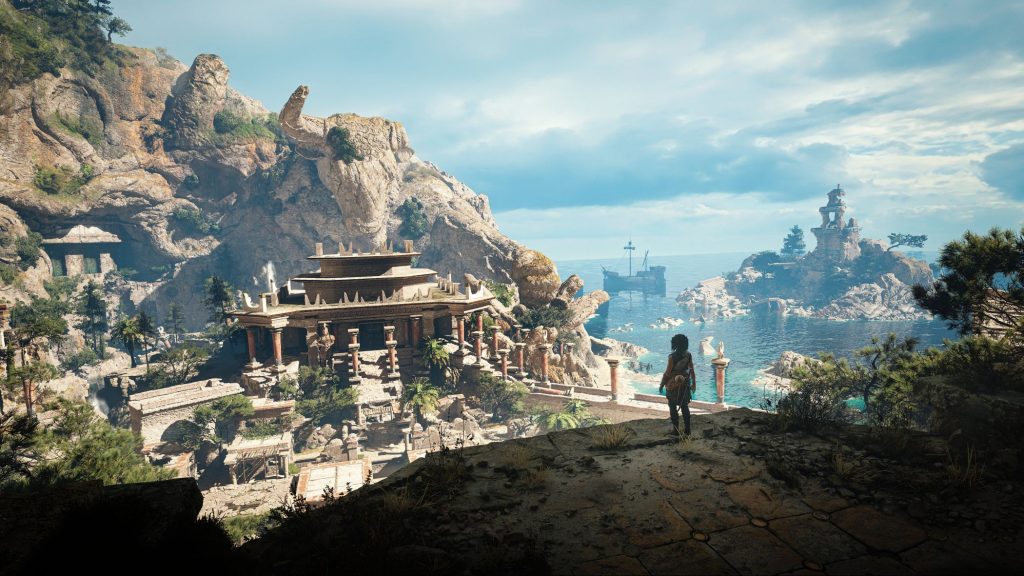
Despite most of Resonance taking place on the island, there’s more to it than just being a beautiful yet mysterious locale in the Mediterranean. Crystal blue seas give way to sandy beaches. Grecian columns crumble near chipped frescoes. Monolithic bronze statues are now stained green with broken limbs blocking critical paths. Sophia and Leni muse on what the images they see could mean and what happened to the people there but quickly enough it’s apparent that this section of the world was a universe unto itself, almost magically so.
Awe-inspiring moments are intoxicating in games like Resonance. The ones where developers set the player up to blow them away with spectacle. The amount of times I just soaked up an upcoming puzzle in Uncharted games before actually trying to rotate whatever gargantuan ancient mechanism was impeding progress are impossible to count. Who cares if it doesn’t make much sense in our reality? The player should be taken aback, simultaneously fearful and dazzled that man would be capable of building such contraptions without the world at large knowing of them.
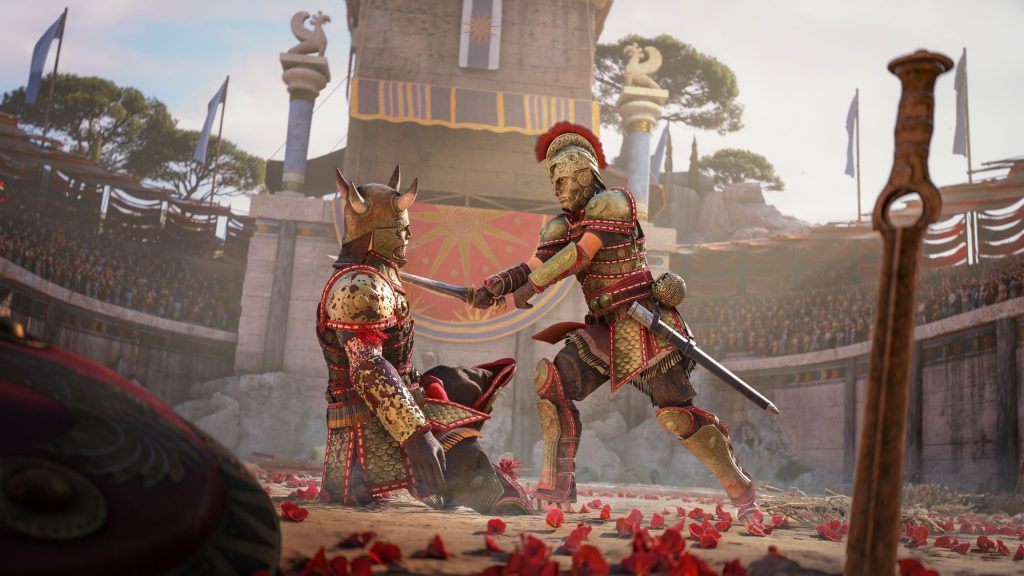
Frequently Asobo Studio satiates the player’s need for spectacle. Not only are they technical marvels from a design and functionality perspective, the way these moments tie into the lore of the island and the narrative show the developer’s confidence in its universe. I would wonder “what’s next?” while simultaneously being strung along a minutes-long setpiece that would belong in the biggest budget games.
Emphasizing how exponentially impressive Resonance becomes over its runtime is hard to do without explicitly spoiling key moments that are best left to self-discovery. Part of the game’s magic is that it never feels stagnant, even when bombarding you with dense moments. Anymore I think it’s quite easy to become numb to spectacle and action. Movies can be dumb fun but the viewer can eventually grow numb if they are bombarded with too much action and not enough substance. Resonance never had an unearned moment, nor did it feel laughable in its almost absurd scale.
As Sophia seeks out her answers, it was also fascinating to watch the tone of Resonance shift, vacillating between numerous moods so the player, much like its protagonist, couldn’t be truly comfortable.
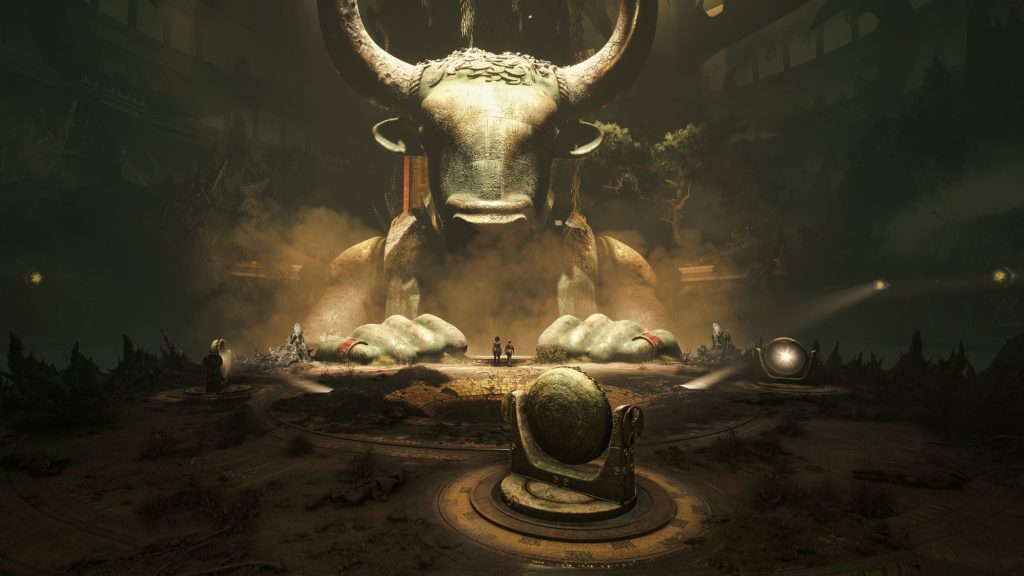
Portions of Resonance are dedicated towards solving puzzles that are never truly difficult but always involved enough that thought is required. Sophia consults her journal that was added to over time by Alec and Faro, making note of discoveries made on the island. Sophia can pull it up at any time and players will watch her hand hover over the illustrations, tapping on them for context–it’s a thought detail that never got old and keeps the player fully immersed.
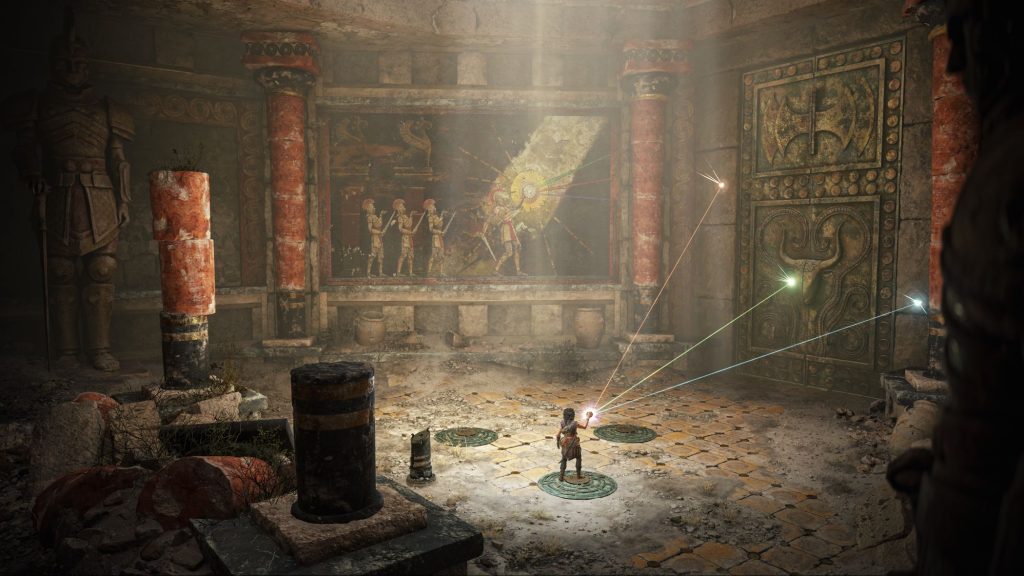
Many of these puzzles are about using light as a source of direction in deciphering symbols. Mechanisms need to be aligned and clues need to be pieced together. Puzzles here are fun and never meant to be lingered on for too long. But their contribution to Resonance‘s greater mystery darkly loomed over the proceedings. I don’t think that Asobo Studio masks its intentions with themes and where the story is going. The game starts out on an ominous note as Sophia’s visions expressly feel sinister. Revelations on the island are framed in a way to make them imposing if not outright terrifying. Surprisingly, Resonance is one of the first times in a game where working through and solving a puzzle actually felt scary. Though the notion of “treasure” is teased, Sophia’s purpose and drive is an answer. And that knowledge feels more and more like a secret that should remain buried as the game progresses.
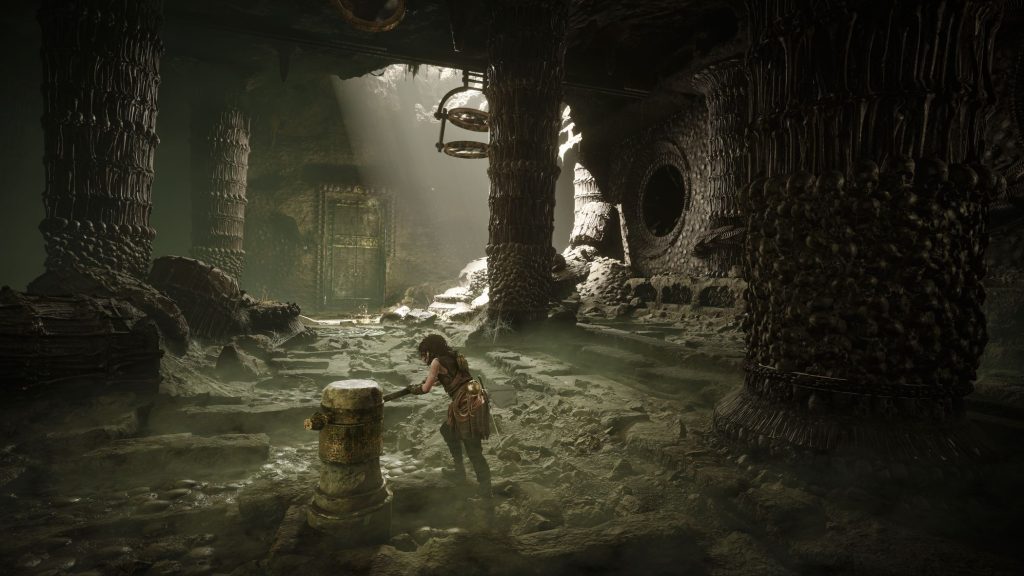
Sophia’s progress–her and the player’s intervention–are the catalyst for the events of Resonance. Had these stones been left unturned, what would be the fates of its characters? Yet we trudge on, delving deeper into the darkness. Yes, Sophia and the player need to push past those 50-foot tall doors or cross that body of water in a boat pulled by a massive chain… but what lies beyond? There’s a kind of discomfort that comes with resolution and revelation here.
Regardless of the stakes and the outcome, Resonance truly plays like one of the best adventure games I’ve experienced over the years. It certainly pulls inspiration from a wide swath of other titles but what game hasn’t at this point? Despite familiarity, it is housed in a wholly unique package that Asobo Studio has crafted.
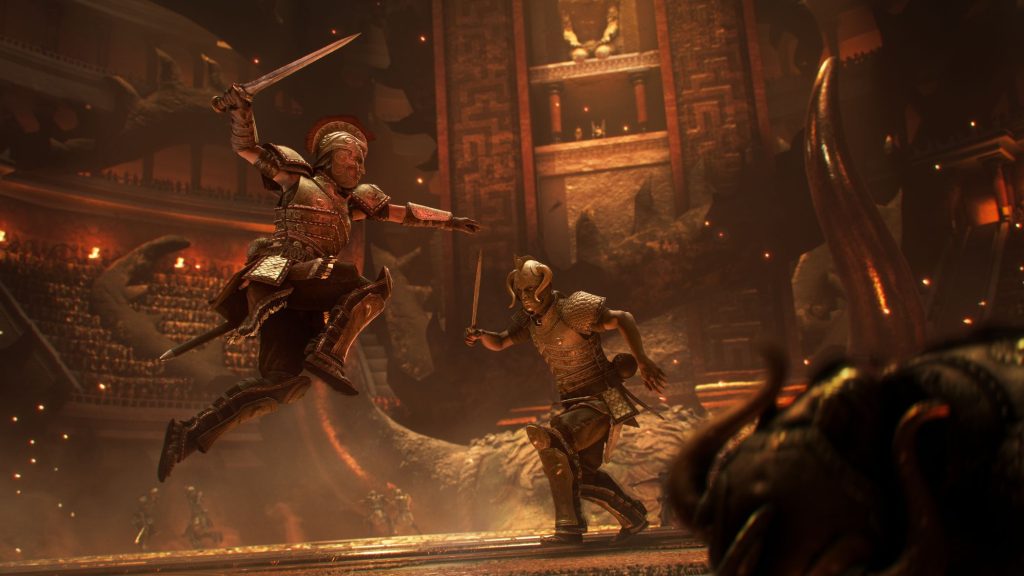
While I think most criticism towards Resonance will go towards its actual combat and potentially repetitive moments, even those are handled in a way that never creates impassable friction for the player.
Unlike Innocence and Requiem, Resonance is all about action. There is no sense of stealth, distraction, or avoidance here. The player can very rarely avoid combat but Sophia will mostly take her foes head-on, brutally so.
In an attempt to challenge themselves, Asobo Studio used Resonance‘s combat as an opportunity to create bloody fights that are a dance of dodging and parrying. Parrying can be a divisive mechanic in numerous action games and I can relate to those who may raise their eyebrow when seeing the word. Resonance is in no way akin to something like Sekiro where perfect timing is an essential tool to survival.
Outside of a few bosses and late-game twists, the humanoid opponents attempting to kill Sophia have flurries of attacks that are easily identifiable after a handful of encounters. Blocking can be done to prevent damage. Red attacks should be avoided unless the right skill is equipped and yellow attacks should be blocked at just the right time to fully stun an enemy. Hold down the attack button to unleash a powerful critical strike. Kick to throw a shielded or guarded enemy off their defense. Throw a grapple hook to pull an enemy forward and knock them off balance.
Diversity is done by throwing in brutes who primarily strike with unblockable attacks or men with spears that stretch far. Archers whistle before they send an arrow Sophia’s way but can be easily dispatched. Thrown items can damage enemies and players can knock bodies into each other to build up stun meters.
Combat is mostly simplistic and only a few encounters will flood the player with opposition that can feel imposing or like a desperate fight for survival. Resonance has a number of difficulty modes which dictate how much health Sophia has and how aggressive enemies can be. Even on Normal difficulty, I felt challenged. Sophia could take three hits before death and killing an enemy restores one health point. Still, fights never were a slog of dancing around soldiers waiting for them to attack. I fought aggressively and still died frequently. But the game’s brutal approach to combat gave it a visceral sense of speed.
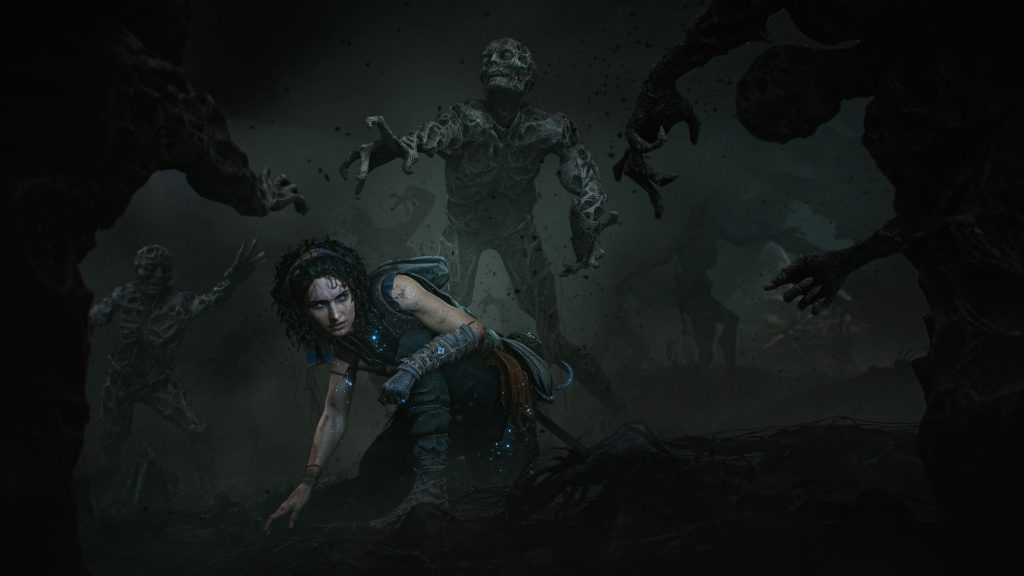
The player earns and can find “Resonance Points” which are used to purchase upgrades to Sophia’s skills. Because they can be freely reset at any time and there are only five unique unlocks, it’s easy to change things up if a strategy is not working. Players can enable Sophia to block red attacks, grant her a double dodge or double kick, hold on to a thrown item, or grab a target that is attacking and throw them. Each skill has two masteries that can be unlocked to provide additional utility and by game’s end, thorough players can upgrade Sophia into a killing machine.
About halfway through the game, Resonance introduces an entirely new twist to gameplay, one that is expanded upon as the narrative progresses. Much of it is centered around actual stealth rather than combat but it surprisingly doesn’t impact the pacing negatively. While this shift in mechanics may feel initially jarring, it was fascinating to see the groundwork for it being laid very early into Sophia’s journey on the island. More so, the way tension digs its fingers into the player during these fraught moments of life or death make sequences of escape and levity all the more savory.
I can imagine that in tandem with numerous combat segments, chase sequences, sneaking sections, and puzzles it can sound rife with variety. And honestly, that’s true. But I know there is a subset of players who may find Resonance to be somewhat repetitive no matter how diversely paced its gameplay is. Yet I think Asobo Studio struck an incredible balance here. No fight lasts more than a few minutes, even bosses. No chase sequence is stretched out to be exhausting, stripping it of all sense of tension, drama, and action. And no puzzle is so overly complex to confound players.
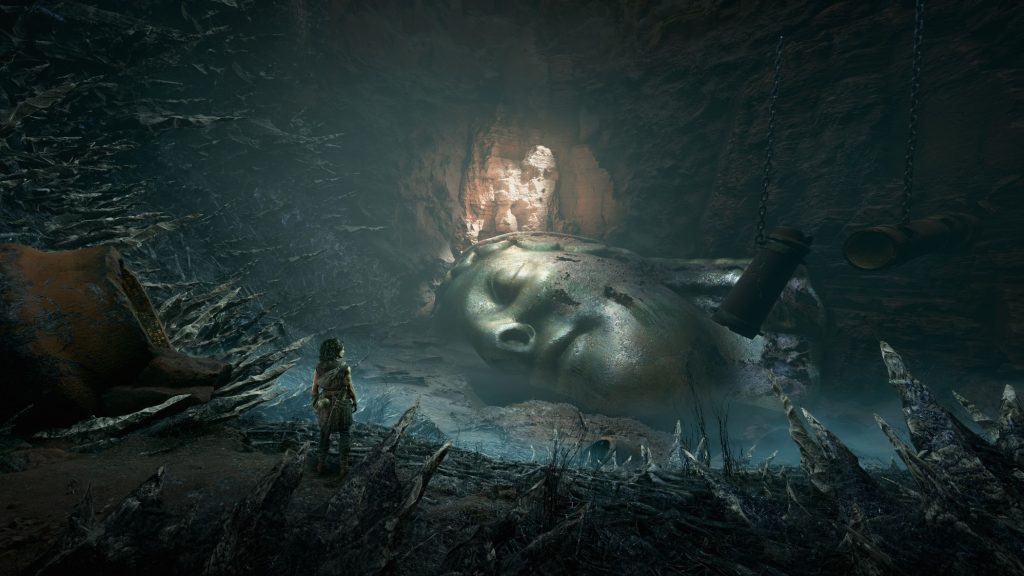
Honestly, the most galling thing about Resonance was that some collectibles, upgrades, and Resonance Points can be missed. Players can seek out optional treasures that add flavor to the island’s past and present. But Sophia can also find charms, bracelets, and other items that provide tangible gameplay benefits to her during combat. The more of each type found, the better chance the effect has of activating. Sophia could be saved from a fatal blow, have her parry window increased, have enemies more frequently drop thrown items, and more. On one hand, it encourages and rewards exploration. On the other hand, players not keen on seeking out everything miss out on the benefits. Interestingly, Resonance doesn’t really hold the player’s hand when it comes to navigation.
Asobo Studios doesn’t incorporate many “yellow paint” signposts to guide players, especially for optional content. I’ve never been one to lament the immersion-breaking potential of this method as I think it helps players less literate in games to have a sense of direction, especially in larger detailed worlds. Because Resonance‘s island is crafted with such expertise, it all feels quite realistic and indicators both subtle and natural help guide the player’s eyes and Sophia’s momentum.
From beginning to end, Resonance is a complete experience, a deeply emotional and intricate adventure that effortlessly navigates players through captivating moments. From the game’s onset, Asobo Studios builds a narrative brick by brick that continues to pay off. Questions bubble to the surface and simmer until the time is just right for a reveal that often blends in more intrigue. As Sophia trudges through the dilapidated remains of a once thriving civilization, players are careened into the past to view the world in vivid color, a calm before a storm.
Just when you think the story’s threads are burrowing towards a climactic moment, Resonance pulls the rug out and adds more complexity and depth. And throughout the intense, meaningful journey, Olivier Derivière’s score strikes another fatal blow. Infused with Mediterranean atmosphere, Derivière incorporated the Greek Cypriot dialect with a full choir; distinct, uncommon instruments; and even used an ancient Celtic war instrument that was recorded in a French chapel.
The immeasurably powerful and transformational score has a pronounced impact on Resonance as a whole. It uplifts Sophia’s meager victories. It cuts with foreboding, thrumming with power as percussion and choir become layered. The player’s actions during combat and exploration cause the music to swell or humble itself to cause. The player and Sofia are often at the whims of this ancient island and the music serves to smother and propel in whatever whims it dictates.
Resonance: A Plague Tale Legacy enshrines Asobo Studio’s deep passion and expertise at delivering emotional narratives that are wrought with tension and adventure. As the pieces fall together and players have made the laborious journey along with her, Sophia does not come out unscathed. However, she emerges as one of the rawest, most emotive protagonists in memory. This harrowing spectacle full of constant surprises, daunting vistas, and moving passion is truly a thing of beauty, an unforgettable adventure.