
This was fun. Yeah, that’s right. Nothing clever, just fun. Let’s get right into things.
Regions of Ruin: Runegate, from developer Gameclaw Studio, is a game with many personalities. On the surface, it is an action game, where someone can slice and dice their way through goblins and other evil creatures. Below the surface hides a simulator, an open-world RPG, and a non-linear adventure that gives nearly full player agency. The only issue? It’s a slow start, and the world feels big, but once you get going and uncover all the above gameplay elements, that dissipates quickly.
Starting with the story, the game begins with an easy narrative that will provide enough motivation to get the adventure going. The main character is a dwarf, and his kin have been evicted from their home or killed by goblins. His dwindling group’s last-ditch effort to survive starts with the discovery and activation of an ancient doorway called a Runegate. The gate takes the group far away from further goblin danger and into the ruins of a former dwarf sanctuary. The sanctuary is a place the group must rebuild and revive, along with their group and societal numbers. In addition to survival and revival, the main character has to go out and gather goods, take down goblins, and convince other lost souls to join their settlement to ensure permanent residence for centuries to come.
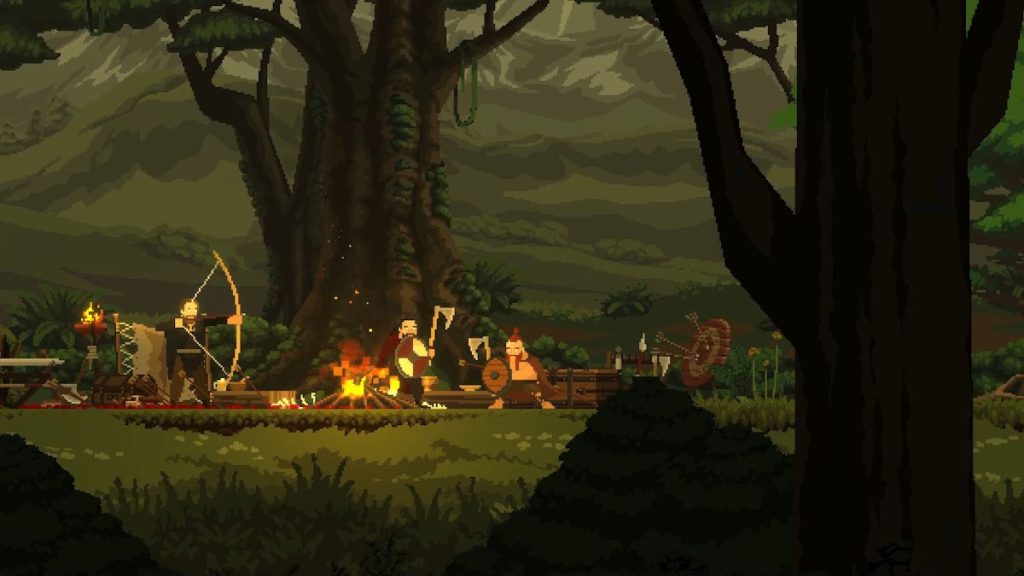
The story is bleak at first, but as the gameplay gets going and the settlement begins to build, there is something nice about seeing a society begin to thrive again. The story does a great job connecting with the gameplay, thus connecting with the gamer. While the narrative starts in the second act crisis, it does a great job of giving more context to the first act, and gives enough push to want to better everyone’s life.
On the gameplay side of the tracks, there are multiple layers to this beauty. The first layer is the 2D action aspect. There is a lot of sword/axe/whatnot swinging, defensive parrying, and a bevy of interesting enemies to take out when the time calls for it. For example, players might happen upon a camp of goblins who are holding a settler captive, and the button-mashing fest will begin. It’s literally hack and slash, which is just fine. Another set of enemies might be wolves who have killed settlers in the wild, and the player might have to take down a pack. Again, hack and slash. Whatever the enemy, it’s just a simple action game on the surface that is just a button-mashing fest.
The second layer is the role-playing game aspect, which doesn’t go incredibly deep, but it offers enough to force some cognitive strategy when it comes to fighting scenarios and/or gathering goods. As the player’s character conquers places and completes quests, they will happen upon goods, such as swords, shields, armor, and magical rings. There are complicated stats attached to most items and, in good Legend of Zelda-like fashion, items will eventually wear down, which makes them gradually ineffective. Juggling items and constantly replacing or repairing items based on power stats and such adds some flavor and strategy to the action process. There is also a skills tree that is gigantic, which also adds RPG flavor to the entire process. Not a bad piece to this overall puzzle.
The third layer of the game is a simulator of sorts. As the player’s dwarf moves from place to place, they will eventually start gathering resources. These resources could be as simple as money, stones, wood, and/or other items that help build out the new ruined city they live in. Worrying about this aspect adds another welcome layer of complication to the overall game. You will want to find these items and want to see the city build itself out into a functioning community.
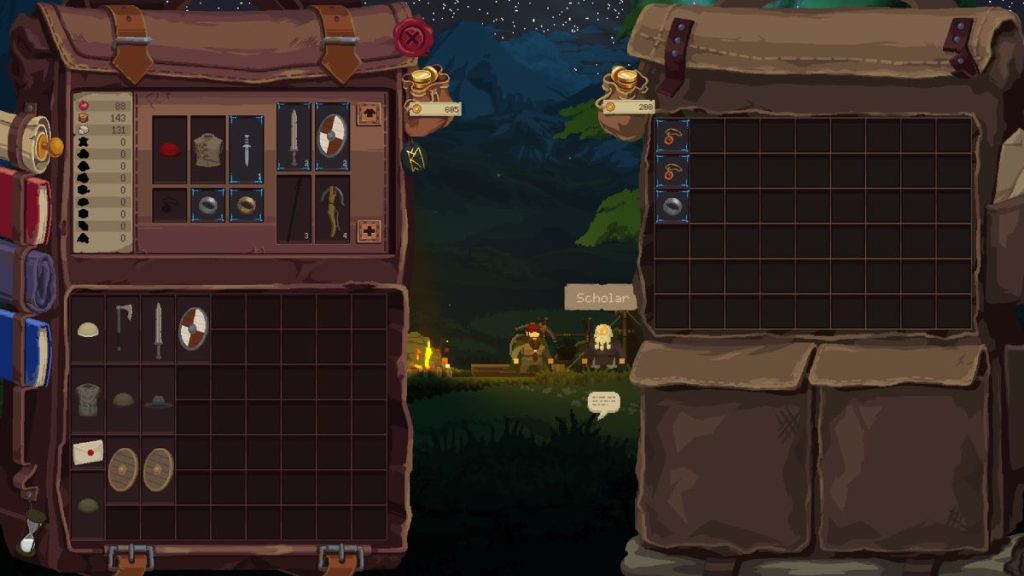
To add even more intrigue to this layer, the main character can recruit additional settlers who are homeless. Occasionally, the player will run into people with certain attributes that can help out the player’s settlement, such as a trader. Invites can be extended, and whoever wants to join the new settlement adds to building the settlement into a more functioning society.
Also, the game will give players the option to offer an invite, something that doesn’t have to happen if the player chooses not to do so. While not so much a simulator, it is a nice piece of the RPG layer that relates directly to the simulator. It’s a cool little element that gives even more agency to the player.
The last layer to this game is its non-linear open-world questing. The world in Regions of Ruin: Runegate is pretty sizable, and the player can choose where they want to go and explore. Again, more player agency. The only limitation to this gameplay element is based on supplies. While not quite the Oregon Trail, resources are factored in with how explorative the player can be in the open-world environment. If players run out of resources, then they run the risk of not surviving. Maintaining a count of resources and understanding what is needed to go, helped by the game’s map, which will tell players how much they need to go to their desired destination, is a factor that delightfully complicates the journey in the game. Ultimately, there is a balance between all the above layers, and this layer does a great job of being in the center of that balance.
Now, other aspects of the gameplay that are worth noting are the branching dialogue element, which I alluded to previously. Anytime a player can make dialogue choices and do what they want, well, to an extent, it’s a good time. There is also an element of having a companion with you to help complete quests. The main character can add an additional character to their roaming group, which helps divide up the fighting and works well as a distraction when enemies are charging (yeah, it’s not right, but it works).
The only hiccup to all the above giddy up is how slowly the game begins. There is a lot thrown at the player at the beginning, which can be incredibly overwhelming, and figuring out where to start and concentrate one’s effort can be a bit much. Now, once all the layers above begin to bloom, and the game starts showing off each layer and how important it is, the game becomes big, deep, and entertaining as hell. Still, there is a learning curve to the process, and trying to understand all the aspects of the gameplay can be a bit of a heavy tow at the beginning. But it’s all worth it.
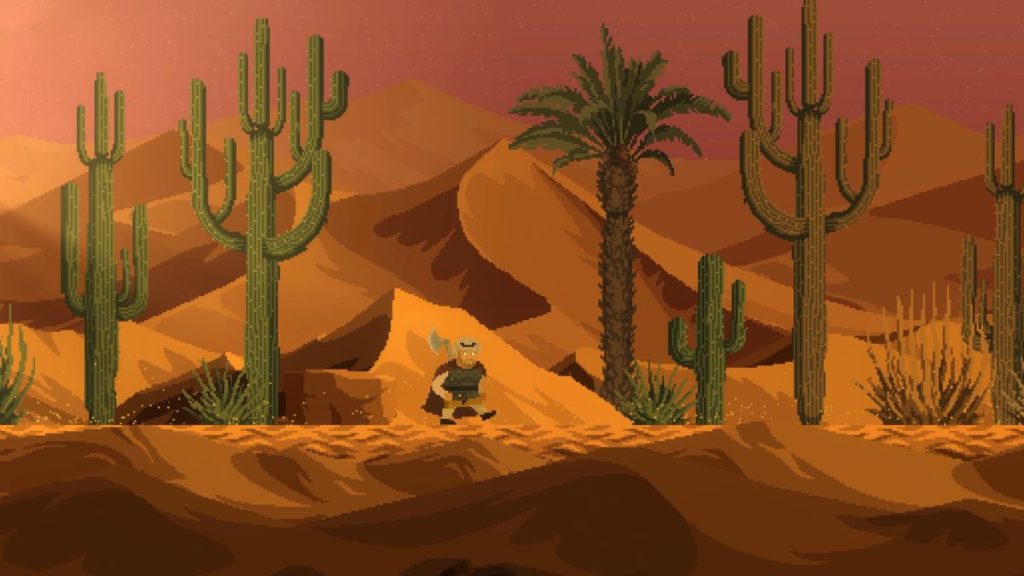
Overall, the gameplay in Regions of Ruin: Runegate is multi-faceted, entertaining, and it offers so many good avenues to go down. It’s one of those games that is surprisingly deep and just never has a boring moment to it. It’s well-made and executed.
On that sweet note, let’s wrap up this review.
Conclusion
Regions of Ruin: Runegate, from developer Gameclaw Studio, is an absolute treat to play. The story is great, the action is simple, and the open-world questing and RPG elements make for a worthwhile gaming time.