


Planet of Lana II: Children of the Leaf delivers emotional gravitas through its gorgeous world, expressive characters, and moving soundtrack. Rich gameplay and clever puzzles cement its place along the best platformers of its kind.
Planet of Lana II: Children of the Leaf is a profoundly emotive game. It speaks to the player’s sense of humanity through everything but a discernible language.
As people, we communicate through so many various means. Our hands wave excitedly when we tell a story passionately. Our eyebrows rise in surprise or awe. Our shoulders and posture droop when we are despondent. When we lie, sweat may bead across our foreheads or our voices will crack and stammer.
Outside of human physiology, we use other means to decipher and translate meaning and feeling to ourselves and each other. A song with poignant lyrics or a melodic tone may evoke emotion in us or remind us of another person. Art can dilate our pupils and teleport us back to base emotions we had as children.
Words help, they always have. A handful of times I’ve read a sincere admission of feelings from another person and felt deeply touched. When wandering around an open world with subtitles on, I’ve heard colorful bits of world-building that would have been missed simply because I didn’t hear them.
But everything is always up for interpretation.
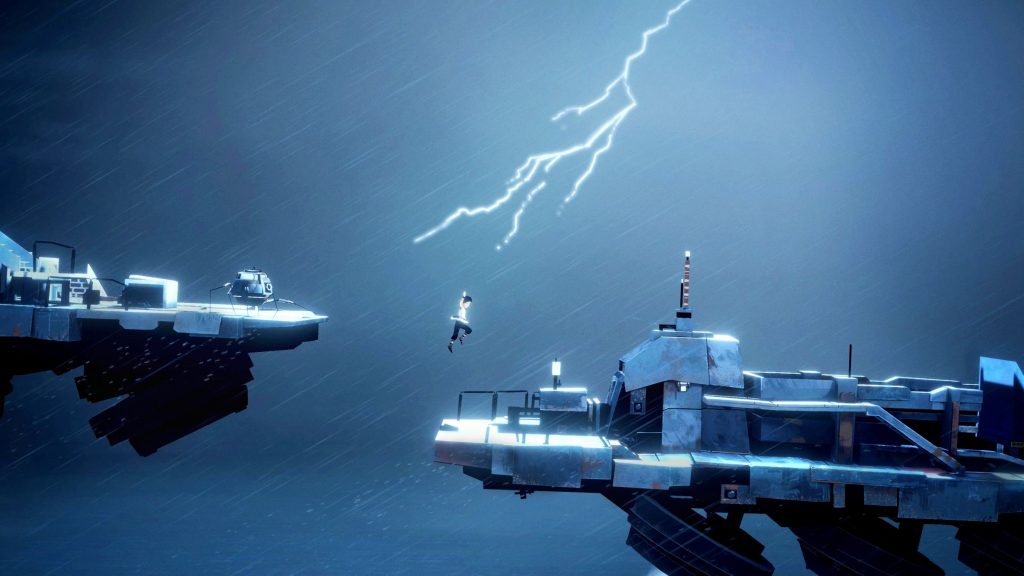
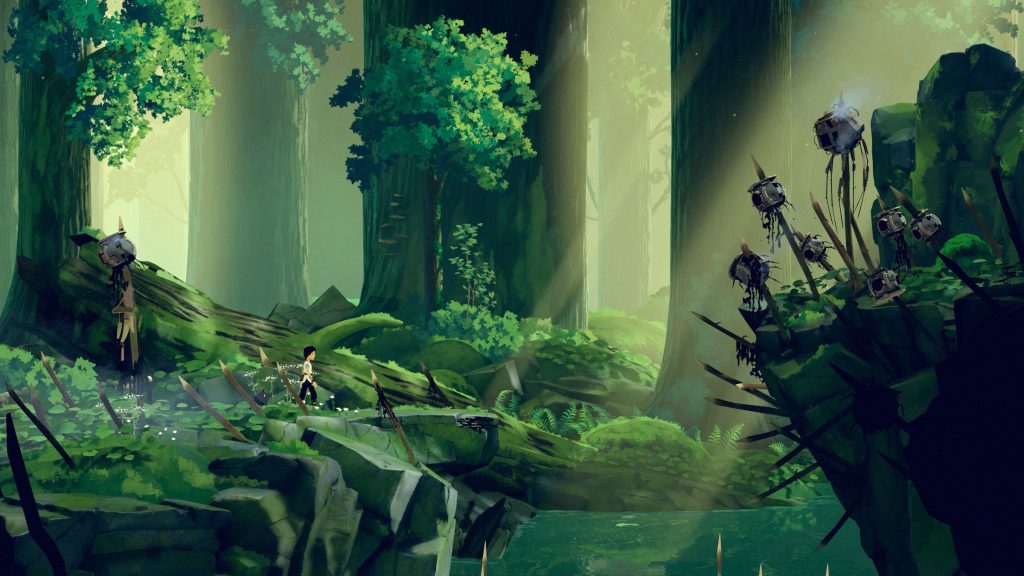
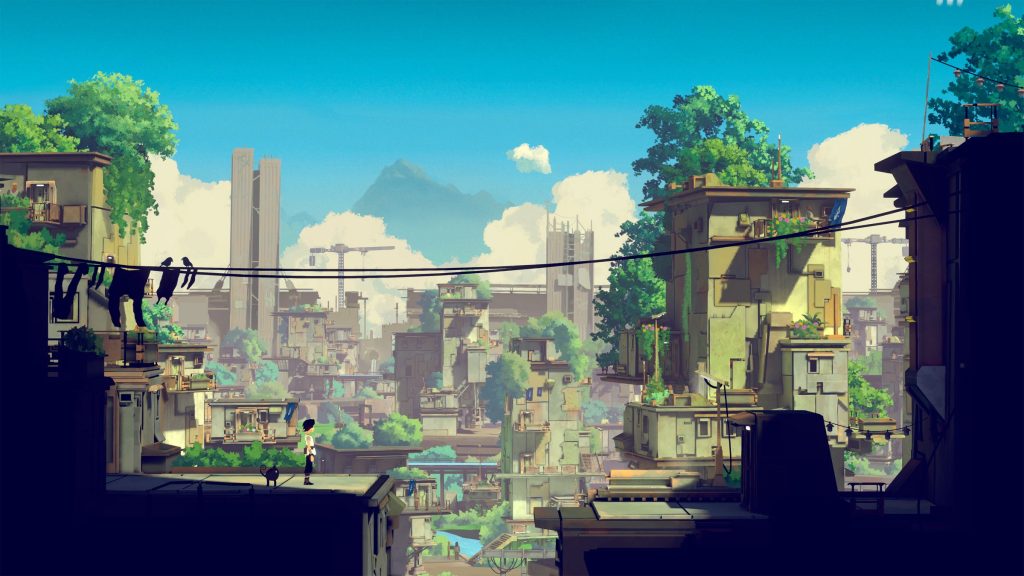
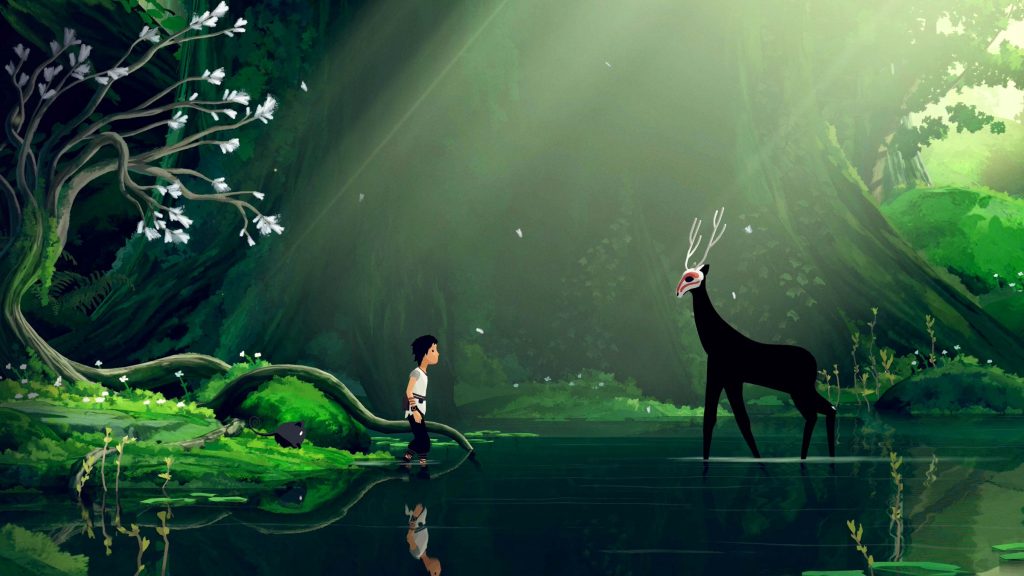
Planet of Lana II bursts with beautiful crescendos of emotion. The painterly canvas that its world inhabits is strikingly colorful, magical. There’s a majesty in this alien world but also a familiarity. The orchestral score used to inform the player of gut-wrenching loss or thrilling determination never feels manipulative. Even its gameplay that relies on thoughtful collaboration and puzzle-solving begs for the player to feel kinship with its two main characters.
However, for me, none of this is as singular a triumph as Children of the Leaf‘s characters.
Stemming from the conclusion of Planet of Lana, Children of the Leaf offers us a continuation, narratively and mechanically. For those–unlike myself–who have played the first game, developer Wishfully has done little to contort the original vision. Curious players can likely find Planet of Lana at a discount but those blindly submerging themselves in the sequel will be treated to a primer of the first game, hitting the important bits of what will be expanded upon over the next 7 hours.
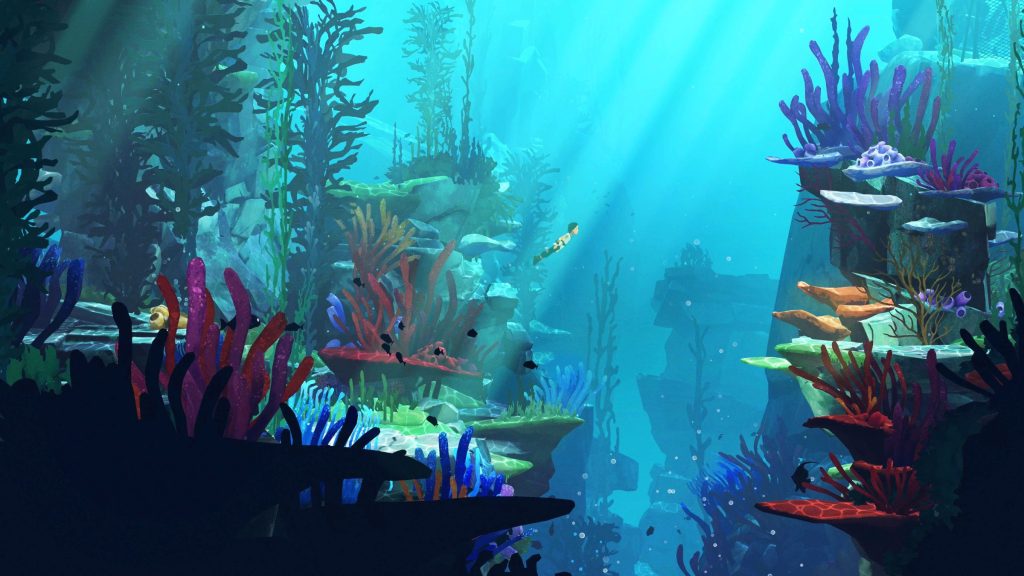
I am deeply familiar with the desired tone Wishfully has worked to craft with Planet of Lana. It is the same one employed by Playdead with Limbo and Inside. The same as Tarsier with Little Nightmares.
As players, we are handed these worlds gift-wrapped. The developer presents us with the package, fully aware of its intent, or meaning, or purpose. It is our task to undo the bow, peel back the paper, and discover what’s inside. Inside is an obvious high bar and one I continuously reference when comparing titles in this rich genre, yet Little Nightmares II is also an incredible piece of work. Playdead and Tarsier were able to shine a light on these bizarre, familiar worlds, illuminating them for the player for a singular visit, a brief peek into the machinations of a larger universe.
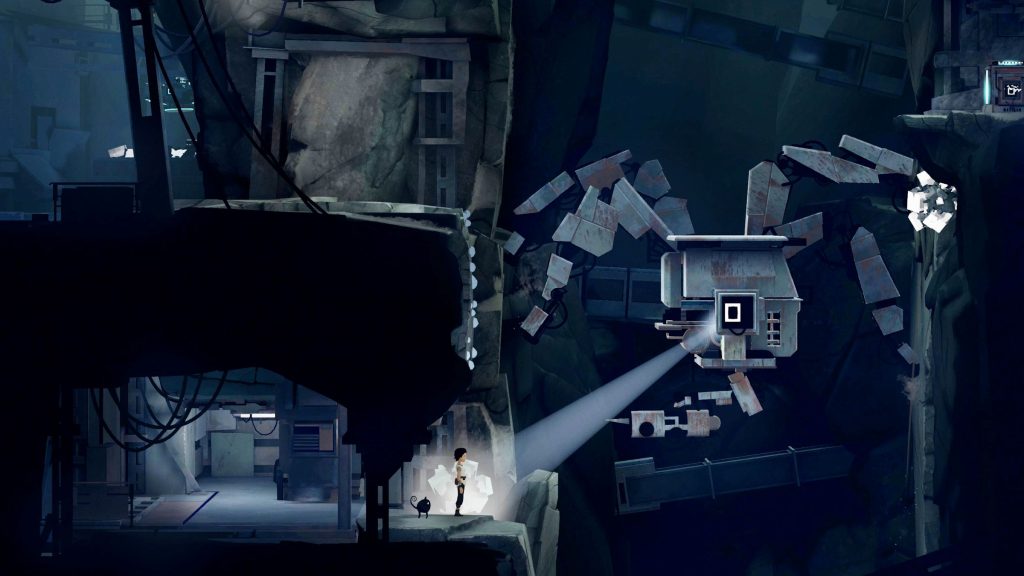
My admiration for this genre is not only in developers’ ability create captivating worlds, it’s in the way they make them feel lived-in and ripe with centuries of history. Everything feels purposeful, even if the player lacks the ability to rationally explain it, they can always work to infer their own interpretation.
Planet of Lana and Children of the Leaf contain numerous moments of tension, especially when main character Lana and her feline-like compatriot Mui are in distress or, tragically, fail a sequence. The player is meant to feel bad, not just because one of these characters screams in agony at loss but because we have become linked to their survival. No one wants Lana to die. Our failure isn’t hers. Instead, the harsh world or our poor timing are the sources of pain… usually.
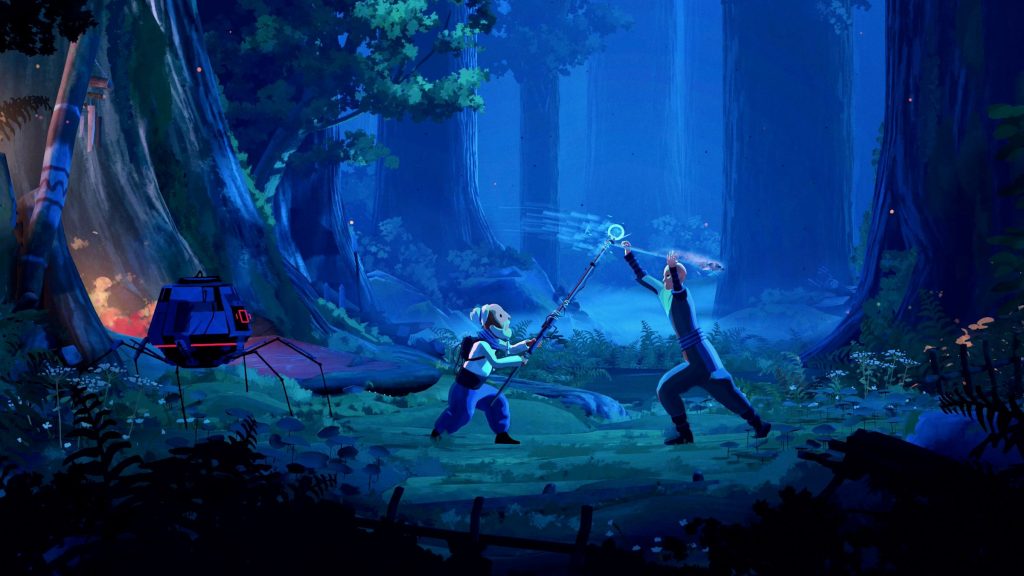
The universe both Planet of Lana games resides in diverts from the horror-skewed titles I’m mostly familiar with. Novo is a world blossoming with verdant forests, crystal-blue oceans, and the shattered remains of monolithic robots. The first game contended with an attack on Lana’s village and her ultimately discovering hidden truths about the origins of the planet. Children of the Leaf continues this throughline and begins to pepper in more insight into the past. The instigating beat of the story, however, is about Lana and Mui working to recover the ingredients to make a medicine that will revive a young child from a coma-like state. The two go to distant parts of Novo to collect these materials, encountering a violent tribe that is not only ripping up the natural beauty of the planet, but using robots to cause further destruction on the inhabitants.
Even when tackling the greater mystery bubbling beneath the surface, Children of the Leaf humbly weaves its interpretive narrative and action. Part of me worried that Wishfully would edge too hard into the Avatar subtext of “humans are awful and ruin the planet”. While that conceit is a factor of Children of the Leaf, it isn’t the focal point, merely a general truth.
Parsing through Children of the Leaf is actually relatively simple. Wishfully signposts enough that the player isn’t completely lost and nothing distractingly weird happens to leave one scratching their head. Players move Lana and Mui through interconnected levels and segments where exploration occurs and puzzles are worked through. Harrowing chases ensue and dramatic moments swell. Any game with a worthwhile story should be able to execute these directives and both Planet of Lana games seem to have accomplished this in spades.
But it really is the way these characters emote and speak that sell Children of the Leaf‘s most profound and subtle moments.
Children of the Leaf is not wordless. Instead, its populace uses a made-up language. A sharp enough ear will be able to detect a few Latin-based substitutions–I remember hearing something that sounded like “captain” when a person in power was being addressed–but it is an alien-enough tongue where players should only recognize the names of characters when speech happens.
Much of this is done to obfuscate the true explanation of the plot. Without subtitles or comprehensible dialog, Wishfully allows the player enough room to draw their own conclusions. This is not a cheat code to removing a story’s purpose and cohesion. Instead, the choice empowers us as players because we get to follow the things happening on screen and draw logical conclusions.
Enough veiled mystery is uncovered that we don’t need to be explicitly told what’s going on. A few unavoidable points in the game also leave little room for broad interpretation. Just like with the best games in this genre, Children of the Leaf wants to satiate our curiosity while also allowing us to thirst for more answers that may never come.
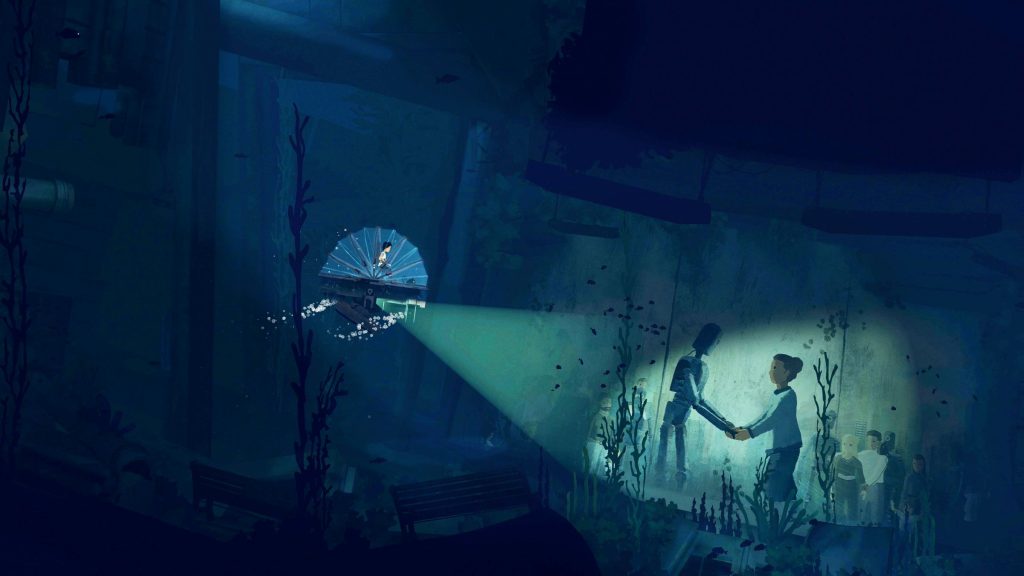
Would Children of the Leaf completely remove its spoken word, it would also be a lesser game. That’s because the actual dialog, when spoken, points to the universal truth of emotions. Unbridled praise should be given to the voice direction in this game. Wishfully created a believable language but also found actors who could deliver these lines as if they had an actual script. Deep sighs of disappointment show Lana’s older sibling hurt when they quarrel. The rising anger and pain tarnish a character that was so optimistic. Mui’s purrs and squeaks have deep range for a creature that can only make noises.
Attempting to describe the dozens of moments I knew exactly how a character was feeling or what they were saying elevated Children of the Leaf in an indescribable way. The ability to infuse the dialog, story, and world by these human aspects of emoting is the real cheat code. Some of the most subpar games have been lifted up by an expert voice performance. Yet Children of the Leaf is already phenomenal in its own right.
Enough impactful things happen here that it would be a crime to ruin the feeling of discovery in what is already somewhat of a short game. It is difficult to stretch something like Planet of Lana on for too long, to do so would dull the crafted moments of transitioning to a new place of wonder. Stylizing characters with no mouth, only eyes. Cold grey steel promoting loneliness just after a green forest with humming wildlife. A delicate score of strings replaced by powerful percussion. The visuals are breathtaking and the sound is layered. This game is a treat for the senses and every choice feels deliberate with a hand of artistry.
And I was absolutely shocked that even Children of the Leaf‘s simple gameplay never really faltered, either.
There is a superb balance of challenge and ease when dealing with puzzles in Children of the Leaf. Only once or twice did I find myself stuck. A few times I accidentally cheesed progress. And a number of times I felt like Lana was a bit too sluggish when climbing up a ledge. And when stripped of these minor nuisances, I truly can’t find much to complain about.
The tasks players are presented with involve a mixture of physics-based manipulation, tightly-timed movement, and piecing together solutions. Most of the game will rely on the player controlling Lana and pinpointing where Mui needs to go. Mui can jump high, fit into small spaces, and use a special ability to manipulate objects and creatures. Whereas Lana can’t jump too far but can swim underwater and press switches.
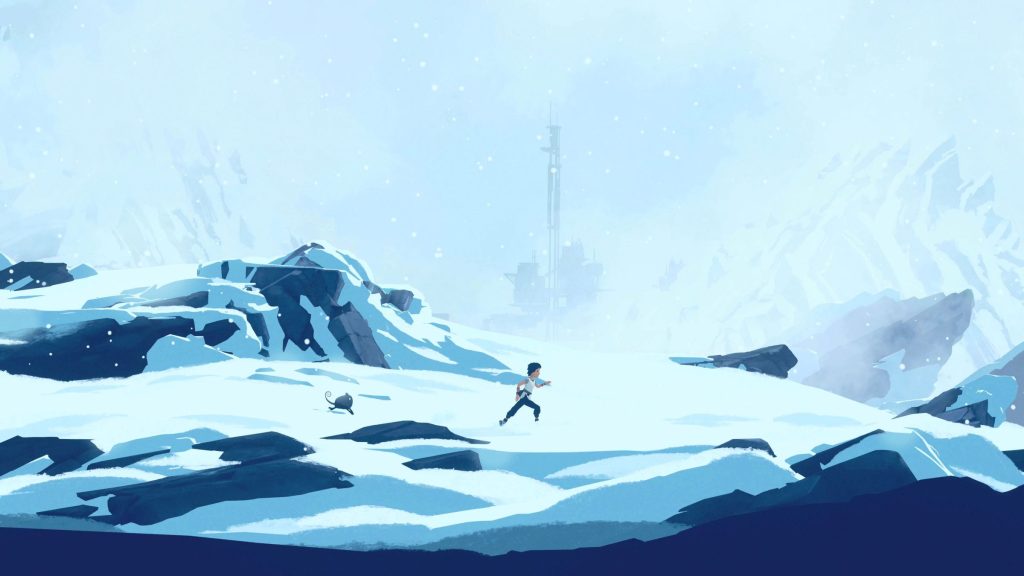
Players use the abilities of both in tandem to do a variety of tasks, none of which are ever overused. Mui can “possess” fish that can spurt out an inky mist to obscure security cameras and underwater predators. In the snowy region, puffball creatures will roll along surfaces creating a flammable film that needs to be linked with flames and frozen ice that impede progression. What’s great is that these are used for a handful of challenges each and never done to exhaustion. Only a couple of times does Children of the Leaf use multi-screen challenges. The player can have Mui wait in place and then dictate where they should go with a press of the right shoulder button. It’s elegant enough and not at all clumsy.
What I began to notice as I navigated Children of the Leaf was that I was constantly engaged. Without intense challenges the game never exhausts the player. The chase scenes that are commonplace in the genre might take some by surprise and they will fail a jump or two but it’s never at the expense of several seconds of wasted time. More importantly, the sheer variety and creativity in place fosters a sense of Wishfully knowing how to effectively balance the important parts of their game.
Children of the Leaf is a relatively short game–which might be a detriment to some. Yet I never found a real flaw with its pacing. I was equally in awe of the creativity found in its gameplay and the layered tones of its narrative. There is a significant amount of intelligent mechanics here that surprised someone like me who has played scores of games, ones not too far removed from the Planet of Lana brand. There is a build-up to a finale which can feel slightly rushed–especially when you want to continue to savor the game just a bit longer–but it’s done in hopes of another act, one I would gladly swallow up.
Planet of Lana II: Children of the Leaf is a valuable sequel because it gently expands on what made the original impactful, avoiding bloated excess. A constant flood of evocative imagery and powerful emotion provides players with a gorgeous world to become lost in and care for its inhabitants. Never resting on the laurels of puzzle mechanics and instilling its characters with depth and gravitas, Children of the Leaf cements itself as one of the best cinematic platformers of its kind.