
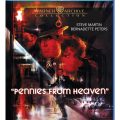
Warner Archive gives Pennies from Heaven an excellent treatment. Although this one may not be for everyone, Steve Martin and the rest of the cast deliver strong performances and choreographed musical numbers. This one is out now.
“I want to live in a world where the songs come true,” Arthur Parker says. In that world, bank tellers would eagerly hand out stacks of Depression-era dough to him, every cloud would have a silver lining, and Arthur’s loveless marriage to Joan would give way to boop boop-a-doop bliss with passionate Eileen.
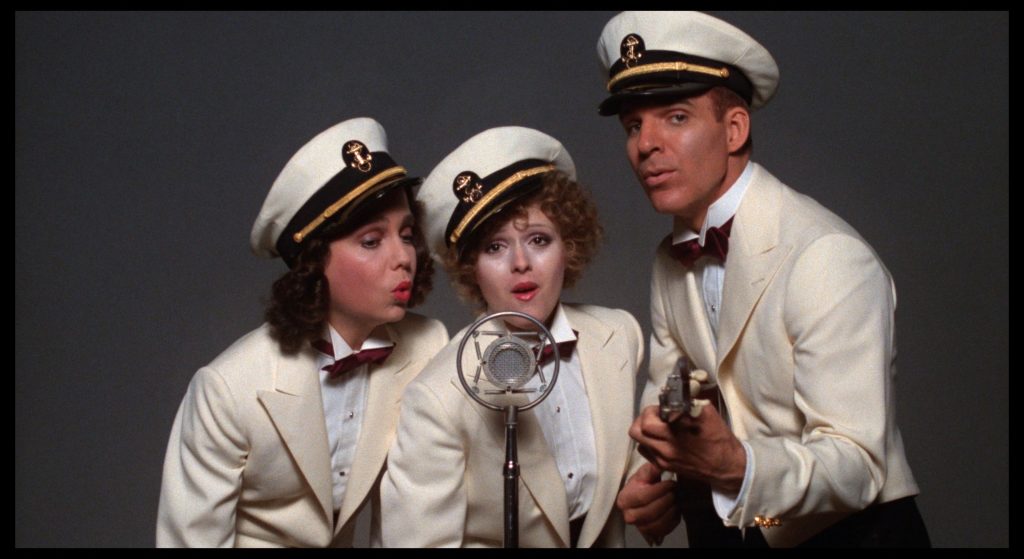
Steve Martin, Bernadette Peters, and Jessica Harper form that triangle of this razzle-dazzler in which lip-synced 1930s songs contrast with characters’ lives. Herbert Ross directed Dennis Potter’s big-screen adaptation of his landmark BBC TV miniseries, filming on sets that recreate Depression-era artwork and bring a savvy touch to vibrant musical numbers. See Christopher Walken strip to “Let’s Misbehave.” Fall under the spell of a Martin/Peters homage to Astaire and Rogers. Every penny is on the screen and looks like a million.”
Released in 1981, this strange, bleak, and often beautiful musical could hardly have been further removed from the traditional Hollywood musicals it was intentionally imitating, and it was also about as far away from the Steve Martin most audiences knew at the time as you could possibly get.
The film is based on Dennis Potter’s acclaimed 1978 BBC miniseries, with Potter adapting his own story for the big screen and Herbert Ross directing. Set during the Great Depression, it follows Arthur Parker, a struggling Chicago sheet-music salesman played by Steve Martin. Arthur is trapped in a miserable marriage to Joan, played by Jessica Harper, and dreams of escaping his dreary life. When he begins an affair with Eileen, a schoolteacher played by Bernadette Peters, he believes he has found a way out of his unhappiness.
The story itself is fairly grim, dealing with adultery, poverty, prostitution, sexual exploitation, desperation, and eventually murder. What makes the movie so unusual is the way all of that misery is contrasted with the fantasy world created by popular music.
This is not a traditional musical where characters suddenly break into song because the story calls for it. Instead, the characters lip-sync to recordings of popular songs from the 1930s. They perform the dance numbers, but the voices belong to the original recording artists.
It can be jarring the first time you see it, but once the idea clicks, it becomes one of the most an endearing qualities of the film that conveys the theme of the story nicely.
However, at the time of release, many movie-goers didn’t really ‘get’ the film or that it wasn’t supposed to be a comedy. With Marrtin was coming off The Jerk, and he was one of the biggest comedy stars in the country, and audiences knew him for absurd comedy, stand-up, his wild-and-crazy-guy persona, and the sort of manic humor that had made him enormously popular.
Martin’s character isn’t particularly funny, quite the opposite. He’s selfish, frustrated, sexually obsessed, financially desperate, and increasingly detached from reality, and that’s the beauty of his role. It deviates so far from his normal roles that one of his first ventures into dramatic territory unfortunately didn’t open up the types of roles it could have, but it gives us a glimpse into his range as an actor.
Bernadette Peters is equally good as Eileen. She can effortlessly inhabit the fantasy sequences while also conveying the sadness of a woman who has spent much of her life suppressing her own desires.
And then there’s Christopher Walken, who seems almost born for this movie. His musical number is one of the film’s highlights, but his presence also reinforces the movie’s strange mixture of realism and theatricality.
Video
Warner Archive’s new Blu-ray is a major improvement for anyone who has only seen the film on older home-video releases. The disc features a new 1080p HD master created from a 4K scan of the original camera negative, presented in its original 1.85:1 aspect ratio.
This transfer finally gives the production design and cinematography the presentation they deserve. The muted Depression-era scenes have excellent texture and contrast, while the musical numbers benefit tremendously from the richer colors and increased detail.
The elaborate costumes, sets, choreography, and carefully composed backgrounds all look terrific. This is especially important with a movie like this because the contrast between the two visual worlds is such an important part of the storytelling.
Audio
The disc includes an English DTS-HD Master Audio 2.0 mono soundtrack.
There’s obviously nothing particularly flashy about a mono track, but it is clean and appropriate for the original presentation. The vintage recordings used for the musical numbers retain their distinctive character, while dialogue and effects remain clear.
Special Features
Warner Archive has carried over some worthwhile extras.
- Scene-specific commentary by film critic Peter Rainer
- Pennies from Heaven 20th anniversary cast and crew reunion
- Original Theatrical Trailer
If you haven’t seen the film and go in expecting another Steve Martin comedy, you will be disappointed. If you’re expecting a traditional musical, you probably aren’t going to get what you want either. Pennies from Heaven is a weird combination of genres that take some risks in storytelling, and even bigger risks from the actors leaving their comfort zones that ultimately lead to box-office disappointment. However, if you’re a fan of Steve Martin, his foray into the dramatic, and are open to some intriguing storytelling, Pennies from Heaven is well worth checking out.
AV Entertainment provided us with a copy of this disc for review, which if interested, you can pre-purchase here.