
The Nacon RIG R8 Spectre Pro HS is a must-have for PS5 owners who desire convenience, cross-platform audio, all-week audio, and studio-grade audio in one single package. The headset’s customization potential and the docking station are a step up from earlier RIG headsets, making for one of the best headsets yet from NACON.
NACON’s newest headset in its RIG lineup, the R8 Spectre Pro HS, is an oddity of a headset with a mouthful of a name. It’s one of the pricier in the RIG lineup, but it’s priced in a spot where it’s beating come competitors while falling short in the ways that matter most for a near-$200 gaming headset. That said, if a PlayStation headset is what you need most, the R8 Spectre Pro HS easily beats out other headset in terms of its price and convenience.
Let’s get to it.
The R8 Spectre Pro HS is a premium-tier headset that’s cross compatible with PlayStation 5 consoles, PC, and iOS/Android. It’s packed with graphene drivers (yes, the same audiophile-grade technology powering SteelSeries’ Arctis Nova Pro and Corsair’s VIRTUOSO PRO), includes a broadcast-grade boom microphone, and is properly optimized for Sony’s Tempest 3D spatial audio engine on the PlayStation 5. It’s a full-featured headset that’s best suited for PlayStation 5 owners looking to immerse themselves in their favorite game’s music and keep in contact with teammates in competitive games.
The R8 Spectre Pro is the king of convenience thanks to its docking station that doubles as a wireless transmitter with flashy LEDs. As one who owns multiple peripherals that need to be charged via a USB cable, my desk has a tendency to get messy. The R8 Spectre Pro’s dock solves this problem, as I can simply set the headset down into the dock when not in use. There’s no leaving the headset lying on my desk, hanging on my monitor’s headset hook, or somewhere else inconvenient. The dock’s LEDs add a nice splash of color, but the customization options were limited.
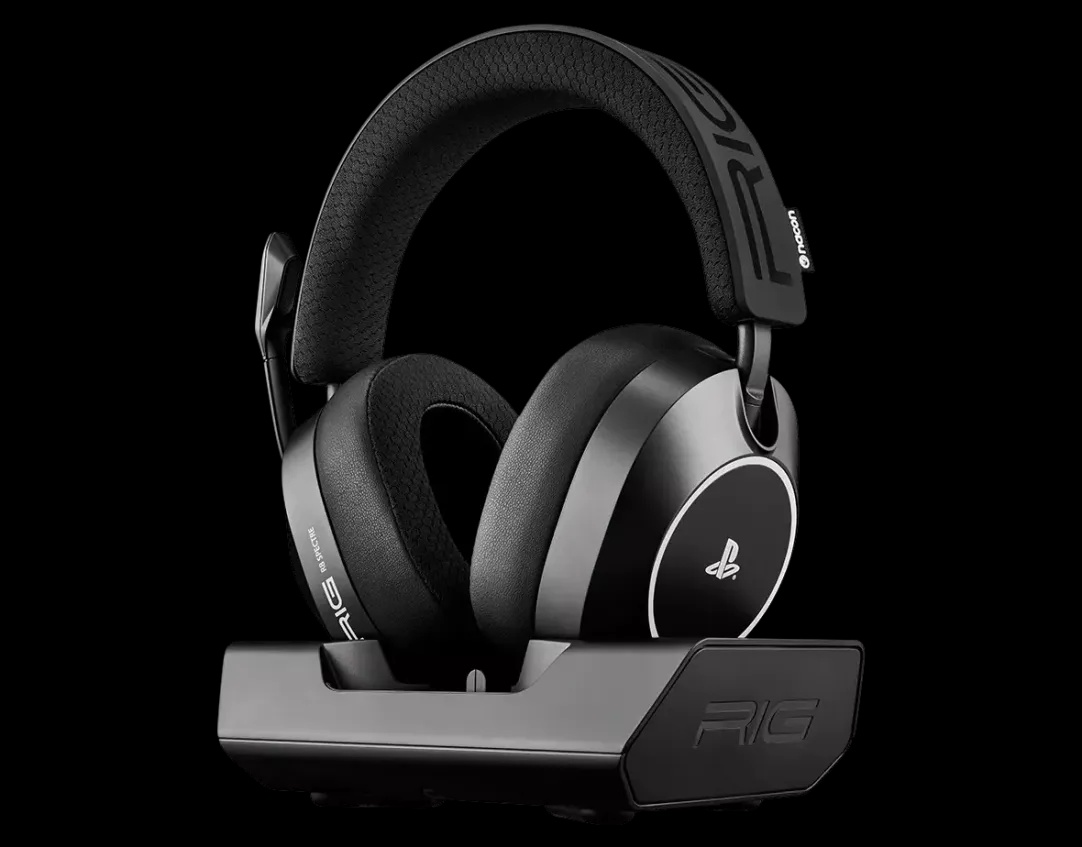 The R8 Spectre Pro’s docking station is a step above some of the other docks on RIG’s older premium headsets (namely the 800 PRO and 900 MAX) this time around, but I still think Nacon has some room to innovate and play in making something novel for their top-tier headsets. Adding more LED customization would be a nice first step, but so would having some controls on the dock ala Steelseries’ implementation. Knowing that these headsets are expected to be used for PC, it would be helpful for consumers to see a battery life indicator or have a DAC inside for powering higher-quality audio.
Moving onto the R8 Spectre Pro’s construction, the headset is primarily made of plastic and looks chunky from afar. That chunkiness can be attributed to the generous padding of the headset’s earcups/headband along with the size of the cups themselves. Interestingly, Nacon has made it so that you can easily swap out the earcups and the outer covers; they’re magnetically attached to the headset! I was sent a set of mod-plates to change the exterior of my headset and swapping them was so easy! I appreciate this customization decision, as some folks like to have their headsets match their personality.
What I’m not a fan of is the plasticky construction and the memory foam padding. For a premium-tier headset (arguably the nicest headset in Nacon’s lineup as of May 2026), I expect an elevated aesthetic that sets it apart from headsets in other price points. Additionally, the default earcups feel aggressively stiff. After about 20-or-so hours of use, they broke in a bit and molded to my ears better, but I was hoping for these to feel more comfortable out of the box. If this stiffness was to ensure sealing so that ANC would work, I would give this headset a bit more grace…but the R8 Spectre Pro lacks ANC.
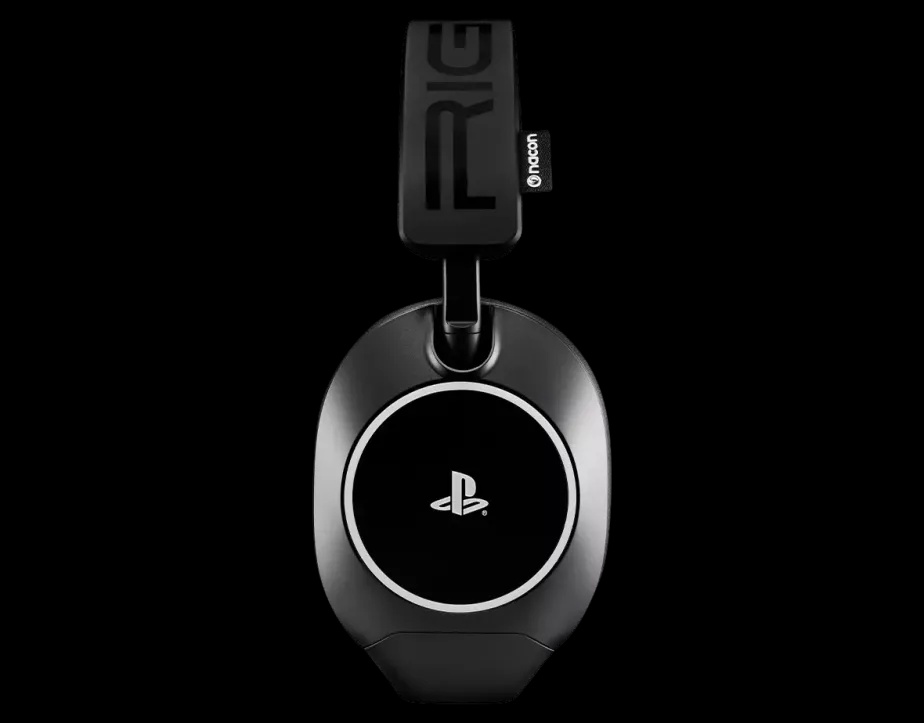 This headset is interesting in that it has shaken up the physical control and microphone placement design language that most of us are familiar with: Most of the controls are on the right hand side. The flip-to-mute microphone is on the right side, too. I’ll admit that as a right-handed person, it felt natural to (un)mute the microphone, but it took some relearning to remember the controls on the right earcup. Luckily the buttons are spaced apart to minimize accidental presses, so there’s that.
On the topic of sound quality, it took a while for me to figure out where these headphones excelled until I finally started playing tactical shooters on my PS5. These headphones easily pinpointed specific audio cues with scary accuracy, giving me just enough time to react and adjust my position to defeat my enemies. For music and movies on my PC, the headset seems tuned for bass-forward media that overtakes the finer details found in other genres (especially acoustics). Most music sounded “good,” but not $200 good like you would expect from a set of Hi-Fi audio cans. I wasn’t the biggest fan of the tuning, but the audio quality is still miles ahead of other PS5 headsets I’ve tried. If you’re looking for a headset to fully immerse yourself in 3D-audio heavy games like SAROS, this headset will win you over.
The headset can be controlled with the RIG Navigator iOS/Android app. It’s relatively barebones, but it has enough functionality to make some fine tuned adjustments and disable/enable some of the headset’s additional features. It’s nothing special, but it helps when needing to get the most out of the headset when paired with my PS5. I’d like Nacon to make the app available for PC owners so they can keep things on a single device.
The “full-bandwidth” microphone is decent, but still better than other wireless PS5 headsets. It lacks premium features like noise reduction, but the microphone has some flexibility to be moved around to take advantage of directional isolation. On PC, my microphone would occasionally cut out, but no such issue occurred when using this headset with my PS5. I get the feeling that there are more firmware updates on the way to improve the microphone quality.
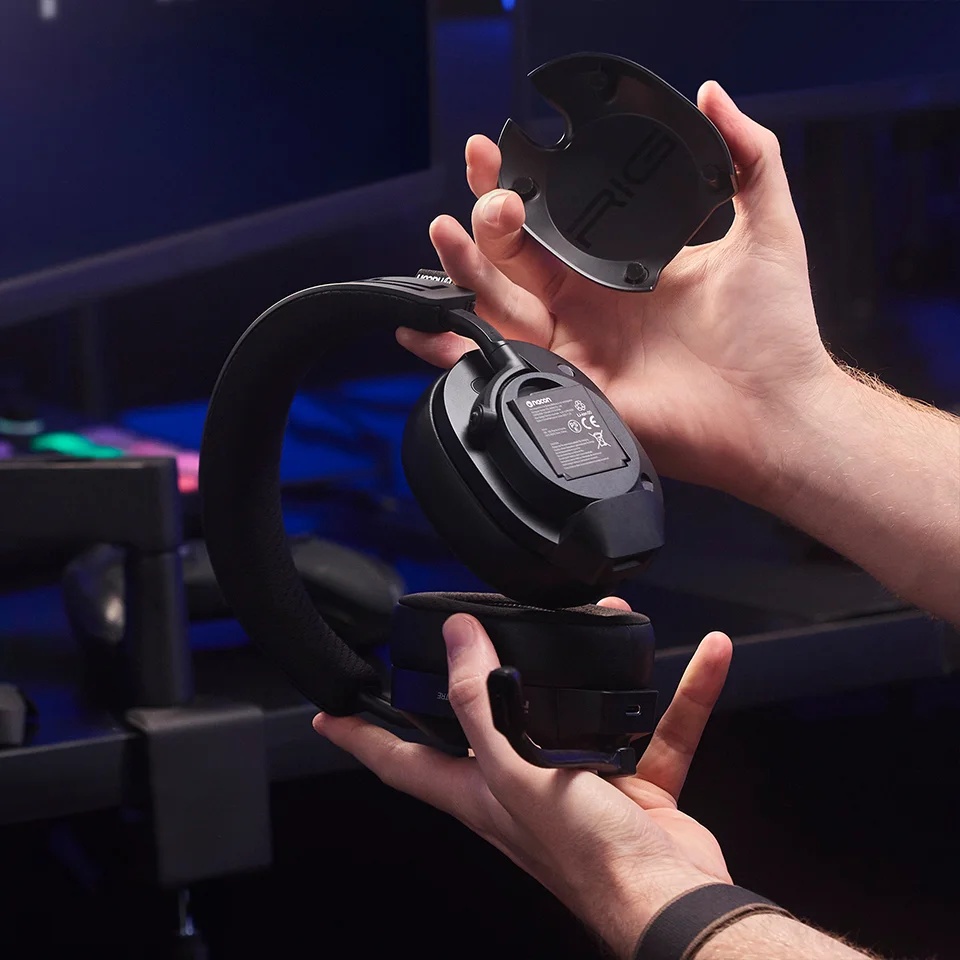 The R8 Spectre Pro’s battery life blew me away. Aside from the battery being removeable (in case one wants to replace it), Nacon has rated the battery to last at least 60 hours on a single charge. This is pretty accurate from my testing – I was able to get several workdays of continuous use before I hit the 30% battery mark, and even then the battery drained at a snails’ pace. I got in the habit of docking my headset when not in use (thus defeating my attempts to drain the battery) because it’s that convenient and easy to use.
Before wrapping this review, let’s comment on the price. The Spectre R8 Pro is priced at ~$180. It’s less than the current top-tier champs from Turtle Beach, Corsair, and Logitech’s Astro headphones but still pricy. The lack of ANC and fine-tuning doesn’t feel great for a premium headset, but it’s still offering a compelling value proposition in the form of battery life, cross-platform audio/device switching, audio tuning for competitive games, and convenience in the form of that charging dock. Frankly, it’s the best headset I can recommend for someone who wants a PlayStation headset that makes games sound and feel better. For PC, I can’t make that argument, as the PC headset space is far more expansive and competitive.
The Nacon RIG R8 Spectre Pro HS is a must-have for PS5 owners who desire convenience, cross-platform audio, all-week audio, and studio-grade audio in one single package. The headset’s customization potential and the docking station are a step up from earlier RIG headsets, making for one of the best headsets yet from NACON.