

Creating a video game like Mouse: P.I. for Hire is a bold undertaking. When you consider all the aspects involved, it becomes even clearer just how ambitious it is. Taking on the rubber hose animation style, the one we have come to love through Cuphead, is a significant risk. To take it even further and center it around an anthropomorphic mouse detective, set in a 30s raw, bleak noir world is wild. But I am so glad that Fumi Games stuck their neck out and created a truly unique experience. By no means is Mouse perfect, but it is a fantastic entry in what I hope is a long-running franchise.
In Mouse: P.I. for Hire, you play as Jack Pepper. Yes, that is a cheese pun, as in Pepper Jack, because most things in this game are puns and references. Jack is a private investigator who has been given a big case to solve. The setting is a black-and-white noir world with walking, talking mice. The world has a gritty, serious feel to it, but with a heavy hand of cheese, pun intended. Despite the humorous tone and playful graphics, Mouse is deep and insightful.
Mouse would be described as a “boomer shooter”, akin to Doom and Wolfenstein. A fast-paced first-person shooter with a large focus on movement. While Mouse did feel like those two games, I found myself comparing this more to Bioshock. I felt that combat was methodical, trying to find the right weapon and right position for the situation, while with Doom, you can play pretty mindlessly.
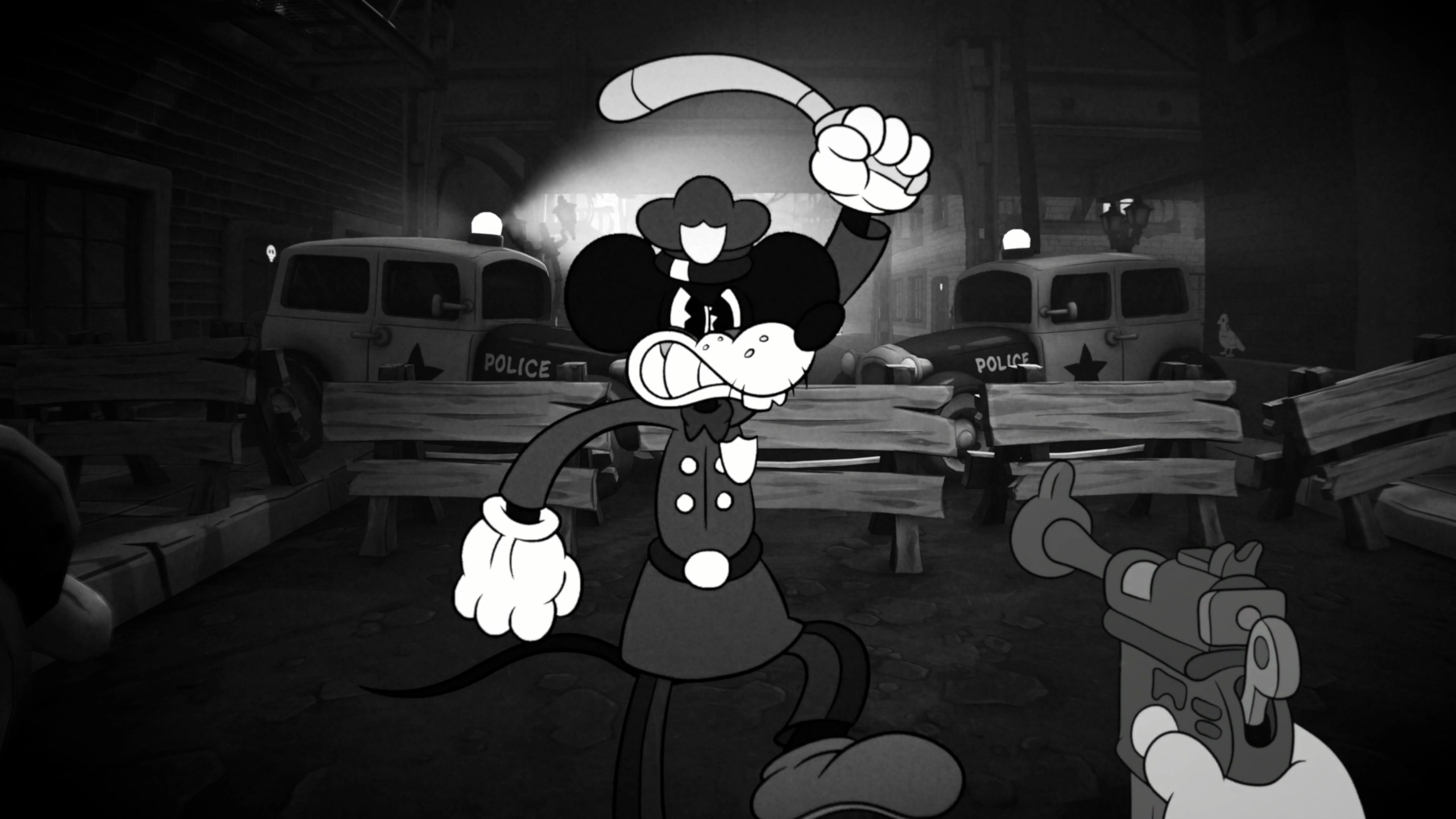 Movement was one of the game’s best features. You can move around each room quickly and seamlessly. Depending on the level, you could find a really nice flow of jumping, shooting, and dashing, allowing you to hit enemies and dodge attacks with ease. Weapons like the shotgun and the automatic rifle helped lean into this play style. As the game unfolds, you unlock different movement maneuvers, but they never feel like they really made a difference or were utilized enough. I found that just the simple double jump would allow me to navigate through levels better than the abilities you unlock after.
For a game that only used black and white, the graphics still impressed me. Each character you see on screen is a 2D image, even though you are in a 3D world. Heading into the game, I was of the mindset that this would bother me, and it wouldn’t look good. But I was pleasantly surprised. All the animations looked smooth, which helped ease the look of the 2D images. When you move, they track with you, leaving the character always facing you the entire time.
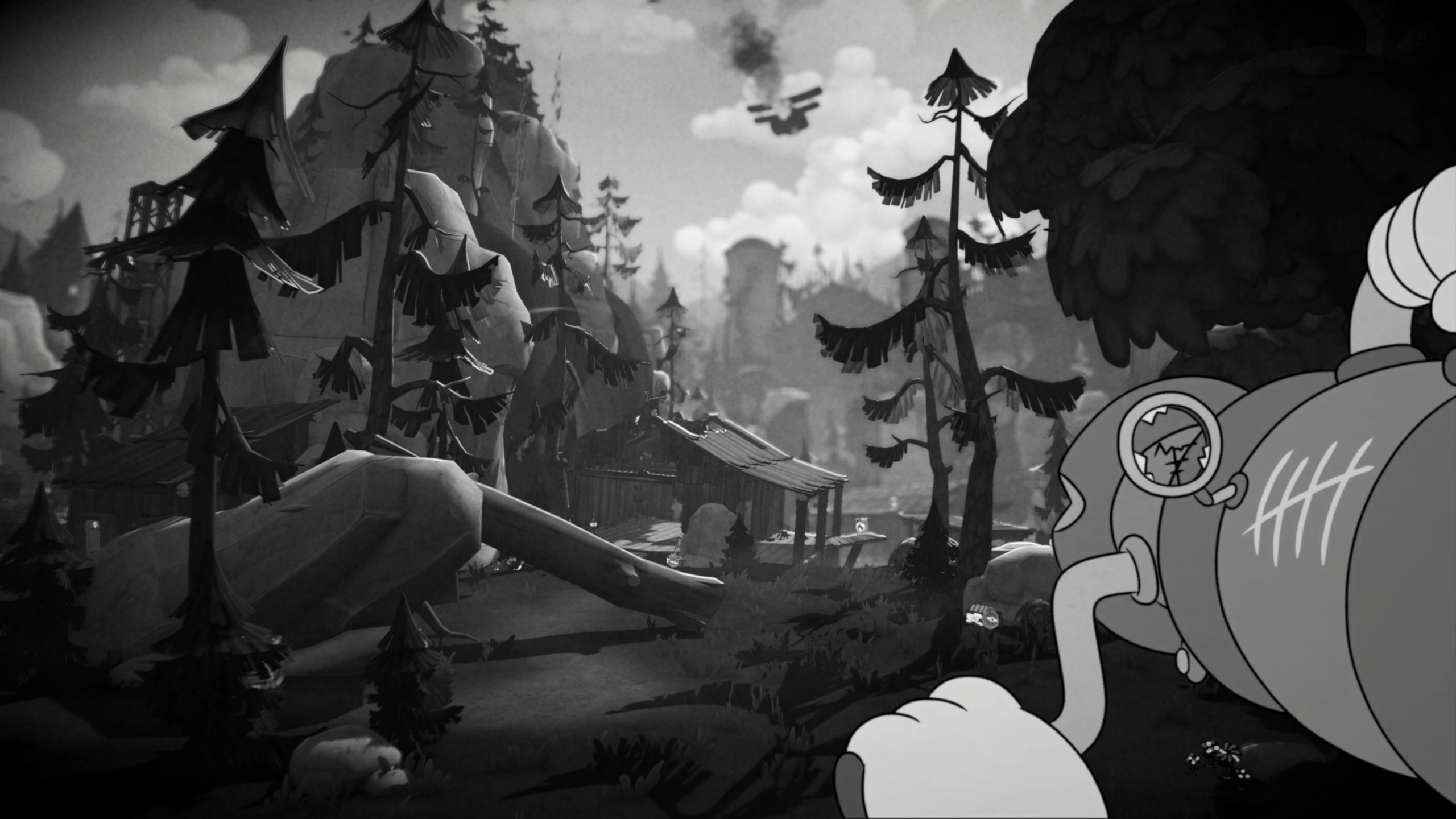 An aspect I absolutely adored was all of the distinct weapon models. Each weapon looked unique, fitting into the animation style so well. When you upgraded a weapon, there was even a special animation that adjusted the appearance. I found myself excited to upgrade my guns, not only for the stats, but also because the animations were so delightful. Even the various types of ammunition had memorable animations as they sit in your HUD. My only gripe with the visuals is the lack of variety in the character models. Most male characters looked similar, and the same for the female characters.
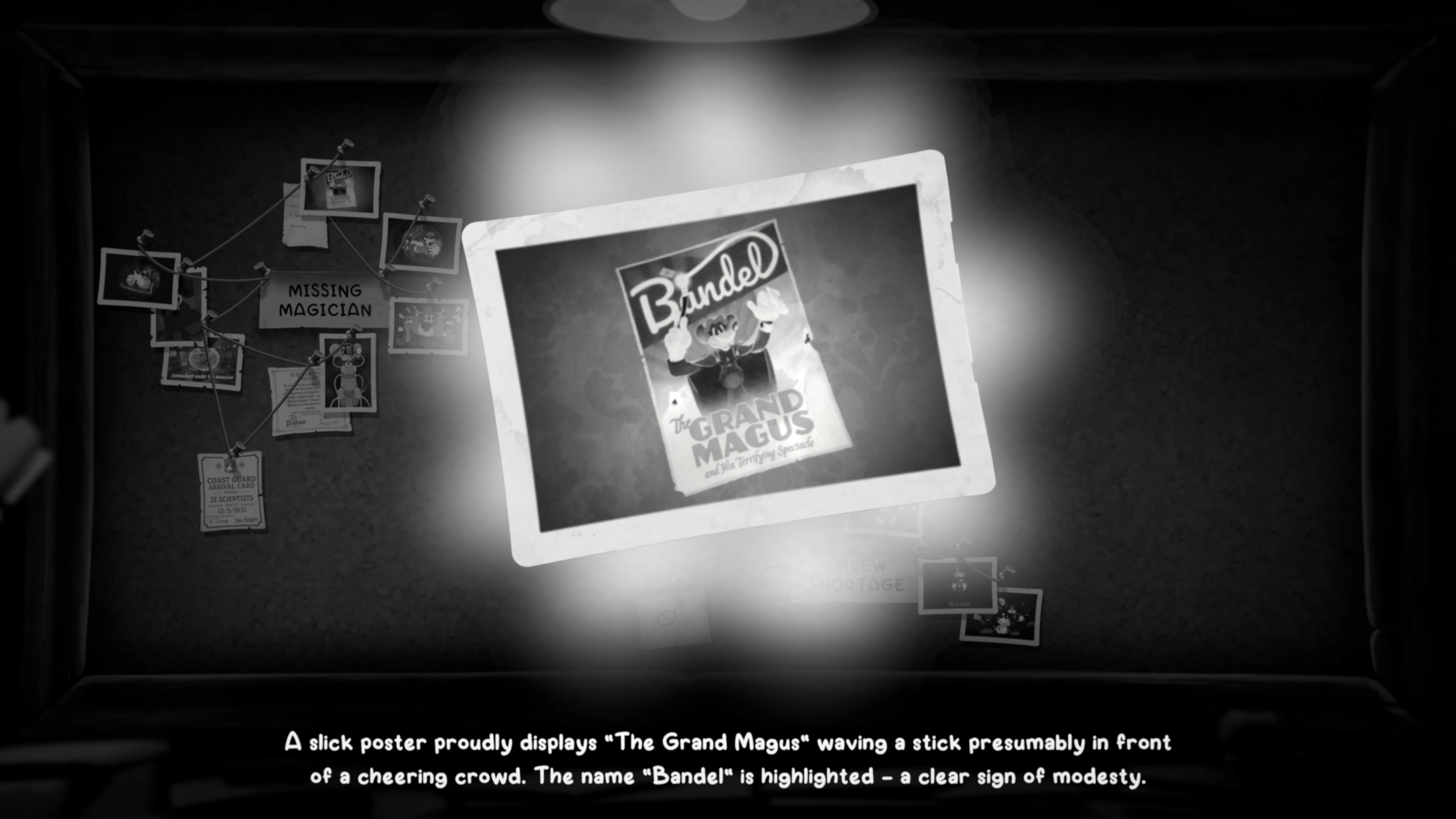 The story overall was satisfying, it wasn’t too risky, and it feels pretty boilerplate for a first game in a franchise. The symbolism and the deeper meanings behind the story are what shine to me. It may be a cartoon game, but it deals with racism, police brutality, classism, fascism, and much more. Most story beats come off as convenient, with every mission perfectly falling in line with the plot, leaving no room for notable side quests. I would have preferred some one-off missions that built out more of those darker themes to expand the world to a greater extent. There were a few side characters who could have been fleshed out a little more as well. Not all, but some characters integral to the plot lacked real motivations other than being a reference to another IP.
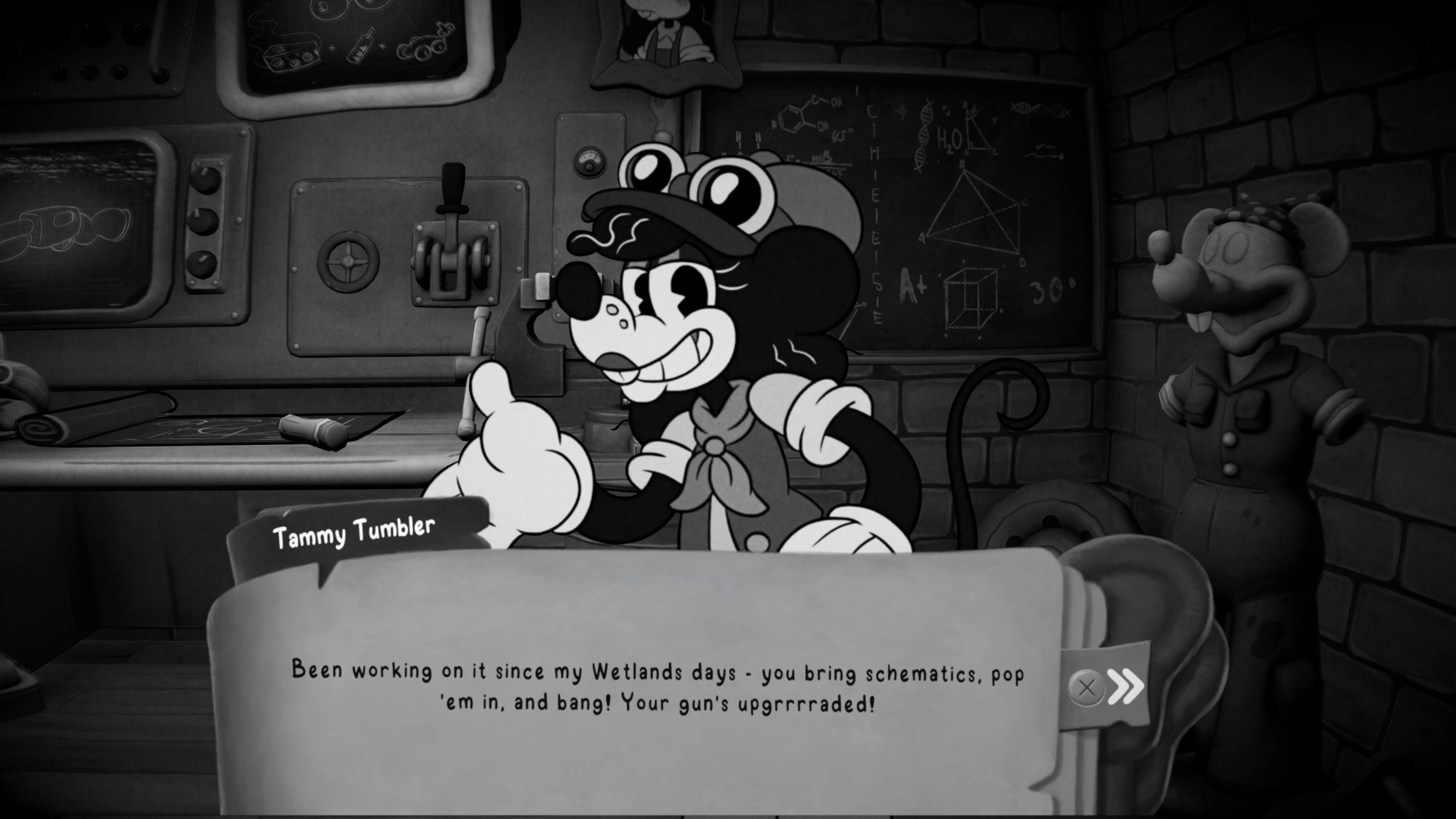 The voice acting in Mouse is some of the best I have ever heard in a game. Troy Baker highlights as the protagonist, and he does not cut any corners in his performance. Baker masterfully immerses himself in the role of a mouse gumshoe. It is well known that Troy can pull off serious roles, but to be able to blend the sinister tone with campy mouse humor was an incredible feat. Not only did Baker shine, but veteran Fred Tatasciore and The Young and the Restless star Camryn Grimes were bright spots as well.
This world and the city of Mouseburg were very interesting, but we barely scratched the surface, and I was left unfulfilled. In between missions, you went back to a hub, which was a slice of Mouseburg that featured Pepper’s P.I. Office, a bar, a shop, and an upgrade station. The office allowed you to pin mission clues, save the game, and obtain new cases. Each level of Mouse had a vast number of secrets you could find, which made it disappointing for the lack of secrets you could discover throughout the hub.
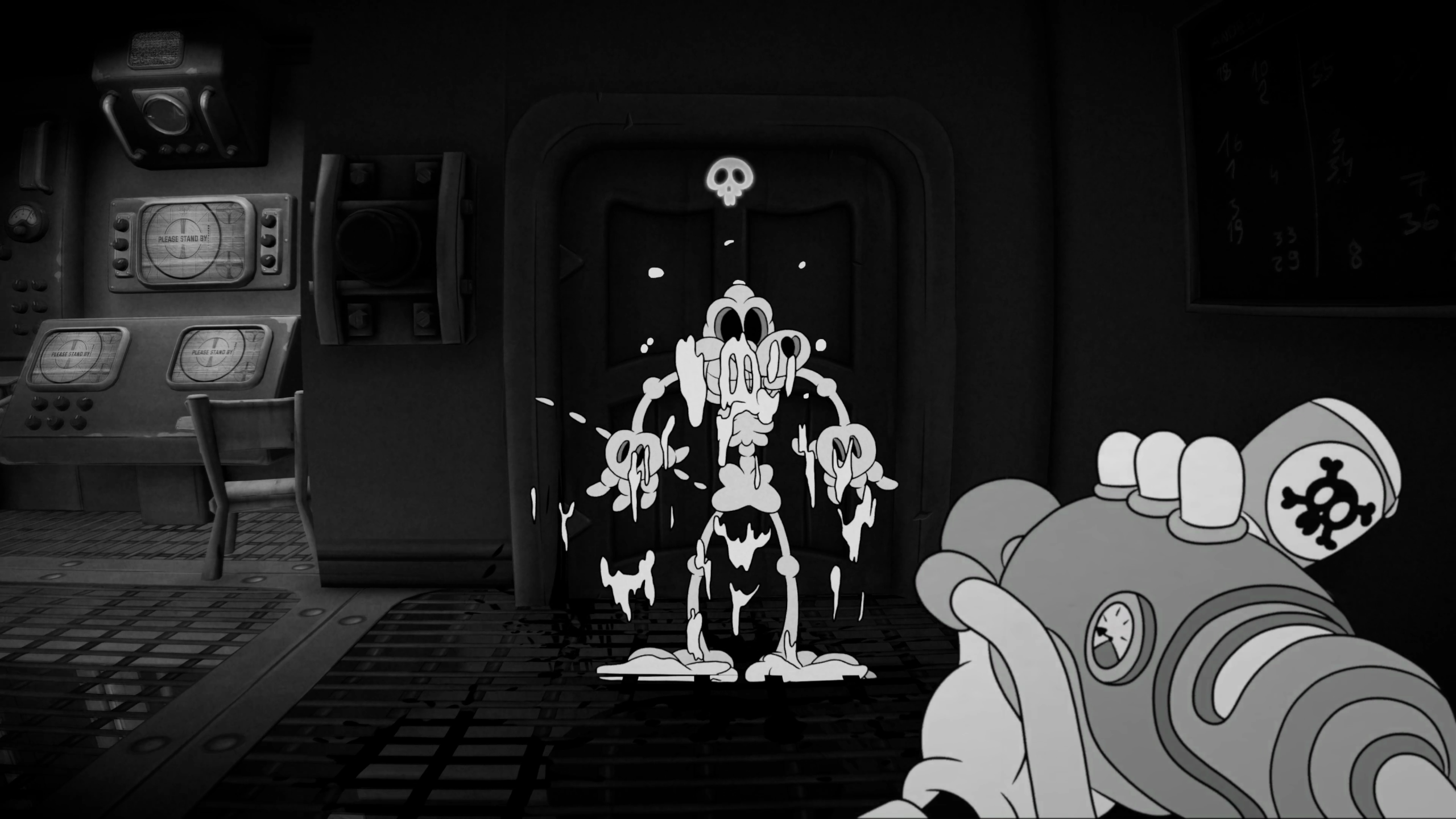 When you wanted to select a mission, you would go to Jack’s car, and then an overworld map would open up. You would then drive the car to the mission location. The map was really big, with so many locked or grayed out locations. Multiple ended up being unlocked with story progress, while others stayed unavailable. I was not sure if there was something I missed or possible DLC locations, but it left me frustrated. This goes back to the idea that we only scratched the surface of this world. To further this point, there was no mission replayability, nor did the game allow you to go back to the different locations. Potentially missing out on collectibles and secrets.
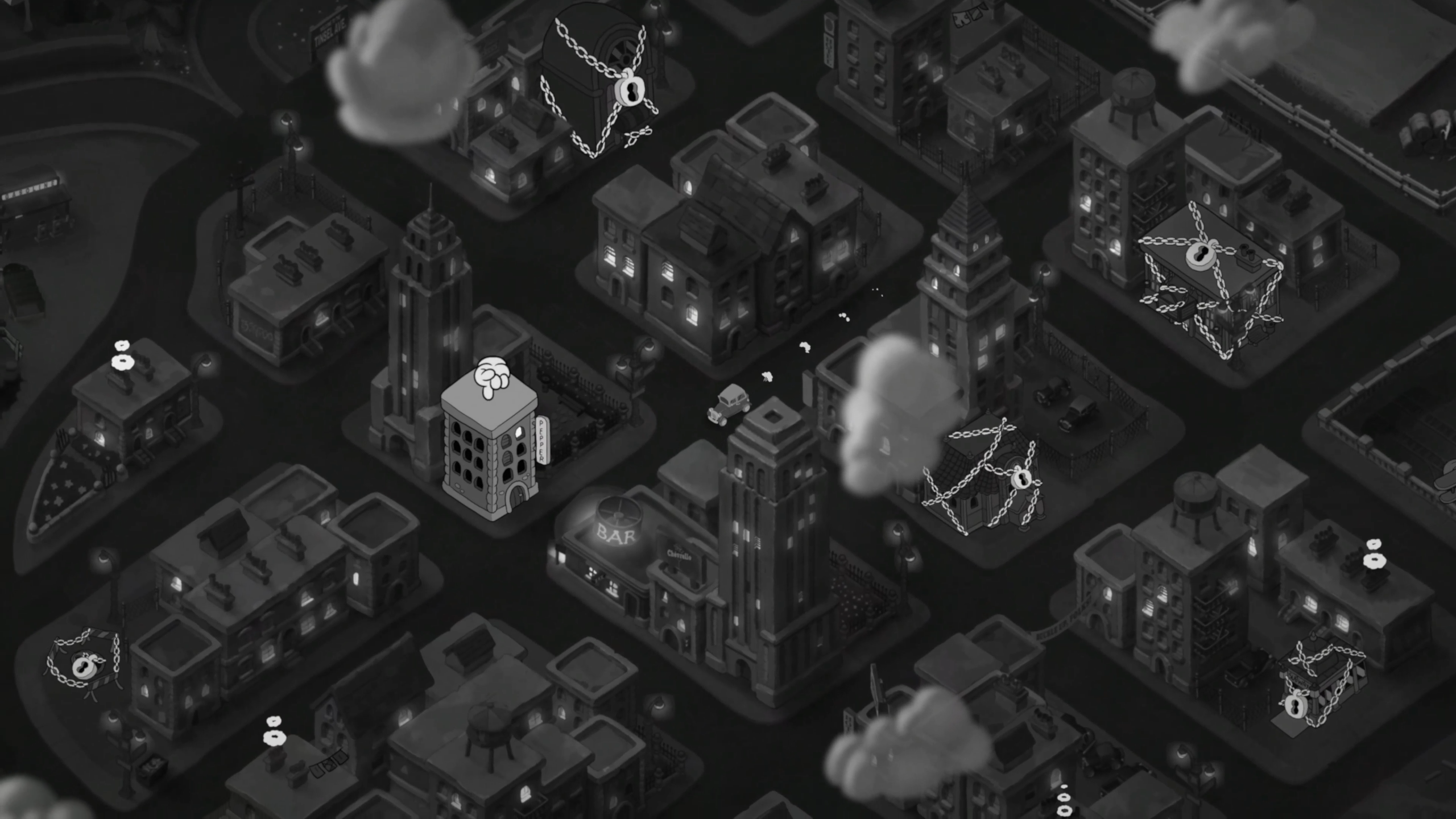 I enjoyed the level design of each mission. Each portion felt so detailed, you could tell all the hours the animators put into this. Every room you walked into was a gorgeous setpiece that you wandered and fought around. I loved being in a level and seeing through a fence or a window something obtainable; it just really invited this sense of exploration, like “Ooo, I can’t wait to figure out how to get there” or how it played into the story. I appreciated each location so much that I wanted to revisit them with my new abilities and weapons to help explore potential new levels, in a Metroidvania way, but as I mentioned, this game is only dipping its toes into the possibilities of this IP.
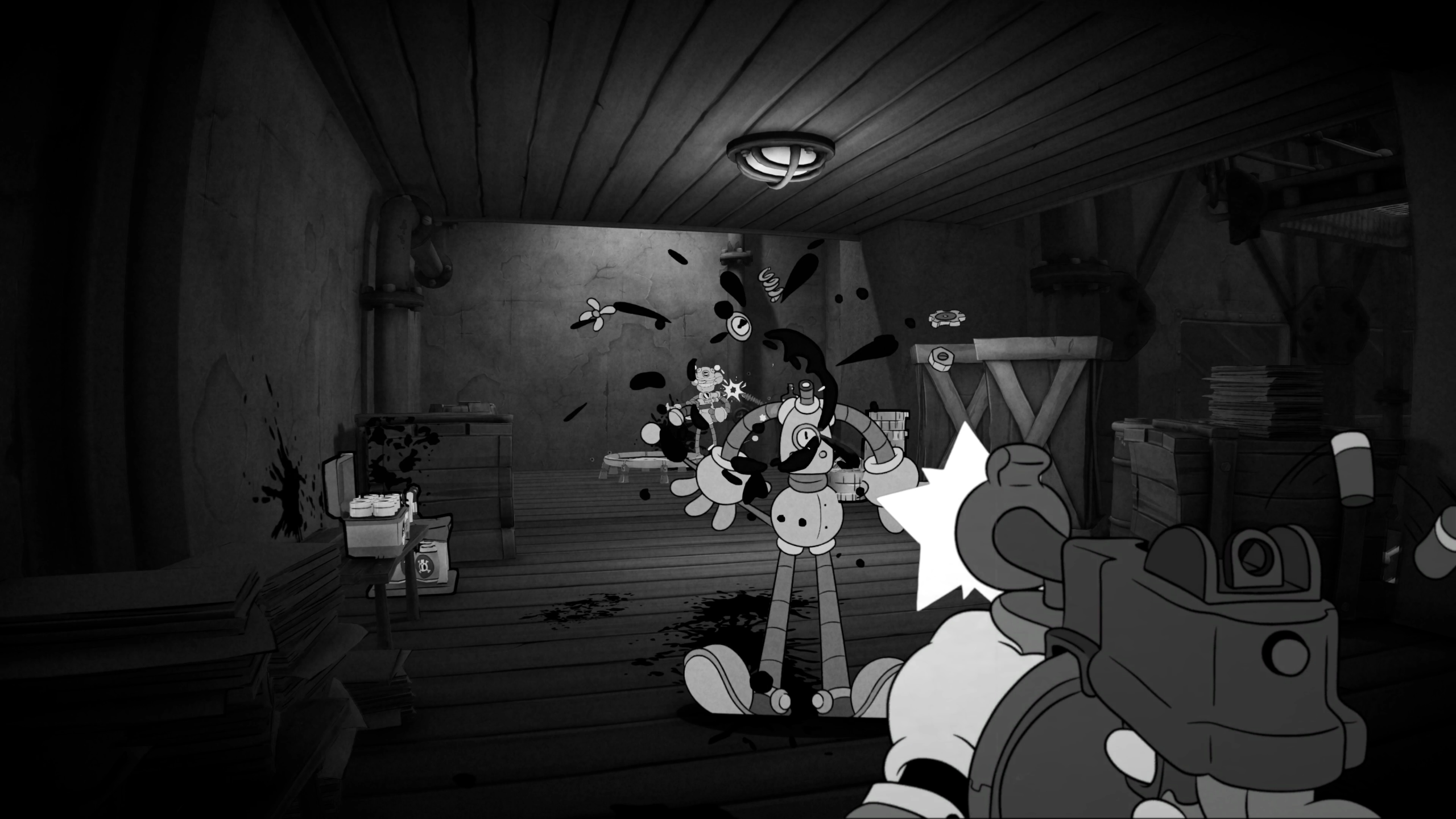 Secrets were truly a dime a dozen, and they varied in difficulty, which was welcoming and added to the traversal. The letdown was what was at the end of the secrets. The majority of the time, it was just cash or ammo; more rare were baseball cards or strips of comics. Schematics used for weapon upgrades can often be found as well; they were the only secrets that were worth the hustle.
Earlier, I noted the animations of the weapons and how special they were. The same cannot be said for the guns themselves. As the game progressed, you unlocked new weapons. Despite having a variety of firearms, I found myself really sticking to 2-3 guns the whole game. The guns unlocked in later portions of the game felt more cumbersome than useful. I think of a game like Bioshock Infinite that shows you a little animation after you receive a new ability. This animation helps the player learn the extent of the abilities, and I think this would have been helpful for the equipment in Mouse. Despite their flaws mechanically, they look beautiful, and their names are fantastic. The Tommy gun in this world is a “James Gun”, come on, that’s just good old-fashioned comedy.