
It was a brisk winter of 1992, and my friend Jason took me to see a new game at Aladdin’s Castle that he promised would change my point of view on fighting games. Having been a Street Fighter II champ (in my head) for years, I was skeptical of his obnoxious claim. Sadly, and also delightfully, Jason was right.
Mortal Kombat introduced the world to a new level of fighting that went well beyond the typical fighting arcade experience. It brought photorealistic people that were animated far better than Pit Fighter (much love), a bevy of different martial arts and characters, and, of course, the brutal fatalities that sent parents and the video game industry into a tizzy. The latter half of that sentence, we could spend an entire article on the lunacy of parental guidance, bad politicians, and uninformed people who firmly believed that Nine Inch Nails (NIN) was a rap band. I’m not kidding. Someone thought that.
Anyway, with the emergence of MK, it set a new standard for the fighting genre. It inspired games like Samurai Shodown to make their unrealistic pixelated fighters perform brutal finishes in 1993. SNK made it fun, though. Anyway, every fighting game that reared its head after MK’s release had to take into consideration what a rebellious 90s teenager wanted, and how it could be delivered to them to satisfy their Mortal Kombat tastes. Simply put, Mortal Kombat set a new bar for nearly every fighting game to reach.
Now, 33 years later, Digital Eclipse brings a wonderful reminder via their new release, Mortal Kombat Legacy Kollection, that shows how things started with the MK franchise, where they went, and why this game series created an important shift in the fighting video game genre. And this collection brings about everything you want from it.
Let’s get kicking on this.
Pieces and parts
The Mortal Kombat Legacy Kollection is broken down into several categories. The first one is probably the reason you’re purchasing it – the games. Beyond just the games, you also get a wonderful journey down the history hole from the series’ inception to modern times. Aside from those two major features in this collection, the game features good online and offline play, a fantastic library of character profiles, and a music player featuring the OST of all the games included.
Anyway! Let’s talk games.
Games Included
The games in this collection span from the 1992 original arcade release all the way up to 2003’s Gameboy Advance release of Mortal Kombat: Tournament Edition. Somewhere in the middle lies the wonderful 32X translation (32-bit! RAD!) and the SNES and Genesis games that stirred up quite the controversy that eventually, and forcefully, led to the creation of the ESRB. There’s a lot of goodness here, and some bad. The latter means that some systems probably shouldn’t have tried to translate MK to them (looking at you, Game Gear).
Anyway, the list of what is included is as follows:
- Mortal Kombat – Arcade Game (1992)
- Mortal Kombat – Genesis (1993)
- Mortal Kombat – SNES (1993)
- Mortal Kombat – Gameboy (1993)
- Mortal Kombat – Sega Game Gear (1993)
- Mortal Kombat II – Arcade Game (1993)
- Mortal Kombat II – Genesis (1994)
- Mortal Kombat II – Sega 32X (1995)
- Mortal Kombat II – SNES (1994)
- Mortal Kombat II – Gameboy (1994)
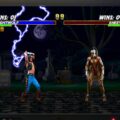
- Mortal Kombat III – Arcade Game (1995)
- Mortal Kombat III – Genesis (1995)
- Mortal Kombat III – SNES (1995)
- Ultimate Mortal Kombat III – Arcade Game (1995)
- Ultimate Mortal Kombat III WaveNet – Arcade Game (1997)
- Ultimate Mortal Kombat III – SNES (1996)
- Mortal Kombat Trilogy – PlayStation (1996)
- Mortal Kombat Mythologies: Sub-Zero – PlayStation (1997)
- Mortal Kombat 4 – Arcade Game (1997)
- Mortal Kombat: Special Forces – PlayStation (2000)
- Mortal Kombat Advance – Gameboy Advance (2001)
- Mortal Kombat: Deadly Alliance – Gameboy Advance (2002)
- Mortal Kombat: Tournament Edition (2003)
That is quite the list. Most of what you see here is good to great; some are duds. It happens when you cross platforms or when you try to do a spin-off.
What I found cool about this release is how it handled the game’s quality of life improvements. For each arcade game, players can change difficulty, which feels the same regardless of whether it’s on easy (or maybe I just suck at MK), they can train on fatalities, change the control schemes and game settings (including turning on and off blood/violence), and even save their games and come back to them later. There are a lot of ways players can change their gaming experience, which makes this collection very accessible to all types of players, good and bad.
These types of options are also available on the console and handheld versions of the games. One caveat on that statement — each game has its own limitations on how it can be changed, so not all games are the same. Regardless, I’m impressed by the different ways to change the gaming experience, especially on those arcade titles. They could get downright difficult at times. At least I don’t waste quarters now.
To help make this collection a bit livelier, the game allows you to save replays, and it keeps track of your progress. Those are little things that maybe aren’t huge deals in the Mortal Kombat Legacy Kollection, but they are small details that keep people competitive. We have a few writers on the site who would live off those additional gameplay elements added in this collection.
As for the controls in this game? They have been refined for modern gaming consoles, which means you have much better accuracy with your execution. That is important if you have ever played this series. Knowing which buttons to hit, where you need to move your character, and how to pull off fatalities requires nearly perfect controls. Trust me, the controls are far better than popping a quarter into an arcade machine and having a damaged joystick to fight with. Trust me, that’s no fun.
Overall, I enjoy the game collection that is included with Mortal Kombat Legacy Kollection and all the small changes that Digital Eclipse made to make the experience customizable and more modern. I do wish that the collection was extended beyond 2003, as I think it ends on a dud, but I’m sure there are some major legal and financial hoops to jump through to make that happen.
Now, let’s discuss some history.
History Discussion – A Blast from the Past
Thank you, Bob’s Burgers, for that title.
Anyway, there is a portion of this collection called The Krypt, which features a segmented documentary about Mortal Kombat’s inception. Small note before we jump in, I was baffled about why Atari’s logo popped up during the first load screen of this release, but now I know. Digital Eclipse used the same type of history-laden timeline that was featured in Atari 50, and it works very well.
When you enter The Krypt and load up the documentary, you will find an actual timeline that moves left to right, and occasionally down. The timeline features a bevy of chronologically logged moments of when/how the group of devs, led by Ed Boon and John Tobias, came together at Midway to make Mortal Kombat, what they had to solve to make the game work, and how they bumped into and applied fatalities to the gameplay mix. It’s a neat history lesson that digs deep into the ’90s and pulls out the best parts of the development for the original game. In addition to the documentary, the timeline also features small blurbs of information, one-sheets, and other goodies that help lay down a better trail of the game’s journey.

And that’s only the first part of the documentary.
There are multiple chapters to it! Which means you just don’t stop at the first game’s creation, rather you’re in for the whole journey through several games (and movie moments). All of which is chock full of good information and behind-the-scenes material. I’m surprised by how well this was done and what pieces and parts were included. This feature alone is worth the collection’s price. I love Atari 50 for this exact reason, and adore this collection because of the amount of effort and care that went into it. It’s a solid history lesson on everything you would ever want to know about the series’ journey.
It’s good stuff.
Anyway, on that note, let’s wrap up this review.
Conclusion
Mortal Kombat Legacy Kollection from developer and publisher Digital Eclipse exceeds expectations. While the collection doesn’t bring all gaming gems to the surface, it brings enough good arcade and console translations with new features and improved controls that make it an easy sell. To boot, the documentary about the series’ history is well done and also worth the price of admission.