
Welcome back, Kojima’s masterpiece.
One of the biggest questions over the last few decades has been whether, and when, Konami would bring Metal Gear Solid 4: Guns of the Patriots to modern consoles. Born on the PlayStation 3, with its awful cell processing chip that developers struggled to use, this beauty of a game propelled the MGS franchise to an entirely new level of gameplay while also pushing forward Blu-ray technology (which is why it only ended up on the PS3). The fourth title in the series delivered a bigger world for modern gamers, outperforming Metal Gear Solid 3, which also set the series on an entirely new path compared to its predecessor.
Anyway, while its original creator had moved on to bigger, more spectacular things, Konami was left with the task of converting it from its Cell-processing roots into a simpler codebase that would run smoothly. This couldn’t have been easy, as I remember hearing rumblings about the processor’s inflexibility and rigid nature back at E3 in 2007. I mean, did anyone ever wonder why PS3 games were mostly streamable on PSN rather than downloadable? Well, you got your answer.
But I digress.
Konami finally cracked the code and has created Metal Gear Solid: Master Collection Volume 2, featuring Metal Gear Solid 4: Guns of the Patriots, Peace Walker, and Ghost Babel. How did Konami do in its almost certain plight to bring the latter and former to a modern console? They did pretty darn well. While the games have aged, especially Peace Walker, a PSP release, slight tweaks in controls, without changing much else, will at the very least bring back some good memories of what made these games special. It was certainly worth the wait.
Now, the biggest uphill battle for Metal Gear Solid: Master Collection Volume 2 is translating these games to a modern console. As one would assume, control schemes and expectations for how a third-person game should work are very different from what they were in 2008. In a way, these games have translated well into a modern form, though not perfectly.
Let’s get right into it.
Metal Gear Solid 4: Guns of the Patriots
Starting with the reason players want this collection, Metal Gear Solid 4: Guns of the Patriots has had the most tweaking to cater to modern gamers. The controls have been tightened and are less frustrating, more rumble has been added, and movement feels a lot less robotic than it did back in the day. One of the most frustrating parts of the MGS series over time has always been the controls. Aiming, switching guns, moving into position, crouching – you name it, it was always a bit of a pain in the ass. Most people originally excused these issues because of the story and other bells/whistles, but they were always a problem in nearly every release in the series. The only exception was Metal Gear Solid V, where Kojima changed the controls to make movement and aiming far more modern and manageable.
Anyway, to the point, while MGS4 isn’t anywhere near as comfortable with controls as MGSV, Konami did a great job of getting most of the annoying controls fixed for this release. The game feels far more comfortable, which lets you focus on the dramatic conclusion for our boy, Solid. At the very least, it helps the player focus on the game rather than curse the controls.

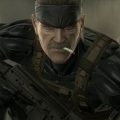
As for the rest of the game’s revival in a modern gaming world, it brought back some feels. The story of Solid Snake’s last face-off with Liquid Snake, while uncovering the faults of nanobot technology, is more than relevant to our modern world. How Snake navigates his own issues and tries to connect and correct the wrongs of his past makes the journey entertaining and emotional. Its narrative is powerful, as is the character development of both the main characters and the enemies. In other words, it’s a fantastic narrative that is still fun to experience and play, capturing one of the highest points in PlayStation history and gaming history. While the story is great, as is the action and the wonderful secrets the game contains (and a bevy of weapons to use and enjoy), it does have its faults.
In a wonderful Kojima-style way, it’s a rather chatty game. Players will see a lot of cutscenes, which isn’t surprising given the source, and at times the game will feel more like a movie than an interactive experience. I get that nostalgia is a big draw for this release, but it doesn’t change the fact that there are far more meaningful cutscenes than action-driven moments. For gamers who didn’t experience this back in the day with Kojima games, or who have forgotten how Death Stranding was over the last decade, this is typical of the creator’s design. So, does this mean the game is ‘less than’ for it? No, it’s still an epic story that deserves all the cutscenes it contains. Playing through it again, outside the original excitement of its release, brought to light how much goes on in its cutscenes and how I wished during my experience that I got to shoot and maneuver through several lands, rather than just sit and watch.
On the graphics side, it’s been cleaned up a bit, but it still maintains that high-end PlayStation 3 quality. I’m not sure anyone expected this game to look different or to match the remade version of Metal Gear Solid 3: Snake Eater, but if you did, please tame your expectations. Konami’s collection releases typically capture the heart, soul, and visuals of the originals. Metal Gear Solid 4 is no different. Visually, it’s going to look aged at times, but it maintains the original look while adding some spruced-up moments that respect the original release. It looks good and serves as a clear reminder of the technological leap between the PlayStation 2 and PS3.

Overall, while not a lot has changed, it’s still nice to see MGS4 finally make it to a modern-day console. I think it’s been far too long to bring this gem back to a wider, younger audience. It was certainly a Kojima masterpiece that deserves some revisited love and praise. Konami did a wonderful job with how they treated it.
Peace Walker
As much as I love MGS4, I am not completely in love with Metal Gear Solid: Peace Walker. It has some glaring limitations in its re-release, though it still contains a story worthy of continuing the Metal Gear Solid 3 narrative. And believe me, the story drives this experience.
The story follows Big Boss as he and his friend Kaz build their own mercenary army for hire. While training and preparing for whatever lies ahead, a girl named Paz and her professor, Ramon Galvez Mena, approach the group. Both want to protect Costa Rica’s interests, and they’re concerned about Metal Gear and AI issues. Offered a nice base in the middle of the ocean, a haven that shows up in MGSV, Snake and Kaz agree to help and make their way to Costa Rica to see what’s up. Of course, not all is as it seems.

Compared to its connected prequel, MGS3, this story is good but also a step down. The story is much smaller in scale than MGS3, which isn’t surprising considering the system limitations it ran on with the PlayStation Portable, and it just seems more like a side quest than a main one. While it did add some much-needed details when MGSV arrived later, it still doesn’t quite live up to the hype because of the epicness of the game before it. Metal Gear Solid 3 was a very tough act to follow, especially on a smaller scale.
On the controls side, this game came out on the PS3 and Xbox 360, but didn’t improve upon the controls. It had some control limitations because the PSP version lacked good hardware. Those limitations carried over to those systems and into this current release. This game is vastly different than what you would expect from the series, as pointing a gun (R1) and shooting (square button) is an awkward stop-and-go process. Simply put, it’s included for the story connection, not much of the gameplay, though it did emphasize the separation of action, stealth, and army-building gameplay elements. It veered from the original Kojima formula and made the experience much deeper with more ways to play. Some of those separated gameplay elements made their way into the fifth game, as the army and base-building aspect was addictive at times.

Overall, MGS: PW’s inclusion in this collection helps solidify the MGS library, but because of its control limitations and some truly bland graphics straight from the PSP copy, its only real strength is the story. Maybe that’s enough for MGS fans out there.
Metal Gear Solid: Ghost Babel
I honestly didn’t know much about this one, but now I do. It’s bonus content for Metal Gear Solid: Master Collection Volume 2 and a standalone story by Konami set in a universe where Metal Gear Solid 2 never happened.
The story follows a group of guerrilla fighters called the Gindra Liberation Front who have stolen a Metal Gear prototype and brought it to Central Africa. Snake’s job is to infiltrate, take down the group, and retrieve the prototype before it’s too late. A simple story for a simple game.
Metal Gear Solid: Ghost Babel was a game created by Konami and released on the Game Boy Color in 2000. This bonus content brings the original top-down view, properly colorized for modern gamers, and feels like the first two Metal Gear games on the Nintendo Entertainment System. While not canon, the game still brings with it a chatty storyline that reminds players how far the Metal Gear series has progressed from its original roots.

Don’t get me wrong, its lack of connection doesn’t help its case compared to the other games in this volume, but it’s still nice to see a bit of history most didn’t get to see when it was originally released. I think it’s neat and a good bonus to the overall collection. It certainly brings back a simpler gaming era that, at times, feels more entertaining than modern gaming. The lack of controls and the need for complicated controls make it a relaxing gaming experience.
On that sweet note, let’s wrap up this review of Metal Gear Solid: Master Collection Volume 2.
Conclusion
Metal Gear Solid: Master Collection Volume 2 from Konami brings back some solid games to add to an already budding Metal Gear Solid collection. Of course, the star of the collection, Metal Gear Solid 4: Guns of the Patriots, is the real reason why players will want this, and it doesn’t disappoint with its story and perfect PS3 translation.