

Mega Man Star Force Legacy Collection is a near-complete collection of the Nintendo DS’ Mega Man titles. Featuring welcome quality of life benefits, new-and-improved (for the most part) audio/visuals, along with online play, it’s a must-have for a Mega Man fan wanting to replay some of the best titles in the series’ history.
Capcom’s been on a roll lately with their legacy title collections. Last year saw the release of their Capcom Fighting Collection 2 (spoiler alert: we think it’s great), 2024 saw the release of MvC Fighting Collection (another spoiler: it’s a blast from the past that took us for a ride), and in 2023 we saw the release of Mega Man Battle Network Legacy Collection (final spoiler: I was enthralled, but I may be biased due to my being a Battle Network superfan). To say that Capcom is formulating blueprints for rereleasing legacy content and preserving history is an understatement; they’re thoughtfully and carefully presenting today’s players with curated collections of titles that ultimately celebrate their multi-decade legacy. I know Capcom is not the only legacy studio with a massive catalogue of games, but they seem to be one of the few who are taking the time to reach into the dusty archives and let new players join in on the fun.
I realize now that I have said the word “legacy” multiple times in the above paragraph. I’ll try to be creative with my word choices for the rest of this review.
 Fast forward to today, March 2026, Mega Man Star Force is getting the collection treatment with Mega Man Star Force Legacy Collection. When I originally previewed it earlier this month, I had spent all of maybe 2 hours with the game (primarily focusing on Pegasus). I liked what I saw. The question now remains: Since writing that preview, do I still enjoy MMSFLC? The short answer is: Yes.
Before getting to my longer answer, here’s a rundown of what is included in this collection:
- Mega Man Star Force Leo, Dragon, & Pegasus
- Mega Man Star Force 2 Zerker x Ninja & Zerker x Saurian
- Mega Man Star Force 3 Black Ace & Red Joker
- Online play (with netcode)
- Enhanced graphics (optional filters), enhanced music (optional selection between the original and newly arranged soundtrack), extensive fine-tuned quality-of-life features (like autosaving, speed boosts, encounter rate adjustments, HP boosts, and more!)
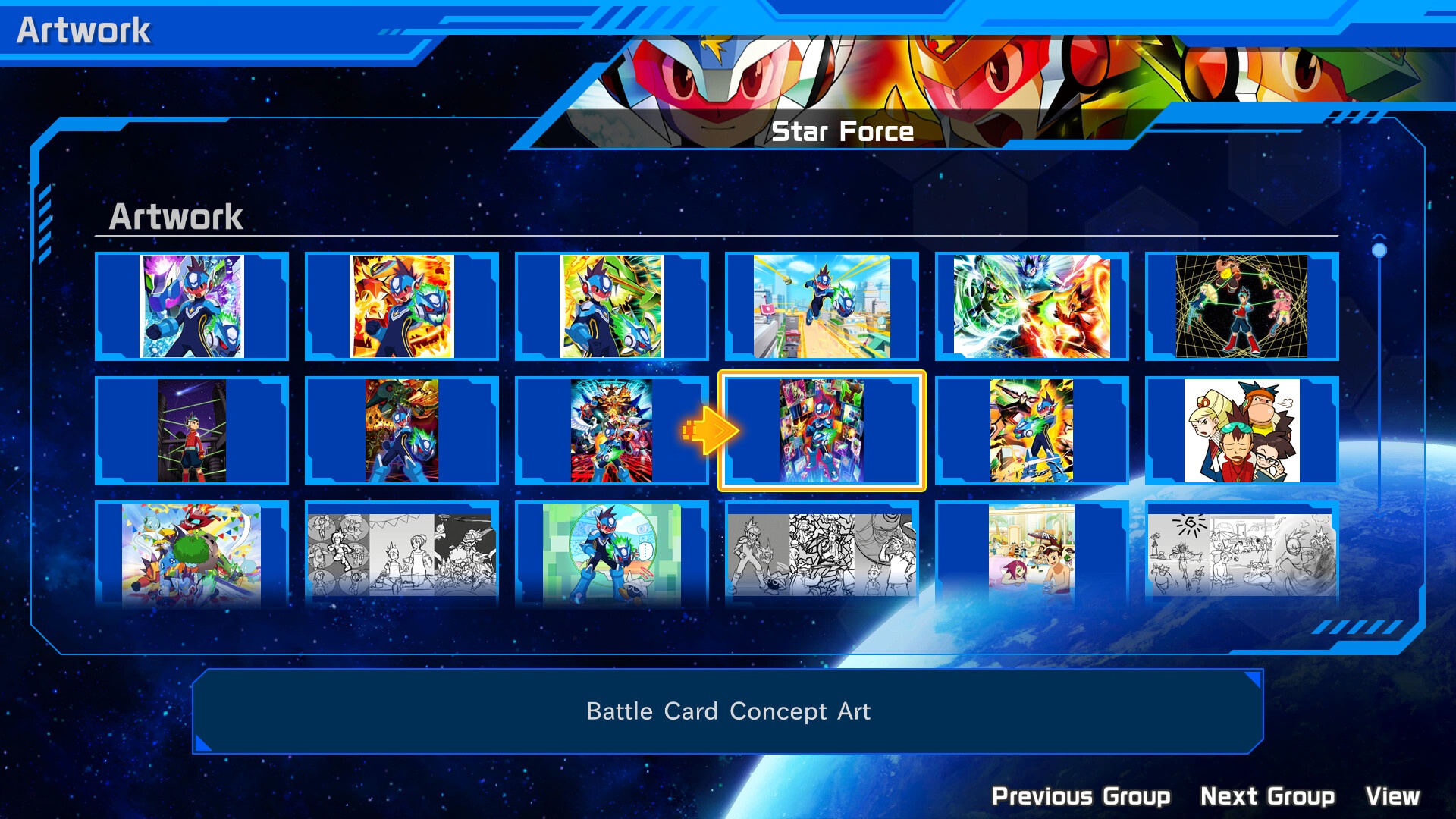
- Galleries of art and music content
- …and more!
In case you (like me) didn’t go to school for math, that’s seven total games. Sure, it’s technically 3 distinct games with their multiple versions, but who cares? It’s complete – that’s all that matters. This collection is the closest thing players in North America can get to playing the full Star Force experience that Japanese players had way back when.
Moving onto my longer answer, I generally enjoyed Mega Man Star Force Legacy Collection, despite my general discomfort with the pivot from Battle Network’s 2D combat to the over-the-shoulder combat of Star Force. My biases aside, it’s hard to ignore the quality of Star Force’s storytelling throughout its three entries. The first and third game (especially) adopt a darker, mature, and more serious tone than anything from Battle Network. Across the three games, Geo’s story arc evolves from following a reclusive fifth-grader to a friendlier adolescent who understands the interpersonal and functional (thanks to the game’s BrotherBand system) benefits of companionship. Characters shirk traditional anime archetypes and are formed around missing emotional puzzle pieces from Geo’s life. Thankfully, you don’t have to be intimately familiar with the Battle Network series’ lore or gameplay, as Star Force’s games take place far in the future and are self-contained within its own universe. There are several nudge-nudge-wink-wink moments for longtime Mega Man fans, but not enough to make an unfamiliar player feel left out for not knowing some arbitrary plot point.
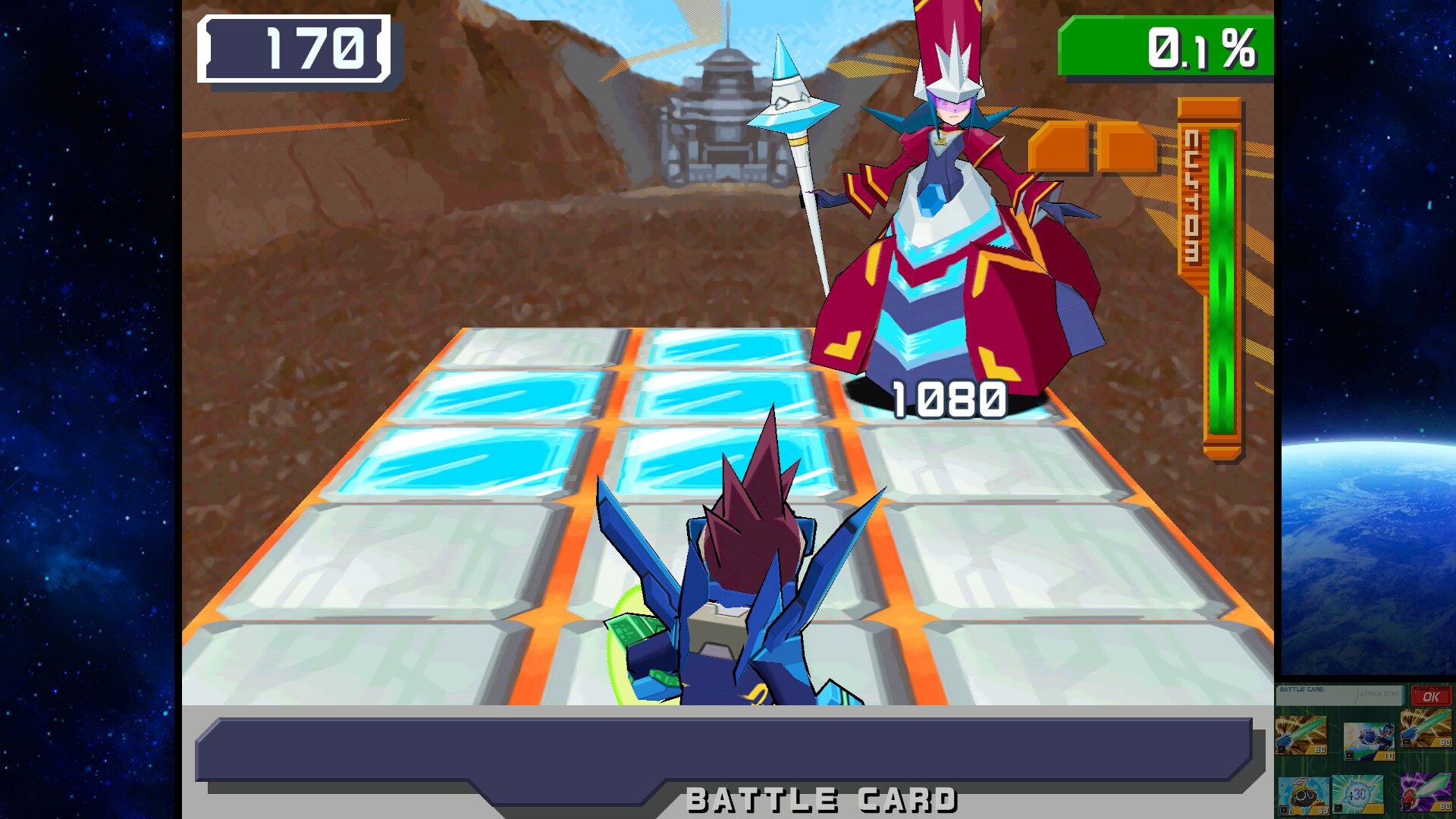
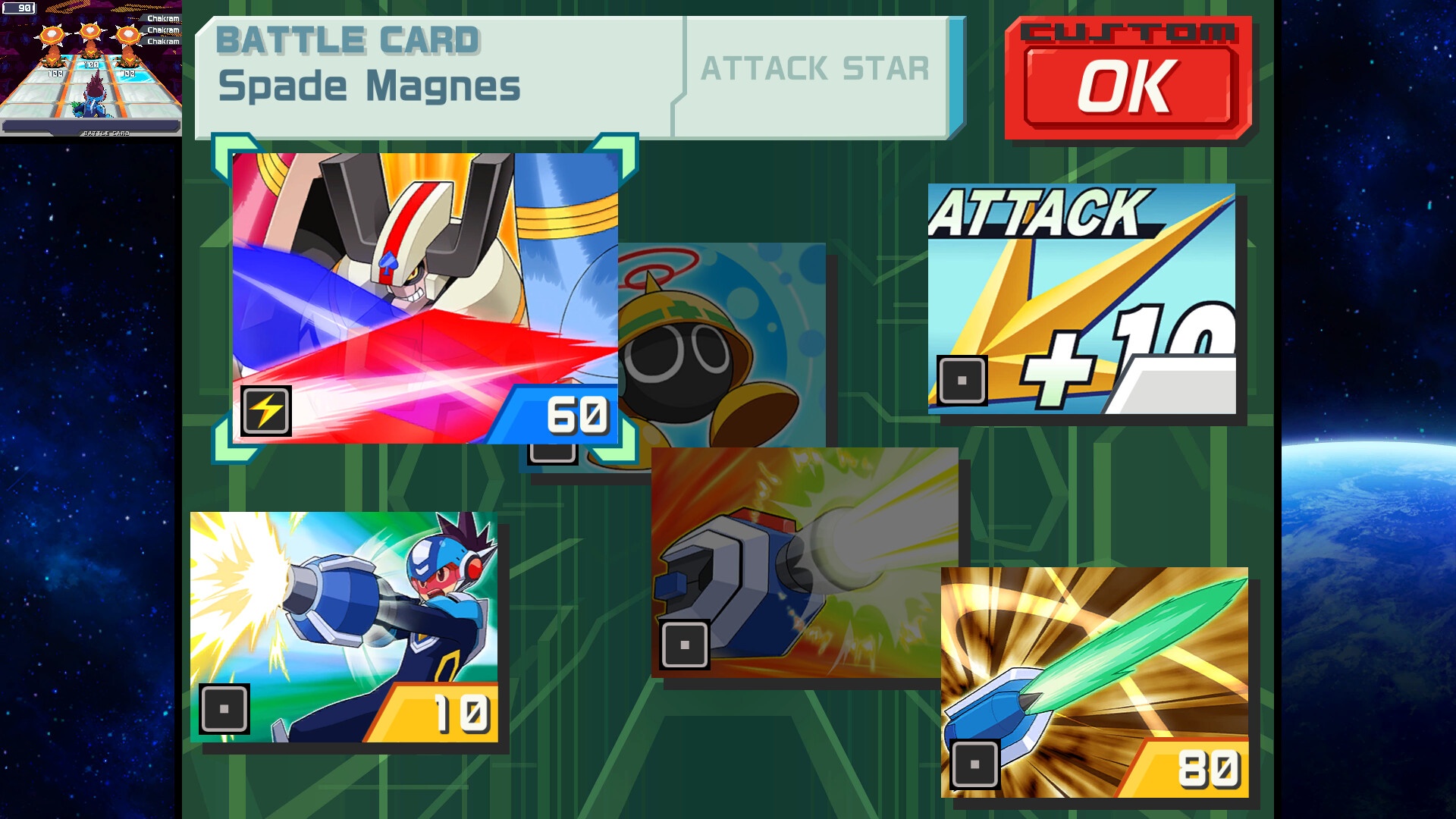
As mentioned, Star Force’s combat takes place behind Geo’s shoulder (ala third-person view) rather than on a 3×3 2D plane ala Battle Network’s combat. The action is boosted in this view, but it comes at the cost of movement and attack creativity. Repositioning the perspective over-the shoulder leads to a limited pool of Battle chips, but I’m willing to forgive that drop in variety if it means that combat is less restrictive overall. Compared to the nuances of Battle Network’s Battle Chip categories, Star Force’s deckbuilding is less restrictive and doesn’t require the player to make deep strategic decisions long before a battle begins.
 What I’m trying to say here is that Star Force overall feels better from an outsider’s perspective. If the complexities of Battle Network didn’t gel with you, it’s likely that Star Force will feel miles better thanks to its approachability. Either way, combat remains solid and action-packed, standing the test of time in ways some other legacy Mega Man titles fall short.
I cannot shake off the fact that there was a missed opportunity to fix some longstanding mechanical issues that make an otherwise fantastic game (especially Star Force 3 – it’s one of the shining stars of the entire Mega Man series) a great game. The chief issues here are meaningfully boosting some lesser-known mechanics (like bringing out a specific NPC into the overworld) and the management of sidequests (jobs) – I could only take on one at a time. Some of the jobs ended up requiring searches online to figure out what I had to accomplish/where I had to go because of the utter lack of information that NPCs provided. I’ll admit that reworking some of these mechanics may require an overhaul of the game into a remake territory, but it still doesn’t feel good to be restricted by some of these shortcomings.
It’s almost ironic that MMSFLC was released during the time when Meta was releasing their Meta AI glasses. Geo Stelar’s Visualizer functions similarly as Meta’s AR-dream in that equipping the Visualizer adds an augmented reality layer onto the overworld. The traditional Battle Network gameplay loop of walking to everyday objects and trying to “jack in” into discrete and isolated Cyberworlds is no longer a thing. Star Force’s Wave World exists as a layer on top of the real world, only able to be accessed when Geo steps onto an orange portal (a “Wavehole”) and is teleported into the aether where the world can react to his presence only when he fixes a faulty machine or teleports out of the Wave World to otherwise inaccessible locations (like behind a store counter, to the surprise of the clerk who thought he was alone). The act of Wave Changing is far more direct than attempting to find unmarked ports, but it also restricts the environmental creativity that accompanied the unique computers in Battle Network.
I realize now that much of this review thus far has involved me making comparisons between Battle Network and Star Force. As one who’s familiar with the former, it’s hard not to make those comparisons when playing the latter for the first time.
 What’s most novel about MMSFLC is how it translated Star Force’s dual-screen gameplay onto the Nintendo Switch’s single screen. In my original preview, I discussed how “[t]he default setting has the main screen positioned front and center on my screen while the second screen is shrunk down and positioned in the corner. When I press the ZL button, the secondary screen increases and becomes the focus while the main screen shrinks. This screen-switching function can be done at any time, keeping gameplay fluid.” This remained consistent throughout my testing. There were moments when I was expecting whiplash from switching screens over and over, but those events never came to fruition.
MMSFLC has done something that other legacy publishers can and should consider when attempting to port Nintendo DS games to newer and single-screen hardware. The approach of switching between screens only when necessary is a great way of keeping the player’s attention on what matters rather than wasting valuable screen real estate with static imagery that might not matter at any given time. For those who want the “true DS experience,” there’s a visual setting that allows a Switch to be rotated vertically to show both screens (I’d imagine it’s great on PC for those with vertical monitors, too). If Star Force (as a DS game) can be successfully ported with little compromises to the Switch, then other DS games can and should, too.
In terms of the collection’s updated graphics and audio, I’m not the biggest fan. I alluded to the HD Filter looking overly smoothed during my preview – this remains the case for all of the games. Imagine if someone took Photoshop’s smoothing tool and went ham with smoothing everything out to the point of some text being virtually unreadable. The AMAKEN logo especially looks unreadable with the HD Filter enabled, resulting in me disabling the HD Filter for most things but enabling it for combat. The new art for Battle Chips looks fantastic, though. The new voiceover, too, is worth keeping the sound on when playing.
Unfortunately, I wasn’t able to test out the Online play functionality during my review period, so I cannot comment much. However, I was able to test out Battle Chips in the Waiting Room against a dummy just to see how the previously unreleased chips functioned. It was a great testing space. That said, if MMSFLC’s netcode is anything like MMBNLC’s online play then it should feel and play great. The only question, though, is how long the interest in the online play lasts. MMBNLC’s interest dwindled relatively quickly after launch, but it’s thankfully supported by a small group of folks on Discord who still play. Let’s see what happens.
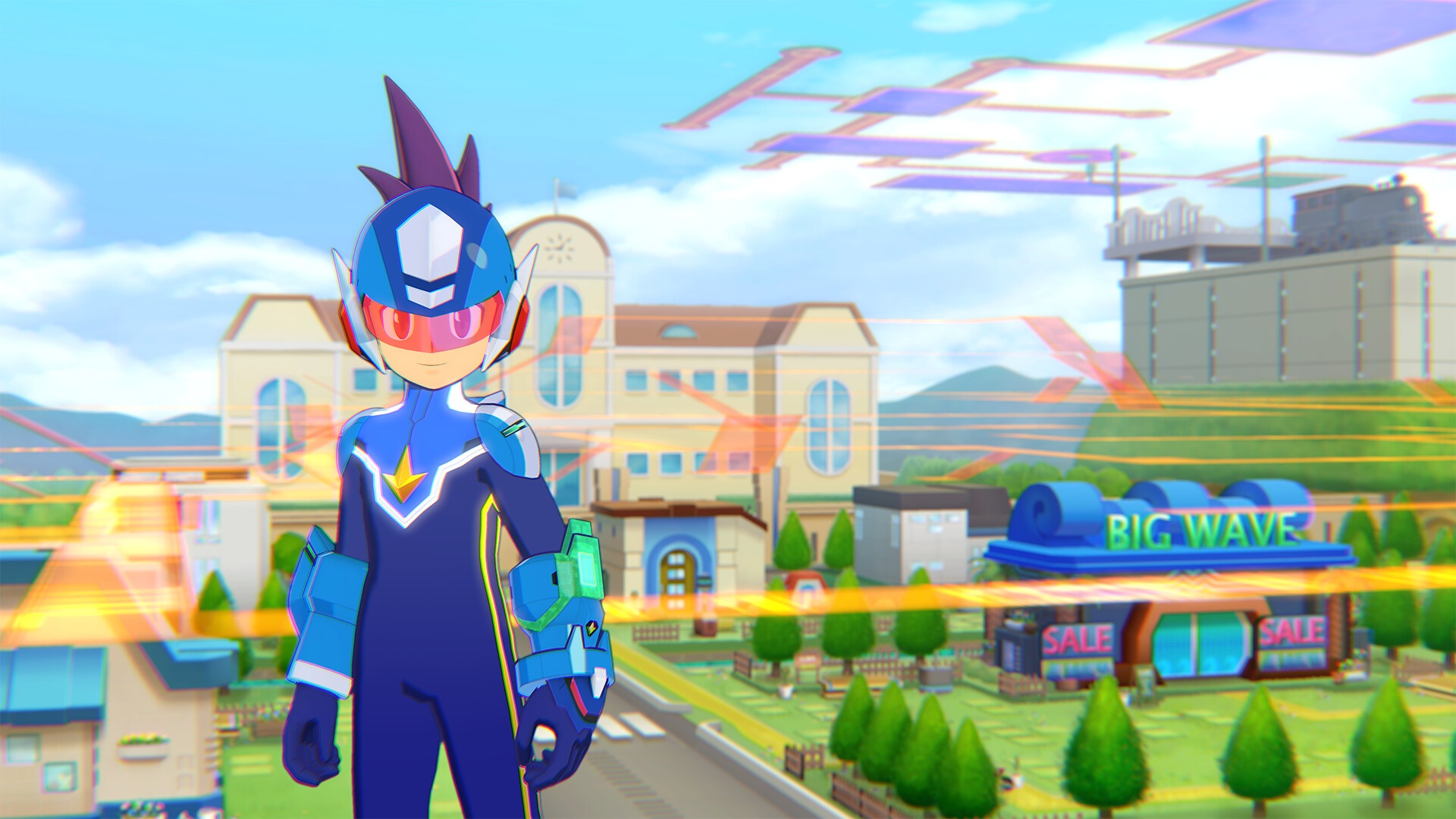 The MMSFLC main menu’s 3D model of Mega Man is a nice touch and is similar to the MegaMan.EXE avatar in MMBNLC, but it’s less interactive. Pressing the L button triggered a conversation or two, but he disappeared when entering any of the menus. It would have been better for him to react to my menu choices (like saying “Good choice!” when selecting one of the games or saying “Connecting Online!” when choosing the Network option).
I was hoping for Operate Shooting Star (a Japan-only spinoff side game) to make its way into this collection given its overlap with Star Force. Sadly, it did not. While MMBNLC featured some artwork from OSS and other spinoffs, there’s little mention of it here. This makes MMSFLC feel slightly less than comprehensive despite the other additions that brought Western audiences to parity with what players originally experienced in Japan. Don’t get me wrong, MMSFLC is more-or-less complete in terms of its base game content. Like many others, I’m a Mega Man superfan – please give us the last bits of missing content, Capcom!
Let’s wrap this up.
Mega Man Star Force Legacy Collection is a near-complete collection of the Nintendo DS’ Mega Man titles. Featuring welcome quality of life benefits, new-and-improved (for the most part) audio/visuals, along with online play, it’s a must-have for a Mega Man fan wanting to replay some of the best titles in the series’ history.