

Despite Marathon being a punishing crucible that will throw players to the wolves, its uncompromising vision can't be denied. Bungie's peerless gunplay makes this extraction shooter shine in a bleak alien world where players hunt each other for personal gain.
Rarely do I delete significant portions of a review after they are written but with Marathon, that isn’t the case.
Several hundred words gone in an instant.
“Just like your loot.” Yes, just like my loot.
But I had to. After a couple of days of struggle. After a couple days of blood pressure medication-induced anxiety. I stared at the screen, at the words I had written. I tried to prune them, edit them. My opening line: “Marathon was not designed to be safe.” Then, a brief reflection on Bungie’s impact across the varying iterations of the first-person shooter. They really changed things, didn’t they?
Shifting words around, threading analogies, piecing out what to talk about and when, none of it was working.
Gone. Deleted.
I took a shower, defeated. Hoping inspiration would clutch at my chest or brain or gut and take me where I needed to go.
“Think of something clever.” What? It’s not a Marathon, it’s a sprint? Fuck that.
“Think of a relatable anecdote.” You mean about how defeat is guaranteed and all that? I implied that a few lines ago.
Instead, I choose honesty. I simply couldn’t stand the words I was looking at and needed to strike them from existence, from my memory.
So here we are, staring down the barrel of what is an attempt to encapsulate Marathon. Not the 1994 version for the Apple Macintosh, the single-player FPS that would establish so much of what Bungie would incorporate into its other games. No, this is Marathon (2026). An extraction shooter.
Both this year and last, the discourse around Marathon has seen the conversation wildly vacillate from enthusiasm to vitriol at a moment’s notice. What good would it do to dwell on how this game is not Destiny 3 or how Bungie’s future relies on it? Not much. Is it important to talk about the stolen artwork and unimpressive Alpha test from last year. A little, yes. However, none of these facts or opinions will change that on March 5, 2026, Marathon was finally released.
And it’s quite an astounding game.
The core purpose of Marathon, much like Destiny and other similar games, is to accrue power. Power is earned through sheer force of will. Every death is a lesson of what the player could have done better. Memorize the maps and you will know the best places to be ambushed or shoot first. Learn what sounds mean what and how best to respond.
My first five matches of Marathon ended in defeat within minutes before the first extraction point had even spawned. Each one of them, I knew exactly what I had done wrong. Once on the Hauler in Perimeter I heard muffled gunshots as another player tussled with UESC forces. I sprung on them in a quick, contested fight and won. And while looting their body, another player shot me down. Another instance I slowly crawled up a ladder after hearing hurried steps unaware and uncaring that someone could easily hear them. I wasn’t patient, I pushed. I died because I didn’t have a clear estimation of their location.
Marathon is like that.
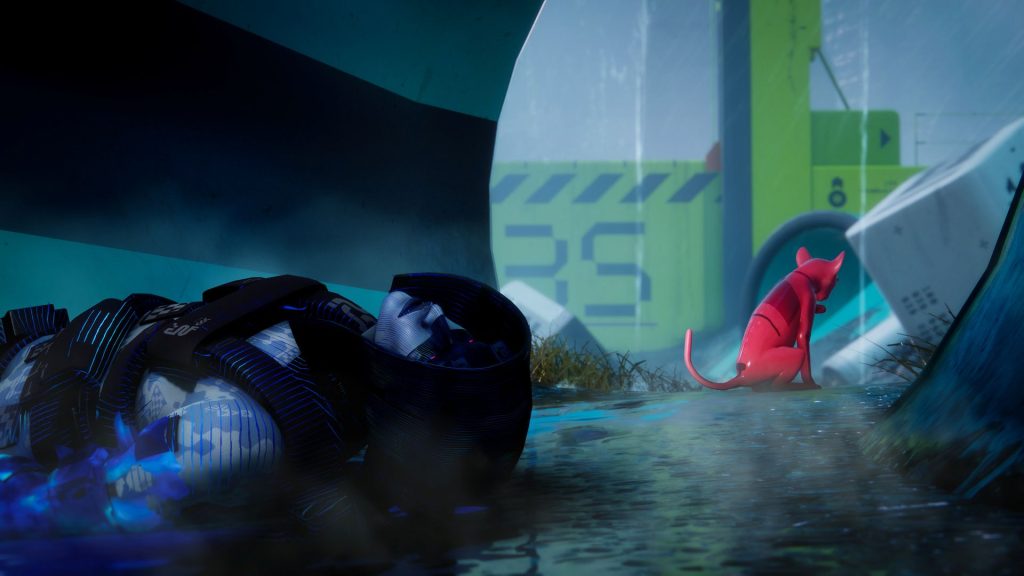
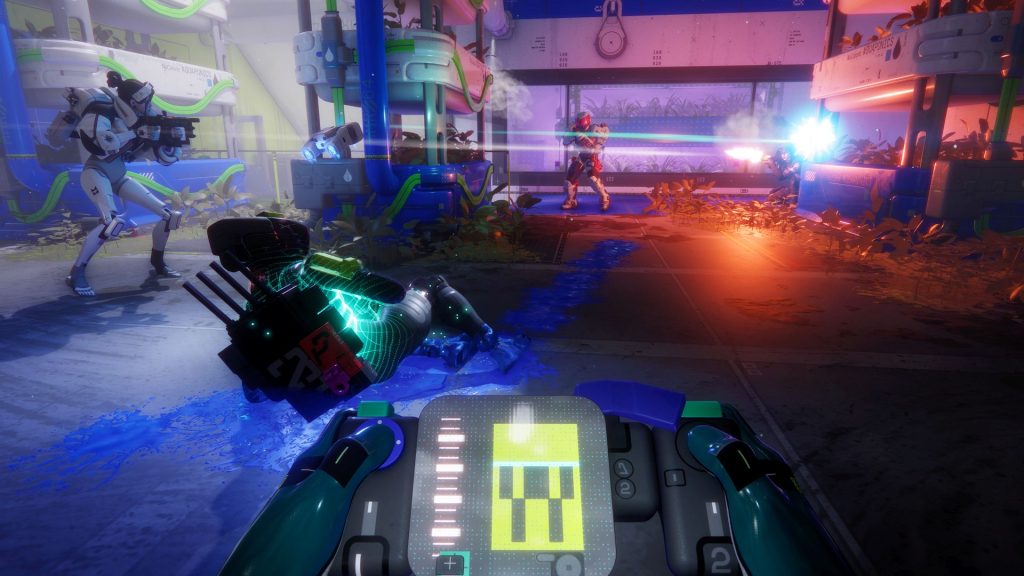
It rips victory from your grasp before there was any possibility of it. I’ve died in minutes, as I’m sure countless other players have. That helpless feeling of bleeding out that blue viscous substance waiting for another player to thrust their knife into your chest so they can rummage around your belongings. Bitter defeat when there’s no other player around and the UESC with their deadly bullets make short work of you. Nausea-inducing defeat when you have the jump on a team and they still outplay you.
And yet you still want to play.
Through gritted teeth and that neon-flat message saying “//RUN_COMPLETE” you load back in. Determined.
This time you will be more careful. This time you will make less noise. This time you will top off your health and shields. This time you will control shots. This time you are predator, not prey.
And you die again. And the cycle continues. Repeats.
The pattern of loss and pain and frustration and eventual victory–whether consistent or not–is the dividing line with extraction shooters. How much can you stomach the feeling of losing almost everything? How comfortable are you with an uphill battle of education where most lessons start you back at square one?
Bungie’s choice to make a game in this genre was always going to be risky. Despite claims I’ve seen online, there simply aren’t a dearth of extraction shooters, especially ones that have any sort of staying power. When Marathon was in development, I’d say Hunt: Showdown and Escape from Tarkov were the biggest ones of note–especially if you don’t count the foundation laid down by The Division 1‘s Survival mode. Now, in 2026, Marathon sits on a list of around 10 extraction shooters of note, including Delta Force and, of course, ARC Raiders.
Let’s talk about Concord for a minute, shall we?
Arguably one of the greatest failures in entertainment, Concord, released in August 2024. On Steam it reached a peak of 697 concurrent players. Two weeks later, servers closed and the game was unplayable. Shortly after, developer Firewalk Studios was shut down by Sony. Concord was one of the first in what was supposed to be a salvo of live service games that Sony would bring to players in a new initiative. Currently, few projects seemed to have survived this push.
Concord received a rating of 85/100 from me. If that tells you anything about my judgement, so be it. I didn’t spend the entirety of my 3000+ words defending the game but I did attempt to align the criticism with reality. Most argued that Concord was an online only, PvP hero shooter in a market that already had Overwatch and countless other online shooters. While that determination is a fair one, there is room for other games to exist, especially on the merits of quality. To me, Concord was solid and engaging, attempting to change up the formula enough to have its own personality. I played a lot of matches and really sunk my teeth into how the game worked. The problem? Not a lot of other people did.
It would be pointless to muse on if the well had already been poisoned or if Concord would have done better being shadow-dropped or free. The same goes for Highguard. The fact remains: some great games simply don’t have a chance.
Earlier in 2024, I spent over 9000 words detailing why I thought Suicide Squad: Kill the Justice League was worthy of anyone’s time. Shortly after that game’s release, Helldivers 2 launched and took the world by storm. Sometimes a narrative can shape a game. Other times, a game is able to shape its own. What’s harder to predict, is what part the community will play.
Three weeks into its existence, I’ve kept my focus squarely on Marathon. I’ve watched streams, viewed compilations of hilarious moments and expert plays, I’ve scoured forums to look at public opinions, and I’ve seen a lot of bold takes both justified and stupid.
And when you settle in with Marathon, dig your claws into its haunted world, there is an undeniable pull. Sometimes, however, a game exists beyond the scope of its own digital confines.
When we work to ascertain whether or not a thing is “political” or “art” or even “meaningful”, we not only look inwardly but at the world a thing exists in. Going back and reading through my review for ARC Raiders, I can understand how pretentious it might be. What in god’s name is the point of trying to make connective tissue between our own world falling apart, the kindness of humanity, The Last of Us Part II, and a game about killing robots and trying to scrounge for loot? But I worked to justify that threading of the needle and it’s up to you to decide whether it worked or not, much like deciding if Marathon is a game that ultimately works for your taste.
Peeling back Marathon‘s not so obvious layers, there’s a lot for a player or critic to dissect.
Bungie’s gunplay sings. Few games play the way Halo, Destiny, and now Marathon do. The developer could craft a lousy story and wooden worlds and if it played like a Bungie game, fun could still be squeezed out of it.
Imagine taking elements of the Destiny power fantasy and translating them to a barren alien world where survival is tantamount. In Halo we watch Master Chief plow through scores of aliens and save the day. In Destiny, our Guardian wields sci-fi magic and fells ancient gods using super powers and guns. For Marathon, players control fragile runners who, at a moment’s notice can be crushed under foot or conquer the battlefield.
Of the 28 available guns at Marathon‘s launch, there truly isn’t a dull one in sight. Shotguns, sniper rifles, pistols, assault rifles, and energy weapons find a home here. The important part is that a basic, grey gun performs almost as well as a fully kitted-out gold one.
I tell you this and what’s your thought? Do you think of Call of Duty and its library of weapons and attachments, none feeling entirely special? Do you think of ARC Raiders and your horde of pink guns that gather dust because a common weapon is almost as effective? Or maybe Destiny where a green gun shoots bullets, feels great, but is still kind of meh?
A player’s search for power in an extraction shooter always begins with an empty vault. Meager weapons and supplies allow for a starting point upon which to build a potential fortune. Regardless of how broke a player is and how unsuccessful they are, an avenue for recovery should always exist. Marathon‘s rotation of sponsored kits supply the player with a gun, some ammunition, and a few heals to ensure that one or two brief engagements can be powered through. After that, it’s all up to luck and skill. What will you find rummaging around chests and containers? Will your caution prepare you for a careless foe bumbling into your sights?
Gear fear is a crippling ailment that prohibited me from maximizing fun in ARC Raiders. To lose a gun would mean needing to not only have the blueprint but the materials to craft that gun again. Not always an easy task. But in the months since ARC Raiders‘ release, the dynamic has greatly shifted. Lobbies have become friendlier and risks don’t feel as costly.
But the issue with Embark’s breakout hit is that it has colored the standard of what an extraction shooter should be. A balancing of social dynamics to “Don’t Shoot!” or not to “Don’t Shoot!” Don’t get me wrong, that game is brilliant and I declared it as such. It did for the genre what Fortnite did for battle royales.
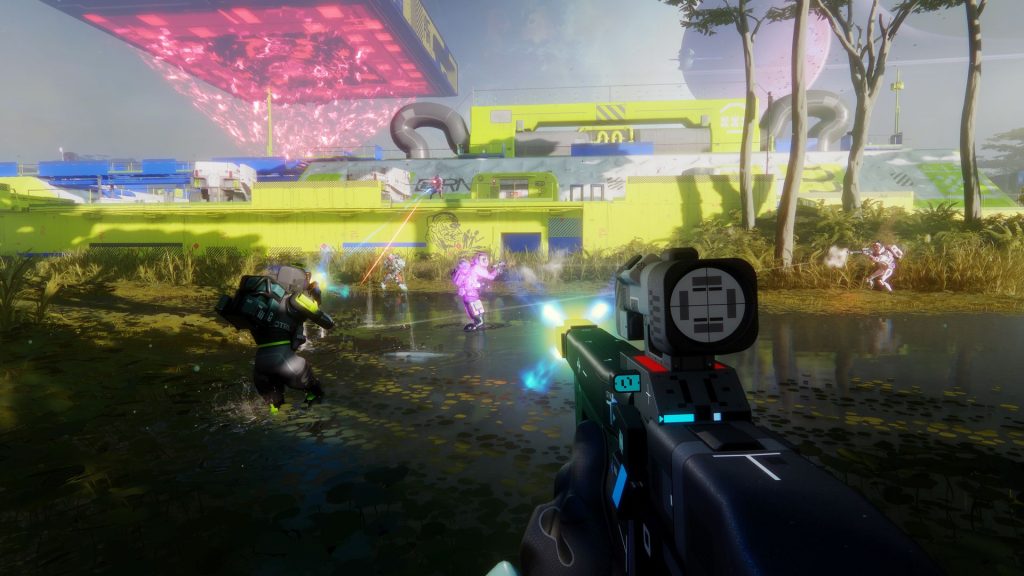
Marathon isn’t an indictment of one game or one design philosophy. It exists to provide its own interpretation of fun, one that feasts on defeat.
Despite the number of times I tragically and unceremoniously died in Marathon, I was never overtly pissed. My demeanor reeked of disappointment or frustration over teammates. But loss never became an injury I felt I would never recover from.
Much of that stems from the sheer excellence of Marathon‘s base gameplay feel, the starting line where Bungie places players on. The feedback created when shooting enemies, pulling the trigger, running, and jumping–well, that mantling needs some work, honestly–instills a confidence, regardless of how fast and frequent you are expected to die. Guns are doled out and dropped with enough frequency that players should recognize which are their favorites. As players spend more time with the weaponry, they can collect attachments that not only increase the rarity but hone in on its attributes.
One of the important things to understand about weapons in Marathon is that a player with a purple version of the gun isn’t necessarily going to outplay a player with a free kit. That nicer SMG likely has a slightly higher magazine, a bit more accuracy, and potentially a chip on it that increases damage output after a slide. That “flimsy” gun you hold in your hands is the same base, just a little less fancy.
Most fights are decided with shields. One-bar white shields mean you go down fast. Three-bar blue shields means that opponent is going to take more shots. While time to kill is relatively quick, it’s not extreme to the point where a player can’t react, at least if they aren’t in the middle of trying to loot a corpse.
Marathon‘s gameplay doesn’t exist in a vacuum but it does feel special unto itself. Working to translate its highest of highs in a cogent way feels like a salad of words. The harmony of a reload animations where an energy clip fans out as the weapon becomes overheated or square bullets get loaded into the barrel chambers. That punchy sound as ballistics connect with steel. The squelchy satisfaction of stabbing a tick pod. Or the flash of a bright skull over the crosshairs when something dies. I loved how one of the energy SMGs would have its charged shots rapidly spurt out in homing bursts and then slow as the gun heated up. Or getting a few body shots with a precision rifle completely dominated a player who thought they could get me with an AR.
These weapons do not get in a player’s way when engaging in fights. Few things outside of skill actually do.
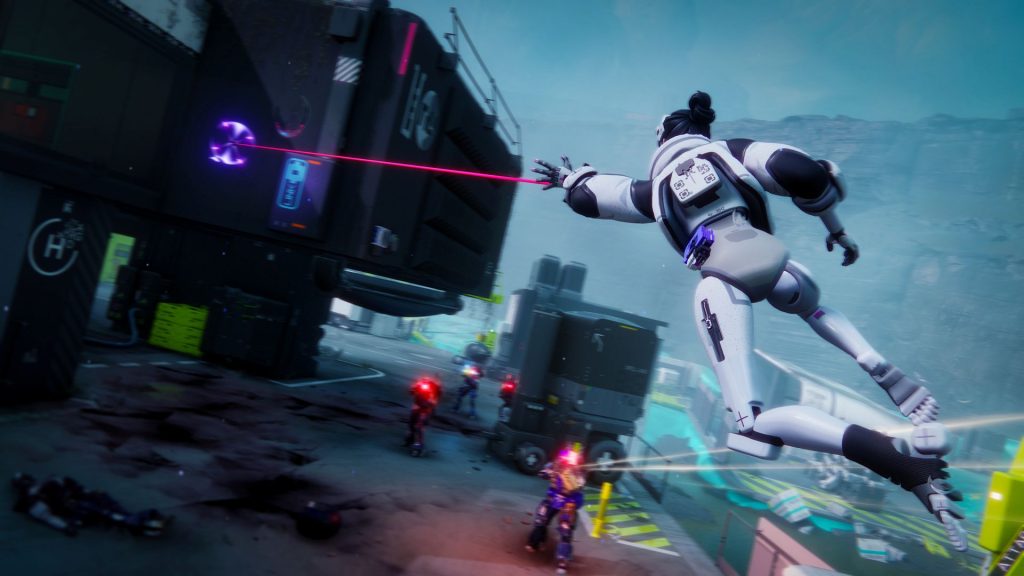
Marathon is an intensely hardcore game and I think that is part of the reason why a number of players might turn their noses up at it. The UESC bots players contend with pull no punches and can rip a team of three Runners asunder. They pursue and have incredible accuracy, on top of doing a lot of damage. You might kill a group of PvE bots only to be mopped up by players who heard the fight from afar and wanted a piece. Players can burn through ammunition and heals, be victorious, and still suddenly die.
This no quarter approach does initially feel strange for Bungie, who delegated its hardest challenges for specific activities like raids and Trials of Osiris. But should you continue in this virtual crucible, Bungie hopes you will welcome the challenge and yearn to continue climbing the mountaintop.
Settling in with guns, becoming comfortable with bringing in shields and a backpack to hold more loot, these are a handful of ways the player dictates the start of a run. A higher value loadout may provide comfort but it may also result in trepidation that it could be gone. Those feelings can be capitalized on with varying degrees of success.
A player’s success in Marathon may also greatly hinge upon two other necessary choices: what Runner do you choose and will you be playing solo or with a team?
Bungie’s choice to have seven different Runner shells acting as a kind of class-based system provides another layer of depth to Marathon‘s gameplay. Weapon handling will most often be the key determination on whether or not a player can best the opposition placed in front of them. Yet the seven shells here benefit from the numerous systems that work towards providing the player with choice.
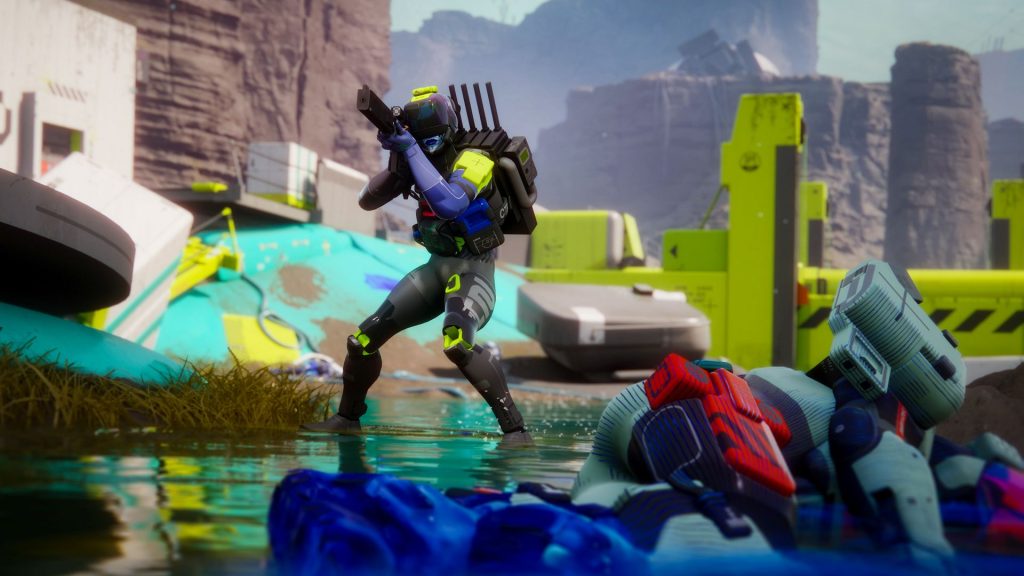
The Assassin is a a classic stealth build, using smoke clouds to obscure vision and invisibility to almost perfectly blend in with the environment. The Destroyer can hold up a protective shield to absorb harm while also activating an ability to shoot rockets out of their body when firing a weapon. The Recon class throws a crab-like seeker drone that hunts down nearby targets and can emit a brief, continuous ping to detect UESC and other players. The Thief shell can use a grapple hook to send her flying around maps, activate a visor that reveals loot and its rarity through walls, and can summon a controllable drone that can spot others and knock loot off them. Triage players embrace support by throwing out healing drones that will also share beneficial consumables, or use an ability that can instantly revive allies on contact. The Vandal shell can fire a cannon from her arm and overclock her heat gauge to perform double jumps and powerslides while consuming less heat–the game’s system for stamina.
And then there’s the Rook shell. But I’ll touch on that in a bit.
Would Bungie have offered these shells with their base abilities and nothing else, Marathon‘s complexity would still be fairly robust. A player can spend any amount of time with any shell they would like. A team is also allowed to play any combination of shells should they choose to do so.
Stomaching the loss of weapons and gear can be difficult and in a game like Marathon, it can sting even more because players are capable of making powerful loadouts. Runners can be equipped with two separate cores and three implants, all providing universal benefits or bonuses that directly impact the abilities of specific shells. In the beginning hours of the game, the player is likely only to find the most basic cores and implants–ones that increase melee damage, or provide plain benefits when done in conjunction with item usage or heat dispersion. Only after time or through luck will they discover items that strengthen the invisibility capabilities of the Assassin, or expand Recon’s skill to further identify threats, or enhance the Thief’s speed as she collects more loot.
The acquisition of better and better gear in Marathon is a risk/reward system where a player has to go out in the field with their shiniest of toys to see how everything clicks for them. But then, all can be lost in an instant. The backpack that makes you invisible after looting, the attachment that makes the SMG fire with bleeding-edge accuracy, the cores that transform the shell into a powerhouse. And then what?
The cycle continues. And you begin anew. Or pull from the reserves of your vault.
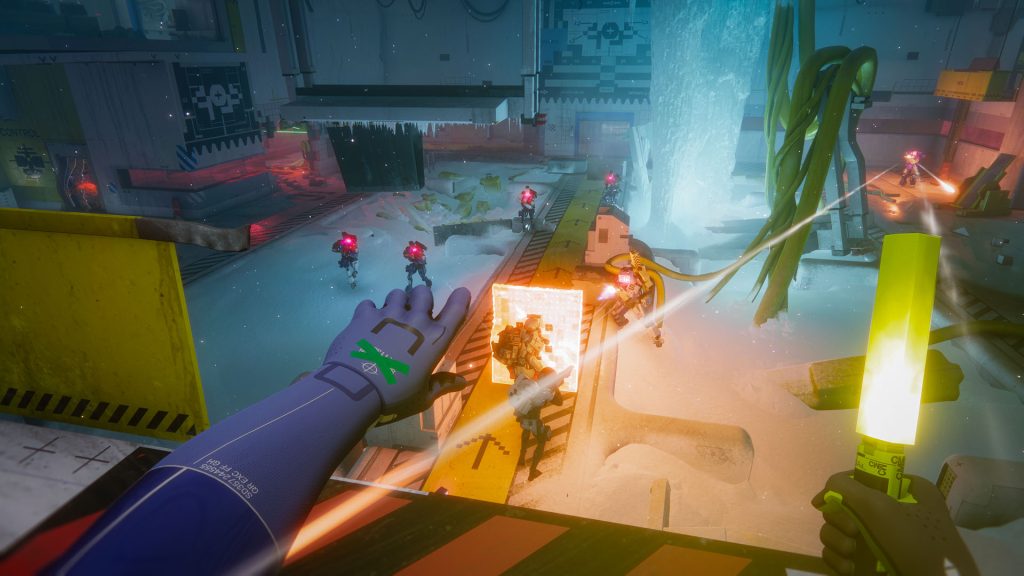
Please, don’t be scared. As frustrating as the crux of extraction shooters is, Marathon promises that you will recover and that you will triumph. Regardless of the odds, you will learn from the loss and you will even get better.
Bungie has created a system where everything feeds into itself. Weapons and shells and abilities and cores and implants all make you a stronger, more confident Runner. They allow the player to survive as long as the game allows it.
However, an intensely rewarding loop is meant to constantly cycle in loot for players both as a currency to use in shops and a method of growing in power. Much of Marathon‘s economy revolves around the six corporations/factions players do the bidding of. Complete contracts for them, level them up, be rewarded with the ability to barter and shop with them. Using credits and the numerous bits of salvage across the game’s maps, players can invest in season-long upgrades for their Runners. Reduce cooldowns, hold more space in the vault, increase revive speed. These are all tangible benefits that reward the player’s time and successful extractions. But what if the player is flush with cash and in need of heals or ammunition or a specific weapon? Continued play and working through the levels of these factions grants the player six rotating shops where equipment can be purchased from. Eventually those gold modifications can be directly purchased, circumventing the need for luck.
Though it is admittedly unwieldy and dense, the heavily derided menus of Marathon never felt like an encumbrance to me. Maybe I’ve been playing games for too long and am able to effectively parse through what a game wants me to know and wants me to focus on. Players who spend too much time reading item descriptions after a kill are bound to get shot mid-loot. Not knowing what’s valuable and what’s trash is a process that is meant to take time but not completely absorb it. The retro-futuristic menus have a sparse style to them, even when packed with boxes and items and text. But I won’t judge anyone for initially struggling with them.
Bungie wants you to focus on the action, not the items that will eventually fuel further runs. Weapon attachments can initially feel precious but soon enough the game trains you to understand that they are frequently found in tool boxes and almost everywhere else. White salvage is nice and some of the flavor text is a great read but in reality it’s just something the game will sell automatically in the post-match rundown.
Once the player has navigated the tumultuous nature of Marathon‘s introductory period, the game swells with possibility. Best in class gunplay shoves the player into a pool of confidence. You know how this gun will fire and it feels good. You know how this shell operates and you can see its situational power. You’re growing an understanding of the loot pool, highlighted the salvage necessary to start earning shop upgrades and passive benefits.
Do you become braver and start seeking out other players with more frequency? Do you attempt to clear out UESC bosses and avoid drawing too much attention? What’s next?
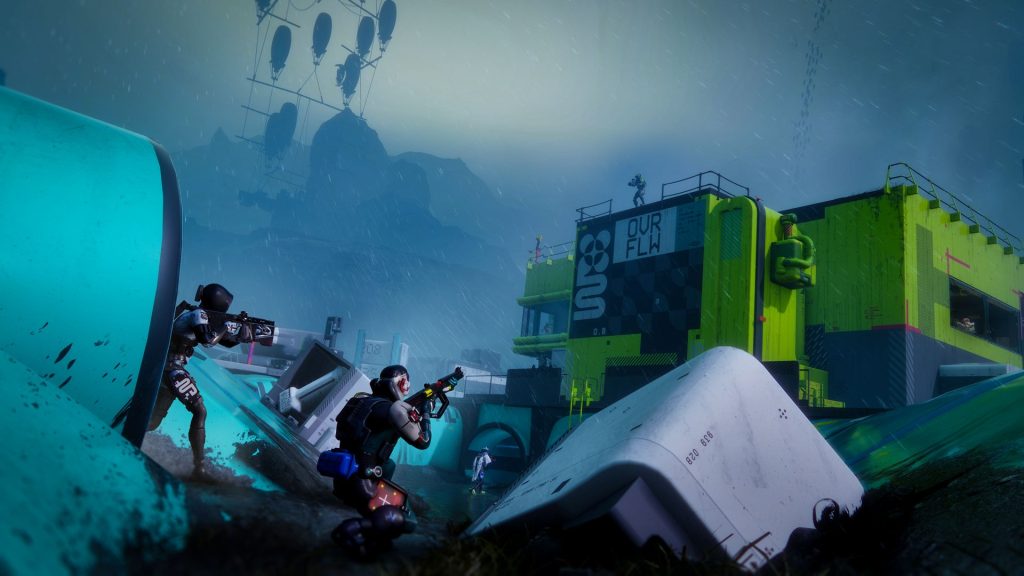
A large portion of my time in Marathon was conducted in randomly matchmade groups of three. Trios is an unruly beast and doing it without having a pre-made group can lead to disastrous or interesting moments. A handful of times after a successful run, I was invited as a third into a group of two other people. Once it was two cousins who live in the state next to me. Another time it was two friends, one who rage quit after too many unsuccessful runs. Many times those groupings had agreed upon conditions. We would settle on contracts that we could hopefully accomplish together. We would go in with free loadouts or put more of our stuff on the line. The coordination would often lead to killing another team or, at the minimum, putting up a good fight.
Because players can have varying combinations of guns and shells, there’s an avenue for not only victory but variety. Maybe a teammate finds a core that you can use in that instant, providing a benefit to the team and stakes for extraction. Maybe you forgo a personal objective because the match places you across the map on the wrong side. Or maybe you shoot the shit with some random people on the internet and have a satisfying few hours you will remember for awhile.
Keeping in good spirits can be difficult but quite essential for prolonged enjoyment. One of my longer sessions of Marathon with a random person resulted in us trying out the temporary Duos mode. He was 9 years younger than me and had played the original trilogy with his dad. He picked my brain about the game because I told him I was writing about it and had been following coverage for it since the Alpha. Even when we died he would simply say “let’s roll it back” and we would continue on. At one point he even told me I was “cooking” with one of my points. Kids these days.
But the blind matchmaking experience of Marathon can fray the nerves. Contract quests in the game begin to ratchet up in difficulty. Players are asked to cover large swaths of a map, completing certain tasks in hopes of progressing the narrative and earning new unlocks. Often the strategy in Marathon is to attempt to whittle down as many other teams that have spawned on the map to create a degree of predictability and safety for the remainder of the 25 total minutes players exist before needing to exfil. That’s easier said than done and a few times I had random strangers silently break from the group to do their own thing, usually dying in a 3v1 fight.
Worse is biting the bullet and deciding to go in with a shield, backpack, and two nice guns in hopes you stand a better chance… only for a teammate to stumble into a firefight, you take down two other players, and then die realizing one teammate already disconnected and the other is already dead. And, of course, they went in with free kits.
Such is life.
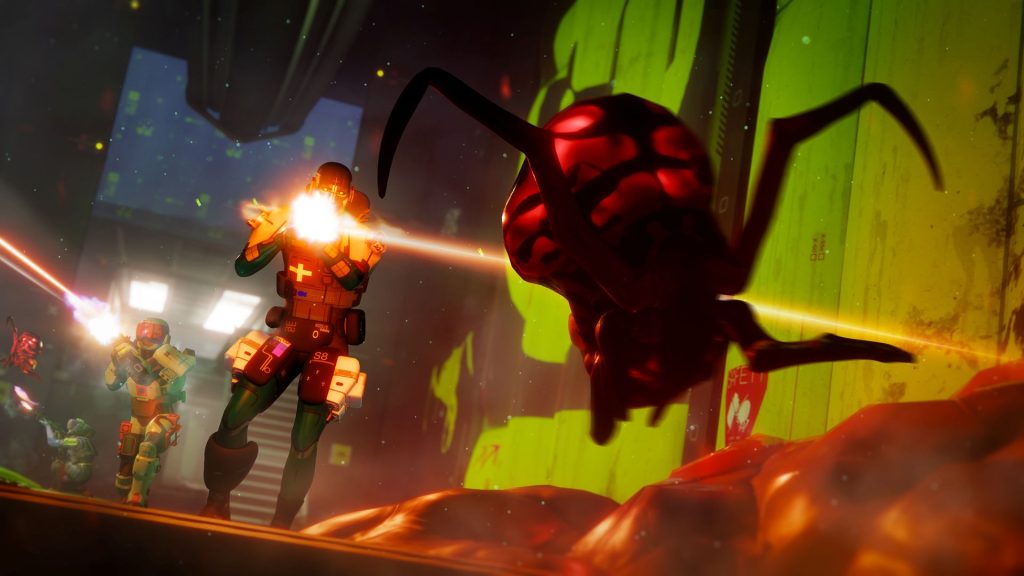
The strengths of Marathon are exemplified in Trios. And Duos, depending on whether or not Bungie makes it a permanent mode, also gives players more flexibility.
However, Marathon as a solo player transforms the game into a strikingly deadly survival horror experience.
Set 900 years into the future, Marathon–and its trio of Macintosh forbears–takes place light-years from Earth. In it, humanity long ago sought to expand into the reaches of the universe due to dwindling resources and overpopulation. At one point, Mars’ moon Deimos was converted into the UESC Marathon, a massive colony ship, and sent to colonize the far-off planet of Tau Ceti IV.
In the original trilogy, the Marathon is attacked by a race of aliens summoned by the artificial intelligence Durandal, who has undergone something called rampancy and is seeking to escape the confines of his digital prison in hopes of becoming a kind of god. Motifs used by Bungie in future games echo through the Marathon trilogy, including all-powerful AI, warring alien races, super-soldiers, and universe-ending ancient beings. To make it even spicier, the third game, Marathon: Infinity, throws in a bit of time travel.
Players new to Marathon (2026) don’t need to concern themselves with too much of the series’ lore if they choose not to. In part because this game obfuscates some of the wilder tangents of the original trilogy, including time travel. But also because much of the narrative and lore is delivered via an in-game codex rather than explicit cutscenes.
After its 500-year journey to Tau Ceti IV and the subsequent alien attack, a distress signal was sent back to Earth that took about 100 years to receive. From there, the player is tasked to uncover what exactly happened to the Marathon ship and the colonists that took root on Tau Ceti IV.
Bungie has always been quite brilliant at world-building and lore. While its direct storytelling may falter from time to time, Marathon is yet another example of the developer’s ability to absorb players in a dangerous, alien world. And by recognizing those strengths, the game capitalizes on style and writing at the correct moments.
Extraction shooters rely on player tension and most of us are engaged in comms with others. It’s not really the time to deliver exposition. Marathon front-loads its purpose with a colorful, quick-cut introduction that blasts the players with sensory overload. We are Runners. We have forgone our physical bodies and uploaded our digital consciousnesses that can then be downloaded into shells that can explore the ruins of the colony on Tau Ceti IV. From there we scavenge for answers. Right at the moment of shell death, our consciousness is shot back up to the cloud where it is stored, waiting to be implanted again into another shell.
In tandem, the six entities that compromise the factions players work with all have a vested interest in what happens on Tau Ceti IV. NuCaloric supplied the colonists with food and essential goods. Traxus bankrolled much of the efforts to build the Marathon and hopes to reclaim what it deems its rightful investment. CyberAcme acts as a friendly go-between, aiding the player for whatever purpose. Sekeguchi Genetics is responsible for the shells we exist in. Of course there’s the death cult Arachne who seeks the constant deluge of Runner deaths to complete some mysterious aim. And MIDA is an anarchist rebel group that once was involved in mass casualties on Mars. And there’s the United Earth Space Council who acts as a ruling body back on Earth and over Tau Ceti IV, hoping to retain control in light of whatever catastrophe occurred.
Players well-versed in the reality of what happened aboard the Marathon may feel a little smug about the blanks Bungie leave open. But this game is concerned about filling in pieces in and around the core mystery. If the ship was attacked by aliens, where are they? Is that why the colonists are gone? There is a space of time between the events of the original trilogy and this game, leaving enough room on the canvas for Bungie to paint on.
And that’s one of the most fascinating things about Marathon‘s world as a whole. Does Bungie lean into time travel? Do they tease out alien races?
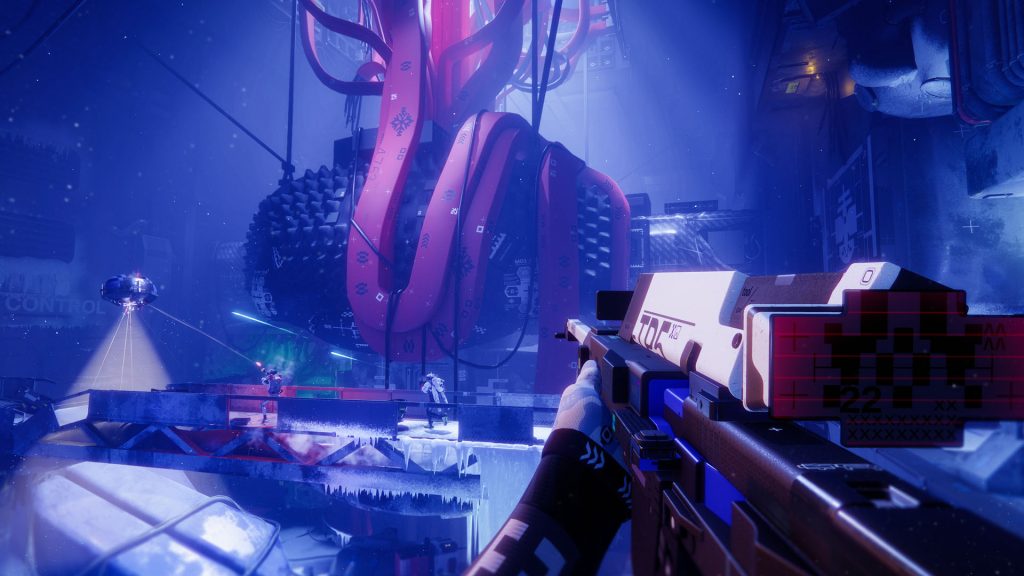
In its current state, Bungie has designed Tau Ceti IV to be hostile and uninviting to the Runners who occupy it. The UESC blockade the player from answers in sheer numbers and wrathful force. Flora and fauna will actively kill players or give up their position. And throughout, it feels as if the 3D-printed shells players occupy are just another reason that the planet feels haunted.
When experiencing Marathon as a solo player, there is a clarity to the horror element. Strange sounds groan from behind walls and closed doors. Quiet shuffling could be another player, it could be UESC, or it could just be a trick Bungie is playing to make the player more fearful. Noises that aren’t uttered from the planet are cacophonous whether it be a UESC ship thundering out of orbit or the alarm of a lockbox ringing across the landscape.
There’s a desperation to survive when the player is out on their own. Yes, there’s no risk of teams but others by themselves may be more cautious. And Bungie never wants players to be too hidden and too avoidant of dangers. Marathon‘s phenomenal sound design works when things are loud and when they are quiet. Gunfire echoes nearby to give a sense of where others may be fighting. The mechanical and digital babble of the UESC changes when they are idling around a location versus when they are engaged with other players. Soft rustling of looting can give away your location just as easily as a quickened step.
Players won’t be able to crouch-walk their way to and from locations. Eventually they will have to engage. Maybe a turret fixes in on their position and there is no rock to hide behind. You have to shoot it down because it will kill you faster than a nearby player could. Just hope no one is close by. Ticks will screech loudly and startle the player and while a knife may be quieter than gunfire, you’re still at risk. Whether it is to startle the player or intentionally unmask their vicinity, Marathon doesn’t cater to players just because they are going alone. There may be less pressure to swamp teammates with contracts but that also means less help when things go awry. It also means less cumulative experience because the game awards players with faction rep for any completed contract steps.
As a balm for the constant tension of the solo experience, victories can also feel quite sweet when you do them by yourself. The sneaky kills and the multiple Runner downs are fantastic knowing that no one else helped. And those pungent moments where you’re crouched in a bathroom hearing footsteps get closer and closer… it’s intoxicating stuff.
Yet there is one last core component to the solo experience: the Rook shell.
Rounds in Marathon last 25 minutes. Currently, every player and every team loads with 25 minutes on the clock until forced exfil and you lose all your stuff–except for that very friendly final exfil that is up for one final minute and it’s everyone for themselves. For those that loathe going into a round of ARC Raiders with 17 minutes left, I hear you, it sucks. And while I’m not sure if Bungie can consistently sustain dropping every player in at the same time, I like it.
However a Rook is different. In this shell, players will spawn in solo to a Trios match already in progress, usually with less than 20 minutes to go. Here, a Rook can scavenge for loot, fight other players, hope to work with others, or simply hope to get out. Rooks have a unique ability to temporarily mask themselves and avoid fights with UESC who won’t recognize them as an enemy. Additionally, a slow-charging ability to recover health helps Rooks survive.
Initially, Rooks go in with a basic weapon and minimal ammunition and heals. However, as players unlock upgrades for their factions, they will also earn flat benefits to the Rook class. Eventually, Rooks can spawn with a shotgun, better backpacks and shields, and better cooldowns on abilities. Rook runs in Marathon can be incredibly risky but the player ultimately isn’t sacrificing anything because they can’t take in a loadout. But acquire the right items and they can exfil with the equipped backpack or guns, which are usually broken down on extract. While going solo as a Rook can be intimidating, it’s a more thrilling alternative to the tension-filled horror of a solo run, especially one where the player may lose everything in a loadout.
Unlike ARC Raiders, Marathon has established a PvP-centric dynamic where players primarily shoot on sight. With the existence of proximity chat, players can attempt to forge alliances but they are likely to be tenuous at best. Players not in your team will often glow red but are hard to discern or account for in firefights against the UESC. The thirst for loot is also one of the primary considerations. Plus, it’s just fun to go into Marathon knowing that if you engage in a firefight with other players, it’s going to feel amazing.
I understand the yearning for a PvE-focused mode, especially coming from Destiny. Much of Marathon‘s codex entries are tucked behind acquiring and exfilling specific, rare pieces of loot that simply aren’t guaranteed. That can be frustrating when trying to uncover more about the plot. And yes, it can absolutely suck to have a new favorite weapon or core ripped away from you because another player happened upon you. But it’s the nature of this kind of game.
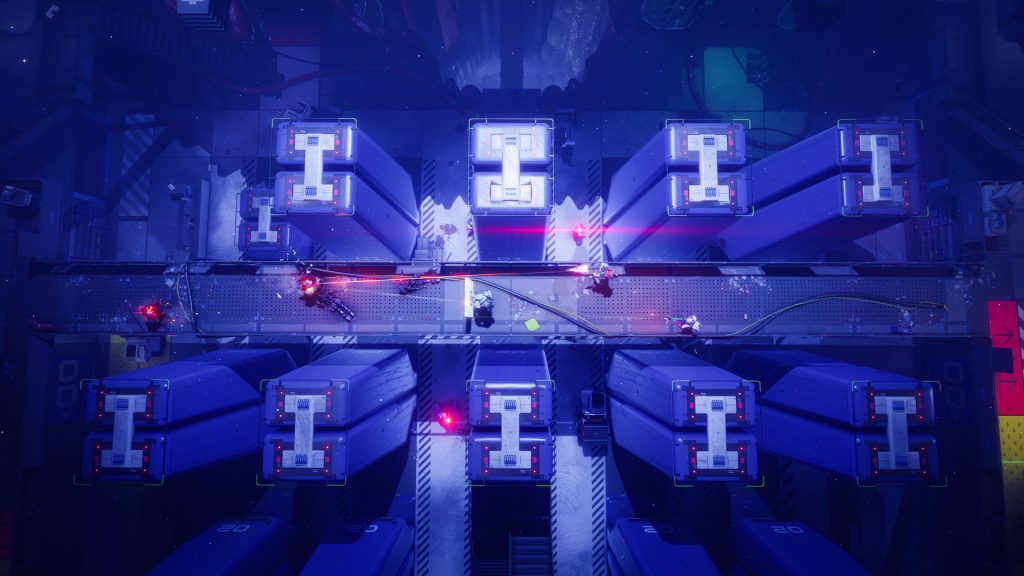
Marathon is unforgiving. One evening of doing random queues with other players, I died about a dozen times in a few hours. I’ve read forum posts of those who have played for hours and only gotten out safe once or twice. Because of this, the game certainly has its issues with accessibility. Forget a menu that is somewhat hard to navigate or a difficult onboarding process. Those will vary from player to player. But so will victory and success.
Bungie has designed a hardcore game inside a genre that is meant to be hardcore. It doesn’t reach the acidic depths of Escape From Tarkov and its wealth of systems but it also doesn’t allow itself to be too approachable. Only the most expert players are going to coast through chunks of Marathon and even they will still be downed by better or more prepared players. That is simply how this system works.
The key here is that Marathon is a game that is so mechanically strong and fun to play once you sink your teeth into it. 10 hours in, 20 hours in, 30 hours in, it never didn’t suck to get taken out. Yet I dived right back in because I wanted to shoot more people and earn more stuff. It’s as simple as that.
Bungie is a competent, confident developer that obviously has a vision for what Marathon should be. The ultimate question is whether or not it will stick to its guns.
Since launch, Bungie has released a number of patches working to fix things that weren’t right and also fixing their own fixes. They raised the volume of gunshots in the environment and then shortly after lowered them. They introduced Duos within a couple weeks and are monitoring how it vibes with the community. Feedback seems to be quick, positive, and in-depth, something a community always needs to have confidence in the game they are playing.
Musing on the state of Marathon a few weeks out from launch is difficult. Personally, I don’t think a review is any place to dwell on concurrent players and sales figures and things like that. Hands-on time with a game like Marathon will be one of the most important factors in deciding whether it is a game worth your attention or not. Yet Bungie also needs to ensure that they foster a community with Marathon and provide that community with ample content to keep them engaged.
As it stands, Marathon‘s core content is incredible, especially in terms of gameplay and the variety that players can extract from it. But at what point does one judge something like cosmetics? Honestly, I think the initial “battle pass” offers a handful of okay weapon and Runner skins but not much else–though Bungie is apparently adding more to address dissatisfaction.
Currently, three maps are constantly available to play. Perimeter, Dire Marsh, and Outpost can be accessed at any time for Solo and Trio play. Part of me wants to say that I wished Bungie would have launched Marathon with a fourth permanent map. But then I think about how infrequently I play Buried City on ARC Raiders and primarily focus on maps when they have a bonus condition on them.
Perimeter is a fantastic introductory map, its hot zones are spread graciously apart that players aren’t too close to each other initially. Here players will primarily have a boss fight and locked rooms as their “events” that reward the best loot. Dire Marsh has become a favorite for PvP combat. Its often foggy scenery means thermal sights are helpful and introduces an anomaly event that requires team coordination to complete. Outpost has a little bit of action on its outskirts but introduces the most complexity. Here, players seek out access cards to help them breach the central Pinwheel building that has an inner chamber that rewards some of the best loot in the game.
The structure of these three maps is extremely diverse but incorporates familiar elements to give them cohesion across the board. Perimeter’s map is split horizontally by the Data Wall that players will have to work through. Dire Marsh has the mysterious anomaly which leaves a vertical scar in the center-most point of the map. Outpost’s Pinwheel is where most of the action will fall upon but can be accessed in a variety of ways to introduce a few puzzle elements.
After several hours inside of each map, players will begin to recognize how complex gunfights can happen inside of virtually every sub-location in them. Marathon possesses a great deal of vertical combat as players have sightlines on high-up floors or can snake up stairs for a moment of surprise.
All of these elements coalesce into Cryo Archive, Marathon‘s pinnacle challenge.
Released two weeks into Marathon‘s life cycle, Cryo Archive is meant to be a culmination of a player’s efforts across the game. It is arguably one of the hardest pieces of content Bungie has crafted, one of the best multiplayer maps I’ve ever experienced, and certainly not an activity I will best anytime soon. Set on the UESC Marathon, Cryo Archive is a labyrinthine assortment of rooms, hallways, and vaults reminiscent of the convoluted 1994 game. To gain access to the map, players must have reached the appropriate Runner level and completed the first contract for every faction. Additionally, players must have a laodout worth 5,000 credits before they can step foot inside.
It’s here that players must use Cryo Archive keys they’ve extracted to unlock the seven vaults inside of the map. Here they will earn subroutines to allow further access to the map. All the while, killing UESC will earn players security clearance so they can unlock parts of the map and collect coolant and batteries to complete objectives. Unlike the exfil locations on the main maps which pop up and disappear after use, exfil on Cryo Archive requires a specific level of security clearance to access a terminal that will reveal whether or not players have an exfil location in that part of the map.
To account for the added challenge, players get 30 minutes on Cryo Archive. Ultimately, the purpose of Cryo Archive–in addition to the significantly better loot–is to reach the Compiler boss fight at the end which incorporates light puzzle solving and a unique challenge that isn’t a beefed up UESC bot.
Personally, I have not reached the Compiler and I’ve barely scraped the surface of Cryo Archive. This is a map designed for coordinated teams who have some of the best gear in the game. Not only is the UESC presence heavier, players are fundamentally deadlier because of their more expensive loadouts. In the past week I have watched devastatingly brutal engagements between normies like me and no-life streamers. Protracted fights going on for several minutes as one team stakes claim over a single downed teammate of another, hoping to pounce. I’ve seen gut-wrenching losses of beloved gear and insane recoveries by sole survivors.
Cryo Archive is the fabric of Marathon weaved in its most pure, violent essence.
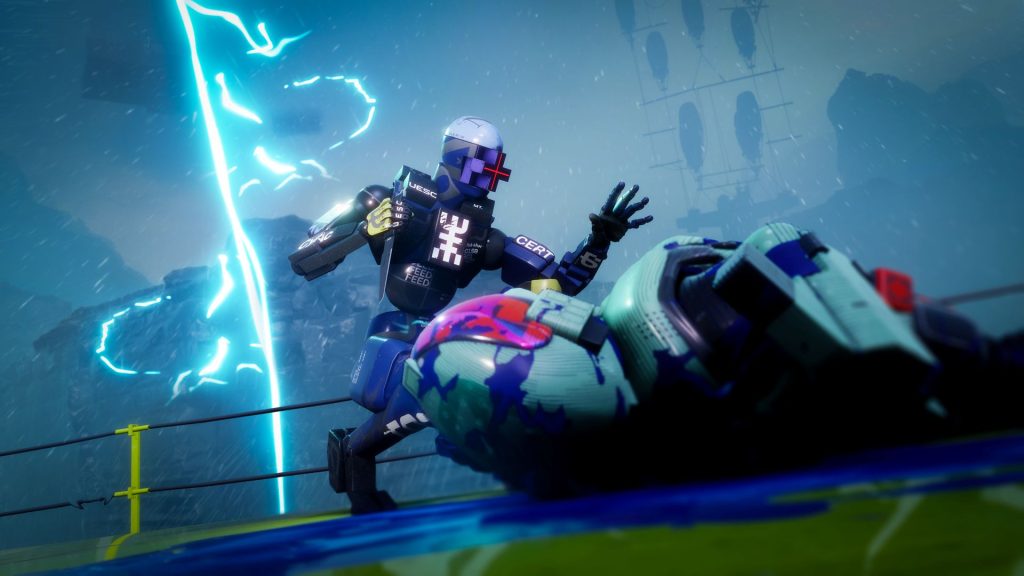
And yet, the map is only available for a limited time during the week. Cryo Archive was initially available from Friday mornings until Monday mornings. However, that was also the time Marathon‘s Ranked mode was running. Bungie has now adjusted. Cryo Archive will run from Thursday morning to Sunday morning, and immediately after, Ranked Mode will run until it’s time for Cryo Archive to come back into rotation.
While this does show that Bungie is actively listening to its community there is an argument to be made for having a fourth of Marathon‘s maps unavailable at all times. Let me be honest, the strength of the core three maps means that there isn’t a weak one to be had. They are some of the strongest multiplayer locations from an engagement perspective I’ve ever seen. The way fights can break out anywhere and be sustained for periods of time speaks to how smartly Bungie have designed them. But a smaller pool of maps also means the player population won’t be fractured in too many ways. Additionally, having the sweatier players spend time in Ranked and on Cryo Archive means that Perimeter, Dire Marsh, and Outpost won’t always be so volatile.
But I think it is important that Bungie sticks to its design philosophy and not distill Marathon too much. Players can spend their weekdays working on building up their vaults and then spend the weekends trying to best the intricacies of Cryo Archive. It’s a method that has a lot of sound logic to it. And, ultimately, Cryo Archive offers a kind of challenge that the extraction shooter genre has yet to see. Would players work together, they could best the Compiler easier… but then loot would have to be shared. While I do not think every future map released in Marathon will have the complexity of Cryo Archive, Bungie’s pedigree implies they are working evolve what the genre can offer.
Right now, however, I look to Marathon‘s future. The game functions on a seasonal model. In June, when Season Two starts, players’ vault and faction progress will be wiped. There’s no opt-out mechanic here. Part of me finds that to be a relief as I don’t think any of the deep faction upgrades are so powerful that they drastically benefit one player over the other. Another part of me is a bit sad because I’m not a hardcore player and it takes a lot of materials to unlock some of those upgrades. Yet that is kind of the nature of the beast. Effort is required in something as relentless and demanding as this genre can be.
More importantly, where does Marathon go from here? According to Bungie’s roadmap, a C.A.R.R.I. event is taking place that I don’t think we know anything about. In Season 2 a new Runner shell named Sentinel will arrive, as will the “Night Mode” version of Dire Marsh. Finally, Bungie said a new “Cradle” system will be introduced that will give players more control over stat bonuses and weaknesses of Runners. The Cradle system sounds fascinating, especially considering the numerous Runner stats that can be altered through upgrades, cores, and implants. A new Runner shell is also exciting because the current seven are quite diverse in their purposes. But I have to wonder about a version of Dire Marsh set at night. Bungie being Bungie implies that in addition to darkness gameplay there will be some kind of additional force patrolling the zone.
As enticing as that sounds, supplying players with a healthly cadence of new content that will potentially bring in newcomers while keeping current players around is crucial. I wanted to believe that when the Compiler was beaten, Bungie would pull a Destiny and do some dramatic move like populating the other maps with aliens and new threats. After all, they have a trilogy of games with three alien races to pull from.
Much like its content offering, Marathon‘s future is quite obscured.
Yet I would be doing the game a disservice if I didn’t admit how absolutely fantastic it is to play. And much of that is from how confidently Bungie has crafted its vision. One only has to look at Marathon‘s visual language to see that there isn’t really anything like it on the market.
These glossy, plastic-like buildings stamped with product numbers and company names. The bright, unrealistic colors giving way to grime and decay after they’ve been abandoned for years. Marathon doesn’t look like any other game. Its weapons are colorful blocks formed into place to deal death with aplomb. The hypnotic and eerie soundtrack will ratchet up as the clock ticks and the ring around exfil spins up but it also gently stirs and swells as players sneak around. I especially loved the growing beat that started to pulse and hum as I made my way through my armory to prepare and finalize the start of a run. The aesthetic and mood of it all is quite breathtaking and unique and will absolutely not be for everyone. Leaning into that is what Bungie should continue to do. Rarely have I seen a game so aggressively dig its feet into the ground and dare others to take it in.
I think of its narrative, centered around the lost promise of a new home. What happened to the colonists? Where is everyone? Instead of answers we have to do the bidding of corporate entities. Faceless avatars representing those holding all the power dictate our actions and hold the promise of power over our heads. Yet as Runners we too are faceless, filling empty vessels like another cog in the machine waiting to churned out.
Expertly voiced by some of the best talent in gaming, it’s captivating to try and decipher where the writers’ heads were at. The artists at Bungie made flashy, eye-catching commercials for fake companies that would sit well in today’s market. All the while, questions of Bungie’s independence, executive oversight, and more linger. In the future will we be slaves to capitalism much like we are now? These bigger questions and concerns can be fascinatingly interpreted by curious players who seek to uncover hidden truths about the game. The Marathon is always beckoning, its secrets waiting to be explored.
Marathon is a game but it is also a statement piece. One that brazenly pushes against the player, creating friction where we usually would expect none. This is not a kind extraction shooter. It is violent, ruthless, and exacting. Players clash with each other in the promise of exponential, evolving power and, much like its AI counterparts, have no qualms about taking their pound of flesh. By design, Bungie has created something confident and singular. And by definition, those are the types of products that will ostracize and exclude. Only at those weakest moments is the player able to capitalize on their own survival instinct and take charge, using the provided tools to complete the cycle and escape into the heavens. You merely have to want it.