

Do you ever look at a game and say to yourself, “I can see what they were going for, but they didn’t quite get there”? Well, this is one of those times.
Lost Soul, Aside from developer UltiZeroGames and PlayStation Studios, had all the markings of something great, as it felt like a page taken from Final Fantasy, but it just couldn’t get there. While the characters in the game are compelling, the story skips around too much to connect, disrupting the gorgeous and fun gameplay that Lost Soul Aside brings to the table. And the gameplay is quite good once you get rolling with it.
So, let’s get our pleather game and swordplay going and jump right into this review.
Narrative misstep
Not every game needs a narrative to drive it, but games like Lost Soul Aside certainly did. The story unfolds with our protagonist, named Kaser, who sets out to investigate why inter-dimensional beings called the Voidrax have started to appear. While investigating, Kaser’s sister goes along with him in hopes of helping him out, only to find herself in a sticky situation when a Voidrax takes her soul. Driven by guilt and grief, Kaser makes it his mission to take down the Voidrax while also trying to retrieve his sister’s soul.
The entirety of this game felt like it was the second act of a narrative that had already been established. What was skipped with the story is the first act, where the world is built and the main characters are given backstories and placed firmly in their roles for the rest of the adventure. The reason why the first act is important is that the player must connect with the characters, making them care about them, and giving the story a chance to properly set up the crisis. What this game brings to this area feels like going to a party where you know no one, and you get caught in a conversation that is only meaningful to the people there. You have no backstory and no sense of direction when the world isn’t established and characters aren’t set up.
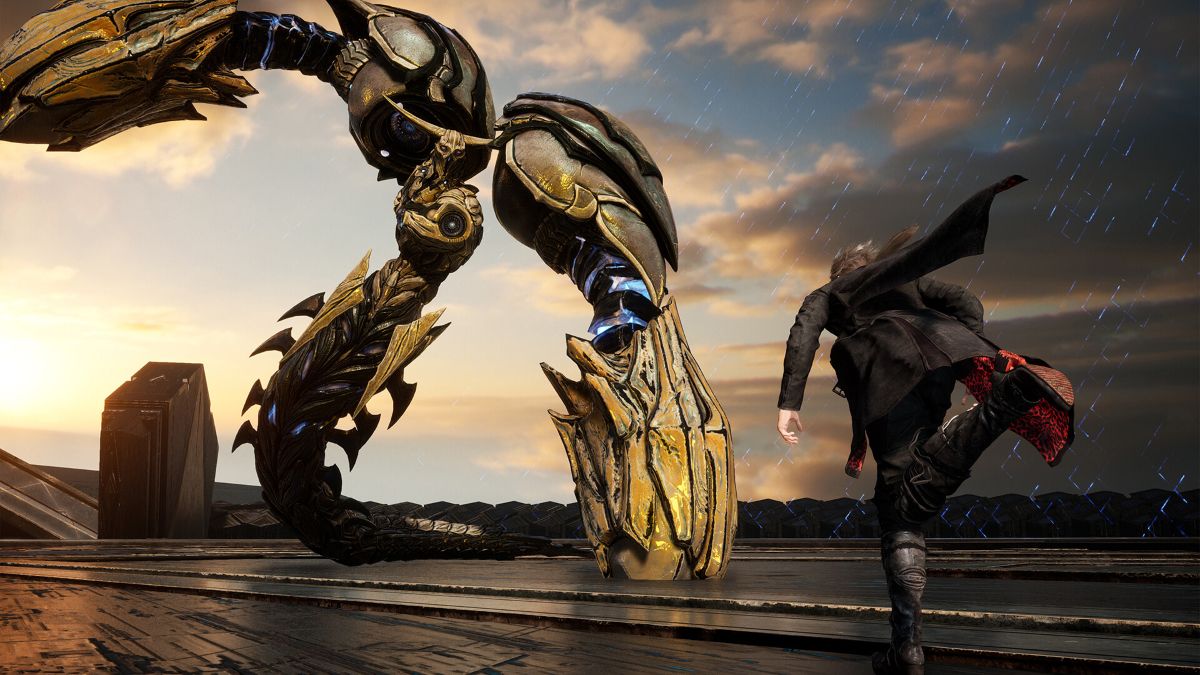
I cannot stress enough how important it is for a game like Lost Soul Aside to give time for that initial setup. It needed that injection of character development to, at the very least, allow for the gamer to understand what is going on and why we should care. For example, we needed to know who Kaser was, why he was so looked down on by the city he was raised in, and who his supporting cast was in the scheme of things. These things must be established before the real crisis of the game happens in the second act, and Lost Soul Aside simply doesn’t do this. This game could have done this through flashbacks, like Final Fantasy XVI did, and could have filled in the blanks as the rest of the story unfolded. It was just a lost opportunity.
A huge positive
While the story might not be fully formed in a proper multi-act structure, the gameplay is actually quite good. The game is an action-RPG at its core, taking cues from FFXVI’s gameplay structure. While it is technically a button-mashing fest, the game creates some good intensity and drama, while also bringing a fair amount of difficulty with it.
Starting with the action, the game has Kaser going in with sword-swinging, controlled fully by simply pressing the right button at the right time. You will spend moments just mashing the hell out of buttons and executing action against piles of enemies. That is quite fun. In addition, the action features a God companion with Kaser, a sassy dragon named Lord Arena, who was trapped for centuries, and who adds more power to Kaser than just a sword. Arena’s power allows for Kaser to initially have God powers to claw-slap the hell out of enemies, as well as breakneck defense and aversion speed.
Getting Arena’s powers expands the action capabilities of the game, which makes it a more fun and deeper button-mashing experience. I can’t stress that enough that the actual action of the gameplay flows well and is fun. It’s just easy to pull off moves and make the moments as destructive as possible.
To push that action gameplay further, the game also features several upgradeable categories, including an interesting ornament system. This system allows you to take gathered ornaments/symbols that contain certain buffs and place them on Kaser’s sword. As ridiculous as some of the ornaments look, the idea is quite solid and useful, making Kaser as powerful as the player wants him to be. Adding to this sword upgrade, you can also adjust Arena’s powers, which makes his usefulness even more interesting in the gameplay structure. To cap off the backend progression system, there is a skills tree that expands what Kaser can do in battle. Overall, the game gives a fair number of options to make the action and strategy deeper for the player. This backend system makes the game more motivating and brings more to the table with action options.
Along with that action button-mashing and backend impressiveness, the game also features a minor number of puzzles. These puzzles can range from simple jumping puzzles, where one must activate columns using a sword, then jump across the moving columns, or it could be as simple as collecting and finding items that expand the world a bit and cause the player to explore. Putting puzzles on top of the action and backend expands the gameplay depth and gives the player more to do.
Ultimately, the gameplay structure and system in place is quite clever and extensive. It’s one of the brighter spots in Lost Soul Aside and a reason to give this game a go. Now, what do you do with all that action and upgrades? Well, you have some interesting enemies to spend it on and a lot of brilliantly designed mini-bosses and bosses.
The enemy of my enemy…
Enemies in Lost Soul Aside are beautifully designed and mostly executed well. The common enemies in the game are ugly, perverse, and intricately designed. While they are mostly easy as hell to take out, they are still beautiful in how they move and look. I have zero complaints about the common enemies in the game. From standard knights to Voidrax, each comes packed with personality and some clever intelligence when it comes to fighting. They can be tricky at times, but, again, they’re mostly easy.
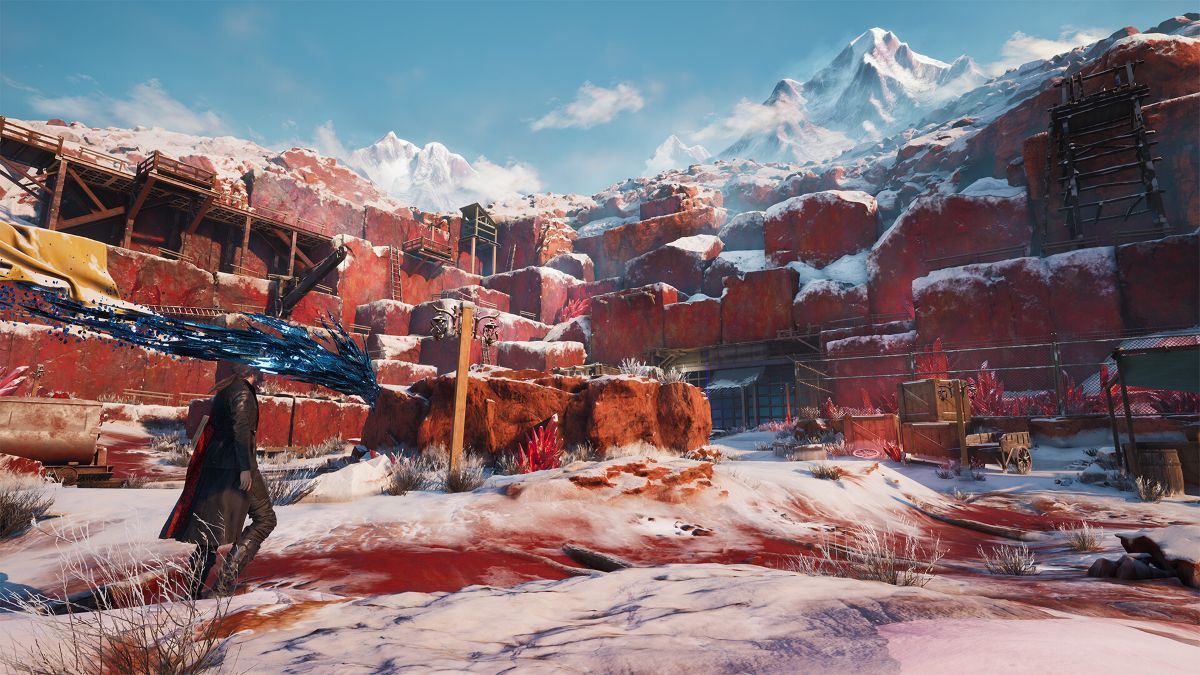
When common enemies aren’t attacking, sometimes environments have traps that go off that require the player to react in X amount of time, or it will mean instant death. These brief moments of adrenaline rush help to magnify the action and enemies, which only stands to make the game more entertaining, as well as engaging. For example, there is a moment early in the game when you must get Kaser over a bridge while trying to get a sword placed in a hexagon space located on the other side. If you place the sword in this hexagon, then you create a shield that protects Kaser from being killed by some monstrous trap. If you don’t, then it’s just an instant death. While the introduction to these types of traps is sudden and not explained well, and you’re almost guaranteed to die the first time you’re thrown into this situation, they add more flavor and value to the experience.
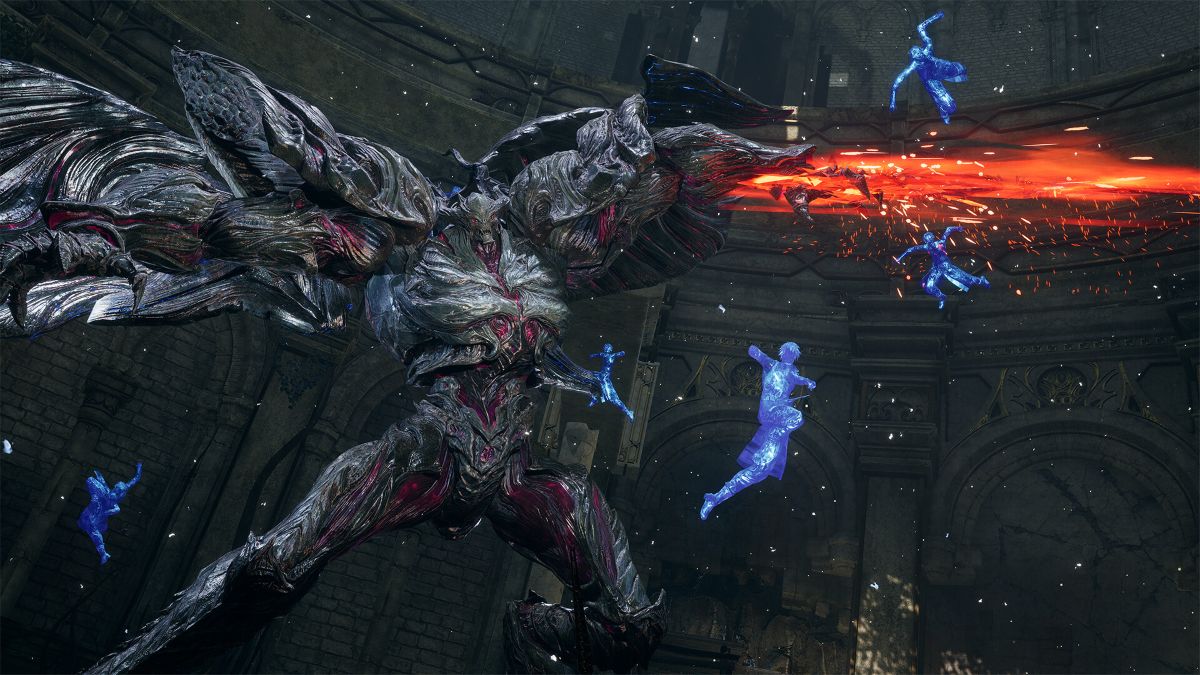
Now, when you get to the mini-bosses and bosses, the gameplay experience, while beautiful and cool, does some weird pacing with encounters. First, the good news. The bosses are beautiful and creatively designed, just like the common enemies. For example, there is an early boss that takes smaller common enemies and mashes them together to form one gigantic knight. This knight boss has three phases and is entertaining when fighting, as it stomps and tries to cut you down. The encounter becomes more intense as you get closer to the knight’s defeat, which just pushes more engagement into the fight. BUT! It is more glam than depth, as figuring this boss out is super-duper simple, as he reveals his patterns early in the fight, and doesn’t really deviate from those patterns. Again, the bosses are really gorgeous and work well within the gameplay provided.
The problem with the bosses is that they can be far too close together during the adventure. For example, there is a stage early in the game when Arena leads you to an island run by Gods that he once knew. The Gods have been infected by the Voidrax, without knowing it, and Kaser has to take them on in a progressive climbing-a-tower fashion to break their possession spell. Think Game of Death with Bruce Lee and you’re on the same page here. Anyway, these bosses are far too close together, as Kaser will simply take out a handful of common enemies and then fight a God. He will do this until he reaches the tip-top of the tower. It’s quick, it feels confusing, especially on the narrative side, and the payoff isn’t quite as good as you would think, as the characters pile on more story elements that you’re still left out in the cold about.
As the game continues, the bosses do become better, and the enemies and journey become more populated and spaced out, but it still feels a little uneven. The stage bosses, in all their glory, create a sense that the game was rushed and the journey, at times, unearned. It’s strange how it works and even stranger with its gameplay pace. In the end, the bosses just feel a bit off.
All this said, the gameplay is quite good, the enemies are creative as hell, and despite the lack of a cohesive story, there is some redeeming value with this game. It certainly isn’t as well-designed and executed as Final Fantasy XVI, but it has more good than bad with the final product.
On that sweet note, let’s wrap up this review.
Conclusion
Lost Soul Aside, from developer UltiZeroGames, lacks a good, cohesive narrative that should be driving the solid gameplay and action. As it stands, the game does a great job with its action gameplay design, features interesting and compelling enemies, and contains a solid backend progression system.