


Generally, I’m not a huge fan of action roguelite. I appreciate them from afar, but typically don’t dive into them because of their purposefully difficult obstacles that make for a slow grind. I don’t mind the grind, but I usually only prefer grind in my daily cup of RPGs. Looking at you, Dragon Quest VII.
Well, that attitude has permanently shifted thanks to Stormteller Games’ isometric action roguelite Lost in Random: The Eternal Die. It’s an action roguelite that is quick on its intentions, contains a gorgeously constructed backend system to make that grind feel less like one, and offers enough jingling distractions during gameplay to make you forget that you have died 20+ times in 20+ hours. While not perfect, it’s pretty darn good.
So, sit back, cast your die on this game, and let’s gamble away this review.
Gameplay that rolls the right way
Lost in Random: The Eternal Die’s story revolves around a character named Queen Aleksandra and her adorable die-companion, Fortune. They both have been sucked into a dark and nasty realm by an overlord named Mare the Knight. They must overcome terrible, nightmarish creatures and large, overbearing bosses to find their way out of Mare’s maze. Not a bad setup by any means.
In all transparency, I had no idea that this was a sequel to a game by the same name from 2021. Furthermore, I had no idea that the lead character, Alexandra, was the antagonist from the first game. That is kind of wild and, at the same time, a good narrative twist to give a villain more context and purpose. Anyway, long rambling short, I need to play the original, especially if it is as good as its sequel.
Speaking of sequels, let’s talk about it!
Core gameplay initiated
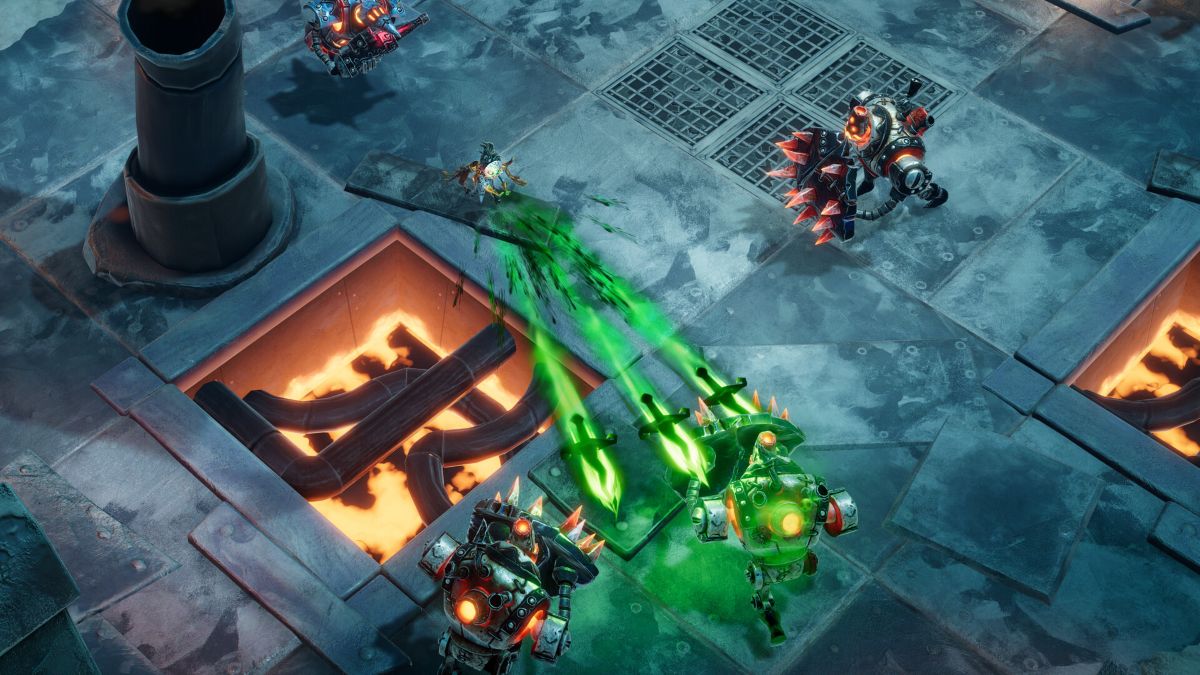
There are several layers of gameplay to Lost in Random: The Eternal Die that make it work well. At its core, the game contains a simple action roguelite structure that the genre is known for having. Queen Alexandra is thrown into a randomly generated environment with a central theme attached to it, such as a castle theme on the first level, and she must uncover a path and find her way to a massive boss fight to progress to the next themed level.
Most of the time, the number of enemies thrown at the protagonists is overwhelming, so moving and shaking around each part of the maze to avoid dying while also trying to take down enemies in a sporadic pattern of attacks is a repeating strategy for this genre. In addition, the game randomly generates the segmented levels, as well as randomly generates the enemies for those segments. Along the way in this chaos, the grind of the game is its repetition, which is a slow character-building tool that makes each revisit of the level a little easier.
Lost in Random: The Eternal Die follows this construction beautifully, as it keeps a healthy rotation of random levels and enemies, which creates a fresh feeling for the gameplay. At no point during my 20+ hours of playing this game did I feel like the content was dragging or overly repetitive, which made getting right back into the action after dying an insane number of times much easier to swallow. The content always felt like it was new, or at the very least differently constructed.
The leveling of Alexandra followed this perfect construct as well. I could see the main character slowly becoming stronger and the progression in the game becoming more accessible. For example, the rooms at the castle level became less of a challenge as I began to find objects to build Alexandra’s movements and attacks. It was a grindy, gradual progression for her character that led to healthy and steady progression in the game. One of the joys of Hades is this type of gradual grinding with visible progression, and this is noticeably present in Lost in Random: The Eternal Die. Even the boss fights in the game were part of this formula, although they were much more difficult in comparison to common enemies.
Overall, at its core, Lost in Random: The Eternal Die does everything it needs to do to make itself a good action roguelite experience. In some respects, the game’s ease-of-use after grinding makes the game less of a challenge, which also makes it less of a burden, as well as more entertaining. There’s just something nice about seeing progression and feeling like you’re getting better at a game. Earning your way through it because of your efforts is a big deal when it comes to hooking a player and convincing them to keep doing the same adventure over and over again.
The die is cast!
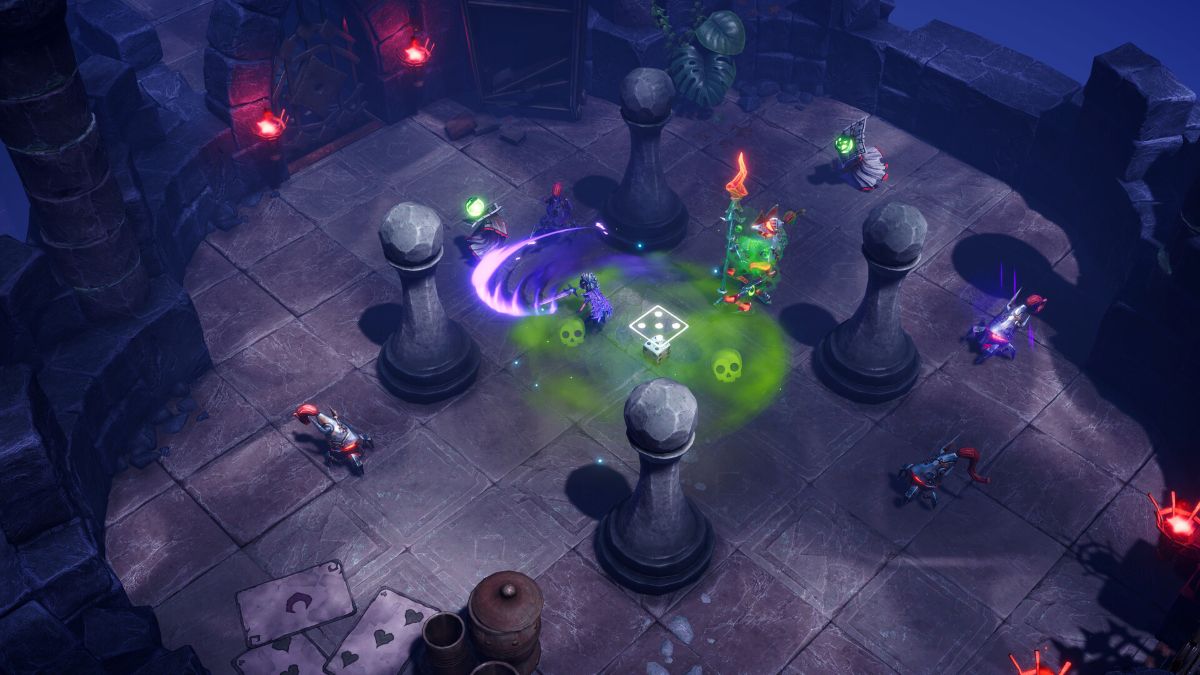
Beyond its core, Lost in Random: The Eternal Die brings additional unique gameplay and distractions that break up its repetitiveness. The first big gameplay element is the use of Fortune. While the hacking and slashing are nice, and the variety of weapons that keep Alexandra’s action constantly changing helps keep that mechanic fresh, throwing fortune into a fight with enemies to see what random damage you can do to them is a welcome gameplay element.
As you fight through hordes of monsters, you can cast the die, Fortune, at an enemy. Depending on what number that comes up (1-6) dictates what type of damage you can do to that enemy. If you cast one, then you’re going to do minimum damage, but damage, nonetheless. If you cast a six, then you’ve defeated that common enemy and can move on. While Fortune doesn’t make too much of a difference during boss fights, this mechanic and useful gameplay maneuver helps to add another attack element into the mix. It certainly keeps the fighting engaging and fun.
The only caveat to this attack is that you must retrieve your dice to make a new cast. If you don’t retrieve Fortune during a fight, then they just sit there waiting, which means you lose an additional attack that could be helpful during battle. It’s a balanced ‘ask’ from the game to the player, as it creates an additional strategic challenge that makes the gameplay deeper.
Overall, I enjoyed the hell out of Fortune and their purpose. I think it was a clever gameplay element that made the action more than just a swing-hit-or-miss experience. The use of Fortune helps separate this game from others in the genre. The fact that it doesn’t seem forced, rather it’s a natural fit for the gameplay, makes this such a fun element to include.
Backend randomness
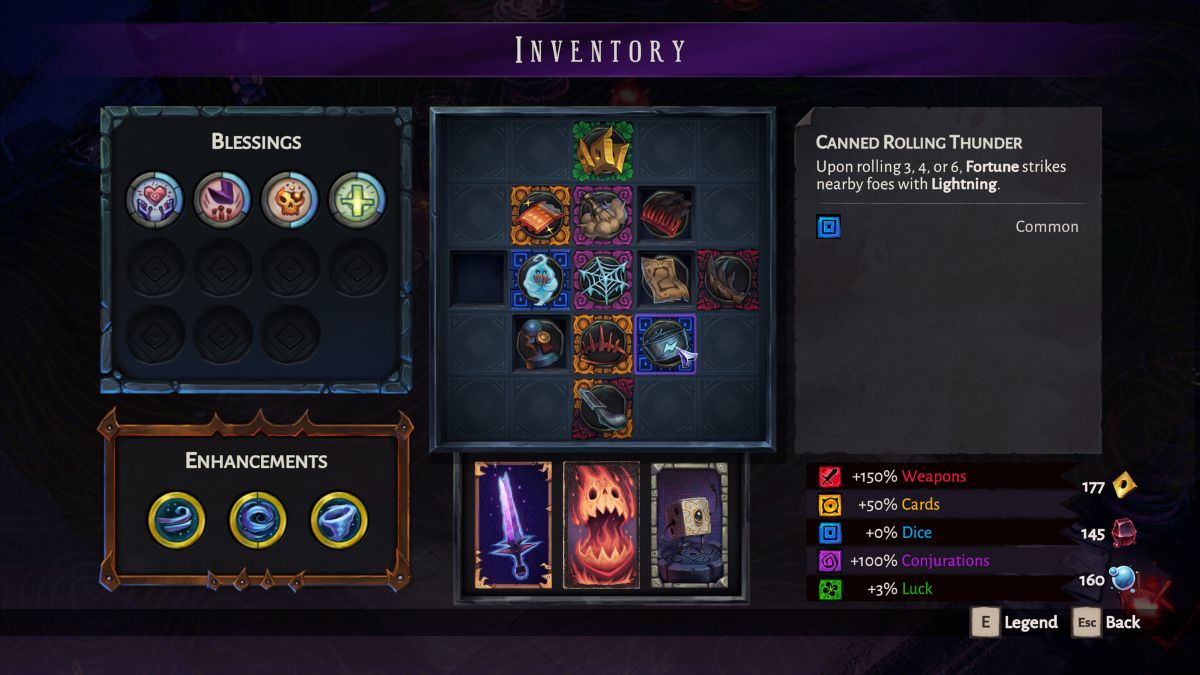
Beyond repeating enemies, tough bosses, good progression, and clever use of dice, the game features an interesting backend system that is divided into two segments. The first backend system, which is a temporary upgrade with each run, is collecting colored dice that upgrade certain attributes of Alexandra and Fortune.
As you progress through the game and complete each room for each level, you will randomly get a reward at the end for your efforts. That reward could be more life, a bag of coins to purchase items for our hero duo, or colored dice/squares that contain certain attributes. Those attributes could be making Alexandra more powerful with her attacks, or it could be better dice rolls for Fortune. Now, while this sounds simple, it’s not.
These collectibles fit into a square grid in a backend menu. That grid requires you to line up three (or more) of the same colors to obtain the attribute upgrade. It’s a slow and steady type of upgrade, as each room isn’t guaranteed to have these types of rewards at the end of your efforts. As random as the game is at its core, this part of the gameplay is equally as random. I’m stuck in the middle when it comes to deciding whether this is a good or bad way to do things. I would have liked to see more consistency when it came to acquiring these blocks and upgrading these attributes, because the randomness can be a grind sometimes, with no real guarantee of reward. You might focus on one upgrade, but ultimately acquire more of another block type, which forces you to upgrade an attribute you weren’t planning on upgrading. On the flipside of that dice, it does make sense as it relates to the consistent theme of the game, which is dice chance.
Overall, I respect that this attribute system is in place, but the randomness of choices makes it a crapshoot when trying to strategically plan out a direction to take with upgrades. Maybe that is the point of the game, as dice seems to be a consistent theme throughout, but a run can either be more challenging or less, depending on what you randomly get. I enjoy control when it comes to upgrading my characters. This felt less like that, but I do appreciate the system. I think it’s a neat system that does work well when it is working in your favor.
The other part of the backend system of the game that helps lead to permanent upgrades is the weapon and permanent character attribute system. Both are led by the collection of materials during each pass-through in the game, which are retained even if you die. For example, there is a fair number of glowing orbs you can randomly obtain during your romp through levels, which you can use to upgrade Alexandra’s traits that can help her become a more powerful or better fighter. Once you upgrade these traits, they permanently stay with Alexandra. That alone creates a hefty amount of motivation to keep running through the game repeatedly. I’m positive it is the reason why I played 20+ hours of this game, other than just getting through tough bosses to see what was next.
In the same vein, there is also red material you can collect that can unlock and upgrade weapons. It’s the same deal as the orbs, you can romp through levels, die, and still retain the material by the end. It’s another motivating factor to keep playing the game.
Collecting both materials doesn’t feel like a chore, rather, it feels like you’re doing something purposeful that only stands to make the game more enjoyable. Anytime you can find a way to make an action roguelite more fun and less like an uphill battle is a good time. I’m not a huge fan of making gameplay feel like a chore.
Other odds and ends
While all the above is enough to make Lost in Random: The Eternal Die a great game, the experience is extended a little bit further with customization and collectibles that are more cosmetic than necessary. You can find Alexandra new hats, costumes, and even masks to gain some minor customization during your playthrough. The game even goes as far as to allow you to find new outfits for Fortune, even though you can’t fully appreciate them because they are so tiny onscreen. The additional customization helps to add a sprinkle of extra motivation to keep playing, especially for those completionist gamers out in the gaming world.
The game also features pit stops in the action, which help give gamers a breather. You will occasionally find a ring master who offers chance-based mini games to upgrade Alexandra through three types of games (enemy attacks, random dice roll, and prize circles based on dice rolls). In addition, the game also features a store for Alexandra to shop in, which is driven by coin collection. The costs of the items, at least early in the game, make this option somewhat unobtainable, especially when you’re deciding whether to upgrade Alexandra or get coins. More times than not, you won’t choose coins, which makes this option just something in the background. This decision creates a good amount of strategic consideration when choosing a reward after fighting enemies.
Anyway, these are neat additions that don’t factor in heavily to the gameplay but can make for a bright spot in a go-around for a level.
On that sweet note, let’s wrap up this review.
Conclusion
Lost in Random: The Eternal Die, developed by Stormteller Games, is a far deeper and richer action roguelite experience than expected. It has quick-moving action with a healthy amount of good progression to keep gamers coming back for more. The upgrade system helps enhance the experience and works more often than it doesn’t. Regardless, this game is fun to play and something gamers can get lost in for hours and hours.