


The 2D platformer has always been the heart of gaming since the mid-80s. It’s a go-to when it comes to finding easy ways to be entertained. While some developers don’t completely grasp or respect the gameplay construct of this genre, the developers at Die Soft clearly knew the assignment and what they had to make with their game, Little Nemo and the Guardians of Slumberland.
Little Nemo and the Guardians of Slumberland is a 2D platformer/Metroidvania that takes the cute and innocent concept of Little Nemo, a cartoon character created by Winsor McCay in 1905, and delivers an entertaining, though slow-starting game that has a fun payoff. The game features a bevy of creatively drawn levels sporting their own dreamy themes, wonderful non-linear puzzle and obstacle solving, and an entertaining, yet simple leveling system that doesn’t take much to grasp. Add decent enemy design and fun boss fights to the mix, and this game has a lot more than one would expect.
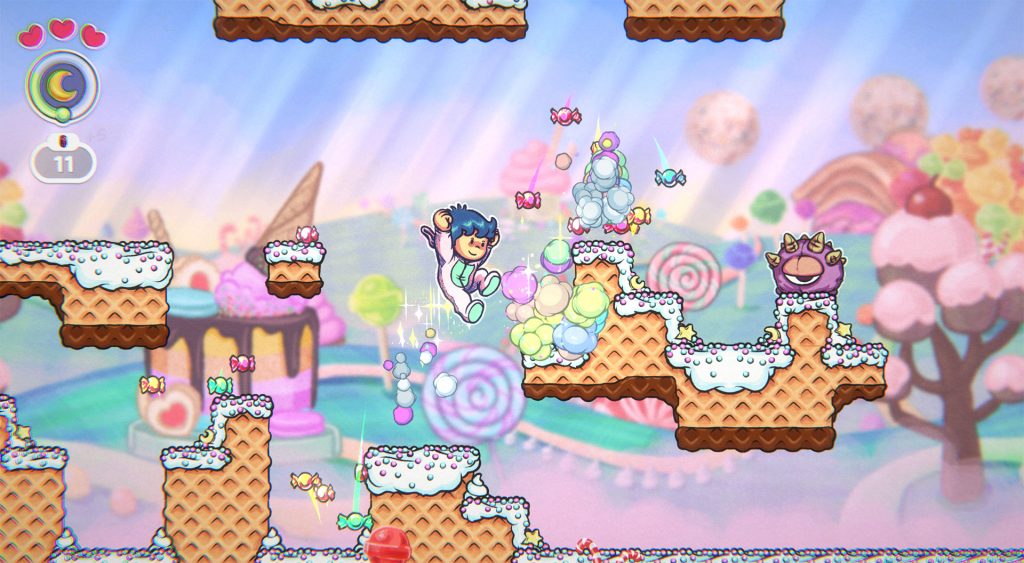
Starting with the ever-important story, Little Nemo and the Guardians of Slumberland is led by a PJ wearing hero, Little Nemo, who has come to help Slumberland prevent the spread of a dream disease called Oblivion. For every bout of Oblivion found in Slumberland, it destroys pieces and parts that make up the whole. Little Nemo is tasked with finding out what is going on, acquiring scepters to Guardians who can prevent it from spreading, and who are trapped in animal bodies, and taking out as many bad guys to see it all through.
While Little Nemo and the Guardians of Slumberland is an old tale, and one that was featured in a 1990 NES release as Little Nemo: The Dream Master, how Die Soft developed an easy-to-follow and well-constructed narrative for this adventure seems more than fresh and new. It’s a good story for younger gamers, and one that older gamers can have some fun with as well. It’s light-hearted, edgy in its own way, and delivers some entertaining and humorous dialogue and situations that keep it going. It also wraps beautifully around the gameplay, which harkens back to the story to keep it moving along.
Now, the gameplay with Little Nemo and the Guardians of Slumberland is what you would expect from a 2D platformer/Metroidvania. Nemo will be jumping on platforms, having to navigate dangers and enemies, and moving to and from locations in a non-linear fashion. Think about the great Super Metroid, and you’ll get the idea.
The non-linear nature of this game’s structure is what fascinates me the most. When I first loaded it up, I didn’t expect a Super Metroid-type of adventure, nor a Super Metroid size. Little Nemo and the Guardians of Slumberland brings that gradual push forward through beating bosses and obtaining objects that slowly open up the gameplay. By gaining said objects, the player will find access to new areas, which only stands to create more motivation to keep pushing forward. Metroid and Super Metroid set this standard decades ago, and Little Nemo and the Guardians of Slumberland carry that skeleton respectfully throughout its gameplay. For example, when the game begins, Nemo is only armed with avoiding enemies, which creates the assumption that the mechanics of the gameplay are going to go in this direction the entire time. Literally, jumping around, avoiding enemies, and trying to traverse platforms was the first hour of the game. I wasn’t sure how this game would motivate me to keep playing because of these perceived mechanics, but as soon as I took down the first boss, a feisty octopus with an attitude, and obtained a yo-yo to use as a weapon, everything started to become clear about what I should expect from that point on. It takes a bit for that Metroid-like structure to take effect, but once it does, the game opens up so well.
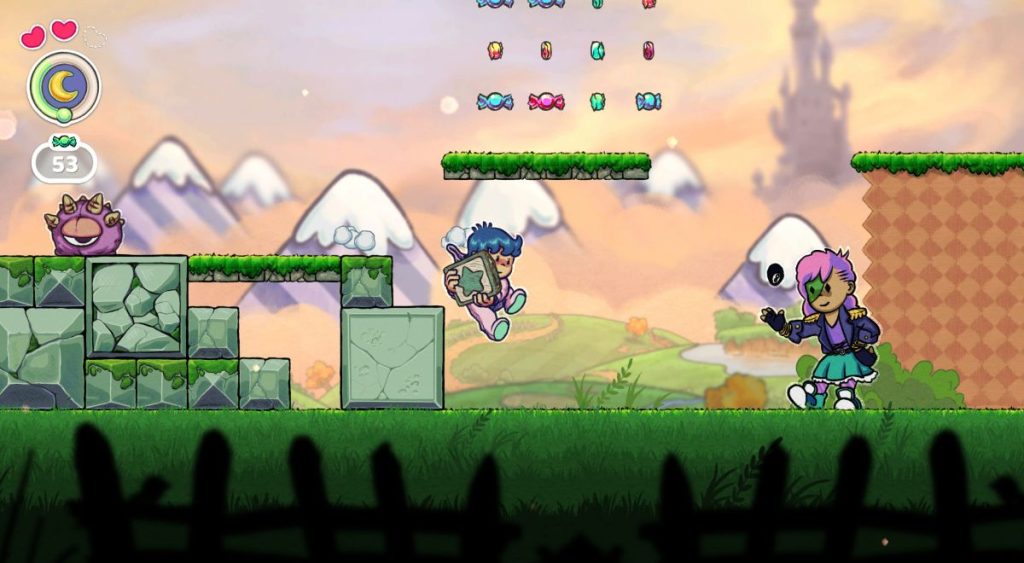
By opening up, I mean that players will be encouraged to go find trouble, explore levels, which are huge, and find objects and bosses to push gameplay progression. As the player does this, the game will show its complicated and beautifully woven tapestry, as avoidable or unreachable places and platforms soon have purpose, and the quest to gain access to those places will be yet another motivating factor to continue with the game. As this all unfolds in the mind, seeing how much effort, time, and love that Die Soft put into this adventure will come to light.
When I first began this game, I was more convinced that the developers spent more time on the hand-drawn presentation of the characters and creatures than on anything meaningful in its gameplay structure, level design, or small quests, making it feel less like a serious 2D platformer Metroidvania. But guess what? This game was meticulously designed and executed brilliantly to make the genre proud of what the finished product became. The gameplay is addictive, it’s large, and at times it can be frustratingly complicated with obstacles it throws the player’s way. In short, this is very much a well-constructed Metroidvania game. Don’t discount its cute wrapper, as it is far more than just adorable.
Of course, the adorability of the game can’t be ignored. The chief currency that Nemo collects to purchase items that he can use is candy. This candy comes from the death of enemies. Now, candy-purchased items come in the form of PJs, which are used as power-ups for Nemo. For example, there is a Norwal PJ set that allows less damage from enemies, but costs 200 pieces of candy when it is offered. Those offerings happen when a scepter is found and returned to a Guardian. If players don’t have the candy, they can’t buy the PJs, which means the game becomes even more challenging.
If collecting and paying for PJ upgrades wasn’t enough, the gameplay also throws a wrench into the collection system. Should Nemo get booted (lose all his health) during his candy collection time, he will lose all the candy he has collected. This adds a bit more stress and thought into how players should approach situations and what strategy they need to use against common enemies. Later in the game, Nemo is introduced to a way of storing said candy, but most of the time, players will just have to be careful and not wake up (that sounds weird, but I will allow it). That gameplay element makes for a more thoughtful process of player approach, which also makes this adventure much deeper than expected.
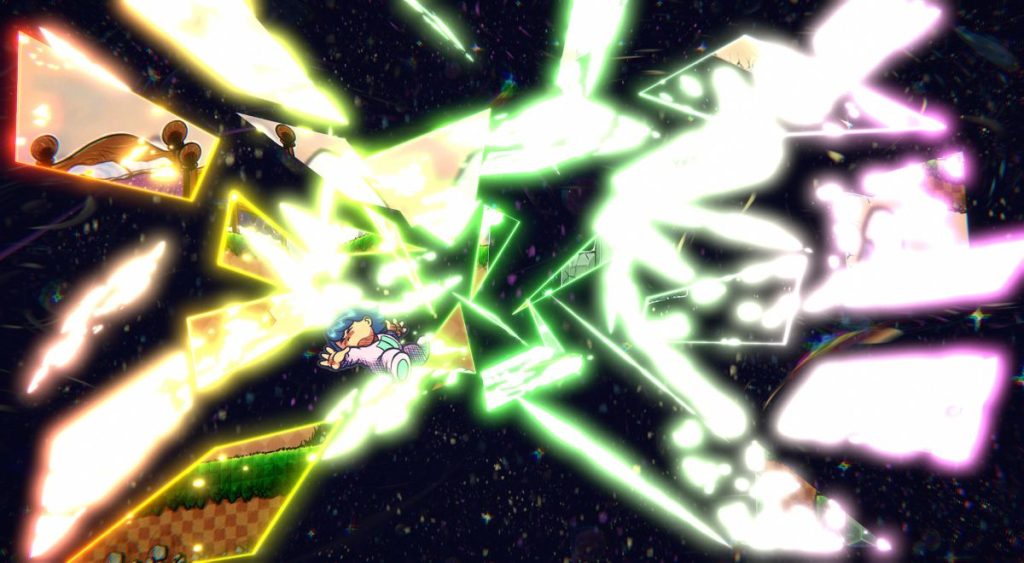
Aside from candy, there are other objects that Nemo can collect to progress. There are yellow and blue moon pieces lying everywhere. The yellow moons can be caught once an enemy is taken down. If the player doesn’t catch the falling yellow moon in time, then the moon becomes candy. There are also yellow moons spread out everywhere in the game, which can be turned into candy, but can also be used to replenish health. The multiple-purpose use of the yellow moons adds a drip of dimension to the gameplay and gives different avenues for the player to take when they need health or monetary gains. It’s a flexible element of gameplay that gives players choice and agency.
As for the blue moons, well, those are spread out amongst the very large and multiple levels of the game, and serve special purposes. The player is tasked with collecting nine of these in each area, though it is optional, and they bring their own sort of upgrades to the gameplay. They are typically tricky to acquire, and most of them are more accessible when bosses are beaten, and new objects that Nemo can use are gained. The blue moons play into the non-linear aspect of the game and will have players returning to previous areas to see if they can acquire them. See how complicated this game is? Far more than I anticipated.
Staying with areas and levels, they are big, creatively put together, and carry their own personalities and enemies with them. For example, the first level is just a candy-themed level that seems like it is straight out of Adventure Time. Dangerous peppermints, candy corn spikes, and everything candy-related surround the player. Once the second level is accessed, the game shifts to a cave-type level, which contains more cave-like creatures and is littered with crystals everywhere. The lights in the cave stage also become a factor, as the level is darker and harder to visually navigate because of the lack of light. The areas are vastly different, but also play into the creativity and dream-like state that Little Nemo and the Guardians of Slumberland is toting. Even the obstacles of each area become different and complicated in their own way, which just makes exploration all the more fun. It also keeps the gameplay far more engaging and interesting.
Now, with all the above said, I think the only stumble in this game’s design is how long it takes to convince the player that this is more than just a throwaway licensed game driven by beautiful art. I struggled the first hour with the gameplay to convince myself that this was more than just a cute platformer that looked cool. After the yo-yo was acquired in the game, and more areas opened, that thought went out the window. But the beginning doesn’t show its cards and doesn’t allude to what is to come, which might lose some players. Of course, it will be their loss, but it’s understandable. Again, it’s just a slow start, but it does pay off when the game gets moving.
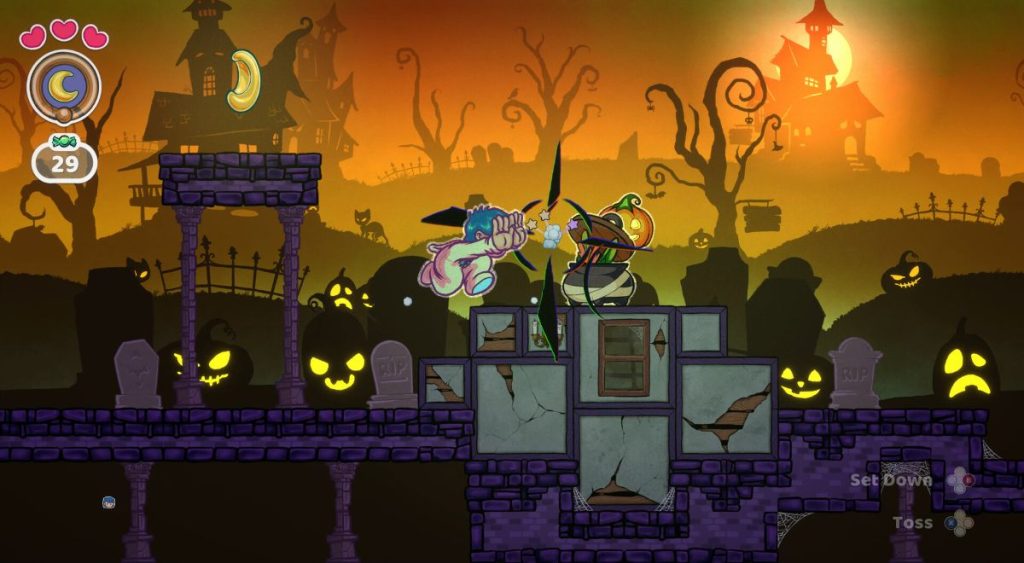
Beyond this minor complaint, the only other one is how easy it is to ‘wake up’ in the game (which is the replacement for dying). The player gets three hearts; once those are used up, Nemo wakes up from his slumber and must start again. Some of the obstacles featured in this game are downright difficult, if not sometimes cheap. I woke up more times than I care to admit, but never got close to falling off the entertainment wagon. But the frustration was certainly real. It’s definitely worth the frustration. To counter starting over, the game does feature a bevy of beds around the game that act as checkpoints, so that Nemo doesn’t have to start all the way over. That helps, but it doesn’t act as a cure for the difficulty of the game.
Anyway, overall, Little Nemo and the Guardians of Slumberland’s gameplay is quite good. It delivers a true 2D platformer/Metroidvania experience that has a cute story wrapped around it that will entertain gamers of all ages. It’s far more than it looks on the surface, and well-designed by the developers, who obviously took this project seriously and wanted to deliver a fun and memorable gameplay experience.
On that note, let’s wrap up this review.
Conclusion
Little Nemo and the Guardians of Slumberland is a fantastic 2D platformer/Metroidvania that is far deeper and more entertaining than it appears, and should satisfy any gamer looking for a non-linear adventure.