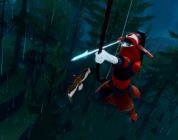

Sometimes I can be so late to the party that it’s embarrassing, especially when the party is damn good. And this is so damn good.
Kemono Heroes, from developer Mad Gear Games and publisher JanduSoft, is an action beat ‘em up that, with its style, execution, and pazazz, harkens back to the grand old days of late 80s/early 90s arcade gaming. It was a simple and fun world before 3D came and ruined it all. I’m just kidding. 3D is wonderful, but there is some good charm about 2D action beat ‘em ups that makes life so much better.
Kemono Heroes is a solo or multiplayer game that brings some good challenges, replayability, and simplicity with it. Offering up four characters to play as, the game does its best to replicate a good time without a long-term commitment. The only downside to this adventure is a restrictive backend for upgrading attributes and abilities. The devs certainly want to make sure you pace yourself.
So, sit back, get those little fox feet ready to move, jump, and slash, and let’s get this review going.
Short and sweet story
The story of Kemono Heroes is constructed with an arcade experience in mind. An evil has taken over the land, most animals have been turned to stone by said evil, and four remaining warriors need to figure out how to undo the aforementioned evil before it is too late. Armed with swords and fun magical weapons, the team, a flying squirrel, cat, monkey, and fox, are ready to slash their way through a supernatural adventure that mixes ancient culture and fantasy.
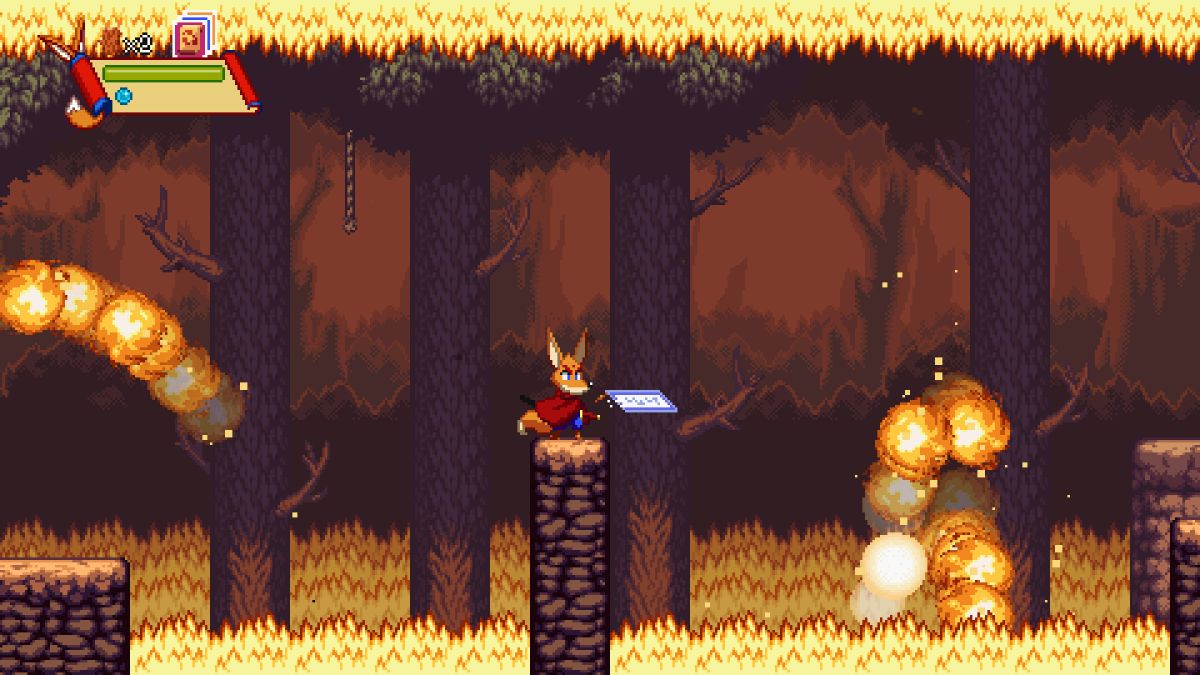
The story is very familiar with its structure, as arcade games were born with this type of story attached to them. Back in the day, when you played an arcade game, especially a multiplayer one, all it took was a great evil and a reason to take it down. That would be enough to kickstart the action and get the player motivated for the adventure. This is how Kemono Heroes functions on the story side of things. There isn’t a long narrative with rhyme or reason; rather, it’s all based on assumption, and the player fills in the evil blanks. You won’t find a Final Fantasy XVI-type massive story with bigger-than-life enemies and heroes, rather, you’ll find simple evil with simple heroes simply clashing together. It’s good stuff, and how arcade gameplay used to work. You know, before ticket machines existed.
Anyway, the story is good, the characters are compelling, and the evil that lurks in this world is creative, as it is fun to deal with from boss to boss.
Gameplay
This is the very definition of an action game. You jump, run, and slash enemies, all the while avoiding their attacks. The mechanics for the game are super simple, which means they won’t get in the way of the action. This was the first nice aspect of the gaming experience that I noticed when playing Kemono Heroes, as it felt exactly like an arcade game would feel. The controls and mechanics have to be on point for this to work seamlessly, and Kemono Heroes certainly does it.
Of course, what good are great controls and mechanics if you don’t have anything to use them on? You get plenty of baddies to take down, and some darn good bosses to boot. The more creative, the better, and there is plenty of better with the baddies.
Starting with the lackies, the common enemies come in a variety of flavors that are catered to whatever maps they happen to exist within. This is an arcade game trait, and it works well, as it provides a variety of different enemies with unique ways to attack you. For example, there is one level where you’ll be fighting flying enemies in a cloud-based world, and the world, as well as enemies, will force you to watch where you jump. The enemies in this level are vicious, as they are creative, and they work within the realm/map created for them.
There is another level where enemies are floating around in a snow-driven atmosphere, and you must avoid large snowflakes while taking down ghostly and ghastly ghouls that hide behind ancient cultural masks. These enemies are a bit more difficult, especially when the game’s difficulty is upped, and they work within the environment/terrain they’re placed in.
Now, the latter part of that last sentence is important. Whatever team of devs designed the levels, they were spot on for each one. The levels are equally as dangerous as the enemies that occupy them. They are constructed to work against you, while at the same time helping you to move smoothly along the experience. It’s like drinking alcohol, where it’s fun until the hangover hits you.
Anyway, bad analogies aside, the level design in this game is phenomenal. For example, there is a level where you must navigate ghostly entities trying to possess objects in the level, which becomes uber dangerous when possession does happen. While you’re trying to prevent the possession, you must be mindful of jumping across crevices and a broken landscape to avoid falling to your death. Now, while that sounds like a super difficult task, those wonderful mechanics help to make the process easy if you’re paying attention to the level’s structure. For this possession level, you can swing around the level and propel yourself forward, while taking down enemies quickly, all while avoiding falling. If you do it right, hit the rhythm of the level’s construct, and it’s a blast to tear through said level. Most levels in Kemono Heroes are like this, and they all have their own potential fun pathway and charm. All of it starts with good level design and execution.
Characters
To make the mechanics, enemies, and level design even better, the game features four very different characters that have their way of taking down enemies and navigating levels. My first playthrough with this game was with Fudemaru the Fox. He was a more traditional character who was the most grounded of the bunch. He didn’t do anything special beyond jumping and slashing, and was your ‘Mario’ of this game. Plain but good and balanced.
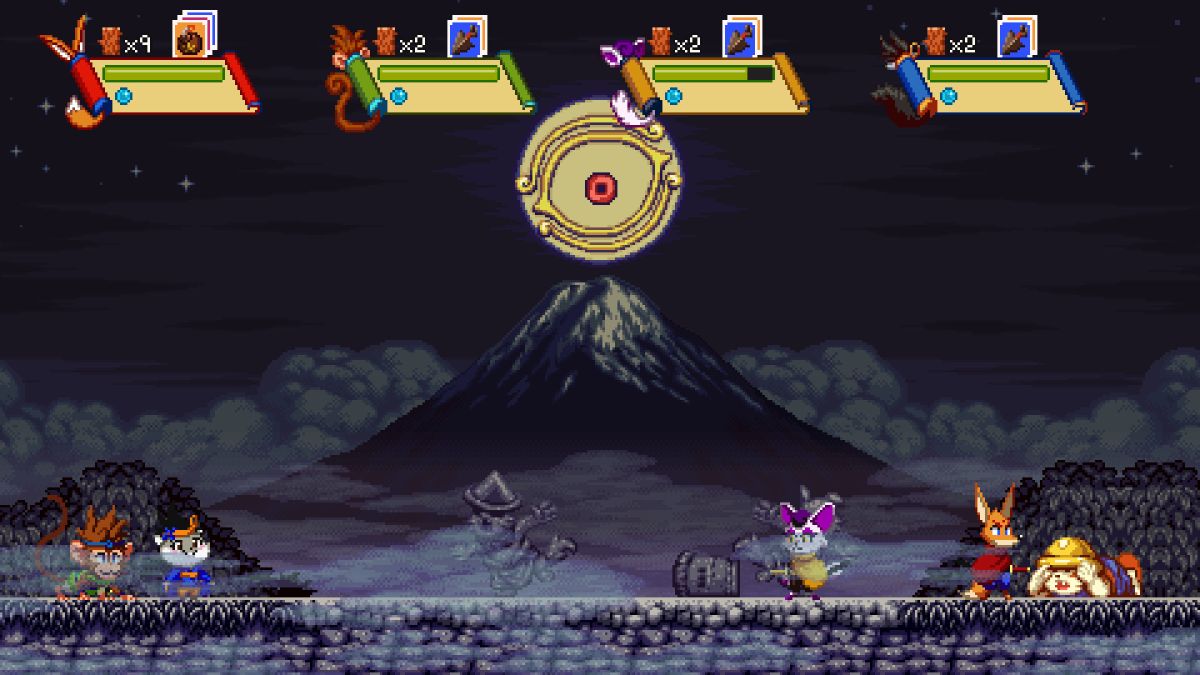
The second playthrough was with Yuu the Monkey. Yuu had the hack/slash abilities as Fudemaru, but could hang on wires and ropes with his tail. Yuu helped me to discover how deep and well-thought-through the level design was in the game, as his abilities were brought out thanks to items, like the rope/wire, that were in plain sight. The different abilities of each character help make the gameplay unique, which makes the replay value skyrocket. Since this was a quick go-around, maybe two hours in length, playing each character to discover their talents and how the levels were built for them was easy to fall into.
Fun bosses
If the characters, controls, mechanics, basic enemies, and level design weren’t enough, then let’s discuss the bosses. Each level features a unique boss built with the level’s design in mind. For example, there is a boss in the ghostly/ghastly setting that is a samurai bear that has passed on, and who is deadly quick with their sword strike, while also maintaining that supernatural creepiness you would expect. He’s a main character in the game, and a tough one to bring down if you play at a harder level.
The aforementioned cloud level has two bosses in it. They’re two very different baddies with wind and lightning abilities. Both float on a cloud, and both keep you honest with strategies and how you navigate their attacks. To boot, a raging dragon is flying through the level, which makes avoiding boss attacks and planning attacks far more complicated. Combined, they’re all flying, and they match perfectly with the level created for them. It’s nice to see some good thought put into enemies, level design, and what that means with bosses at the end of each.
Overall, the gameplay is fast and furious, which makes this an enriching arcade experience. It’s certainly a game you’ll want to replay, and it’s multiplayer as well, so you can bring your friends into its insanity.
Backend
While you’re not going to find a complicated skills tree here, you will find upgradable attributes. As you progress through the game and with each enemy you take down, you’ll have the chance to catch coins. At the end of each level, sans the last one, you can use those coins to get more attack stats, life, and magical slots. You can also use those coins to purchase extra lives. Two reasons why this is cool.
The first reason is that you’ll be motivated to kill as many enemies as possible to get coins, and you’ll be motivated to explore levels for treasure chests. Both options mean more coins, and that equals more upgrades. You’ll find yourself taking as many enemies as possible, and taking chances with treasure chests, which means you’ll engage with the game a lot more. That is a good formula for any arcade action game of this type. It worked in the 80s with games like Golden Axe and Gauntlet, and it works well here.
The other reason why upgrades are cool is that they make the game a lot easier to play. The more coins you get, the stronger your character becomes, and the more chances you can take with the game. That alone should motivate you to gather as many coins as possible during your romp through the game. And the aftermath of the game will have you continuing that effort with the next go around.
My only big hitch to all of this giddy-up is that the game hits a wall quickly with upgrades. There are only a certain number of levels you can upgrade your character before you max out. It feels like it happens too quickly, as it took less than two hours to upgrade all categories of the character I happened to be playing. There are a ton of coins if you do things correctly, so it’s easy to get too many.
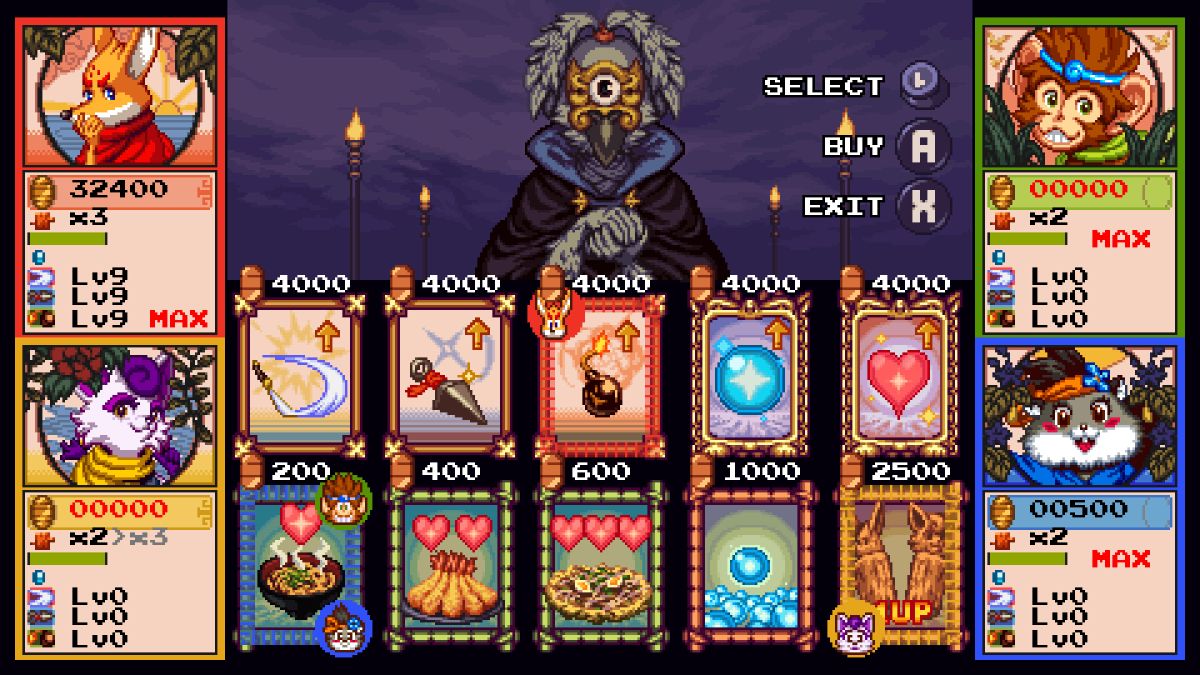
To help slow that down a bit, the game does its best to cap upgradability based on your progression. For example, you can only upgrade your character X number of times if you’re only on the second level of the game. The cap prevents you from spending coins on upgrades, which means you’ll have even more to use the next time you’re between levels. That cap is slightly irritating, as you’ll want to pour all your collected coins in at once to max out your character. I get why they built a cap, because you could probably max everyone out halfway through the first go around of the game, but it hinders excitement for progression more than it helps it. You will scoff a bit at the notion that the game wants to control your efforts and prevent you from becoming too powerful, too quickly. Ultimately, it doesn’t take too much away from the experience. It just feels like it holds your efforts down a little bit, while also becoming an unintentional gameplay obstacle.
Anyway, the upgradable attributes of each character are nice and uncomplicated in how they work. I just wish the game would make fewer coins to collect, make the upgrades cost more, or raise the caps. The latter probably would make you overpowered, but that would be fun as well. It would be like a New Game + feeling when you retain everything and can pretty much take more stupid chances. I like taking stupid chances. It feels right and makes gameplay experiences so much more fun.
On that sweet note, let’s wrap up this review.
Conclusion
Kemono Heroes from developer Mad Gear Games and publisher JanduSoft is a fun action beat ‘em up that keeps the gameplay simple, delivers creative enemies and levels, and throws some good boss fights into the experience. While the upgrades are a bit restrictive with their progression, the game offers far more fun than not.