

It’s been a preview and tactics type of week, folks. First, we previewed Star Wars: Zero Company early in the week, which looks and plays phenomenally, and then we got a preview of Blindspot Games’ Infinity HexaDome Tactics. I’m not complaining.
Anyhoo, Infinity HexaDome Tactics is an interesting game that takes a tactical, strategy-and-turn-based approach and leans toward the competitive side of the gaming industry. I’m not kidding; I could see this being played in some sort of Esports scenario. It gave off that kind of vibe.
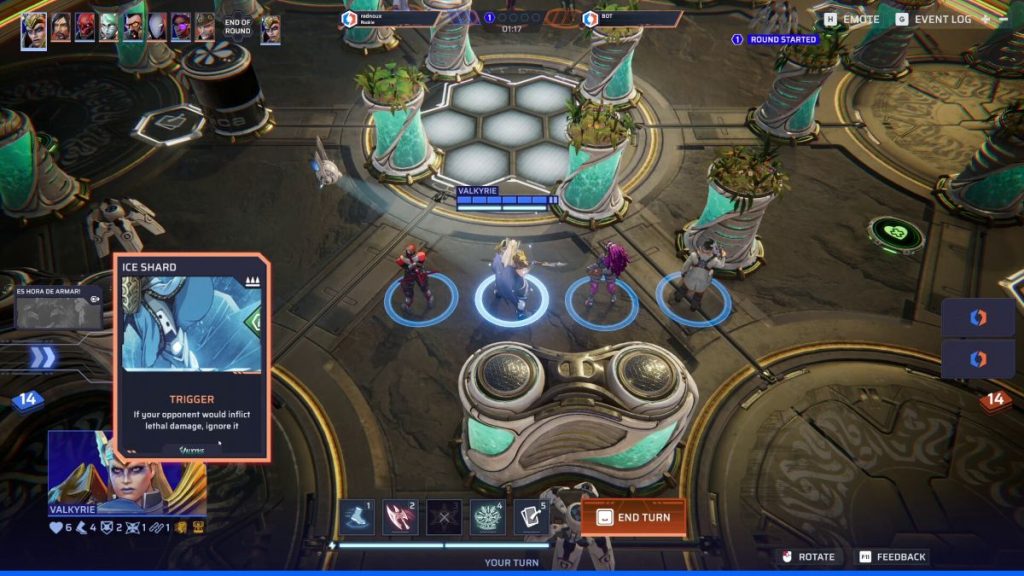
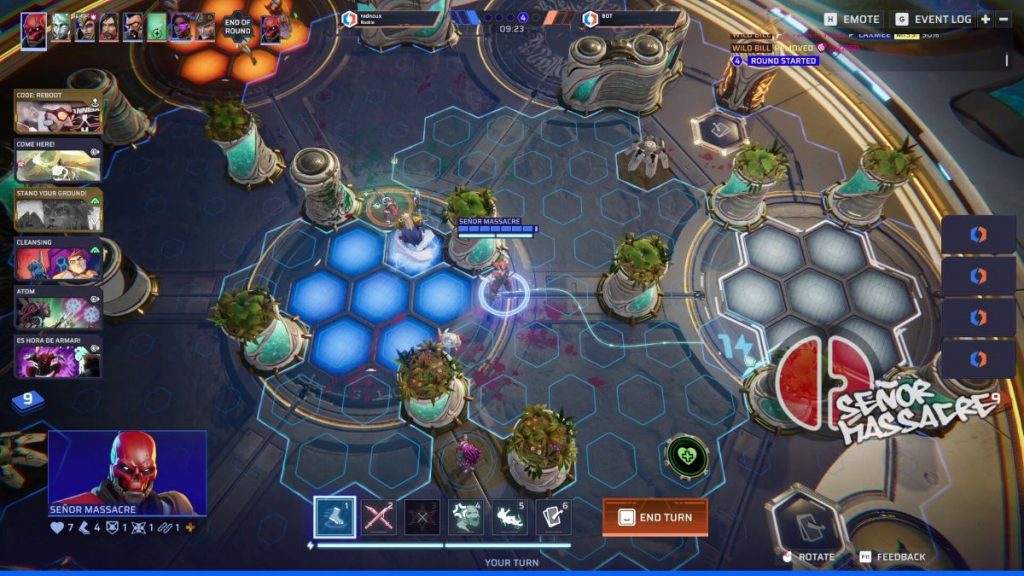
The game is a 6v6 gameplay experience where players use their characters to occupy hexagonal areas while fending off enemies. The team with the most players on the hexagonal areas at the end of the round wins. It’s an incredibly simple concept and construct.
The levels that I played this past week showed off several interesting aspects, as the game is a hodgepodge of genres. We’re talking about a turn-based game that is led by tactics, but also made interesting by the heavy amount of strategy involved in movement, buffs, and deckbuilding. Throw in a competitive element on top of it all, and you can understand that this game was put together with a lot of ideas.
Infinity HexaDome Tactics takes all the above genres and somehow, magically, grinds them into something coherent, intelligent, and most of all, fun to play. There aren’t too many games out there that can mix a handful of genres and come out the other end with something entertaining. Thankfully, Infinity HexaDome Tactics is one of those games.
The first layer of this genre onion is its tactics, as players must find the best path to occupy hexagonal areas within multiple rounds to win a match. This involves developing strategy, moving characters around and placing them carefully in appropriate spots, getting as many of your characters into the limited spaces as possible, and keeping them there for the duration of a round. If a team occupies two hexagonal areas twice, which means they win two rounds, then they win the match. On paper, much like communism, it sounds incredibly easy, but it’s tough to pull off correctly. The turn-based tactics that drive the competitive design start with how the characters are designed.
The number of characters, how their abilities are presented, and the varied strategies they offer create many tactical possibilities. For the time I played, I had two melee tanks, who worked close and personal with enemies, two long-ranged ruffians, and one healer. Moving them around the hexagonal area was limited, and creating the best plan of attack was the first layer of complexity in this game.
Each character’s abilities provided a wide range of ways to approach a hexagonal battle. Luring enemies into an area while setting up their demise from the outside seemed to work the best. The limited number of ability points for movement and offense/defense decisions also fed into the tactical portion of this preview time, adding yet another layer of complexity to the gameplay. Cognitively, even before attacks, it was a rush because the game requires the player to truly think about what they are doing before they do it. Now, while moving certain players with specific capabilities would have been a nice place for Blindspot Games to stop, as that formula is easy to pick up on, they took the gameplay a bit further.
The devs added various abilities to each character, allowing for ranged and leveled attacks during battle. This means each character has multiple approaches to their specific talents. During our preview playtest window, we were able to try out nearly all these abilities. For example, a gunman named Wild Bill brought several different abilities to the fight. With one option, called Twin Pistols, he creates a large amount of damage to mid-range enemies. With his Joker ability, he can increase the stat of a champion teammate (the main person) by a whole point, or use it to create an additional point of damage. Regardless of characters or their abilities, the game throws in a bevy of tactical options and moves for the player to juggle and piece together as they see fit.
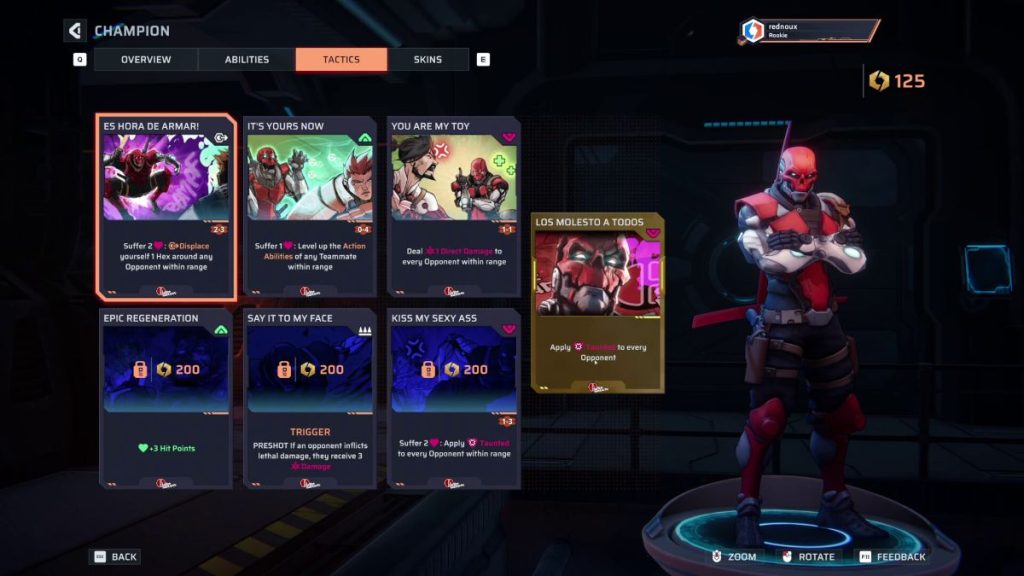
Beyond character abilities, there are also character tactics. This is where the cards come into play. Each character has a set of cards that represent buffs and such. Staying with the aforementioned Wild Bill, he carries tactic cards that feature adding more jokers to his hand, triggering lethal damage to an enemy, and/or helping teammates out in some fashion. These tactics cost characters health, which only adds more player agency in developing the best strategy to win a match. It’s a tactical turn-based game, so having different approaches to battles through characters only stands to make a game like this entertaining.
On the turn-based side of the cornucopia of genres, it’s used in a way that requires players to think about what they’re going to do before they execute it. Because the game’s rounds are finite in moves, the turn-based aspect of the game is a lot smaller than it feels. When the game is done with a round, it’s done with a round, regardless of how many characters are still left on the board. The goal isn’t to eliminate the enemy team, but to occupy hexagonal areas. As long as players can do that, then they will be competitive during a match.
Blindspot Games adds these short rounds to create urgency while still asking players to think through their actions before they make them. In a way, the turn-based portion of the game isn’t as simple as other games of this type. It feels like it’s going against the player at all times, which honestly makes the game far more exciting, if not a little bit stressful.
Finally, on the competitive side of the tracks, I wasn’t kidding when I said I could see this in the Esports industry at some point. Because of all the above aspects of the gameplay, a competitive feeling is built quickly. For example, when an enemy is on a hexagon and the moves are finite, as are the powers, trying to use the resources available to boot them off that area is an absolute competitive rush. It feels like a sporting event, as it acts like one. It’s a lot of good, unnecessary drama that plants a competitive seed in the player’s mind, which will ultimately compel them to do what they can to win. It creates a fun layer of intensity amongst its urgency. People will certainly yell at each other in celebration or condemnation.
Anyway, this is what we learned with Infinity HexaDome Tactics while participating in the preview playtest. The game is still in development, and from what I can tell, it’s going to be good. We didn’t have time to try other aspects, like challenges, but based on what we saw of the main game, we’re impressed, and I’m sure challenges will meet that level of entertainment.
Until the full version comes out and we can give this game a proper go, keep an eye on this one. It’s worth a look.