

There is nothing quite like finding a good card-based adventure with turn-based elements. Add in cooking, and cards, and it might be a wonderful delight.
Hungry Horrors from developer Clumsy Bear Studio might just be that wonderful delight. The game is driven by building deck(s) of cards that, when combined, can mean a powerful recipe to satisfy monsters, as well as take them down. While the game can be an uphill battle at times, it does bring with it an addictive personality that persists through any sort of frustration or difficulty the gameplay throws at you.
So, let’s clean our utensils and get this review going.
Gameplay
Within Hungry Horrors, players will take control of a princess who doesn’t take (bleep) off of peers, magicians, or monsters. Her goal is to build a collection of power recipes that will take out a bevy of baddies when called for, and, of course, rule with a powerful cooking hand.
While the narrative is a goofy romp through a less-than-necessary setup, the gameplay is a well-organized machine that purrs like a kitten when turned on. The gameplay has a few elements that make up its core.
The first element is the hero slowly but surely making their way through monster fights on their way to a final boss. The slow part of the process is finding the right recipe to satisfy the monsters, losing their appetite for destruction. Each monster that the player encounters has a certain craving that will require the player to find a recipe card that matches it. If the player chooses the right card, with the right meal, then the monster has maximum damage laid on it. But the catch with this process is that each round presents a new craving by the monster, and if the player doesn’t have said craving, it could mean massive damage to the princess. Throw in that the princess has a short amount of time to take out said monster before the monster approaches and slays the princess, and you have some intensity with every fight and decision.

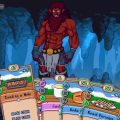
On paper, the concept of this game is easy to understand, but its complexity isn’t easily understood right out of the gate. The cards are far more complicated during gameplay. Each card presents a traditional United Kingdom recipe from various countries within, and each recipe has a constantly building damage number in the top-middle of it. As the player matches more and more meals in a row, the indicator goes up because the player is creating multi-card hits. This single gameplay element is important for not only getting rid of baddies quickly during gameplay, but also for enjoying the challenge of building a well-catered deck that is a balance of cravings. If the player breaks the constant craving, consistent collection of cards, the number on top of the cards resets to the original, single card value. Ultimately, the goal of this game is to get the deck organized and obtain as many recipes as possible to prepare for different enemy battles as possible.
This brings us to the second gameplay element of Hungry Horrors, which is collection and crafting. As the princess makes her way through forests, swamps, and other terrible places princesses should not be traveling, she will gather materials from fallen enemies, which she brings back with her after a level is completed, or she loses. Those ingredients can be recipe ingredients, coins to use later in the journey, or even buffs that will help her along the way.
The ingredients are used in recipes she owns. By building recipe cards from these ingredients, the game silently encourages and motivates the player to continue their journey even in the face of multiple defeats. Players will want to keep playing and continue trying to expand the princess’s recipe book, which becomes a circular gameplay element that utilizes the ingredients. At times, the game will present a player with a recipe that requires an ingredient to be found, which means the player will be back in the loop of continually advancing the game to make the princess’s journey easier and more entertaining. Also, the ingredients are finite in number, which means that the player will have to revisit previously conquered places to pick up more of the same ingredients so that they can make a recipe card to take into battle. Again, beautifully circular and motivating.

On the buffs’ side of the equation, there will be objects that the princess will acquire after defeating bosses. Those objects are permanent, though can only be used one at a time. They bring things like easier ingredient gathering, coin gathering increase, and so on and so forth. They are minor adjustments to the gameplay, but they are impactful on the princess’s journey in the game. During my time with this game, they didn’t matter as much as the recipes and ingredients. While they were nice to activate before missions, as they sit on a castle shelf before you go out to a specific land, they didn’t mean much to me. They were a bonus at best.
The third gameplay element for Hungry Horrors is its branching pathways. There is a large variety of lands for the princess to journey through, and each one features a branching path at the end of each enemy encounter (sans the boss). Players must choose how they approach the ‘next step’ of the journey, which places the unraveling journey squarely in the hands of the players. For example, at the end of a fight with a Grendel, the player will be asked if they want to go to a shop or they want to continue on the path that holds certain ingredients or plays off certain recipes. The player gets to choose based on health and situation. If the player is hurting a bit from a fight, then maybe the player chooses the shop option to spend their coins and gather some potions to heal up. Or if the player feels like they have more fight in the game, then they move on to try to gather material in the next fight. Regardless, the choice is up to the player, and each run through the level provides a randomized order for these paths. That alone keeps the journey fresh and cognitively engaging. As a side note, players can purchase potions that alter fight requirements. For example, a player can pick up a potion that changes the craving of a monster, which can be mightily useful when a deck of recipes is leaning toward power cards leaning toward one craving.
Anyway, all three above gameplay elements mean that Hungry Horrors can be a long-term fun adventure that will be easy to come back to regularly. For me, it feels a lot like Ring of Pain, where I’m not pining for it at every given moment, but it’s a gameplay comfort blanket that I can fall into anytime I want. Those types of games can be absolutely the best.
Difficulty
Now, the only hiccup in the giddy-up of Hungry Horrors is how difficult the frontend of the game can be. This game throws a lot of numbers and ways to play at a player from the get-go. The recipes, ingredients, the structure of battles, and how difficult enemies can be, when combined, can be overwhelming.
But! Once players get over that initial learning hump on what the game has to offer, how it works, and how it executes, then the game becomes a treat. That initial difficulty is a tough hill to climb, though, as I can’t tell you how many times I died, and maybe cursed, until everything finally settled. It was a lot.
Anyway, difficulty is the biggest fault of the game, and mainly at the frontend, but I think players who love challenges will dig right into it.

On that note, let’s wrap up this review.
Conclusion
Hungry Horrors, from developer Clumsy Bear Studio, is a card-based joy to play. It’s engaging, wonderfully circular in its design, and an easy game to revisit regularly. The difficulty might turn some gamers away, but once that hill is climbed, it’s a brilliantly built game that will be tough to put down.