

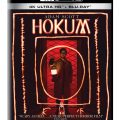
If you're a fan of Damian McCarthy or just becoming introduced to this relatively new filmmaker, Hokum is an excellent addition to the horror genre, with dimensional characters you care about despite the horror story unfolding around them. While I personally am still torn on which film I enjoy more, this or Oddity, the differences in the story, yet similarities in his style and storytelling make them both extremely enjoyable in their own ways. This one is out today.
“A reclusive novelist (Adam Scott) visits a remote Irish inn to scatter his parents’ ashes when he becomes consumed by tales of an ancient witch who is haunting the honeymoon suite. Disturbing visions and a sudden disappearance soon draw him into a nightmarish battle with the darkest secrets of his past.”
Hokum is the third feature from Irish writer-director Damian McCarthy, following the low-budget psychological horror Caveat (2020) and Oddity (2024). With a larger budget and wider distribution through Neon, Hokum gives McCarthy the opportunity to make the biggest splash yet in the genre while staying true to his style of storytelling that made his previous films so memorable. McCarthy has quickly established himself as a distinctive voice in modern horror, specializing in isolated settings, creeping dread, and stories that intertwine the supernatural with very human failings.
The film’s strength lies in the methodical building of unease. Much like Oddity, McCarthy gradually builds a pervasive sense of dread that settles over the remote inn and its secrets, intensifying until it becomes nearly overwhelming in the final act. The creepy atmosphere is sustained through impressive direction, dark cinematography, and a measured pace that allows the connections between the folklore portions of the story and the personal demons Scotts character is dealing with to sink in before the scares fully take hold.
Central to McCarthy’s films is a recurring thematic interest in characters wrestling with personal tragedy. In Hokum, as in his earlier work, the protagonist is forced to use the escalating horror situation as a catalyst for confronting unresolved grief and guilt. This approach brings a certain humanity to the genre. Rather than treating the characters as mere vehicles for jump scares or plot mechanics, McCarthy imbues them with emotional weight. The result is a main character that feels three-dimensional, relatable, and ultimately likeable (which is a feat in itself given how unlikeable he is at the beginning) even as the story grows darker. Adam Scott rarely strays from his beaten path in the characters he plays, usually some kind of sarcastic asshole with a chip on his shoulder. This is very much in the same vein, however, he takes this character’s personal tragedy and through these horrific events we really begin his character has changed for the better.
Video
The 4K Ultra HD presentation delivers a sharp 2160p image with HDR10 in the film’s original 2.39:1 aspect ratio. The muted, shadow-heavy cinematography benefits from the increased resolution and contrast, with fine detail in the aging inn interiors and the misty Irish landscape. Darker sequences hold up well overall. When seeing this in theaters I remember thinking to myself how much I looked forward to seeing this on 4k, as the theater I was in didn’t do the darker scenes justice in terms of seeing the subtle images in the darkest of scenes. I was very pleased when a lot of these images were much clearer, the figures barely visible in the darkness.
Audio
The DTS-HD Master Audio 5.1 track is immersive and effective. Quiet atmospheric sounds, creaks, and distant noises fill the surrounds, while the score and sudden effects land with impact. Dialogue remains clear and centered throughout. Certain scenes at the end really become an assault on the senses amping up the sense of horror with audio immersion.
Special Features
This 4k release also contains a Blu-ray copy, and a slip cover. No digital code is included.
- The Making of Hokum
- Jack the Donkey: A Family Favorite
- Feature Commentary with Damian McCarthy
- Teaser and Trailer

Hokum on 4K is a strong continuation of Damian McCarthy’s distinctive brand of atmospheric, character-driven horror. By pairing creeping folklore dread with a deeply human story of grief and growth, the film delivers both genuine scares and emotional resonance. This one is out today.