

The HiFiMan Sundara are a gem of a pair of open-backed headphones. Their bass might not be the most punchy, but they excel in just about every other area and punch above their class in terms of their overall audio quality.
A few weeks ago, DigitalChumps received a massive box full of headphones from the folks at HiFiMan. This meant that I had to pivot away from my regularly scheduled keyboard reviewing to focus on listening to music. Okay, maybe that’s not entirely true, but the fact is that we have lots to share with you in very little time. Today’s review is on the HiFiMan Sundara Planar Magnetic Open-Backed Headphones.
HiFiMan is over 20 years old as of writing, specializing in exceptional high-fidelity (HiFi) audio products. Additionally, they’ve spent many years focusing on designing planar magnetic headphones rather than traditional dynamic drivers. Planar magnetic headphones have a thin diaphragm with a wire running through it alongside a suspended magnet. As such, these types of headphones can be sensitive while having excellent all-around audio that balances detail, speed, and accuracy.
The Sundara are one of HiFiMan’s older headphones with a NEO Supernano diaphragm, originally released in 2018. Their original price was a whopping ~$500. At that time, the original price point was competitive for other planar magnetic headphones. Fast forward to today, the price has been cut quite a bit to sub-$200 and still a worthy recommendation for folks wanting to enter into the planar magnetic space without dropping several large bills.
Check out the Sundara on HiFiMan’s website by clicking here! (non-affiliated URL)
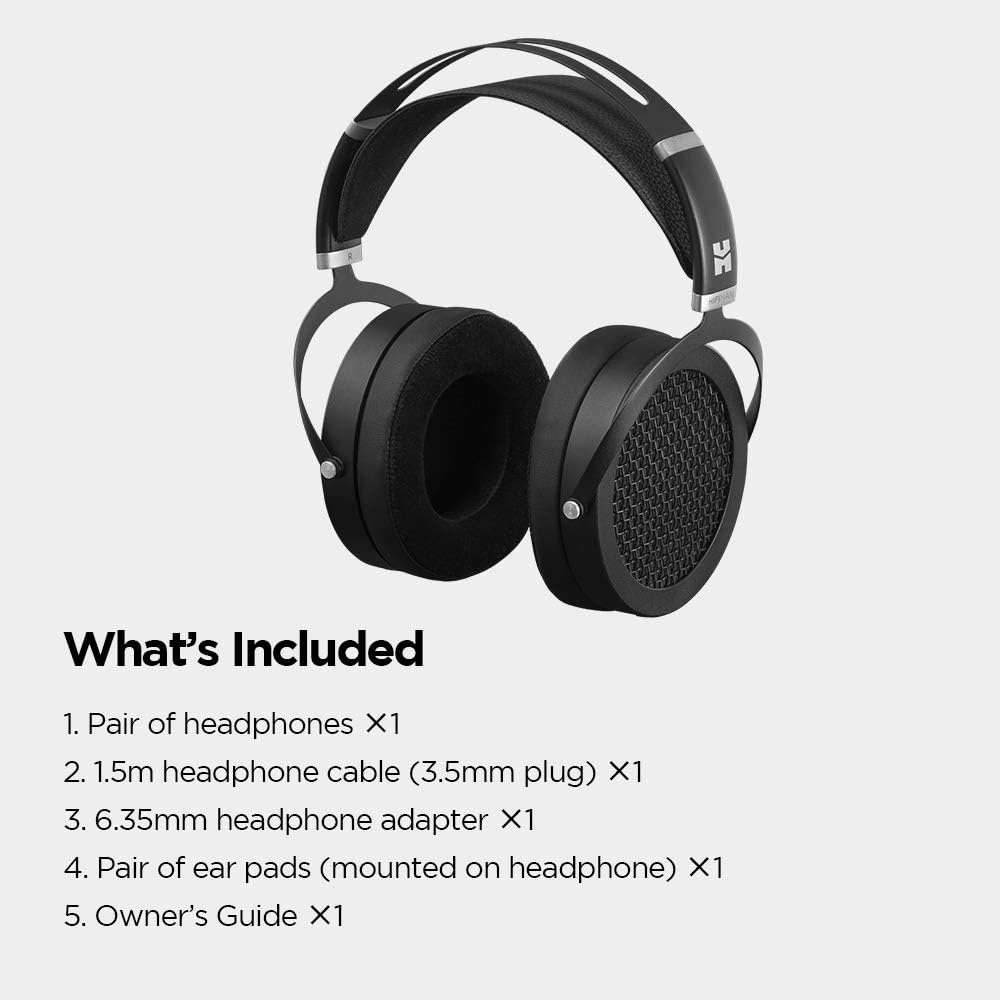
HiFiMan keeps it simple in the Sundara’s box: All that’s included are the headphones, a rubbery 3.5mm to earcups cable, warranty card, and a foam encasing that doubles as a stand for novelty’s sake. There’s nothing too complicated here, but it’s just enough for someone to get started on their HiFi audio journey. I’m not the most impressed with the cable but I do appreciate its flexibility. The cable should be fine for travel if you plan on using these on public transport. I’d imagine that audiophiles might already have a preferred balanced cable for listening, but I didn’t feel like I was missing out by sticking with the stock cable.
In terms of design, the Sundara is made primarily of lightweight black metal with silver accents along with top. The cups’ outer metal grille screams industrial elegance. Beyond that, the headband and outer portions of the cups are made of a thin leatherette material. HiFiMan’s aesthetic here is winning me over on its simplicity and premium materials. The Sundara feel sturdy in-hand and have a decent amount of strength that retains their form factor after longer listening periods. The cups can rotate up/down, but there’s no left-right swiveling, unfortunately.
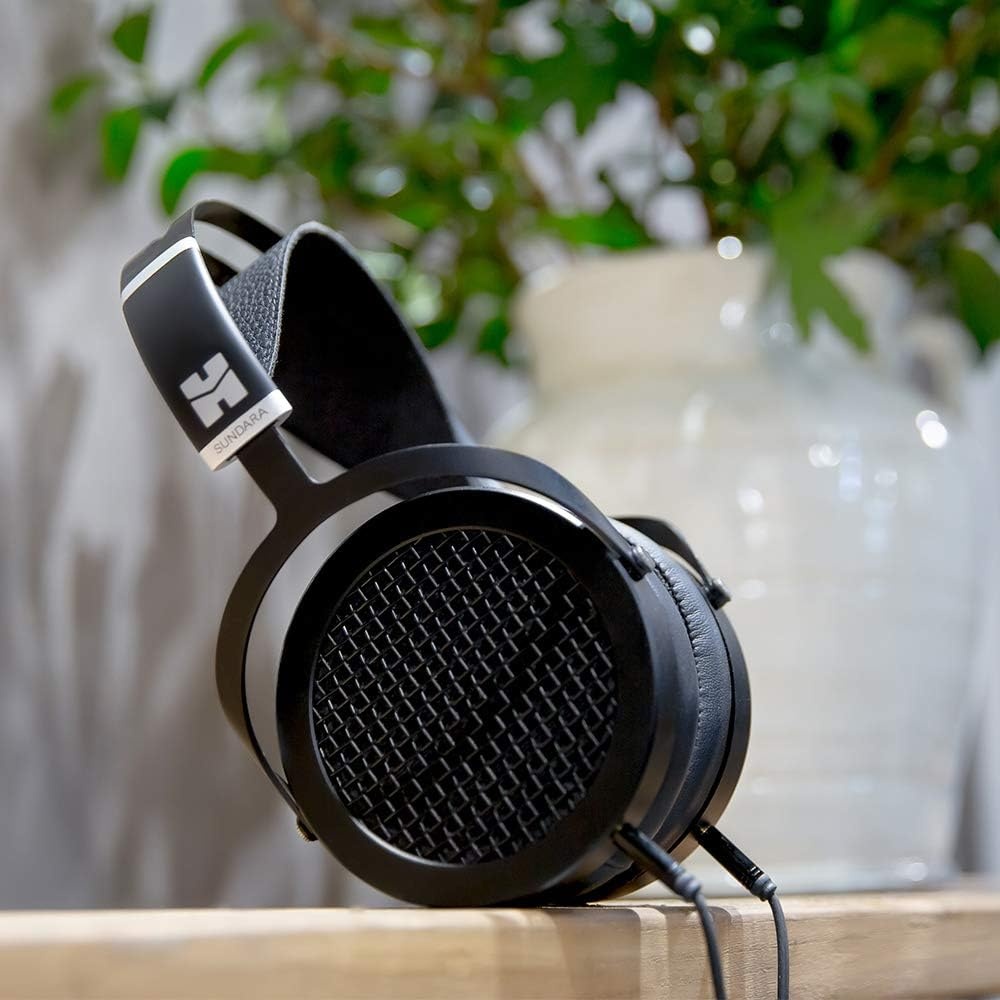 I had some initial reservations about wearing these headphones right out of the box, as the leather headband beneath the metal arch was thin yet somewhat rigid. Thankfully, the suspension system made it so that the top of my head had a small cushion preventing touching the hard metal band. As such, there were no issues of too much pressure. The metal construction made it so that the clamping force was minimal yet solid enough for long-term listening. I have a big head, and I found these headphones to feel secure yet comfortable with minimal adjustments out of the box. I can’t speak for the headphone’s longevity, of course, but the pads can be replaced if/when they start showing signs of age.
Regardless, these are solidly built headphones!
Let’s move on to the most important question: How do they sound?
My initial first impressions of the Sundara were that they produced some exceptional details that I would have expected from higher-priced headphones in the current category. The bass, on the other hand, was lacking in terms of punchiness.
The Sundara have a tightly controlled bass that is far from muddy and doesn’t bleed into the rest of the audio mix. When listening to Chance the Rapper, the bassline felt overly lean. For the average listener, especially one with minimal HiFi experience, the lack of a punchy bass would be an assumptive downside. Here, it’s not: For genres with textured bass (basically anything that isn’t hip hop, trap, or DnB), the Sundara allowed me to appreciate how the bass lines were articulated.
 If you’re considering these and feel that bass is non-negotiable, I had some mild success with several EQ settings that made the bass enjoyable. It still lacked the physical punch, but boosting several settings rounded out the audio profile in ways that overcame the Sundara’s default EQ. I highly recommend fiddling with EQ settings to take advantage of these cans’ hardware.
Moving onto the mids, I was floored by their openness and transparency. These headphones feature some great timbre, particularly when listening to acoustic guitars, brass, and strings. Everything in the mid area felt well-defined and well-positioned. Female vocalists especially sounded fantastic.
The trebles and highs are airy and detailed, but there’s a tendency for the Sundara to sound clinical (meaning there’s a lack of warmth) on some tracks. There’s some sparkle here and there, but there’s something to be said about how the lower treble region sounds natural. I tested out some live recordings of RAYE and she sounded absolutely fantastic wearing these – no harshness whatsoever.
Given that these headphones are open-backed, it’s important to note that external noises won’t entirely be blocked out. Additionally, those around me could hear what I was listening to, so I had to be mindful of my volume levels to ensure that I wasn’t being a nuisance. These are things to consider when debating open-backed and closed-backed headphones, I know, but it’s still important to remind y’all that you probably shouldn’t use these in a shared office space unless those around you have active noise cancelling.
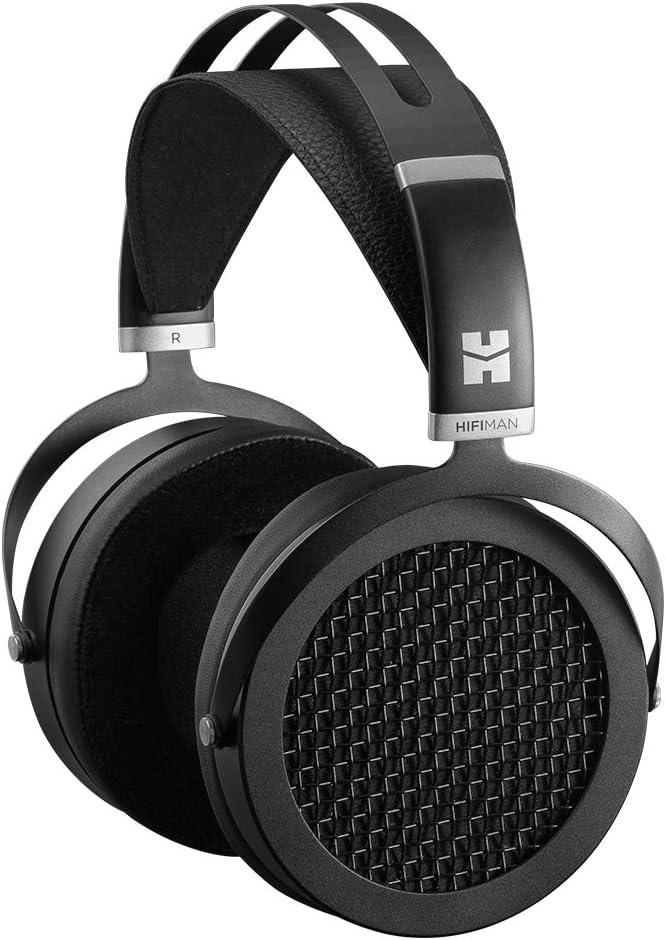 Before finishing this review, let’s talk about the Sundara’s price. When it originally launched, it was upwards of $299. At one point, it was in the $350 price range on Amazon. These days, most storefronts (including HiFiMan’s store, eBay, and Amazon) put it in the ~$175 price range which is relatively competitive for an entry level set of HiFiMan’s headphones. If the current Sundara price is too steep, the Philips SHP9500 can be acquired for half the price (and half the soundstage). If you’re comfortable with paying a smidge more for punchier bass, the FiiO’s FT1 Pro is the only pair I can recommend that beat out the Sundara. Otherwise, the HiFiMan Sundara take the cake (despite their longevity) in terms of audio quality, design, and comfort.
I’d imagine that the Sundaras occasionally go on sale, though. In 2026, you should absolutely snag these cans if they’re on sale (I’ve occasionally seen them for $100!) for an entry point into HiFiMan’s product line of high-fidelity audio products.
The HiFiMan Sundara are a gem of a pair of open-backed headphones. Their bass might not be the most punchy, but they excel in just about every other area and punch above their class in terms of their overall audio quality.